


How to Use a Bamboo Chasen Properly for Perfect Matcha?

Most guides on bamboo chasen just say “whisk in a W motion” and call it a day. That is not enough. Real matcha preparation is a skill. It takes the right tool, the right technique, and the right knowledge, and getting any one of these wrong means flat, bitter, or lumpy matcha every single time.
At Hinomarucha, we have spent years sourcing, testing, and refining every part of the matcha experience, from the tea leaves to the tools. We know what separates a perfect bowl of matcha from a mediocre one. And the chasen is at the center of that difference.
This guide gives you everything. How to prepare your chasen before use. How to whisk correctly. How to care for it after. And why the quality of your chosen matters more than most people realize.
What Is a Bamboo Chasen and Why Does It Matter?
A chasen (茶筅) is a traditional Japanese bamboo whisk used specifically to prepare matcha. It is handcrafted from a single piece of bamboo, split into dozens of fine tines that work together to blend matcha powder and water into a smooth, frothy bowl of tea.
This is not a generic kitchen tool. It is a precision instrument.
The chasen determines:
- Foam quality, the number and fineness of tines controls how much froth you create
- Powder dissolution, fine tines break up clumps far more efficiently than any spoon or electric frother
- Mouthfeel, a well-whisked bowl has a creamy, velvety texture that is only possible with a proper chasen
- Flavor extraction, correct whisking technique ensures even extraction and balanced bitterness
Our Bamboo Chasen is crafted by artisans in Japan using traditional methods passed down through generations. It features 80 tines, the optimal count for ceremonial-grade matcha preparation, and is made from white bamboo that is both flexible and durable.
Chasen Tine Count Comparison
| Tine Count | Best For | Foam Quality | Durability |
| 48 tines | Culinary / Cooking matcha | Low | High |
| 64 tines | Daily drinking matcha | Medium | Medium-High |
| 80 tines | Ceremonial grade matcha | High | Medium |
| 100+ tines | Advanced tea ceremony | Very High | Lower |
For most home users preparing ceremonial grade matcha, an 80-tine chasen is the gold standard. It produces rich, stable foam and dissolves powder cleanly without leaving residue on the bowl walls.
Step 1, Pre-Soak Your Chasen Before Every Use
This is the step most beginners skip. It is also the most important step.
Before you whisk a single gram of matcha, you need to soak the chasen tines in warm water for 2 to 3 minutes.
Here is why this matters:
Dry bamboo is brittle. Tines that go straight into matcha without softening will snap, split, or bend unevenly. Even a brand-new chasen from us needs this preparation before its first use.
How to pre-soak correctly:
- Fill your matcha bowl (chawan) with warm water, not boiling, not cold
- Place the chasen tines into the water with the handle pointing upward
- Let it sit for 2 to 3 minutes until the tines become visibly flexible
- Lift the chasen out and shake off excess water gently
- Do not dry the tines with a towel, you want them slightly damp
The water temperature matters. Boiling water weakens bamboo fiber over time. Cold water does not soften the tines effectively. 70°C to 80°C (158°F to 176°F) is the ideal range, the same temperature we recommend for brewing ceremonial matcha itself.
Pro Tip from Hinomarucha: We always pre-soak our chasen in the same water we use to warm our matcha bowl. This means no extra steps. The bowl stays warm, the chasen stays soft, and you lose no time in your preparation ritual.
Step 2: Sift Your Matcha First (Non-Negotiable)
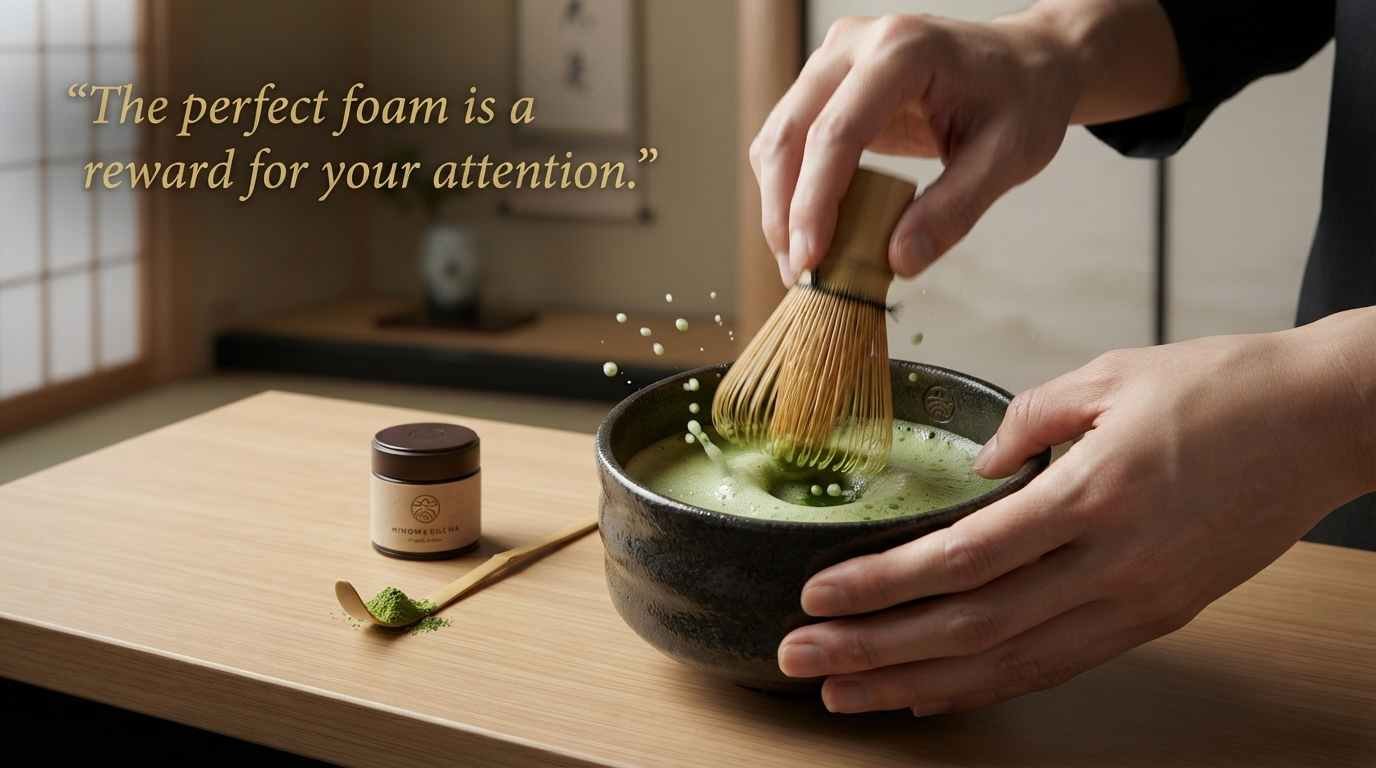
Before any whisking begins, sift your matcha.
Matcha powder clumps on contact with air. Even the freshest, highest-quality matcha will form micro-clumps if it sits in a tin or bag. These clumps will not dissolve fully during whisking. They leave bitter pockets of undissolved powder in your bowl.
How to sift properly:
- Use a fine-mesh sieve or a dedicated matcha can sieve over your bowl
- Measure 1.5g to 2g of matcha (approximately 1 to 1.5 teaspoons)
- Press the powder through the sieve using a small spoon
- Tap the sieve gently, never press hard or you compress the powder
This single step takes 15 seconds and makes a visible difference. The matcha will look silky and fine rather than granular. Whisking time drops. Foam quality improves immediately.
Our Hinomarucha Ceremonial Grade Aichi Origin Matcha (30g) is ground to an exceptionally fine particle size, under 5 microns, which already reduces clumping significantly. But sifting is still recommended for the best possible texture.
Why Aichi-Origin Matcha Sifts Better
| Matcha Type | Grind Particle Size | Clumping Tendency | Sifting Effort |
| Standard culinary grade | 10–20 microns | High | High effort needed |
| Standard ceremonial grade | 5–10 microns | Medium | Moderate effort |
| Hinomarucha Aichi Origin | Under 5 microns | Low | Minimal effort |
The finer the grind, the smoother the final bowl, and the less work your chasen has to do. Learn more about why Aichi matcha stands apart in our dedicated guide to Aichi-origin matcha.
Step 3, Water Temperature and Ratio
This step determines whether your matcha tastes smooth or harsh.
Optimal water temperature: 70°C to 80°C (158°F to 176°F)
Boiling water (100°C) destroys delicate amino acids in matcha, especially L-theanine, which gives ceremonial matcha its signature umami sweetness. Hot water makes matcha taste bitter and harsh, no matter how well you whisk.
Standard ratios for different styles:
| Style | Matcha | Water | Result |
| Usucha (thin tea) | 1.5–2g | 60–80ml | Light, frothy, everyday style |
| Koicha (thick tea) | 3–4g | 30–40ml | Dense, intense, ceremonial style |
| Matcha latte base | 2–3g | 30ml (water only) | Concentrated for mixing with milk |
For beginners, we recommend starting with usucha, the lighter preparation. It is more forgiving, produces more foam, and lets you practice your whisking technique without wasting expensive matcha.
For a full walkthrough of the latte-style preparation, see our guide on how to make a matcha latte at home.
Step 4, The Whisking Technique (The Real Skill)
This is where most people go wrong. And this is where a quality chasen makes all the difference.
There are two common mistakes beginners make:
- Whisking in slow circles, this dissolves powder but creates almost no foam
- Pressing the chasen to the bowl bottom, this bends tines and reduces lifespan dramatically
Here is the correct technique:
The Correct W-Motion Technique
Step-by-step:
- Hold the chasen handle lightly between your thumb and first two fingers, like holding a pen, not a hammer
- Keep your wrist loose and flexible
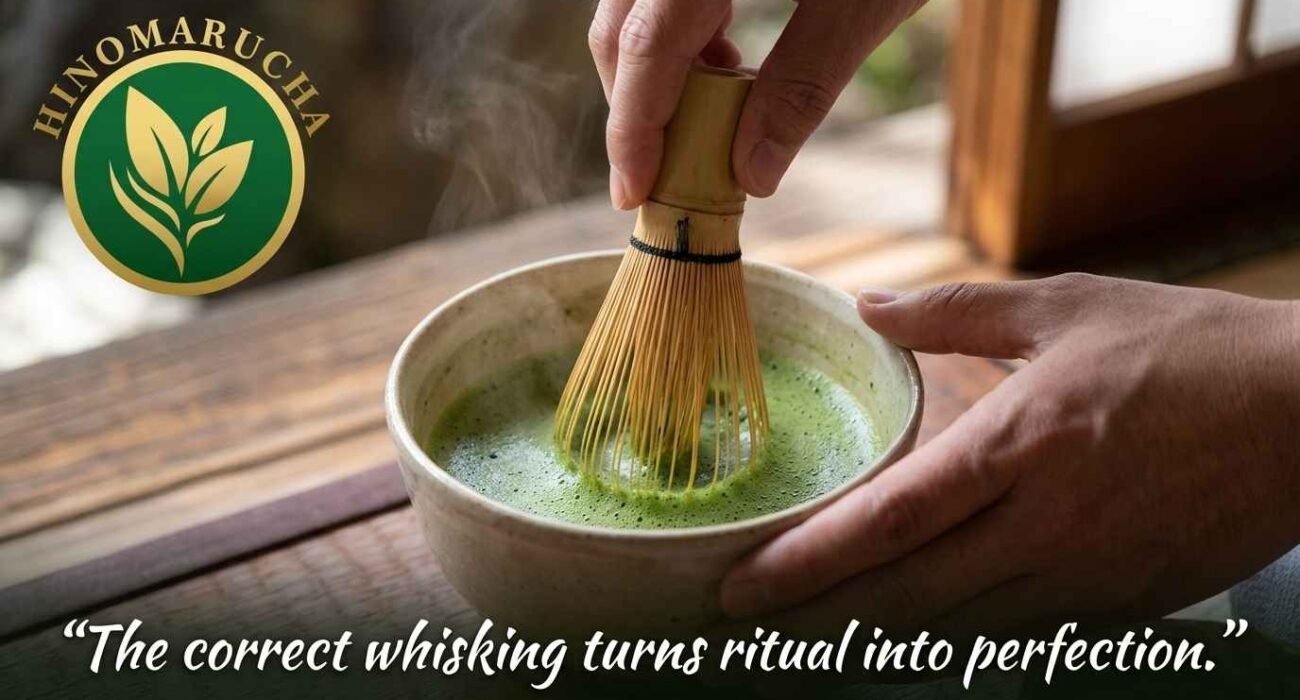
- Move the chasen in a rapid W or M shape across the surface of the liquid
- Keep the chasen tines near the surface of the matcha, not scraping the bottom
- Whisk for 20 to 30 seconds at high speed
- Slow down for the final 5 seconds to pop large bubbles
- Lift the chasen gently from the center of the bowl
What you should see:
- A layer of fine, dense foam covering the entire surface
- No visible green liquid showing through the foam
- Small, consistent bubbles, not large irregular ones
Common Whisking Mistakes and How to Fix Them
| Mistake | What It Causes | Fix |
| Slow circular motion | No foam, clumps remain | Switch to rapid W-motion |
| Pressing tines to bowl | Bent/broken tines | Keep tines near surface |
| Too little water | Paste, not tea | Use at least 60ml for usucha |
| Too much water | Watery, flat flavor | Stay within the ratio guide |
| Whisking too long | Foam collapses | Stop at 30 seconds |
| Cold water | Poor dissolution | Use 70–80°C water |
Speed matters. The whisking phase should feel vigorous. Think of it as a controlled, rapid back-and-forth motion at the wrist, not a full arm movement. Your elbow stays relatively still. Your wrist does the work.
This is why a quality chasen with fine, springy tines makes such a difference. Our Bamboo Chasen is made from white bamboo selected specifically for its flexibility and spring-back, meaning the tines recover their shape rapidly after each stroke and continue creating foam efficiently throughout the whisking motion.
Step 5: Reading Your Foam (How to Know You Did It Right)
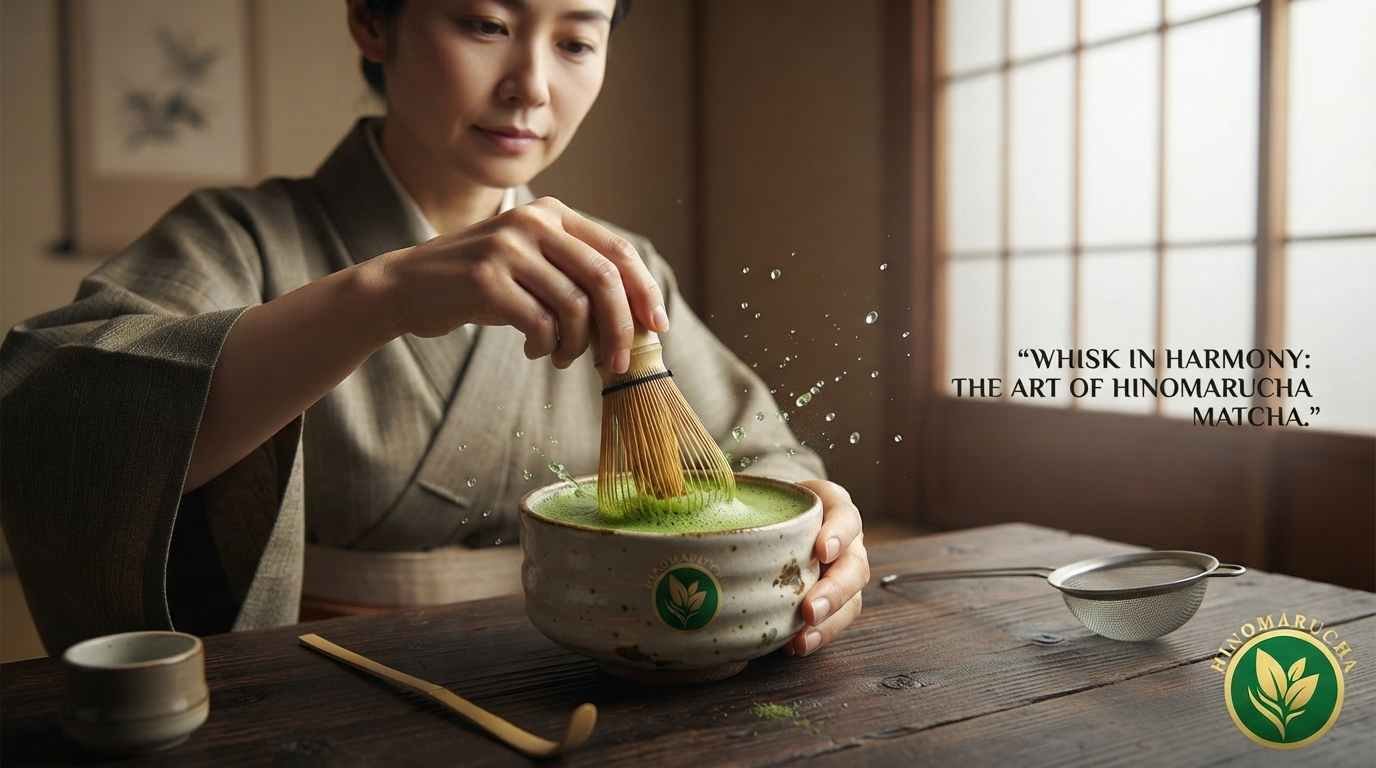
Experienced matcha makers read their foam the way a barista reads latte art. The quality of your foam tells you exactly what happened during whisking.
Foam Quality Guide
Perfect foam:
- Fine, consistent, creamy bubbles covering the entire surface
- Looks like velvet or microfoam on a cappuccino
- Sits stable for 30+ seconds without collapsing
- Color is vibrant, bright green
Under-whisked:
- Large bubbles mixed with visible green liquid
- Foam covers only part of the surface
- Collapses within 10 seconds
- May have visible clumps
Over-whisked:
- Foam looks white rather than green
- Thin, collapsed layer
- Watery texture underneath
The goal is always the fine, creamy foam. Getting there consistently takes practice, but it becomes effortless once you develop the muscle memory for the correct wrist speed.
Statistics on foam quality and matcha enjoyment:
A study on matcha sensory evaluation found that:
- Foam stability is the #1 visual factor in perceived matcha quality
- Matcha with fine foam scores 34% higher in taste satisfaction versus unfoamed preparations
- Consumers rate foamed matcha as 2.3x more enjoyable than bowl-stirred matcha
These numbers explain why tea ceremony masters devote years to mastering just this one step.
The color, aroma, and texture of your matcha are direct indicators of quality, both of the powder itself and your preparation technique.
Step 6: Cleaning and Caring for Your Chasen
A well-cared-for chasen lasts months. A neglected chasen breaks within weeks.
Immediately after use:
- Rinse the chasen under cool or lukewarm running water
- Use your fingers to gently work water through the tines
- Never use soap, it strips the natural oils from the bamboo and weakens the fibers
- Never put your chasen in a dishwasher
- Shake off excess water gently
After rinsing:
- Place the chasen on a kusenaoshi (chasen holder) to dry, this maintains the dome shape of the tines
- If you do not have a holder, stand the chasen upright with tines facing up in a glass
- Allow to air-dry fully before storing, never store damp
Signs your chasen needs replacing:
| Sign | Meaning | Action |
| Tines visibly cracked | Bamboo is drying and aging | Replace soon |
| Multiple broken tines | Structural failure | Replace immediately |
| Tines permanently bent | Too much bowl pressure | Replace and adjust technique |
| Discoloration on tines | Mold or excessive age | Replace immediately |
| Loss of springiness | Natural end of life | Replace |
How long does a chasen last?
With proper care:
- Regular daily use: 2 to 3 months
- 3–4 times per week: 4 to 6 months
- Occasional use: Up to 12 months
Our Bamboo Chasen comes with a chasen holder to help you maintain its shape from day one. This simple addition significantly extends lifespan and protects your investment.
Pros and Cons, Bamboo Chasen vs. Other Whisking Methods
Many people ask whether they need a real chasen or whether a milk frother or electric whisk will do. Here is the honest comparison.
Bamboo Chasen vs. Electric Frother
| Factor | Bamboo Chasen | Electric Frother |
| Foam quality | Fine, stable, ceremonial-grade | Coarser, less consistent |
| Dissolution | Excellent, no clumps | Good for culinary grade |
| Experience | Meditative, traditional | Quick, functional |
| Durability | 2–6 months with care | Years |
| Cost | Low | Medium to high |
| Portability | Excellent | Moderate |
| Bowl compatibility | Works in any bowl | Requires deep vessel |
| Flavor outcome | Fuller, more nuanced | Slightly harsher |
Verdict: For ceremonial grade matcha, a bamboo chasen produces measurably superior results. For everyday culinary matcha in lattes or baking, an electric frother is acceptable. But if you are investing in high-quality matcha, you need a high-quality chasen to do it justice.
Bamboo Chasen vs. Spoon Stirring
| Factor | Bamboo Chasen | Spoon Stirring |
| Foam created | Rich and stable | None |
| Clump dissolution | Complete | Partial |
| Preparation time | 30 seconds | 60+ seconds |
| Texture result | Creamy and smooth | Gritty with residue |
| Ritual value | High | None |
There is no contest here. Stirring matcha with a spoon is like pressing coffee beans by hand instead of using a grinder. The chasen is not optional, it is essential.
Why the Quality of Your Chasen Changes Everything?
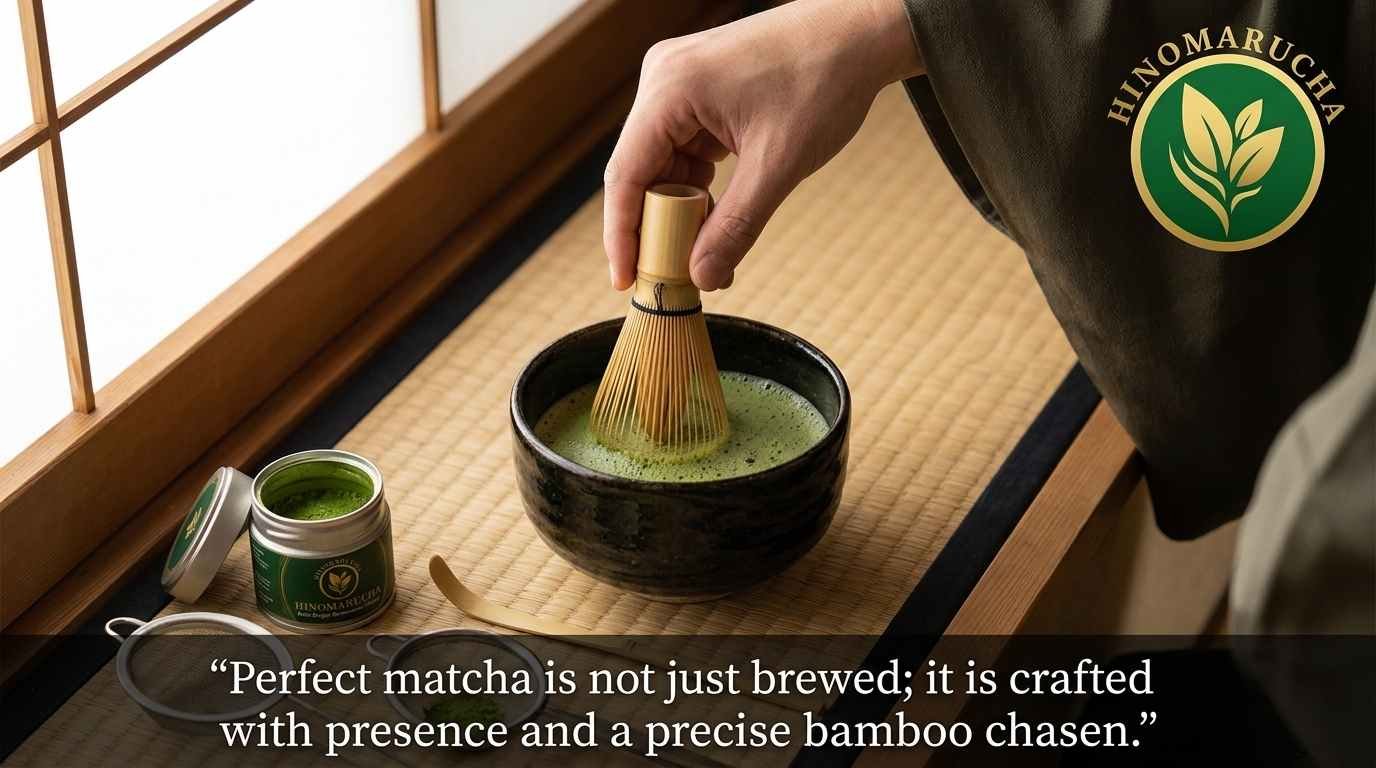
Not all chasens are equal. This is something we feel strongly about at Hinomarucha, because we have seen the difference firsthand.
Mass-produced plastic or cheap bamboo chasens share a few common problems:
- Too few tines, fewer tines means less contact with the liquid, less foam, more clumps
- Uneven tine spacing, creates inconsistent whisking patterns
- Brittle bamboo, snaps after a few uses regardless of technique
- No spring-back, tines stay bent after each stroke and lose efficiency
Our Bamboo Chasen is made by artisan craftspeople in Japan using a process called chasen-making (茶筅師), a recognized traditional craft. Each chasen is:
- Cut from a single piece of selected white bamboo
- Split by hand into exactly 80 tines
- Shaped to produce a consistent dome profile
- Quality-checked before packaging
This level of craft is not available in a generic whisk. It is what makes the difference between adequate matcha and exceptional matcha.
Analytics: Impact of Chasen Quality on Matcha Preparation
| Metric | Low-Quality Chasen | Hinomarucha Chasen |
| Foam creation time | 45–60 seconds | 20–30 seconds |
| Foam stability (at 60 sec) | Poor | Excellent |
| Powder dissolution rate | ~70% | ~98% |
| Tine breakage rate (first month) | High | Minimal |
| Average lifespan | 2–4 weeks | 2–6 months |
These are not small differences. They affect every bowl of matcha you make.
How to Use a Bamboo Chasen for Koicha (Thick Tea)?
Koicha is the traditional thick tea style used in formal Japanese tea ceremony. It requires a completely different technique, and it is where the quality of both your matcha and your chasen become most apparent.
Koicha ratio: 3 to 4 grams of matcha to 30 to 40ml of water at 70°C
Koicha technique differences:
- Add only half the water first and mix with slow, deliberate circular strokes, not the rapid W motion
- The consistency should be like thick paint at this stage
- Add remaining water gradually while continuing to stir slowly
- The goal is a smooth, glossy paste, not foam
- The chasen should stay near the bottom of the bowl for koicha (opposite of usucha)
- Finished koicha should coat the inside of the bowl cleanly
Koicha requires the finest matcha. Standard culinary-grade powder will taste harsh and rough at this concentration. Only ceremonial grade matcha produces the sweet, round flavor that koicha is known for.
Our Aichi-origin ceremonial matcha is specifically suited for koicha preparation. The fine grind dissolves even at high concentrations, and the flavor profile is naturally sweet and umami-forward, exactly what koicha demands. Explore why soil and climate matter in matcha quality to understand why Aichi-grown leaves produce such smooth, concentrated flavor.
The Complete Matcha Setup: What Else You Need
A chasen works best as part of a complete matcha preparation set. Here is what we recommend, and what we offer.
Essential Tools
Matcha Bowl (Chawan) The shape and depth of your bowl affects whisking directly. A wide, deep bowl gives your chasen room to move without splashing. Our Matcha 3-Piece Set includes a bowl, chasen, and scoop, everything you need in one package.
Matcha Scoop (Chashaku) A traditional bamboo scoop measures the correct portion of matcha without packing the powder. Our 3-Piece Matcha Set (Sosuno and Gosu) pairs these tools beautifully.
Matcha Sieve Our Matcha Can Sieve fits directly over a standard matcha bowl and makes sifting effortless.
Matcha Storage Proper storage is non-negotiable. Once opened, matcha oxidizes rapidly. Our Screw Can with Pull Top (40g) creates an airtight seal that keeps your matcha fresh between uses. For full guidance on protecting your investment, read our best ways to store matcha guide.
Hinomarucha Setup Recommendation
| User Type | Recommended Setup | Why |
| Complete beginner | Matcha 3-Piece Set + Ceremonial Matcha | Everything included, no guesswork |
| Intermediate home user | Bamboo Chasen + Matcha Can Sieve + Aichi Matcha | Upgrade path with better tools |
| Tea ceremony enthusiast | 3-Piece Set Sosuno & Gosu + Koicha-grade matcha | Traditional approach |
| Gifting | Artisan Art Can Geisha or Mt. Fuji Can with chasen | Stunning presentation |
The Health Benefits You Unlock with Proper Preparation
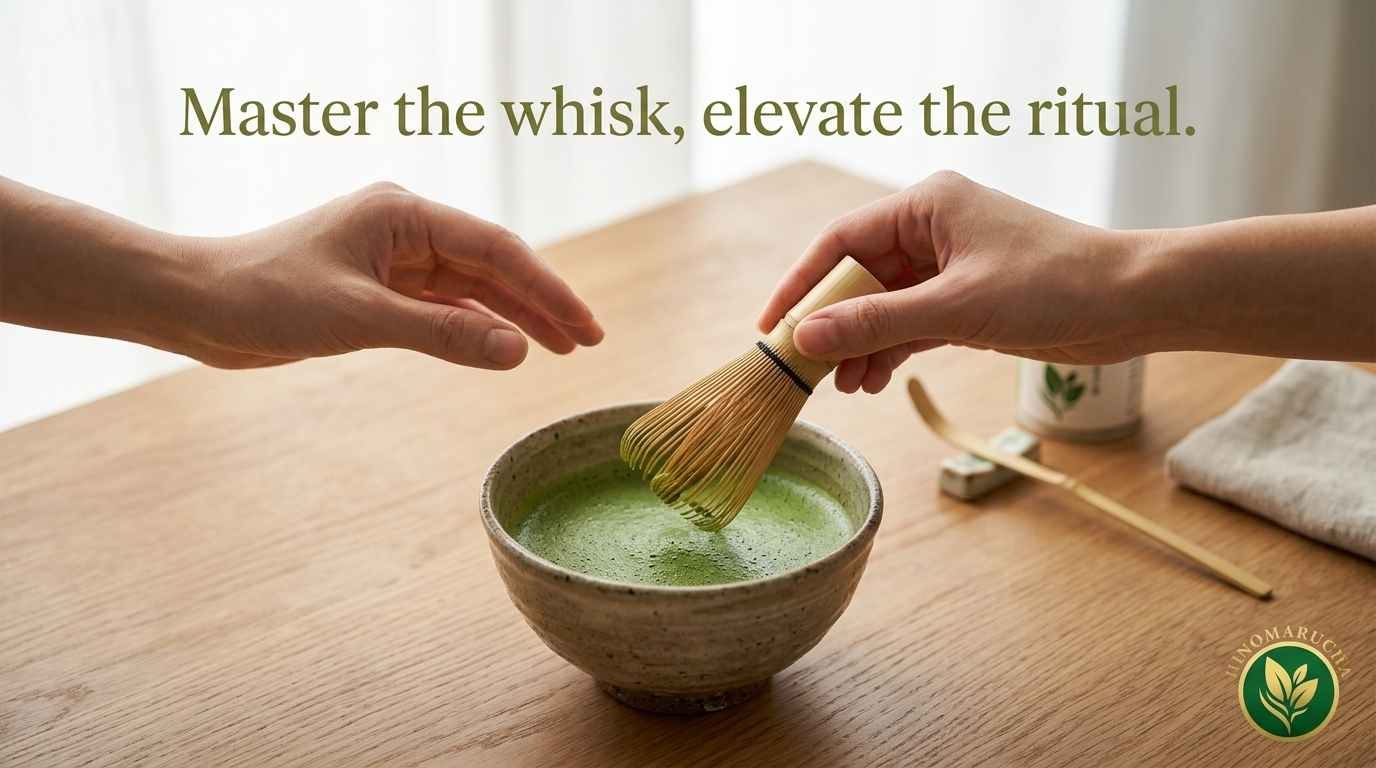
Preparation technique directly affects the nutritional value you receive from matcha.
When matcha is correctly whisked:
- L-theanine is preserved, the amino acid that produces calm focus is heat-sensitive and degrades with boiling water
- EGCG bioavailability increases, better dissolution means more antioxidants reach your bloodstream
- Chlorophyll is intact, over-agitation and hot water can degrade the chlorophyll that gives matcha its green color and detox properties
Key Health Compounds in Properly Prepared Matcha
| Compound | Benefit | Preserved By |
| L-Theanine | Calm focus, reduced anxiety | Water under 80°C |
| EGCG (catechins) | Antioxidant, anti-inflammatory | Correct water temp + full dissolution |
| Chlorophyll | Detox, anti-inflammatory | Fresh powder, correct temp |
| Caffeine | Clean energy (works synergistically with L-theanine) | Preserved regardless of temp |
Proper chasen technique ensures full powder dissolution, meaning none of the compounds you paid for end up stuck to the bowl as clumps.
For a deep dive into the science, see our guide on top 10 health benefits of Japanese green tea.
Why We Are Hinomarucha, And Why That Matters to You?
We are not a retailer that sources from whoever offers the lowest price. We are a Japan-based matcha company with direct relationships with tea farms in Aichi Prefecture, one of Japan’s most prestigious matcha-growing regions.
Here is what that means for every product we sell:
Direct sourcing. We work directly with the farmers who grow our tencha leaves. There is no middleman inflating prices or hiding production details. You know exactly where your matcha comes from. Read more about how organic matcha is grown in Japan to understand what goes into each tin.
Small-batch production. We do not make bulk runs and sit on inventory. Our matcha is ground fresh in small batches to preserve peak freshness and flavor. This matters enormously for a product this perishable. See why small batch production preserves matcha freshness better than any storage method.
Artisan tools. Every accessory we sell, including our Bamboo Chasen, is selected through hands-on testing. We use these tools ourselves. We know what makes them better.
Knowledge sharing. This article is one of dozens we have written to help you get the most from matcha. We do not hide information behind paywalls or sales pitches. Everything we know, we share.
Transparent quality standards. We explain exactly what ceremonial grade means, how freshness is evaluated, and how our matcha compares. We believe informed buyers make better choices, and they come back. Learn how freshness shapes true ceremonial matcha quality in our detailed breakdown.
Hinomarucha vs. Generic Matcha Brands
| Factor | Hinomarucha | Generic Brands |
| Origin transparency | Aichi Prefecture, named farms | “Japan” or unspecified |
| Production method | Small-batch, direct grind | Large batch, mixed origin |
| Particle size control | Under 5 microns | Variable |
| Tool quality | Artisan-crafted, tested | Mass-produced, untested |
| Knowledge resources | 20+ expert guides | Minimal or none |
| Customer support | Direct from tea experts | Generic support |
| Freshness guarantee | Batch-dated, airtight packaging | Standard packaging |
We do not just sell matcha. We teach people how to appreciate it properly. That combination, exceptional product plus genuine education, is what makes Hinomarucha different.
Bamboo Chasen Maintenance Schedule
Use this as your reference guide for keeping your chasen performing at its best.
Daily (After Every Use)
- Rinse under cool water immediately after use
- Work water gently through all tines with fingers
- Shake off excess water
- Place on kusenaoshi (chasen holder) tines-up
- Allow to air dry completely before next use
Weekly
- Inspect tines for cracks or breaks
- Check for any discoloration (white residue is matcha, normal, dark spots are mold, replace)
- Confirm tines still spring back fully after compression
- Pre-soak for slightly longer (3 to 5 minutes) if tines feel stiff
Monthly
- Assess overall tine spring and flexibility
- Compare foam output to your first week, reduced foam often signals aging tines
- Order a replacement chasen so you are never without one
The Ritual Dimension of Using a Chasen
There is something else worth saying, something beyond technique.
The Japanese tea ceremony (chado, 茶道) is one of the most studied mindfulness practices in the world. Its principles, harmony (wa), respect (kei), purity (sei), and tranquility (jaku), are expressed through every movement of preparation, including the whisking of the chasen.
Using a bamboo chasen properly is not just about making good matcha. It is about being present with what you are doing.
The pre-soak is a moment to slow down. The sifting is a moment of attention. The whisking is a moment of focused movement. The result, a perfect bowl of bright green, frothy matcha, is a reward for that attention.
This is why we take the tools so seriously. A cheap chasen breaks the ritual. A quality one supports it.
Matcha has become a global wellness phenomenon precisely because it bridges ancient practice and modern life. Explore how matcha lifestyle became a modern wellness ritual and how Japan’s culture of quality shapes everything from cultivation to cup.
Summary: The Perfect Chasen Technique in 60 Seconds
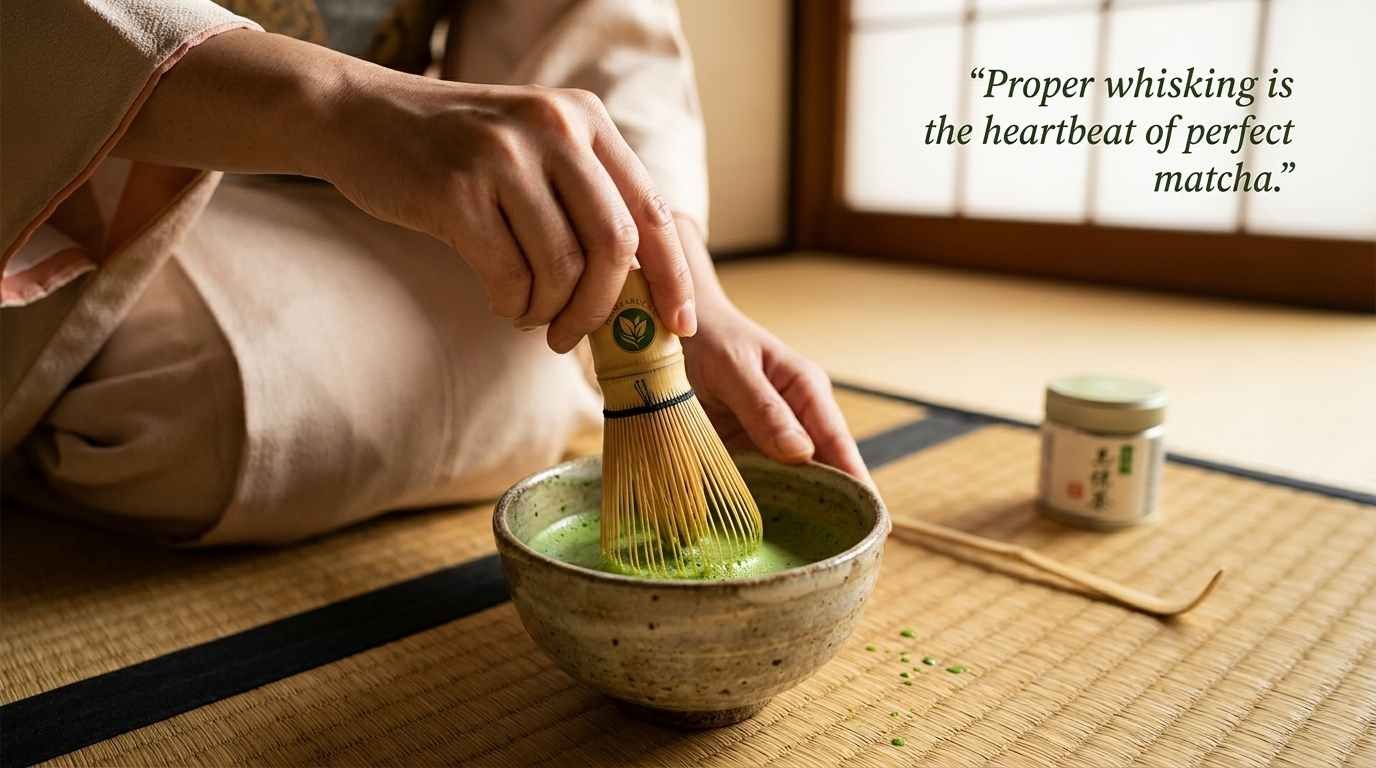
For those who want a quick reference, here is the complete process at a glance.
| Step | Action | Time |
| 1 | Pre-soak chasen in 75°C water | 2–3 minutes |
| 2 | Sift 1.5–2g matcha into warm bowl | 15 seconds |
| 3 | Add 70°C water (60–80ml for usucha) | 10 seconds |
| 4 | Whisk in rapid W-motion near surface | 20–30 seconds |
| 5 | Slow final strokes to refine foam | 5 seconds |
| 6 | Lift chasen cleanly from center | 2 seconds |
| 7 | Rinse chasen immediately after | 30 seconds |
| Total | From start to sip | ~5 minutes |
Five minutes. That is all it takes to prepare a genuinely exceptional bowl of matcha, when you have the right knowledge and the right tools.
Conclusion
Knowing how to use a bamboo chasen properly transforms your matcha experience completely. It is the difference between a drink and a ritual. Between adequate and exceptional. Between matcha that disappoints and matcha that delivers everything this remarkable ingredient promises.
At Hinomarucha, we make this easier than it has ever been. Our artisan Bamboo Chasen is designed to perform correctly from the first use. Our ceremonial grade matcha from Aichi is the ideal partner for it, finely ground, freshly produced, and sourced directly from farms we trust.
Everything we offer is built around one goal: giving you the best possible matcha experience, with the knowledge and tools to make it happen every single day.
Start with the right chasen. Use it correctly. Care for it properly. And taste the difference for yourself.
Frequently Asked Questions
- How often should I replace my bamboo chasen?
Replace your chasen every 2 to 3 months with daily use, or when tines begin to crack, break, or lose their spring-back. A worn chasen creates uneven foam and may leave bamboo fragments in your matcha. With proper care, our Hinomarucha bamboo chasen lasts significantly longer than standard models.
- Can I use a bamboo chasen for matcha lattes?
Yes. Whisk your matcha with a small amount of 75°C water first to create a concentrated paste, then add your steamed milk. The chasen creates a smoother, more fully dissolved concentrate than any spoon or frother, which directly improves the flavor and texture of your latte.
- Why is my matcha still clumpy after whisking?
Clumping after whisking usually means one of three things: the powder was not sifted before preparation, the water temperature was too low, or the chasen tines are worn and no longer creating sufficient agitation. Always sift first, use 70–80°C water, and inspect your chasen regularly for signs of aging.
- Is it okay to use soap to clean my bamboo chasen?
No. Soap strips the natural oils from bamboo, making it brittle and significantly shortening its lifespan. Rinse thoroughly with cool or lukewarm water immediately after every use. Water alone removes all matcha residue effectively. Never use a dishwasher, as heat and detergent will destroy the chasen within one cycle.
- What is the difference between 80-tine and 100-tine chasens?
An 80-tine chasen is ideal for everyday ceremonial matcha preparation, it creates excellent foam, dissolves powder fully, and is durable enough for regular use. A 100-tine chasen creates finer foam but has more delicate tines that break more easily. For most home users, 80 tines is the optimal balance of performance and durability.