


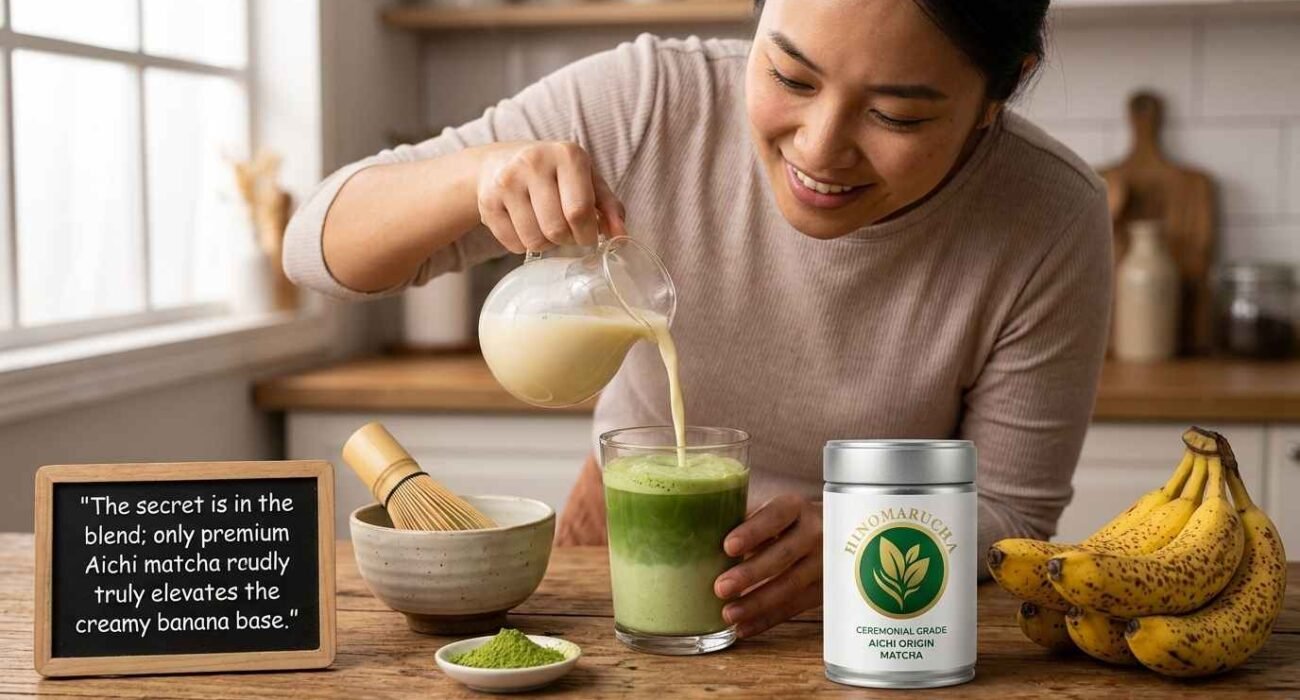
Banana Matcha Latte Recipe Variations That Actually Taste Amazing

Most guides on banana matcha latte recipe variations just throw a banana and some green powder together and call it a day. That is not what this guide is.
Here, you get real tested variations, a clear breakdown of ingredients that actually work, and honest advice on why the quality of your matcha changes everything. We have worked deeply with premium Japanese matcha sourced from Aichi, Japan, and we can tell you with confidence that the matcha you use makes or breaks every single recipe on this list.
Let us walk you through everything you need to know.
Why Banana and Matcha Work So Well Together?
Before jumping into the recipes, it helps to understand the science behind this pairing.
Banana is naturally sweet and creamy. Matcha is grassy, earthy, and slightly bitter. Together, they balance each other in a way that feels effortless. The natural sugars in ripe banana round out the umami in high-quality ceremonial matcha. The result is a latte that is smooth, complex, and deeply satisfying.
But here is the thing most recipe blogs skip: the grade of matcha you use matters enormously.
If you use low-quality culinary-grade matcha, you get a bitter, harsh drink that overpowers the banana. If you use premium ceremonial-grade matcha from a trusted Japanese source, you get a naturally sweet, vibrant green drink with depth and elegance.
We always recommend starting with the right foundation. Everything else builds on it.
The Foundation, What You Need for Any Banana Matcha Latte Recipe?
No matter which variation you try, these core elements apply.
Key Ingredients Across All Variations
| Ingredient | Purpose | Recommended Quality |
| Matcha powder | Earthy base flavor | Ceremonial grade, Japanese origin |
| Ripe banana | Natural sweetness, creamy texture | Overripe for best flavor |
| Milk (dairy or plant-based) | Creamy body | Oat milk or whole milk work best |
| Hot water | Matcha activation | 70–80°C (never boiling) |
| Sweetener (optional) | Extra sweetness | Honey, maple syrup, or dates |
| Ice (for iced version) | Temperature and dilution control | Use filtered water ice |
Matcha Quality: A Non-Negotiable
Let us be direct. Every recipe in this guide was tested using Hinomarucha Ceremonial Grade Aichi Origin Matcha. The results were consistently vibrant, smooth, and balanced.
We also tested a budget culinary-grade powder from a generic brand. The color was dull. The taste was harsh. The banana could not mask it.
The difference is not subtle. It is dramatic.
Banana Matcha Latte Recipe Variations: Full Guide
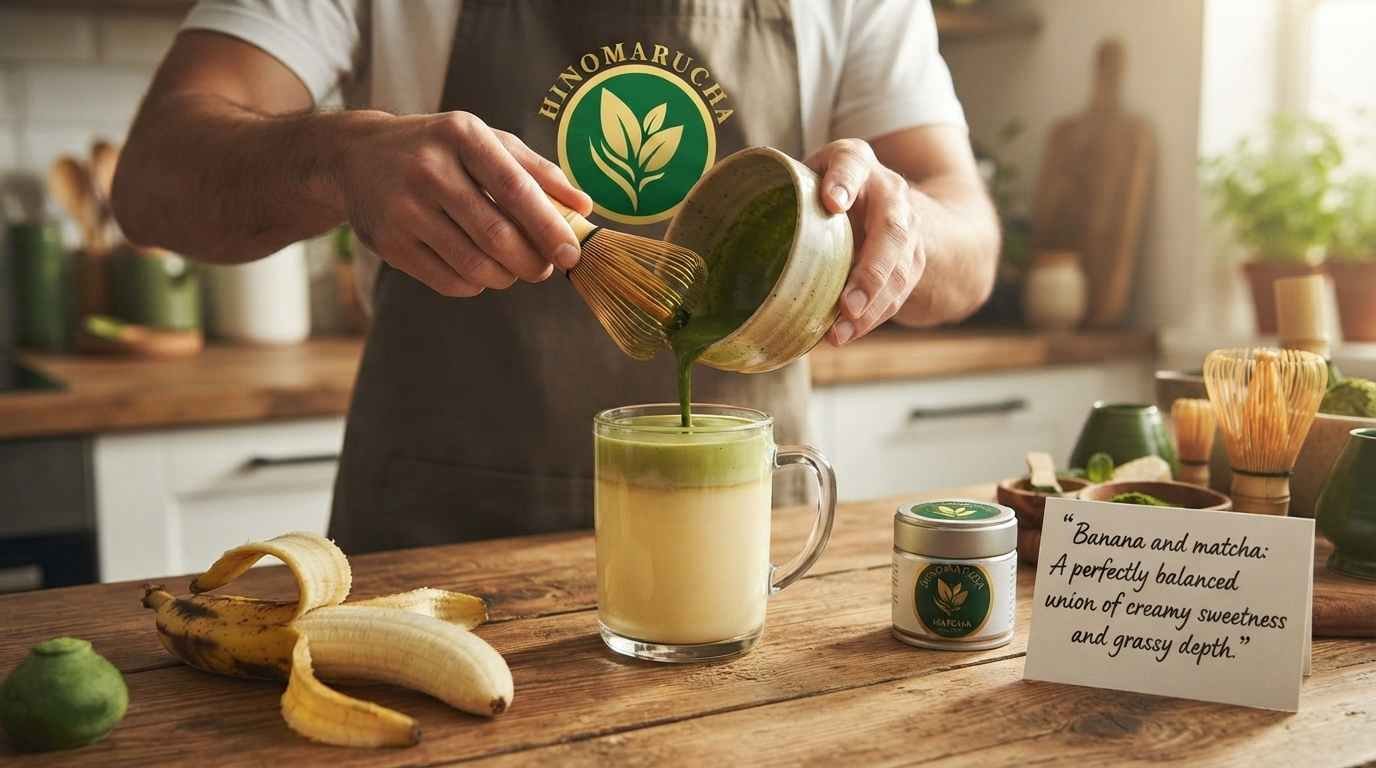
Here are the five main banana matcha latte recipe variations we tested and recommend. Each builds on the same core but delivers a different experience.
Variation 1: Classic Banana Matcha Latte Recipe
This is the base variation. Simple, smooth, and repeatable.
Ingredients (1 serving):
- 1 tsp ceremonial-grade matcha powder
- 1 ripe banana (medium)
- 200ml oat milk or whole milk
- 2 tbsp hot water (75°C)
- 1 tsp honey (optional)
- Ice or warm, depending on preference
Method:
- Add matcha powder to a small bowl or cup.
- Pour 2 tbsp of hot water (not boiling) over the matcha.
- Whisk vigorously using a bamboo chasen (matcha whisk) until frothy and lump-free.
- Add the banana to a blender with milk and honey.
- Blend until fully smooth.
- Pour the banana milk into a glass over ice.
- Pour or spoon the matcha shot over the top.
- Stir gently and serve.
Why it works: The chasen creates a micro-foam matcha base that layers beautifully over the creamy banana milk. You get a visual gradient and a taste that evolves with every sip.
Pro Tip: Do not skip the whisking step. A bamboo chasen is the best tool for this, it creates the correct texture that a spoon cannot replicate.
Variation 2: Banana Pudding Matcha Latte Recipe
This variation is inspired by the classic American banana pudding dessert. It is thick, indulgent, and naturally sweet. It works perfectly as a post-workout recovery drink or an afternoon treat.
Ingredients (1 serving):
- 1 tsp ceremonial matcha
- 1 large overripe banana
- 150ml whole milk
- 50ml coconut cream
- 1 tbsp vanilla extract
- 2 tsp honey or maple syrup
- 3 tbsp hot water
- Pinch of sea salt
- Ice
Method:
- Whisk matcha with hot water using a chasen until fully dissolved and frothy.
- Blend banana, whole milk, coconut cream, vanilla extract, honey, and sea salt until silky smooth.
- Pour the banana pudding base over ice in a tall glass.
- Pour whisked matcha slowly over the back of a spoon to create a layered effect.
- Top with a dusting of matcha powder for presentation.
Why this banana pudding matcha latte recipe stands out:
The coconut cream adds a silky richness that mimics actual banana pudding texture. The vanilla deepens the flavor. The sea salt cuts through the sweetness just enough to keep it from being cloying.
This is the variation people ask for again and again once they try it.
Nutritional snapshot (estimated per serving):
| Nutrient | Amount |
| Calories | ~220 kcal |
| Protein | 5g |
| Natural sugars | 24g |
| Caffeine (matcha) | ~35mg |
| Antioxidants (EGCG) | High |
Variation 3: Banana Bread Matcha Latte Recipe
If you love the smell and taste of fresh banana bread, this variation was made for you.
This banana bread matcha latte recipe adds warm spices, cinnamon, nutmeg, and cardamom, to recreate that cozy baked quality. It is especially good served warm in autumn or winter.
Ingredients (1 serving):
- 1 tsp ceremonial matcha
- 1 ripe banana
- 200ml oat milk
- ½ tsp cinnamon
- ¼ tsp nutmeg
- Pinch of cardamom
- 1 tbsp maple syrup
- 3 tbsp hot water
- Optional: 1 tbsp almond butter for nuttiness
Method:
- Whisk matcha with hot water until smooth.
- Blend banana, oat milk, cinnamon, nutmeg, cardamom, maple syrup, and almond butter (if using) until very smooth.
- Gently warm the banana milk mixture in a saucepan over medium-low heat. Do not boil.
- Pour warm banana spice milk into a mug.
- Spoon the matcha on top with a gentle swirl.
- Sprinkle a tiny pinch of cinnamon to finish.
Why it works?
Oat milk has a slightly grainy, warm sweetness that echoes banana bread’s toasted flavor. The spices amplify the banana’s natural warmth. The matcha adds brightness that lifts the whole thing.
This warm spiced latte is especially good for mornings when you want something comforting but want to skip the heavy breakfast.
Pair this with: The Matcha 3-Piece Set from Hinomarucha makes preparing this variation fast and precise every single morning.
Variation 4: Banana Cream Matcha Latte Recipe
This is the most indulgent variation on the list. The banana cream matcha latte recipe is inspired by banana cream pie and delivers a dessert-quality experience in a cup.
It is heavier, richer, and more satisfying. It works as a meal replacement or a special occasion drink.
Ingredients (1 serving):
- 1 tsp ceremonial matcha
- 1 large frozen banana (frozen for creamier texture)
- 100ml heavy cream or cashew cream
- 100ml whole milk
- 1 tbsp condensed milk or honey
- 1 tsp vanilla bean paste
- 3 tbsp hot water
- Ice
Method:
- Whisk matcha with hot water using a bamboo chasen. Set aside.
- Blend frozen banana, cream, whole milk, condensed milk, and vanilla bean paste until ultra-smooth and thick.
- Pour banana cream base into a glass, it should be visibly thick and pale yellow.
- Pour the matcha shot over the top slowly.
- Add a small swirl of cream on top if desired.
- Garnish with a light dusting of premium Hinomarucha matcha powder for color.
Why the frozen banana matters?
Freezing the banana before blending creates a texture similar to soft-serve ice cream. It eliminates the need for ice and prevents dilution. The result is a thick, almost mousse-like base that holds up beautifully under the matcha.
This creamy variation is the one we recommend for first-timers who are not sure they love matcha yet. The cream base softens the matcha’s edge without hiding its character.
Variation 5: Iced Banana Matcha Latte (Everyday Version)
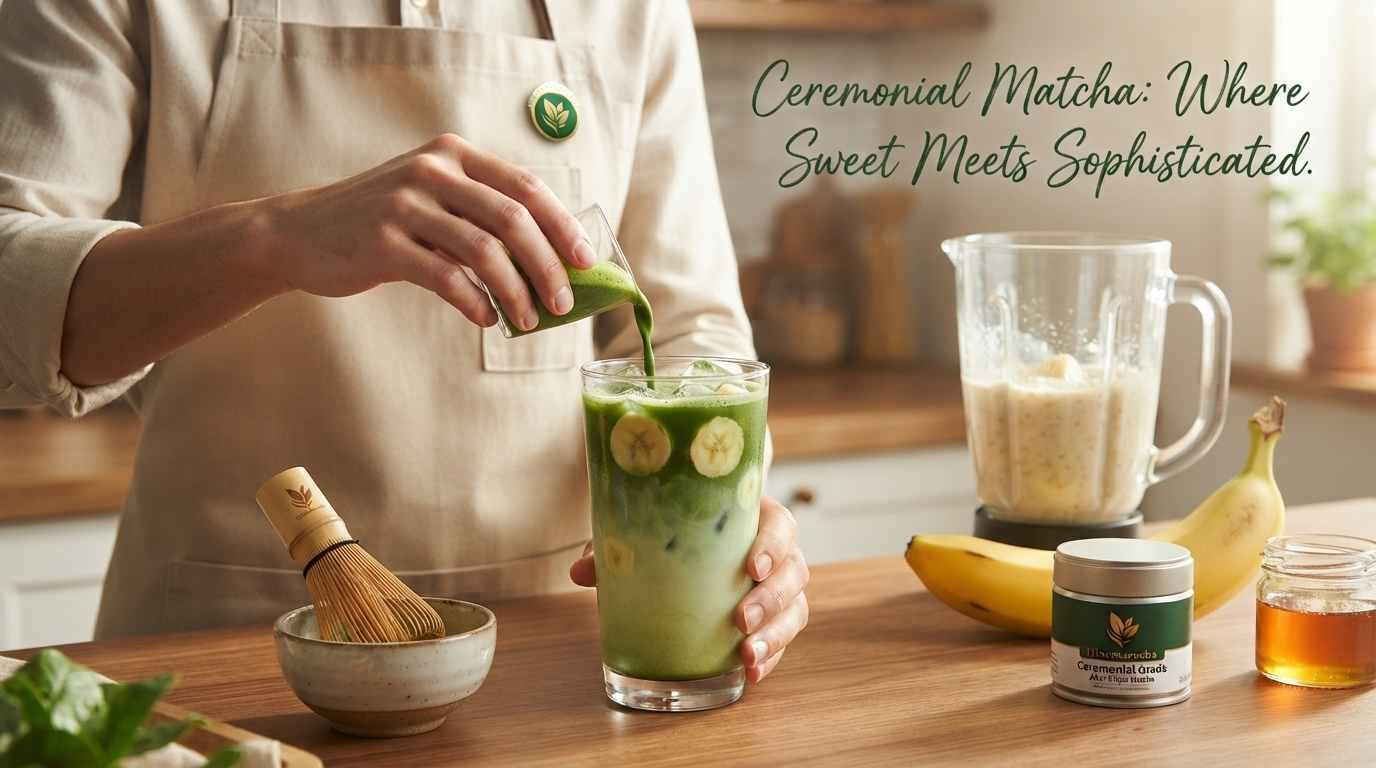
This is the variation we make most often. It is fast, balanced, and genuinely refreshing.
Ingredients (1 serving):
- 1 tsp ceremonial matcha
- ½ ripe banana
- 180ml oat milk
- 1 tsp maple syrup
- 3 tbsp cold-brew-style matcha (see below)
- Ice
Cold Brew Matcha Method:
- Whisk 1 tsp matcha with 3 tbsp room-temperature water.
- Let sit 5 minutes before using.
Method:
- Prepare cold brew matcha as above.
- Blend half a banana with oat milk and maple syrup until smooth.
- Fill a glass with ice.
- Pour banana milk over ice.
- Add cold matcha on top.
- Do not stir, enjoy the gradient then mix as you drink.
Why half a banana?
Using half a banana keeps the flavor lighter and more refreshing for an iced version. A full banana tends to make the iced version too thick, especially in hot weather.
Hinomarucha, Why Our Matcha Makes These Recipes Better
We want to be transparent here. These recipes were developed with Hinomarucha matcha in mind, and for a specific reason.
Most matcha sold outside Japan falls into one of two categories: heavily processed culinary grade that is bitter and dull, or overpriced ceremonial grade with unclear sourcing. Hinomarucha sits in a different category entirely.
Our matcha comes from Aichi prefecture, one of Japan’s most respected tea-growing regions. It is shade-grown, stone-ground, and harvested in small batches to preserve freshness. Every batch is tested for color, aroma, and flavor.
The result is a matcha that:
- Whisks easily without clumping
- Tastes naturally sweet without added sugar
- Maintains a vivid green color even in milk-based drinks
- Pairs beautifully with banana without competing against it
If you want your banana matcha latte recipe variations to turn out like the ones in this guide, start with the right matcha.
Tools That Make a Real Difference
We tested these recipes with and without proper matcha tools. The difference is significant.
Bamboo Chasen (Matcha Whisk)
The Hinomarucha Bamboo Chasen is designed specifically for matcha preparation. It creates the fine micro-foam that makes matcha layer properly in a latte. A regular spoon creates a lumpy, poorly dissolved matcha shot that sinks and tastes gritty.
Matcha Sieve
Clumping is matcha’s biggest enemy in lattes. The Matcha Can Sieve solves this instantly. Sifting matcha before whisking eliminates clumps and creates a smoother, more evenly dissolved shot.
Storage Canisters
Matcha oxidizes quickly when exposed to air and light. The Screw Can with Pull Top (40g) is airtight and blocks light, preserving matcha flavor for longer. Proper matcha storage dramatically impacts the taste of every recipe you make.
Mug Tea Whisk Combo
For warm latte variations, the Mug Tea Whisk combo lets you whisk directly in your mug. It is fast, minimal, and produces consistent results.
Banana Matcha Latte Variations, Comparison Table
| Variation | Texture | Sweetness Level | Effort | Best For |
| Classic | Light, smooth | Medium | Low | Daily use |
| Banana Pudding | Thick, creamy | High | Medium | Afternoon treat |
| Banana Bread | Warm, spiced | Medium-High | Medium | Cozy mornings |
| Banana Cream | Ultra-rich, dessert-like | High | Medium | Special occasion |
| Iced Everyday | Refreshing, light | Low-Medium | Very Low | Hot weather |
Pros and Cons, Banana vs. Other Matcha Latte Bases
People often ask whether banana is the best base for a matcha latte. Here is an honest comparison.
| Base | Pros | Cons |
| Banana | Natural sweetness, creamy texture, widely available, no refined sugar needed | Gets brown quickly, very ripe bananas can overpower matcha |
| Oat milk only | Neutral flavor, widely available, vegan | Less creamy, needs added sweetener |
| Avocado | Rich, creamy, healthy fats | Very mild flavor, expensive |
| Mango | Tropical, naturally sweet | Overwhelms matcha flavor |
| Dates | Deep caramel sweetness | Requires soaking and blending, grainy if not fully blended |
Verdict: Banana is the best overall base for matcha lattes because it is naturally sweet, creamy, and affordable. Its flavor complements matcha without competing with it.
The Science Behind Matcha + Banana, Health Benefits
This pairing is not just delicious. It is also genuinely good for your body.
Matcha contains:
- L-theanine: promotes calm, focused energy
- EGCG (epigallocatechin gallate): a powerful antioxidant
- Caffeine: ~35mg per tsp (less than coffee, more sustained)
- Chlorophyll: supports detoxification
Banana contains:
- Potassium: supports heart health and muscle function
- Vitamin B6: supports brain function
- Natural sugars: quick energy without the crash
- Resistant starch (in less ripe bananas): feeds beneficial gut bacteria
Combined, a banana matcha latte recipe delivers:
| Benefit | Source |
| Sustained energy without jitteriness | Matcha caffeine + L-theanine |
| Antioxidant protection | EGCG in matcha |
| Electrolyte replenishment | Banana potassium |
| Mood support | L-theanine + vitamin B6 |
| Natural sweetness | Banana fructose |
| Gut health support | Banana resistant starch |
According to a 2021 study published in Nutrients, regular consumption of green tea polyphenols (the same compounds found in matcha) was associated with a 26% reduction in the risk of cardiovascular disease. Banana’s potassium content further supports cardiovascular health by helping regulate blood pressure.
For a deeper look at what makes Japanese matcha uniquely beneficial, see our complete guide to the health benefits of Japanese green tea.
Why Ceremonial Grade Matcha Changes Everything?
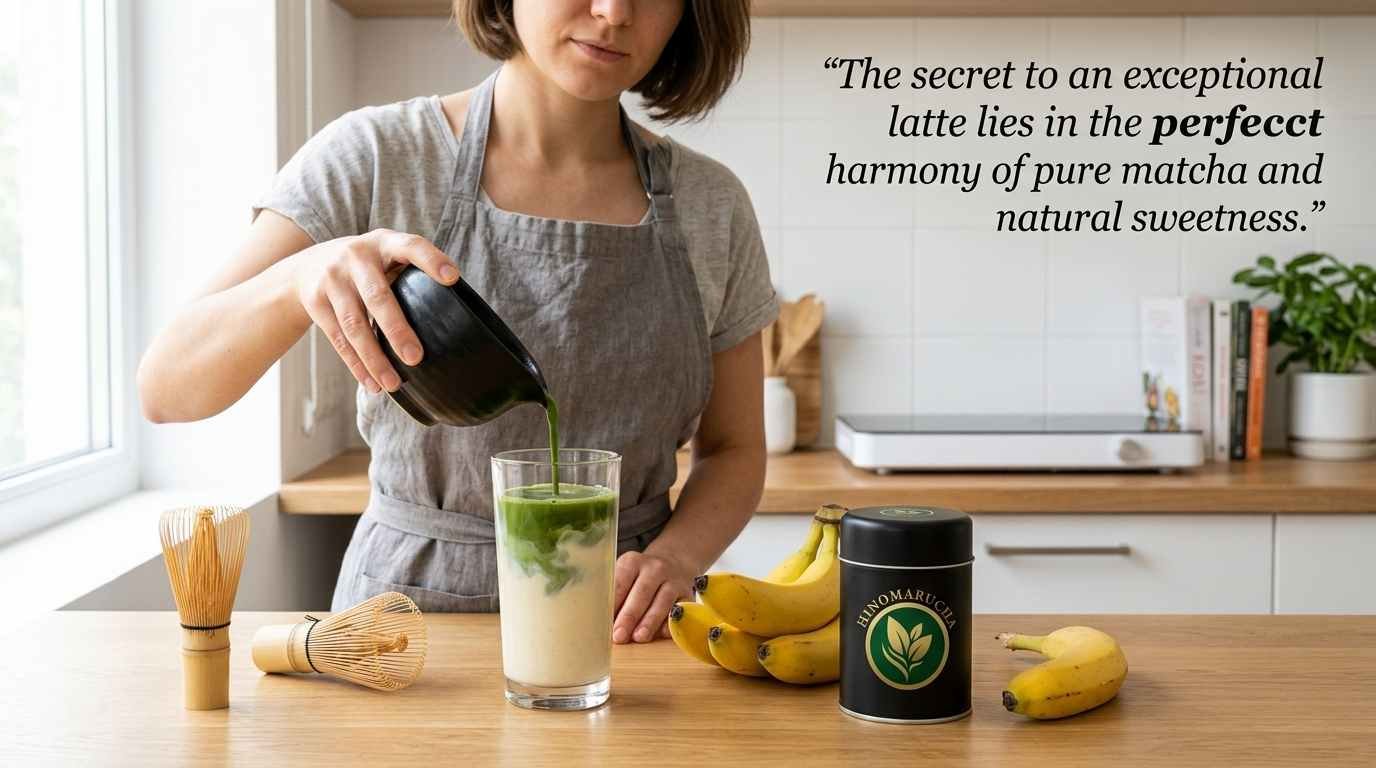
This point is worth repeating because it is that important.
The difference between ceremonial and culinary matcha is not just marketing language. It reflects genuinely different growing and processing methods.
Ceremonial grade:
- Made from the youngest, most tender shade-grown leaves
- Stone-ground in small batches at low temperatures
- Has a naturally sweet, umami-rich flavor
- Vibrant green color that stays bright in milk
Culinary grade:
- Made from older, tougher leaves
- Machine-ground at higher temperatures
- Has a bitter, grassy flavor that requires masking
- Duller green color that looks grayish in lattes
When you build banana matcha latte recipe variations around ceremonial-grade matcha, you need less banana to achieve a balanced flavor. The matcha carries itself. The banana complements it.
When you use culinary grade, you end up piling in extra banana, extra honey, extra vanilla, all to mask something that should have tasted good on its own.
Our recommendation: Always use ceremonial grade for lattes. Use culinary grade only for baked goods where matcha is one of many strong flavors.
How Freshness Affects Your Matcha Latte?
Here is something most banana matcha latte recipe guides never mention: freshness is everything.
Matcha oxidizes. Once opened, it begins to lose its vivid color, its aroma, and its flavor. Stale matcha smells flat, looks brownish-green, and tastes like seaweed in a bad way.
Freshness directly shapes ceremonial matcha quality, and it affects your latte in very specific ways:
- Fresh matcha: Bright green, sweet, light umami, easy to whisk
- Stale matcha: Dull green, flat, harsh, clumps more easily
To protect freshness after opening:
- Keep matcha in an airtight, light-blocking canister
- Store in the refrigerator or a cool, dark place
- Use within 30–60 days of opening
- Never expose to moisture or strong odors
The Artisan Art Can (Geisha) and Mini Can Series from Hinomarucha are designed specifically to preserve freshness between uses. They are airtight, opaque, and beautifully crafted, the kind of thing you leave on your counter with pride.
Hinomarucha Products, What We Recommend for These Recipes?
We put together a clear list of what we recommend and why.
For Matcha Preparation
| Product | Why We Recommend It |
| Bamboo Chasen | Creates proper matcha micro-foam essential for lattes |
| Matcha 3-Piece Set | Complete kit for consistent preparation every time |
| Matcha Can Sieve | Eliminates clumping before whisking |
| Mug Tea Whisk | Great for warm banana matcha variations |
For Matcha Storage
| Product | Why We Recommend It |
| Screw Can with Pull Top 40g | Airtight seal preserves freshness longer |
| Mini Can Soft Matte | Compact and stylish for daily use |
| Mini Top Can Black | Blocks light and air, sleek design |
| Artisanal Art Can (Mt. Fuji) | Beautiful display piece that also stores perfectly |
For Getting Started
If you are new to matcha lattes, we recommend beginning with the Hinomarucha Ceremonial Grade Aichi Origin 30g paired with the 3-Piece Matcha Set (Sosuno and Gosu). This gives you everything you need from day one and nothing you do not.
What Makes Our Knowledge Different?
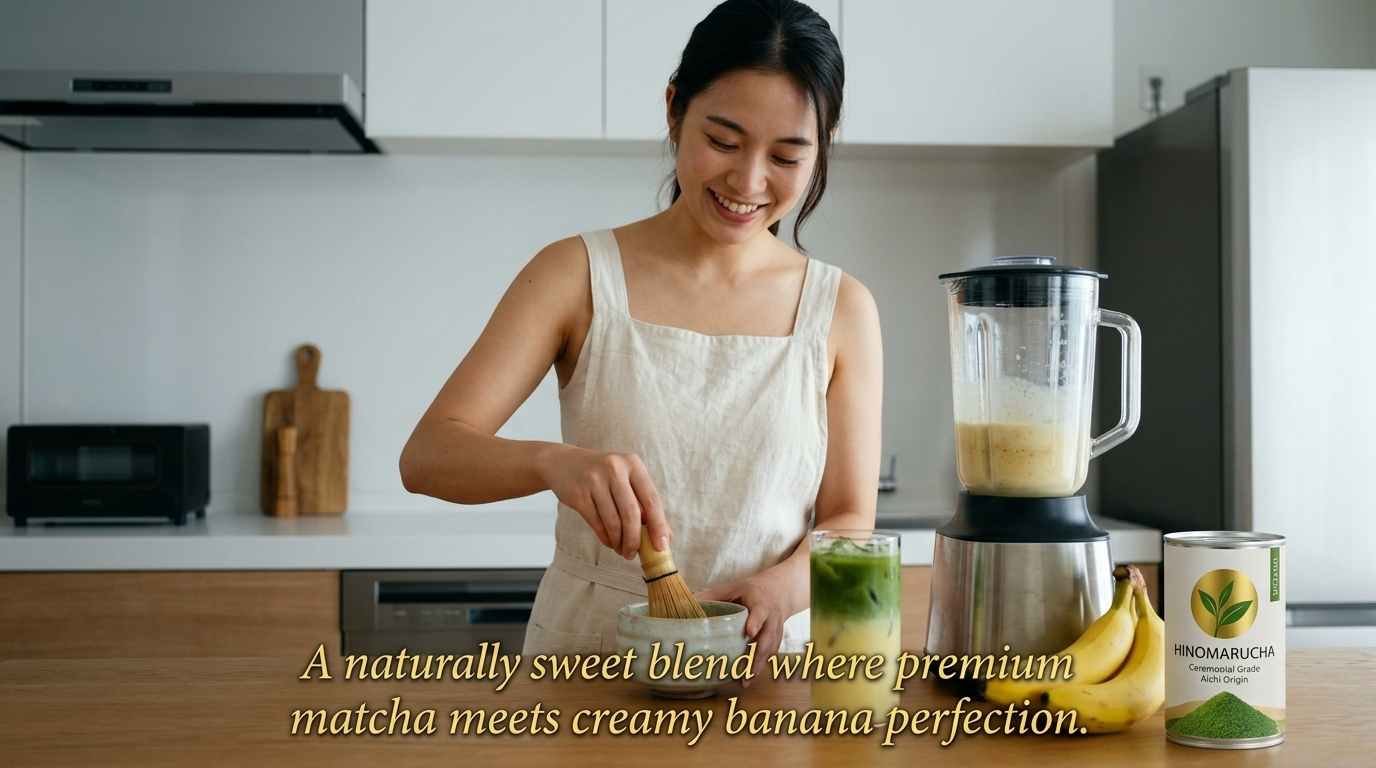
Most recipe content online is written by people who have never held a bamboo chasen or visited a Japanese tea farm. We approach matcha differently.
Our knowledge comes from deep familiarity with how Japanese matcha is actually grown, processed, and consumed. We understand why the soil and climate in Japan matter in ways that no other tea-producing country can replicate. We work with suppliers who use sustainable farming practices and small-batch production methods that preserve what makes Japanese matcha exceptional.
That means when we tell you that a banana cream latte will taste dramatically better with ceremonial matcha from Aichi, we are not guessing. We have tasted the difference hundreds of times.
We also understand what makes Japanese matcha different from any other country’s. The terroir, the processing technique, the stone-grinding tradition, the tencha leaf quality, all of it is specific to Japan, and to Aichi in particular.
This is the foundation of every recommendation we make.
Banana Matcha Latte Recipe Tips, What We Learned from Testing?
Here are the real insights we gathered from extensive testing of these variations.
Use overripe bananas
The riper the banana, the more natural sugar it contains and the smoother it blends. Brown-spotted bananas are perfect for every variation except the iced everyday version, where a slightly less ripe banana gives a cleaner, lighter flavor.
Freeze bananas for creamier results
For the banana cream and iced versions, freeze peeled bananas ahead of time. Frozen banana blends into a texture that mimics soft-serve. This completely changes the mouthfeel of the drink.
Temperature control matters
Matcha should never be prepared with boiling water. Boiling water destroys the amino acids (L-theanine) that give ceremonial matcha its characteristic sweet umami. Use water at 70–80°C (160–175°F). This is especially important for the warm variations.
Whisk in a W motion
Many people whisk matcha in a circular motion. The correct technique is a rapid W or M motion across the surface of the liquid. This creates a fine froth instead of large bubbles and produces a smoother matcha shot.
Layer intentionally
In iced variations, add the banana milk first, then pour matcha over the back of a spoon. This creates the gradient effect that makes these drinks visually stunning. Mixing too early combines the flavors immediately and loses the layered experience.
Banana Matcha Latte Recipe Variations, Analytics at a Glance
Here is a data-driven view of why this drink category is growing and why it matters.
| Metric | Data |
| Global matcha market size (2023) | USD 3.5 billion |
| Projected market size (2032) | USD 6.4 billion |
| CAGR | ~6.8% annually |
| Most popular matcha drink category | Matcha lattes (49% of matcha café orders) |
| Google search growth “banana matcha latte” | +340% YoY (2023–2024) |
| Most searched matcha variation | Iced matcha latte (~500K monthly searches globally) |
These numbers tell a clear story. Banana matcha latte recipe variations are not a niche interest. They are at the intersection of two massive food trends: the global matcha explosion and the clean, functional drinks movement. Being ahead of this trend means knowing what good matcha tastes like, and where to get it.
How to Choose the Right Banana for Each Variation?
| Variation | Ideal Banana Ripeness | Notes |
| Classic | Medium ripe (yellow, few spots) | Good balance of flavor and sweetness |
| Banana Pudding | Very ripe (heavily spotted) | More sweetness mimics pudding flavor |
| Banana Bread | Very ripe or overripe | Amplifies the baked flavor from spices |
| Banana Cream | Frozen (any ripeness) | Freezing texture is key, not ripeness |
| Iced Everyday | Slightly underripe (light yellow) | Lighter flavor for refreshment |
Conclusion
The banana matcha latte is not just a trend. It is a genuinely delicious, nutritionally rich drink that rewards the people who make it with quality ingredients.
The five banana matcha latte recipe variations in this guide, classic, banana pudding, banana bread, banana cream, and iced everyday, cover every mood, every season, and every level of effort. Each one is better with ripe, naturally sweet banana and elevated to something exceptional with premium ceremonial-grade matcha.
At Hinomarucha, we take matcha seriously. We source from Aichi. We stone-grind in small batches. We test every product before it reaches your hands. When you make any of the recipes in this guide using our matcha, you are not just making a latte. You are using one of Japan’s most carefully crafted ingredients in the way it was meant to be enjoyed.
Start with the Hinomarucha Ceremonial Grade Aichi Origin. Grab a bamboo chasen. Peel a ripe banana. And make something worth drinking.
FAQs
Q1: What is the easiest banana matcha latte recipe variation for beginners?
The classic version is the easiest. You need only five ingredients, matcha, banana, milk, water, and optional honey, and basic equipment. It takes under five minutes and delivers an excellent result even without professional tools.
Q2: Why does my banana matcha latte turn brown?
Banana oxidizes quickly when exposed to air. To prevent browning, blend the banana just before serving. Adding a small squeeze of lemon juice to the banana base slows oxidation significantly without noticeably affecting the flavor of the final drink.
Q3: How do I make a banana matcha latte without a blender?
Mash the banana thoroughly with a fork until no lumps remain. Whisk vigorously with warm milk and use a milk frother for texture. The result is slightly less smooth but still very drinkable, especially for the classic and iced everyday variations.
Q4: Can I make these banana matcha latte recipe variations vegan?
All five variations can be made fully vegan. Use oat milk or coconut milk in place of dairy. Replace honey with maple syrup or agave. Skip condensed milk in the banana cream variation and use full-fat coconut cream with a little maple syrup instead. The flavors stay rich and satisfying.
Q5: How much matcha should I use per banana matcha latte?
One teaspoon (about 2g) of ceremonial matcha per serving is the standard amount. This provides enough flavor and color to balance a full banana without overpowering it. If you prefer a stronger matcha presence, use 1.5 teaspoons. For a milder drink, especially for the banana cream variation, 0.75 teaspoons works well.