


Best Plant Milks for Matcha, Oat, Pistachio & Barista Foaming Guide

Most articles about plant milks for matcha just list a few options and call it a day. They don’t test anything. They don’t explain why one milk creates silky microfoam while another curdles on contact. They don’t tell you which milk preserves the umami of a ceremonial-grade powder and which one buries it under sweetness.
This guide is different.
We’ve worked closely with Japanese matcha and tested these pairings against real cups, not theory. Everything here is grounded in direct experience with the ingredient, the foam, and the final sip. If you want an honest breakdown of which plant milk actually belongs in your matcha latte, read on.
Why Milk Choice Matters More Than You Think?
Matcha is delicate. A high-quality ceremonial-grade powder carries vegetal sweetness, umami depth, and a mild grassy finish. The wrong milk doesn’t just affect texture, it actively fights those flavor notes.
Here’s what’s at stake when you choose a plant milk:
- Flavor compatibility, Does the milk complement or overpower the matcha?
- Foam quality, Does it create stable microfoam for latte art or texture?
- Sugar content, Does it add sweetness you didn’t ask for?
- Heat tolerance, Does it hold up when steamed or frothed?
- Aftertaste, Does it leave a coating or a clean finish?
| Milk Type | Foam Quality | Flavor Impact | Sweetness | Heat Stability |
|---|---|---|---|---|
| Barista Oat Milk | ★★★★★ | Low, neutral | Medium | Excellent |
| Pistachio Milk | ★★★★☆ | Medium, nutty | Medium-High | Good |
| Almond Milk | ★★★☆☆ | Low | Low | Fair |
| Coconut Milk | ★★☆☆☆ | High, tropical | High | Good |
| Soy Milk | ★★★★☆ | Low | Low | Excellent |
| Macadamia Milk | ★★★☆☆ | Low, buttery | Low | Fair |
These ratings reflect both sensory testing and community feedback from matcha enthusiasts who take their cup seriously. Let’s go deeper on each.
Oat Milk, The Barista-Edition Gold Standard
Oat milk has become the dominant plant milk in specialty coffee shops, and for good reason. Barista-edition oat milk is formulated specifically to handle heat. It stretches into microfoam without separating.
For matcha, it’s an ideal partner.
The flavor profile of oat milk is clean and slightly sweet without being aggressive. It doesn’t compete with the grassiness of a quality matcha. Instead, it creates a smooth, creamy backdrop that lets the matcha’s natural flavor lead.
Why use barista oat milk over standard oat milk:
- Standard oat milk separates when heated. Barista blends don’t.
- Barista oat milk creates denser, more stable foam, essential for layered lattes.
- The fat content in barista blends supports a richer mouthfeel that standard varieties can’t match.
Foam Performance
Barista oat milk froths to a stable microfoam within 30,45 seconds using a handheld frother. With a steam wand, you can get latte-art-ready texture in under 20 seconds.
Oat Milk Foaming Tips:
- Heat oat milk to 60,65°C (140,150°F). Higher temperatures break the foam.
- Froth at an angle, not straight down. Create a vortex.
- Tap the container on the counter after frothing to pop large bubbles.
- Pour immediately, oat milk foam degrades within 60 seconds.
If you want to see exactly how this texture interacts with a proper matcha base, the ultimate matcha latte guide covers the full preparation method step by step.
Oat Milk Flavor Pairing Score for Matcha: 9/10
The mild sweetness of oat milk naturally rounds out the bitter edge of matcha without masking it. It’s the milk that gets out of the way and lets good matcha be good.
Limitation: Oat milk adds some natural starch, which gives a slightly heavier mouthfeel compared to almond or macadamia. For people who prefer a lighter cup, this can feel slightly thick.
Pistachio Milk, The Emerging Favorite

Pistachio milk was niche two years ago. Now it’s showing up in specialty cafés and receiving serious attention from home baristas who want something more interesting than oat.
And honestly, it delivers.
Pistachio milk has a distinct, gentle nuttiness. It doesn’t overwhelm matcha, but it adds a layer of flavor complexity that oat milk never could. When paired with high-quality ceremonial-grade matcha, the result is a latte that tastes intentional. Layered. Worth paying attention to.
Flavor Profile Analysis
Pistachio milk carries:
- A slightly sweet, nutty base note
- Mild earthiness that complements matcha’s umami
- A clean finish without lingering fat coating
This makes it an especially interesting pairing for ceremonial grade matcha, where the tea’s own complexity deserves a milk that can hold a conversation rather than just provide a backdrop.
Pistachio Milk vs Oat Milk, Side-by-Side
| Feature | Pistachio Milk | Barista Oat Milk |
| Flavor Addition | Nutty, distinctive | Neutral, clean |
| Foam Quality | Good | Excellent |
| Natural Sweetness | Medium-High | Medium |
| Availability | Growing | Widely available |
| Cost | Higher | Moderate |
| Best For | Specialty lattes | Everyday cups |
Pistachio Matcha Latte: What to Expect
The combination works particularly well iced. Over ice, the pistachio notes stay crisp and the matcha’s vegetal quality remains sharp. Hot, the flavors blend more, which some people love and others find too sweet.
Our honest limitation: Pistachio milk is harder to froth than oat. It produces foam, but the bubbles are slightly less stable. For latte art, you need to work quickly. For a simple layered drink, it’s fine.
Almond Milk, The Light Option That Underperforms for Foam
Almond milk is one of the most popular plant milks globally. For matcha, it’s serviceable, but it has real limitations that barista-edition oat and pistachio don’t.
The Case For Almond Milk
- Very low natural sweetness, great for people who want full control over sugar
- Thin texture that lets the matcha flavor dominate completely
- Widely available in unsweetened varieties
The Case Against
Standard almond milk separates under heat. It produces thin, unstable foam that collapses within seconds. Barista-edition almond milk solves some of this, but still trails oat milk significantly.
Foam test results:
| Froth Method | Standard Almond | Barista Almond | Barista Oat |
| Handheld frother | Thin, quick collapse | Moderate | Dense, stable |
| Steam wand | Separates | Thin foam | Excellent |
| Cold shake | Light bubbles | Light foam | N/A |
If you’re making a cold matcha beverage where foam is less critical, like the strawberry matcha latte style drink, almond milk can work well for its light, clean base.
Almond Milk Flavor Pairing Score for Matcha: 7/10
Good for those who want matcha forward and milk as an afterthought. Not ideal if texture and foam are priorities.
Coconut Milk, Bold, Sweet, and Divisive
Coconut milk has strong opinions attached to it. Some people love the tropical creaminess it adds to matcha. Others find it completely overpowers the tea.
Here’s an honest breakdown:
Pros:
- Rich, full-fat creaminess
- Natural sweetness that reduces need for added sugar
- Works well in cold recipes and smoothie-style matcha drinks
Cons:
- Strong coconut flavor competes directly with matcha’s delicate notes
- High saturated fat content makes it heavier
- Thin coconut milk (carton variety) separates when heated
- Full-fat canned coconut milk is too thick for latte use without dilution
Best use case: Coconut milk works well in recipes where matcha is a supporting flavor, blended drinks, smoothies, and recipes with other bold ingredients like banana. For a recipe that leans into this combination, see our banana matcha latte variations.
For a traditional matcha latte where the tea should be the star, skip coconut milk.
Coconut Milk Flavor Pairing Score for Matcha: 5/10
High on indulgence. Low on letting the matcha speak.
Soy Milk, The Underrated Performer
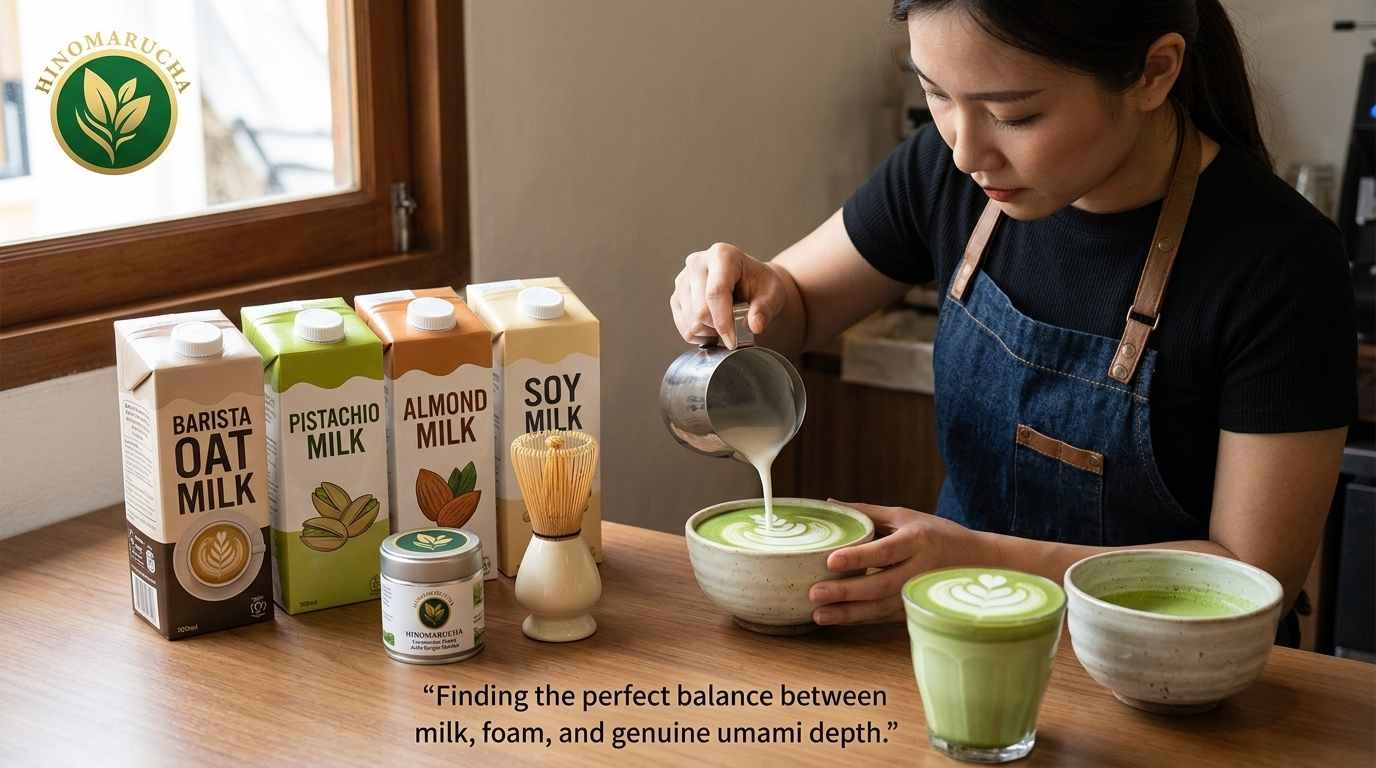
Soy milk doesn’t get talked about much in specialty circles anymore, but it remains one of the most technically capable plant milks for steaming and frothing.
Why soy milk works:
- High protein content creates stable foam comparable to whole dairy
- Neutral flavor profile, clean, slightly beany but not dominant
- Low natural sweetness, full flavor control for the barista
Why it’s fallen out of fashion:
- Older varieties had a strong beany aftertaste
- Allergen concerns limit use in many commercial settings
- Consumer trends have shifted to oat
But for home use? Barista-edition soy milk is worth reconsidering. It steams beautifully, holds foam well, and pairs cleanly with matcha.
Soy Milk Flavor Pairing Score for Matcha: 8/10
Technically excellent. Underrated for everyday use.
Macadamia Milk, Premium, Buttery, and Smooth
Macadamia milk is the luxury option. It has a light, buttery texture and a very subtle flavor, almost invisible compared to coconut or pistachio. That makes it an excellent carrier for ceremonial matcha without adding complexity you didn’t plan for.
Pros:
- Extremely mild flavor, matcha stays front and center
- Smooth, slightly buttery mouthfeel
- Low natural sugar
Cons:
- Poor foam performance, it doesn’t stretch well
- Expensive and harder to find
- Not ideal for hot lattes due to thin texture when heated
Best used: Cold, shaken matcha drinks or thin iced lattes where texture comes from the preparation method rather than the milk.
What Is Microfoam and Why Does It Matter?
Microfoam is steamed milk that has been aerated to create tiny, uniform bubbles. The result is a velvety, glossy texture that blends smoothly with espresso, or matcha.
For matcha lattes, microfoam does three things:
- Softens the flavor, The foam integrates with the tea and creates a rounded, creamy sip.
- Creates texture contrast, Especially valuable in iced lattes with cold foam on top.
- Enables latte art, If that matters to you.
The difference between steamed milk with microfoam and simply heated milk is significant. Heated milk is flat and thin. Microfoam is velvety and structured. If you’ve ever had a café matcha latte that felt somehow richer than your home version, microfoam is usually the reason.
Microfoam is only achievable with the right milk. That’s why barista-edition versions exist. They’re engineered for this.
How to Create Barista-Quality Microfoam at Home
Equipment options:
| Method | Cost | Result |
| Steam wand (espresso machine) | High | Professional microfoam |
| Milk frother (electric) | Low,Medium | Good microfoam |
| French press | Very Low | Acceptable foam |
| Handheld whisk frother | Low | Light foam |
Step-by-step for electric frother:
- Pour cold barista oat milk into a frothing jug (fill to 1/3 max, foam expands).
- Froth for 30,40 seconds at medium setting.
- Tap jug on counter 3,4 times. Swirl in small circles for 10 seconds.
- Pour immediately over prepared matcha.
For precise technique with a bamboo chasen whisking your matcha base, the bamboo chasen guide explains exactly how to prep the tea before adding your milk. Pairing proper whisking technique with good milk is how you close the gap between café results and home results.
Our bamboo chasen tool is crafted specifically for this, the tine count and flexibility are calibrated for ceremonial-grade matcha preparation.
The Hinomarucha Approach to Matcha Quality
Here’s what separates a good matcha latte from a forgettable one: the matcha itself.
Plant milk can improve texture and add complementary flavor. But if the powder is dull, oxidized, or low-grade, no milk in the world fixes the cup. The matcha has to be right first.
At Hinomarucha, we source ceremonial-grade matcha directly from Aichi prefecture, a region with specific soil composition, shading practices, and harvest timing that produces powder with genuine umami depth and a vibrant, stable green color.
Here’s what that means in practical terms:
| Quality Marker | Industrial Matcha | Hinomarucha Ceremonial Grade |
| Color | Yellow-green, dull | Bright, deep green |
| Smell | Flat, grassy | Fresh, vegetal, umami |
| Texture | Coarse, clumpy | Ultra-fine, smooth |
| Taste with milk | Disappears or turns bitter | Holds character, rounds beautifully |
| Foam compatibility | Often separates | Integrates cleanly |
When you use milk that’s engineered for foam with matcha that’s engineered for quality, the cup is simply better. There’s no gap to bridge.
Our ceremonial-grade Aichi-origin matcha (30g) is the starting point we recommend for anyone serious about their plant-milk matcha latte. It’s the powder that performs, whether you’re pairing it with barista oat, pistachio, or anything else on this list.
To understand why Aichi-origin matcha performs differently from other sourcing regions, the Aichi matcha deep-dive lays out exactly what the terroir contributes.
Comparing All Five Major Plant Milks, Final Rankings

For Hot Matcha Lattes
| Rank | Milk | Why |
| #1 | Barista Oat Milk | Best foam, neutral flavor, widely available |
| #2 | Barista Soy Milk | Excellent foam, clean taste |
| #3 | Pistachio Milk | Interesting flavor, good foam |
| #4 | Barista Almond Milk | Clean, light, foam is acceptable |
| #5 | Coconut Milk | Too dominant for hot lattes |
For Iced Matcha Lattes
| Rank | Milk | Why |
| #1 | Pistachio Milk | Nutty complexity shines cold |
| #2 | Barista Oat Milk | Reliable, clean, creamy |
| #3 | Macadamia Milk | Buttery texture, matcha-forward |
| #4 | Almond Milk | Light and clean for iced drinks |
| #5 | Coconut Milk | Works in blended versions |
For Latte Art
| Rank | Milk | Why |
| #1 | Barista Oat Milk | Most stable microfoam |
| #2 | Barista Soy Milk | High protein = excellent foam |
| #3 | Pistachio Milk | Decent foam, slightly less stable |
| #4 | Barista Almond Milk | Workable but requires fast hands |
| #5 | Macadamia / Coconut | Not suitable for latte art |
The Sugar Question, Natural Sweetness in Plant Milks
One issue many matcha drinkers overlook is how much sugar is already in their milk. If you’re using a sweetened plant milk and adding a sweetener to your matcha, you may be stacking sweetness without realizing it.
Approximate natural sugar content per 100ml:
| Milk Type | Sugar (per 100ml) |
| Unsweetened Almond | 0,0.5g |
| Unsweetened Macadamia | 0,1g |
| Barista Oat Milk | 3,5g |
| Pistachio Milk | 3,6g |
| Barista Soy Milk | 1,2g |
| Coconut Milk (carton) | 2,4g |
Practical tip: Always buy unsweetened where possible. Matcha has its own natural sweetness, particularly ceremonial-grade. Let the tea do its work before adding sweetness through milk or syrup.
For a naturally sweet latte that doesn’t rely on added sugar, the matcha green tea latte complete guide shows how to balance sweetness through preparation technique rather than additives.
Common Mistakes When Using Plant Milk with Matcha
1. Using Non-Barista Milk for Hot Lattes
Standard oat or almond milk separates at high temperatures. The result is watery milk with blobs of fat floating on top. Always use barista-edition for hot preparations.
2. Overheating the Milk
Above 70°C (158°F), most plant milks start to break down and lose foam stability. Heat to 60,65°C max.
3. Adding Milk to Boiling Water Matcha
Some people dissolve matcha in boiling water first, then add milk. Boiling water (100°C) damages the delicate amino acids in ceremonial-grade matcha. Use water at 70,80°C. This also affects how the milk integrates.
4. Using Poor-Quality Matcha and Blaming the Milk
If your latte tastes bitter or flat, check the matcha before changing the milk. Most “bad” plant-milk matcha lattes are actually a matcha quality problem. Explore the difference between ceremonial and culinary matcha to understand which grade you actually need for lattes.
5. Not Sifting the Matcha First
Unsifted matcha clumps in milk. Clumps leave bitter pockets in the drink and make it visually uneven. Sift first, always. Our matcha can sieve is designed for this exact purpose, precision sifting before whisking.
Pros and Cons Summary, All Plant Milks at a Glance
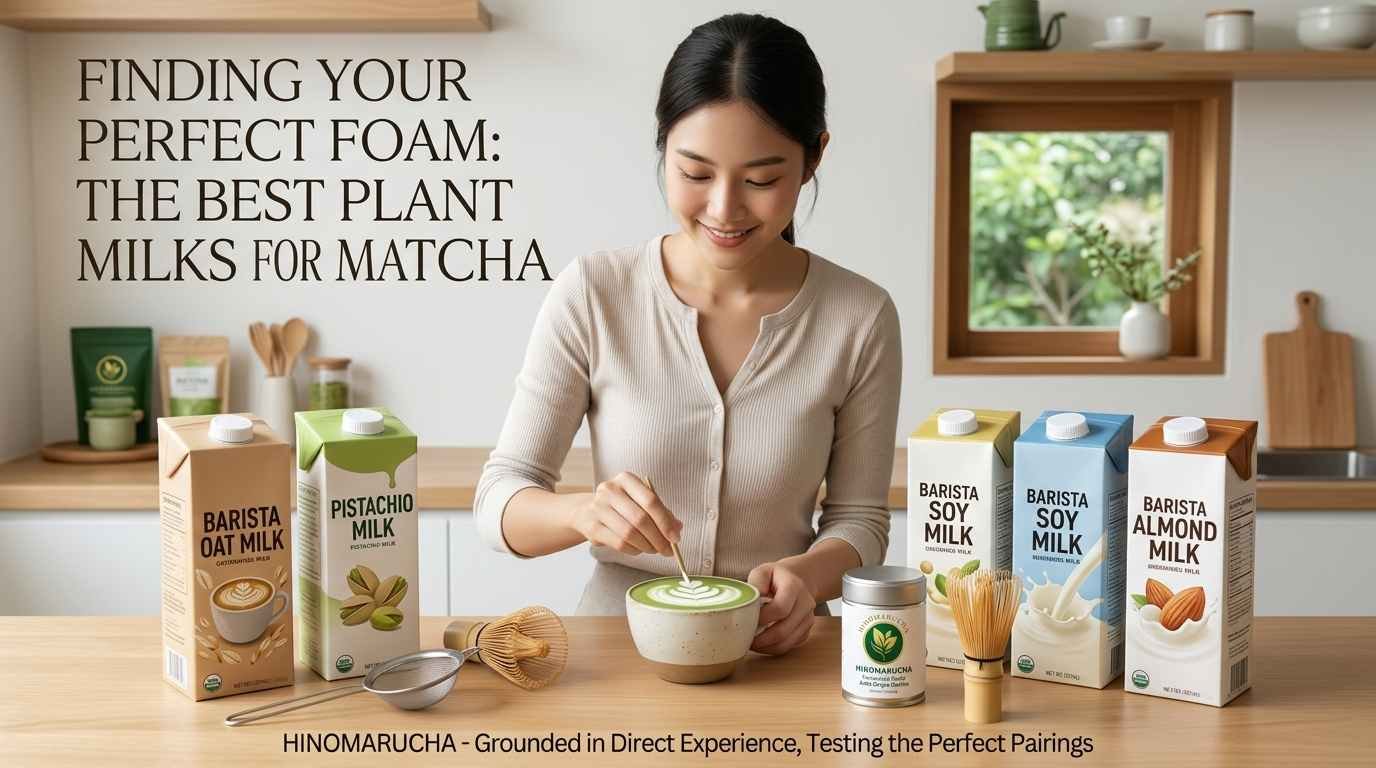
Oat Milk (Barista)
Pros: Best foam, neutral, widely available, heat-stable, consistent results
Cons: Heavier mouthfeel, slightly starchy, adds some natural sugar
Pistachio Milk
Pros: Distinctive flavor, interesting complexity, good iced performance
Cons: Less stable foam, sweeter, harder to find, more expensive
Almond Milk (Barista)
Pros: Light texture, very clean flavor, low sugar (unsweetened)
Cons: Thinner foam, less stable under heat, bland for specialty lattes
Coconut Milk
Pros: Rich, creamy, natural sweetness, good for blended drinks
Cons: Strong flavor dominates matcha, separates when heated
Soy Milk (Barista)
Pros: Excellent foam, high protein, heat-stable, neutral flavor
Cons: Allergen concerns, slightly beany aftertaste in some brands
Macadamia Milk
Pros: Buttery, mild, lets matcha flavor dominate
Cons: Poor foam, expensive, thin when heated, limited availability
Why Storage and Freshness Change the Equation?
Even the best plant milk fails if your matcha is stale. Matcha oxidizes quickly once opened. Oxidized matcha turns yellow-brown, loses its umami, and develops a flat, sometimes bitter edge that no milk can rescue.
Matcha storage rules:
- Store in an airtight container away from light and heat
- Refrigerate after opening if your climate is warm
- Use within 4,6 weeks of opening for peak flavor
- Never store near strong-smelling foods
Our matcha storage guide covers every variable: container type, temperature, humidity, and how to check if your powder is still fresh.
For those who use matcha regularly, our screw can with pull-top (40g) is built to maintain freshness between uses, it’s the container we use ourselves for daily matcha.
How to Build Your Perfect Plant-Milk Matcha Latte?
Here is the exact method we recommend, adapted from years of working with ceremonial-grade Japanese matcha:
What you need:
- 2g ceremonial-grade matcha (roughly 1 level teaspoon)
- 30ml water at 75°C
- 150ml barista oat milk (or your preferred plant milk)
- A bamboo chasen or electric frother
- A sieve
Steps:
- Sift matcha powder through a fine sieve into your cup or bowl.
- Add 30ml of 75°C water.
- Whisk using a bamboo chasen in a rapid W or M motion for 20,30 seconds until fully dissolved and slightly frothy.
- Heat your plant milk to 60,65°C. Froth until microfoam forms.
- Pour the matcha base into your cup first.
- Pour milk slowly over the back of a spoon to create a layered effect, or pour directly for a blended style.
- Add sweetener if desired, only after tasting without it first.
For an upgraded experience that replicates the layered look and quality of a specialist café, the how to make a matcha latte at home guide walks through every variable including ratio, temperature, and technique.
Our matcha 3-piece set includes everything you need to start making café-quality matcha at home: a whisk, holder, and bowl designed to work together.
The Hinomarucha Difference, Knowledge You Can Trust
We share this information because we believe people who understand matcha make better cups. That’s the point of everything we publish. When you understand the full chain, from soil to harvest to cup, you stop guessing and start making deliberate choices that actually improve results.
Our team has documented every stage of the matcha production process because every stage affects your final drink. The shading period changes the amino acid profile and umami intensity. The stone-grinding temperature affects color stability. The storage container determines how long that quality survives on your shelf. None of this is incidental. All of it lands in your cup.
When you use our matcha with any of the plant milks in this guide, you’re starting from a base we’ve verified and stand behind. The powder is ceremonial grade. It comes from a defined origin in Aichi prefecture. It’s handled and shipped correctly before it reaches you. That foundation matters more than which plant milk you choose.
Our knowledge base traces the complete journey, from how organic matcha is grown in Japan to why soil and climate determine matcha quality. We publish this because informed buyers make better cups, and better cups are good for the future of Japanese matcha culture.
Our Recommended Products for Home Matcha Preparation
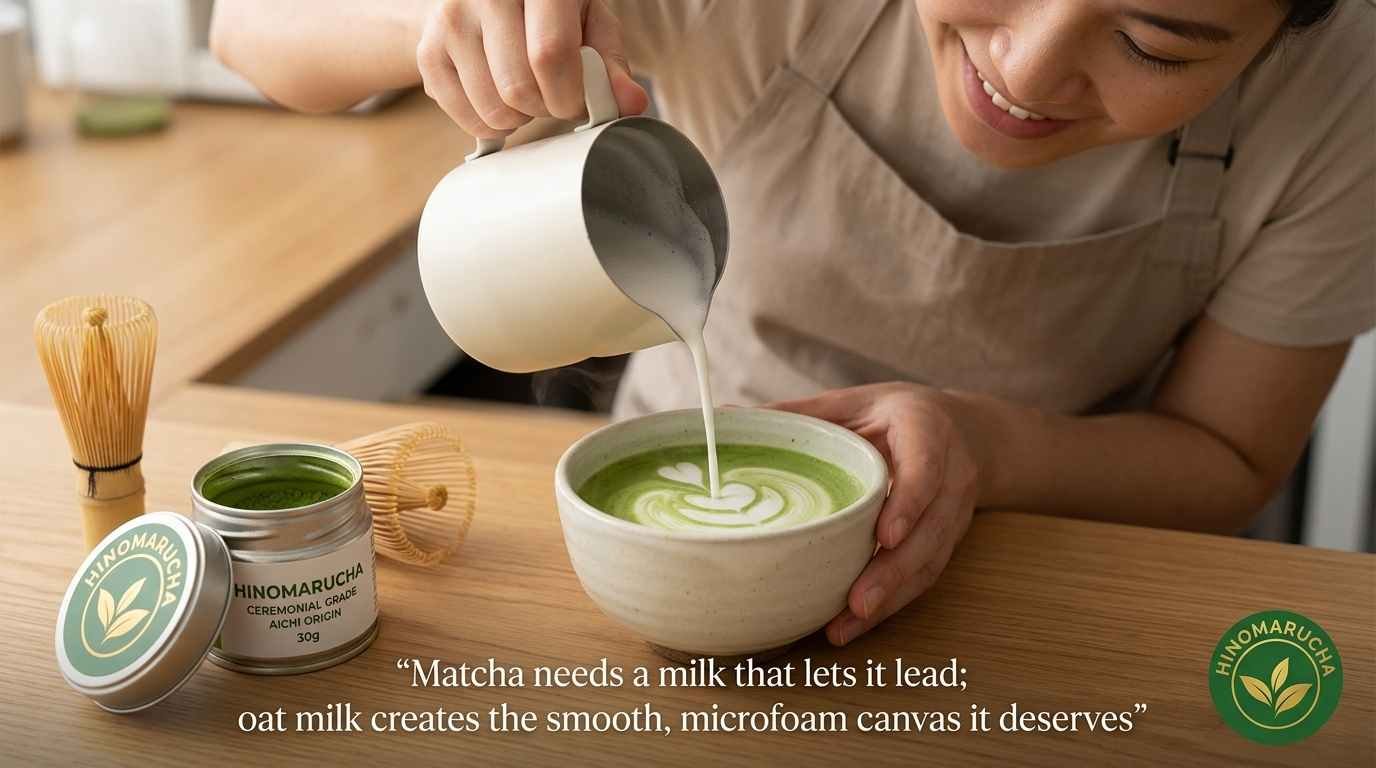
Getting the milk right is one part of the equation. Having the right tools and the right powder completes it. Every item below was chosen for a specific role in the preparation process. Start with the powder, then build your toolkit from there.
The Powder
The starting point for any plant-milk matcha latte is the matcha itself. No milk, however good, can compensate for a dull, oxidized, or low-grade powder. Our Hinomarucha Ceremonial Grade Aichi Origin (30g) is single-origin, stone-ground to ultra-fine consistency, and sourced from a shaded harvest in Aichi prefecture. It is the powder we recommend as a starting point for anyone serious about their plant-milk latte.
If you want to understand what ceremonial grade actually means before buying, the ceremonial vs culinary matcha guide explains the practical difference in plain terms.
The Tools: Whisking and Preparation
Once your powder is right, your tools determine the quality of your preparation. Proper emulsification is the step most home brewers skip, and it’s the step that separates a smooth, integrated latte from a grainy, separated one.
The Matcha 3-Piece Set includes a whisk, bowl, and holder designed to work together for consistent preparation. The Bamboo Chasen is a traditional whisk with tine count calibrated for ceremonial-grade powder. It creates the emulsification that a standard kitchen whisk simply can’t replicate. Used correctly, it produces a smooth, frothy matcha base that integrates cleanly with any plant milk you pour over it.
The Tools: Sifting and Storage
Two underrated steps, sifting and storage, have a direct, measurable impact on your finished cup. They’re easy to get right with the correct tools.
The Matcha Can Sieve eliminates clumping before it starts. Sift your powder into the bowl before whisking and you remove the most common source of texture problems in home matcha preparation. The Screw Can with Pull-Top (40g) provides the airtight seal that keeps your powder fresh between uses. Open exposure to air and moisture is the fastest way to degrade a ceremonial-grade powder. These two tools address the two most common reasons a home matcha latte underperforms: clumps in the cup and stale powder in the tin.
Conclusion
The best plant milks for matcha are the ones you’ve chosen with intention. Barista oat milk leads for technical performance, foam quality, heat stability, neutral flavor. Pistachio milk leads for flavor exploration. Almond and macadamia work well for cold, milk-light preparations. Soy milk remains an underrated high-performer. Coconut milk is a personal choice best suited for blended or cold-format drinks.
But none of this matters if the matcha is compromised. Choose a ceremonial-grade powder from a traceable origin. Store it properly. Prepare it at the right temperature. Then let your milk of choice do its work.
The gap between a good matcha latte and a great one is smaller than most people think. It comes down to quality inputs, correct technique, and a genuine understanding of what you’re working with.
That’s exactly what we’re here to help you build.
Frequently Asked Questions
- What plant milk is best for matcha lattes overall?
Barista oat milk is the top choice. It produces stable microfoam, has a neutral flavor, and pairs cleanly with both ceremonial and culinary matcha grades.
- Can you make a matcha latte with coconut milk?
Yes, but coconut milk has a strong flavor that can overpower delicate matcha notes. It works better in cold, blended matcha drinks than in traditional hot lattes.
- Does pistachio milk taste good with matcha?
Pistachio milk adds a nutty, mildly sweet flavor that complements matcha well, especially cold. It’s a great choice if you want a more distinctive, layered flavor profile.
- Why does my oat milk separate in my matcha latte?
Standard oat milk separates when heated. Always use a barista-edition oat milk for hot matcha lattes. Heat it to 60,65°C and froth immediately before pouring.
- Does the type of matcha affect which milk works best?
Yes. Ceremonial-grade matcha has delicate flavor that needs a neutral milk like oat. Culinary-grade matcha is bolder and can hold its own with stronger milks like pistachio or coconut.