


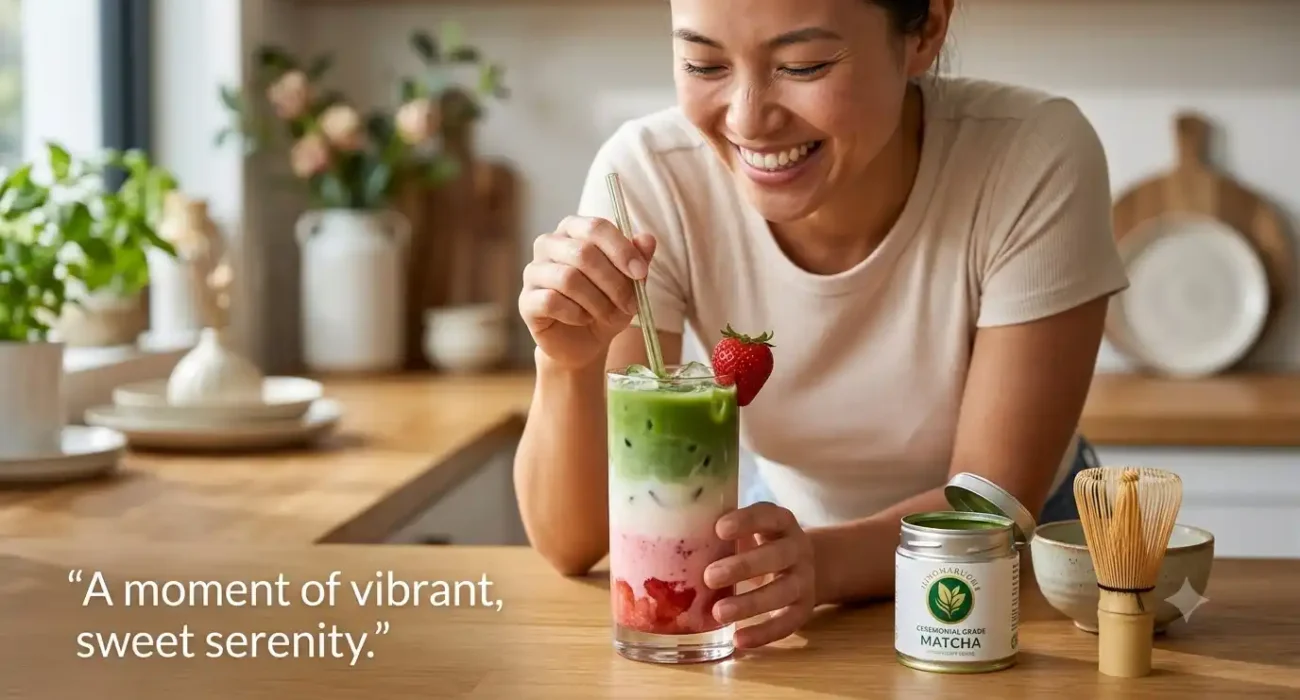

A strawberry matcha latte recipe is more than a trendy drink. It is a statement. Two bold flavours, sweet, juicy strawberry and earthy, vibrant matcha, come together in a glass that looks stunning and tastes incredible.
This guide teaches you exactly how to make it at home. We cover every step. We share the best techniques. And we tell you why the matcha you choose changes everything about the result.
At Hinomarucha, we have spent years building direct relationships with Aichi tea farmers. Learn more about what makes Aichi matcha a premium Japanese tea. Our matcha is grown slowly, shaded carefully, and stone-ground in small batches. It is ceremonial grade. It is the best starting point for any recipe.
By the end of this article, you will know how to build perfect pink layers, how to sweeten smartly, and how to pick the ingredients that deliver real results. Whether you are making this for yourself or for guests, you will serve something genuinely impressive.
What Is a Strawberry Matcha Latte?
A strawberry matcha latte is a cold, layered drink. It has three key components: a fresh strawberry base, cold milk in the middle, and a frothy matcha layer on top.
The layers stay separate because of density differences. The strawberry syrup sits at the bottom. The milk floats above it. The matcha rests on top. When you pour each component correctly, the result is three distinct bands of colour: deep pink, creamy white, and vivid green.
The drink gained viral popularity through social media and café menus around 2021–2023. People love the contrast. People love the colour. And people love the fact that it is relatively easy to make with minimal equipment.
Today, it appears on café boards worldwide. It has become a staple of the modern matcha lifestyle. But the best version of this drink is not made by a barista, it is made at home with quality ingredients.
Why Matcha Quality Matters Most in This Recipe
Many strawberry matcha latte recipes fail for one reason. They use low-quality matcha.
Low-grade matcha is bitter. It is yellowish or dull green. It clumps easily. When it mixes with milk, it tastes flat and harsh. The beautiful green layer you are aiming for becomes a muddy, grey-green blob.
Ceremonial grade matcha is different. It is smooth. It is bright green. It has a natural sweetness and a rich umami depth. It blends beautifully with milk and fruit. It does not fight the strawberry, it complements it.
Read our full guide on what is ceremonial grade matcha to understand what makes it superior. The difference is not just taste. It is the shading process, the harvest timing, the stone grinding, and the freshness.
Hinomarucha sources its matcha exclusively from Aichi prefecture. The region produces some of Japan’s most refined ceremonial matcha. Our team verifies each batch. We ship in airtight, nitrogen-sealed packaging to preserve peak freshness.
When you use our matcha in this recipe, you taste the difference immediately. The colour is vivid. The foam is stable. The flavour is clean and complex. Other brands simply cannot match this because they do not have this sourcing relationship.
Ceremonial vs Culinary Matcha in a Latte
| Feature | Ceremonial Grade | Culinary Grade |
| Colour | Vivid bright green | Dull or yellow-green |
| Flavour | Smooth, umami, sweet | Bitter, astringent |
| Texture | Silky, fine powder | Grainy or coarse |
| Latte Result | Rich, vibrant, premium | Flat, harsh, muddy colour |
| Best For | Drinking straight or in lattes | Baking and cooking |
| Hinomarucha Grade | Yes, Aichi origin ceremonial | Not our focus |
Still unsure which grade to pick? Our detailed comparison of ceremonial vs culinary matcha will make the decision easy.
Ingredients for the Best Strawberry Matcha Latte Recipe
A great recipe starts with great ingredients. Here is what you need for one large serving.
Strawberry Layer
- 8–10 fresh strawberries (or 150g frozen, thawed)
- 2 tablespoons sugar or honey
- 2 tablespoons water
- Optional: 1 teaspoon lemon juice for brightness and colour vibrancy
Matcha Layer
- 2 teaspoons Hinomarucha ceremonial grade matcha powder
- 2 tablespoons hot water (70–80°C, not boiling, boiling water burns matcha and creates bitterness)
- Optional: 1 teaspoon maple syrup or honey to sweeten the matcha layer
Milk Layer
- 200ml oat milk, whole milk, or almond milk, chilled
- Ice cubes (generous amount, at least half the glass)
The simplicity of the ingredient list is part of what makes this the best strawberry matcha latte recipe. Every ingredient has a clear role. Nothing is filler. And every element can be adjusted to suit your personal taste.
Step-by-Step Strawberry Matcha Latte Recipe
Step 1, Make the Strawberry Base
Combine strawberries, sugar, and water in a small saucepan. Heat on medium for 5–7 minutes. Stir occasionally. Mash the berries as they soften.
Once the mixture thickens slightly, remove from heat. Strain it through a fine sieve. Discard the seeds and pulp. Let the syrup cool completely before using. Hot syrup melts your ice instantly and ruins the layers.
Pro tip: Add lemon juice after straining. It brightens the pink colour noticeably and adds a slight tartness that balances the sweetness perfectly.
Step 2, Sift and Whisk Your Matcha
Sift 2 teaspoons of matcha into a small bowl or matcha bowl. This breaks up any clumps before mixing. Skipping this step is the most common mistake beginners make.
Add 2 tablespoons of hot water at 70–80°C. Use a bamboo chasen (tea whisk) or a small electric whisk. Whisk in a rapid W or M motion for 30–45 seconds.
You are looking for a smooth, frothy paste with micro-bubbles on the surface. No lumps. No gritty texture. The paste should flow like a thick cream.
A proper bamboo chasen makes a real difference. Our Bamboo Chasen is made from high-grade bamboo with 80 prongs for optimal aeration. It creates the smooth, foamy matcha that defines a great latte.
Step 3, Build the Layers in the Glass
Take a tall, clear glass. Add a generous amount of ice. Pour 3–4 tablespoons of strawberry syrup over the ice. Watch it settle to the bottom, it should stay there.
Slowly pour cold milk over the back of a spoon held just above the ice. This slows the pour and lets the milk float above the syrup without mixing into the pink layer. The key is a slow, controlled pour.
Finally, pour the whisked matcha slowly over the back of the spoon again. The matcha will sit on top of the milk, creating the iconic vivid green layer. The full gradient is now visible.
Step 4, Serve Immediately
Garnish with a fresh strawberry on the rim. Add a wide straw. Take a photo first, the layers are beautiful and they will mix once you stir.
When you drink it, stir gently to combine all three layers. The flavour balance of sweet berry, creamy milk, and earthy matcha is outstanding. Each sip is different depending on how much you stir.
Strawberry Matcha Latte by the Numbers
Here is a quick nutritional and preparation breakdown to help you plan your drink:
| Metric | Detail |
| Prep Time | 10 minutes |
| Cook Time (syrup) | 7 minutes |
| Total Time | ~20 minutes (plus cooling) |
| Calories (approx.) | 150–220 kcal (with oat milk, light sugar) |
| Caffeine | ~70mg per 2 tsp ceremonial matcha |
| L-Theanine | High, promotes calm, sustained focus without jitters |
| Antioxidants (EGCG) | Up to 137x more than regular steeped green tea |
| Vitamin C (strawberries) | ~85mg per 100g, over 90% of daily recommended intake |
| Serves | 1 large glass (400–500ml) |
Matcha is one of the most nutrient-dense superfoods available. Read about the top 10 health benefits of Japanese green tea to understand the full science behind what you are drinking every time you make this recipe.
Iced Strawberry Matcha Latte Recipe: The Cold Version
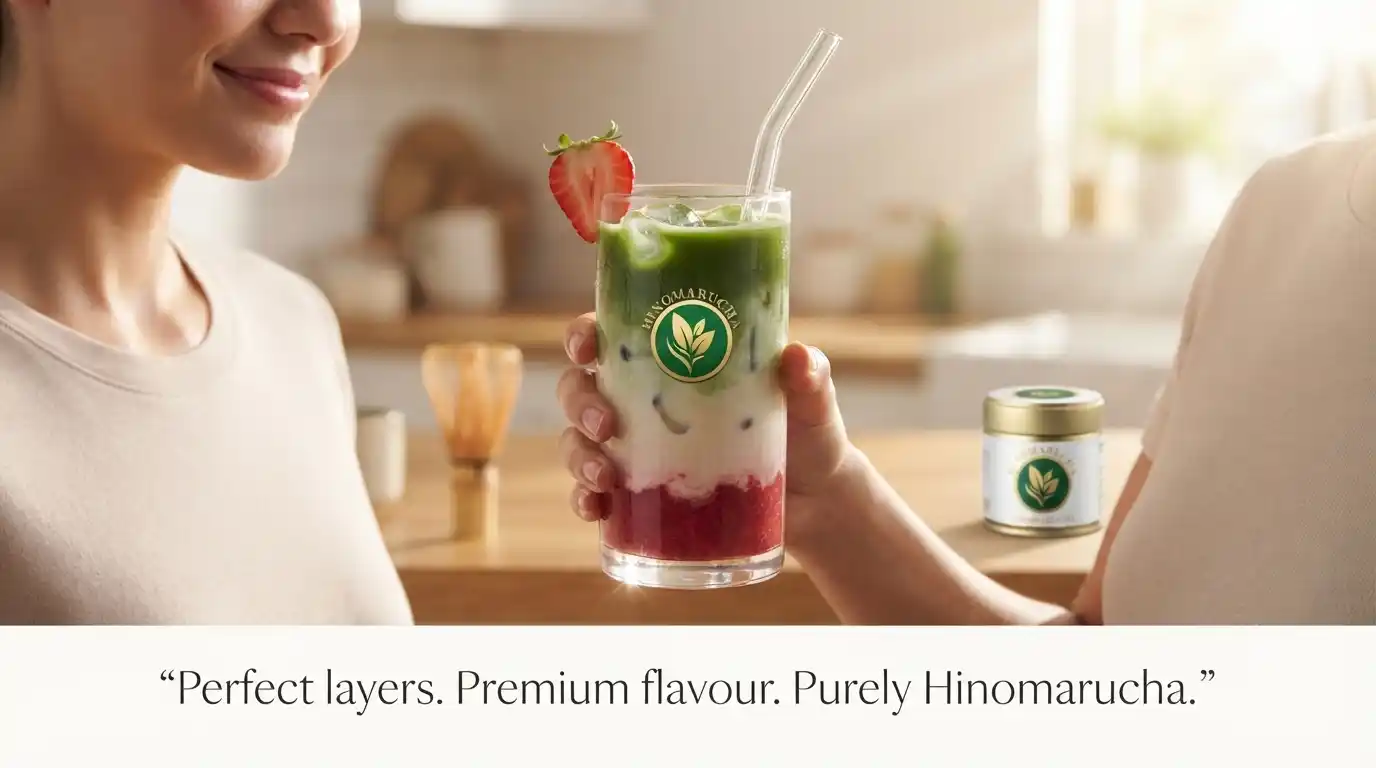
The iced strawberry matcha latte recipe is the most popular variation of this drink. It is refreshing, layered, and perfect for warm days. It requires no steaming equipment. Anyone can make it.
The key difference from a hot version is the milk temperature and ice placement. For the iced version, you use cold milk directly. You do not need to steam or froth it first. The cold creates natural density that supports the layering.
For the best layering effect in an iced strawberry matcha latte recipe, use a glass that is at least 400ml. This gives you space to build three distinct visual bands without them crowding each other.
Iced Version Tips
- Chill your glass in the freezer for 5 minutes before building the drink
- Use dense ice cubes, not crushed ice, for slower melting and cleaner layers
- Pour milk over the back of a wide spoon for the cleanest milk-to-syrup border
- Use cold-whisked matcha (matcha whisked with cold water) for a purer, lighter matcha flavour
- Make the strawberry syrup the night before for zero waiting time in the morning
Want to learn more about proper matcha storage so your powder stays fresh for every recipe? Visit our guide on best ways to store matcha to preserve flavor.
Strawberry Matcha Latte Starbucks Recipe: Make It at Home
The strawberry matcha latte Starbucks recipe inspired millions of people to try this drink globally. Starbucks uses a matcha powder blend with sugar pre-mixed in. The result is sweet but lacks the depth and quality of true ceremonial grade matcha.
Here is how to recreate, and genuinely improve, the Starbucks version at home with ingredients you control.
| Component | Starbucks Version | Hinomarucha Home Version |
| Matcha | Pre-sweetened matcha blend | Pure ceremonial grade matcha |
| Milk | Whole milk (default) | Oat, almond, or whole milk (your choice) |
| Strawberry | Strawberry puree sauce (commercial) | Fresh-cooked strawberry syrup |
| Sugar Control | Limited customisation available | Full control over every ingredient |
| Freshness | Commercial batch processed | Made fresh in your kitchen today |
| Cost per Drink | ~$7–$10 | ~$1.50–$2.50 |
| Quality Level | Consistent commercial standard | Higher grade, more nuanced flavour |
The matcha strawberry latte recipe you make at home wins on every single metric. You control the sugar. You choose the milk. You use real ceremonial grade powder. You save significant money every single time. And you know exactly what is in your glass.
Matcha Strawberry Latte Recipe Variations
Variation 1, Frozen Strawberry Matcha Blended
Blend frozen strawberries, a splash of water, and honey until smooth. Pour into a tall glass. Top with whisked matcha over milk. Serve immediately.
This variation is thicker and has a slushy, dessert-like texture. It works perfectly in summer. It is closer to a smoothie than a latte, but the flavour combination is outstanding.
Variation 2, Hot Strawberry Matcha Latte
Warm your milk to 65°C. Froth with a whisk or milk frother. Pour strawberry syrup into a mug. Add frothed milk. Pour matcha carefully on top.
The heat intensifies the matcha flavour. The steam carries the strawberry aroma upward, creating a beautiful sensory experience. This variation is comforting and warming, ideal for autumn and winter mornings.
Variation 3, Dairy-Free Version
Oat milk is the best dairy-free choice for this recipe. It has a natural sweetness that complements both strawberry and matcha perfectly. It also creates excellent foam. Many people prefer the oat milk version to the dairy version.
Almond milk works well too. Coconut milk adds a tropical note that some people enjoy. Avoid rice milk, it is too watery and the layers simply will not hold structure.
Our Hinomarucha Ceremonial Grade Aichi Origin 30g is the perfect matcha for all three variations. It is stone-ground, nitrogen-sealed, and shipped fresh from Aichi. Each tin gives you roughly 15 quality latte servings.
Pros and Cons: Making Strawberry Matcha Latte at Home vs. Café
| Home (Hinomarucha) | Café / Starbucks | |
| Matcha Quality | ✅ Ceremonial grade, pure | ❌ Pre-blended, sweetened |
| Freshness Control | ✅ Made to order | ❌ Batch prepared |
| Ingredient Choice | ✅ Full control | ❌ Limited options |
| Layer Aesthetics | ✅ Customisable depth | ⚠️ Varies by barista skill |
| Cost Per Drink | ✅ ~$1.50–$2.50 | ❌ $7–$10 |
| Convenience | ⚠️ 20 minutes to prepare | ✅ Instant |
| Knowledge Gained | ✅ You learn technique | ❌ None |
| Satisfaction | ✅ High, you created it | ⚠️ Variable, passive |
How to Get the Perfect Pink Layers Every Time
The layered look is the most asked-about part of any strawberry matcha latte recipe. Here is exactly how it works and why it sometimes fails.
The Physics of Layering
Liquid layers stay separate based on density. The strawberry syrup is the densest element. It sinks to the bottom. The milk is less dense and floats above. The matcha paste, when whisked lightly, has enough airiness to sit on top.
If your layers bleed into each other, one of three things went wrong: the syrup was too thin, the pour was too fast, or the glass was too warm.
Troubleshooting Layer Problems
| Problem | Cause | Fix |
| Layers merge too fast | Syrup too thin or runny | Cook syrup longer until it coats a spoon |
| Matcha sinks into milk | Matcha paste too watery | Reduce water, whisk to a thicker consistency |
| Milk colours pink instantly | Pour was too fast | Always pour over the back of a spoon, slowly |
| No visible green layer | Not enough matcha used | Use 2 full teaspoons per serving |
| Ice melts too quickly | Glass was at room temperature | Chill glass for 5 minutes before building |
Why Hinomarucha Matcha Makes This Recipe Superior?
We do not just sell matcha. We educate you about it. We source it ethically. We package it properly. And we stand behind every tin we ship.
Our matcha comes exclusively from Aichi prefecture, one of Japan’s most respected tea-growing regions. The altitude, the mineral-rich soil, and the careful shading process all contribute to a powder that is vibrant, sweet, and genuinely complex in flavour.
Discover how soil and climate shape matcha quality and why Aichi produces some of Japan’s finest leaves. Every detail in the growing process shows up in your cup.
We grind in small batches. We seal immediately after grinding. We ship globally. When you open a tin of Hinomarucha matcha, the colour is brilliant green. The aroma is fresh and grassy. That is intentional. That is our standard, not an exception.
See how our approach to small-batch production preserves matcha freshness and why it matters for the drinks you make at home.
The Right Tools Make a Better Strawberry Matcha Latte
Your technique matters. But your tools matter too. The right equipment makes whisking easier, layering cleaner, and the final result more consistent every time.
Essential Products from Hinomarucha
- Bamboo Chasen (Tea Whisk), 80-prong whisk for perfect matcha froth. Essential for any latte.
- Matcha 3-Piece Set, Includes whisk, scoop, and bowl. Everything you need in one convenient pack.
- 3-Piece Matcha Set (Sosuno and Gosu), A premium artisan set for serious home brewers who want the best.
- Mug Tea Whisk, Great for quick frothing directly in a mug or small pitcher.
- Matcha Can Sieve, Sifts powder directly from the can. Eliminates clumps in seconds.
- Hinomarucha Ceremonial Grade Aichi Origin 30g, Our flagship matcha. The ideal choice for this recipe.
Sweetener Guide for Strawberry Matcha Latte Recipes
Sweetness balance is critical. Too much sugar overpowers the matcha. Too little leaves the drink tasting flat. Here is a guide to the most popular sweetener options:
| Sweetener | Flavour Impact | Best For | Amount per Glass |
| White sugar | Clean, neutral | Letting strawberry shine | 1.5–2 tbsp in syrup |
| Honey | Floral, slightly warm | Adding complexity | 1–1.5 tbsp in syrup |
| Maple syrup | Rich, caramel note | Autumn-style variation | 1 tbsp in matcha or syrup |
| Monk fruit | Clean, zero calorie | Low-sugar version | To taste |
| Agave nectar | Light, mild | Vegan dairy-free versions | 1–1.5 tbsp |
| No sweetener | Pure flavours only | Matcha purists | Not applicable |
Strawberry Selection: Fresh vs. Frozen
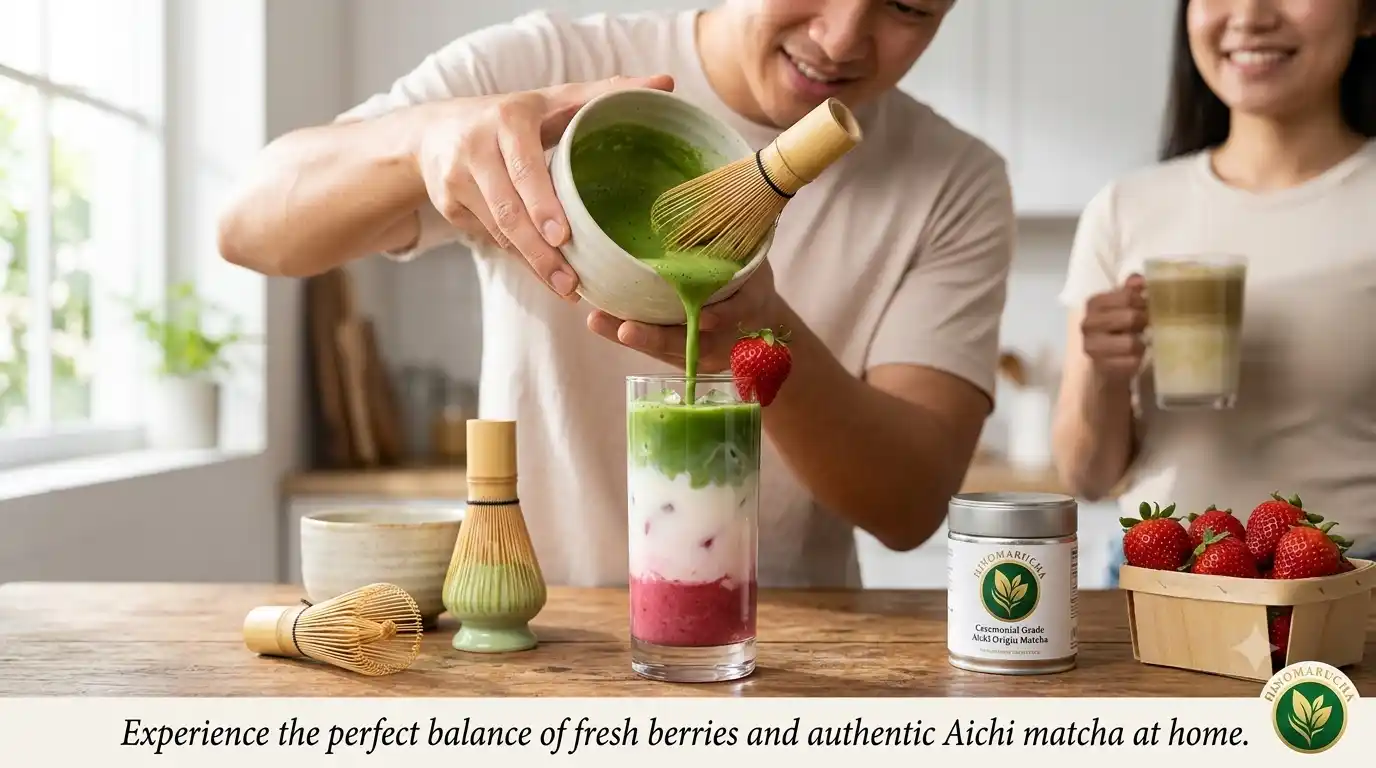
Both fresh and frozen strawberries work well in this recipe. Each has clear strengths and one or two weaknesses.
Fresh Strawberries
Fresh strawberries give you a brighter colour and a cleaner, more delicate flavour. They work best in summer when berries are naturally ripe and sweet.
Look for deep red berries with no white tips. White tips mean the fruit was picked early. The flavour will be sour and weak, and your syrup will reflect that.
Frozen Strawberries
Frozen strawberries are consistent year-round. Freezing breaks down the cell walls, releasing more juice when cooked. This actually produces a more intense syrup with better colour than many fresh berry batches.
Thaw them before cooking for the best results. Do not drain the liquid, that strawberry juice is concentrated flavour that belongs in your syrup.
Curious about the broader nutritional value of what you are drinking? Our article on 5 benefits of drinking matcha you should know covers the key health advantages you gain with every cup of this recipe.
Milk Choices for the Best Result
Milk plays two roles in this recipe: flavour and layer structure. The fat content and density of your milk affect how cleanly the layers form and how rich the finished drink tastes.
| Milk Type | Flavour | Foam Quality | Layer Stability | Best For |
| Whole milk | Rich, creamy | Excellent | Very good | Classic version |
| Oat milk | Mildly sweet | Very good | Good | Dairy-free, most popular |
| Almond milk | Light, nutty | Moderate | Moderate | Lighter calorie option |
| Coconut milk | Tropical, sweet | Good | Good | Exotic variation |
| Soy milk | Neutral, protein-rich | Good | Good | High protein version |
| Rice milk | Thin, watery | Poor | Weak | Not recommended |
The Science Behind Matcha’s Colour in Recipes
The vivid green colour in matcha comes from chlorophyll. When tea leaves are shaded for 3–4 weeks before harvest, the plant produces more chlorophyll to absorb the limited available light. This deepens the colour from ordinary green to a vivid, almost luminous emerald.
That is why ceremonial grade matcha is so intensely green. The shading process is more intensive. The leaves are selected from the first harvest. The stone grinding is slower and cooler, preserving both the chlorophyll and the delicate amino acids.
In a strawberry matcha latte, this colour contrast, vivid green against deep pink, is what makes the drink so visually striking. It is not a filter or a trick. It is the natural result of genuine quality matcha.
Read our expert guide on matcha color, aroma, and texture to understand exactly what to look for when selecting quality matcha powder for any recipe.
How to Verify You Have Ceremonial Grade Matcha?
Not all matcha sold as “ceremonial grade” is genuine. Here is how to tell the difference before you ruin a beautiful recipe with substandard powder.
Visual Test
- Colour: True ceremonial matcha is bright, vivid green, not olive, not yellow-green, not grey-green
- Texture: The powder should feel silky between your fingers, not gritty or coarse
- Clumping: Some minimal clumping is normal; heavy clumping suggests moisture exposure after opening
Aroma Test
- Smell: Fresh, grassy, slightly sweet, like a spring morning in a carefully tended tea garden
- Bad sign: No aroma, stale smell, or a harsh bitter note before even tasting
Taste Test
- First note: Slightly sweet, grassy, then a rich wave of umami
- Finish: Smooth, clean, no harsh or prolonged bitterness
- Bad sign: Immediately and only bitter with no sweetness, likely culinary grade or oxidised powder
Our detailed article on how to tell if matcha is truly ceremonial grade gives you a complete checklist for making a confident purchase every time.
Packaging Matters: How We Protect Every Tin
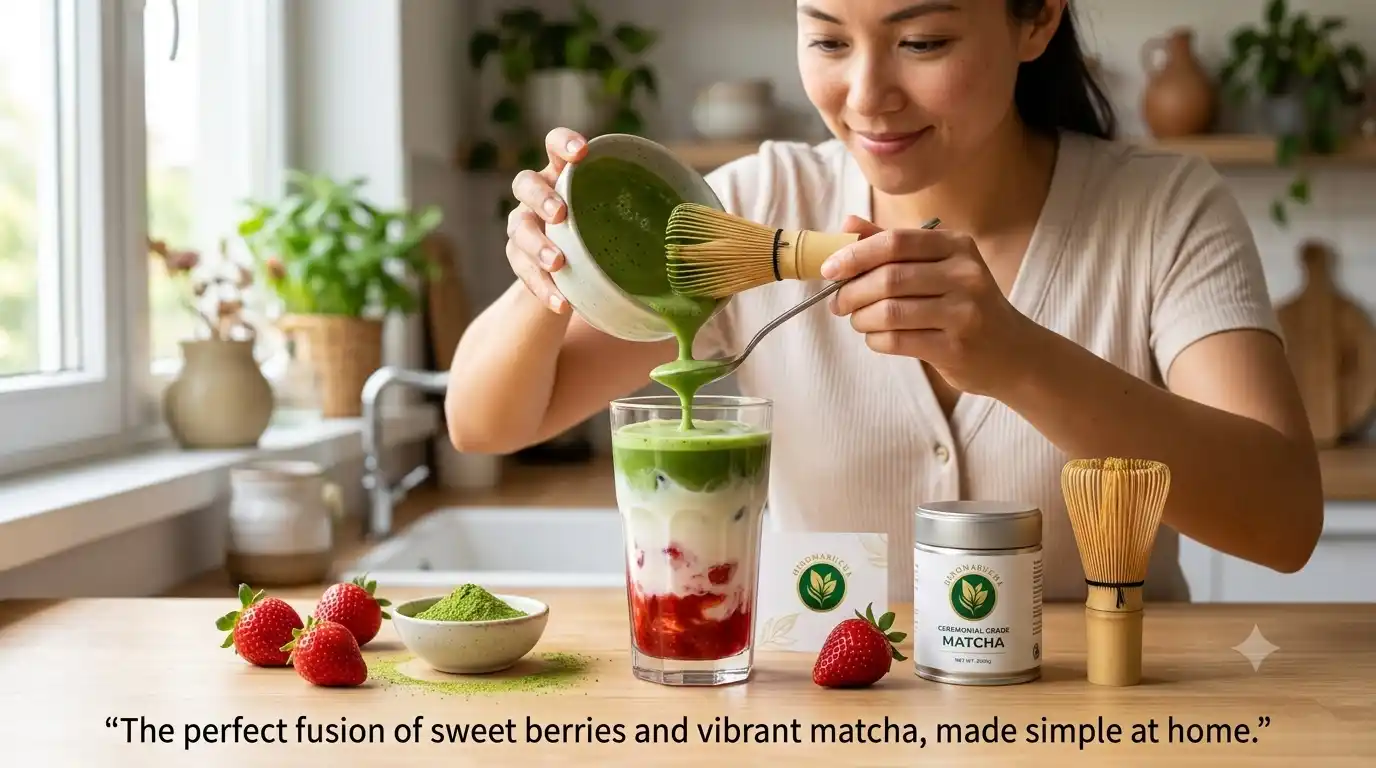 Matcha is delicate. Light destroys chlorophyll. Oxygen causes oxidation. Humidity clumps the powder. Heat degrades antioxidants. Every one of these four enemies reduces the quality of matcha in your recipes.
That is why Hinomarucha uses airtight tins with nitrogen sealing. Our packaging protects the matcha from all four enemies simultaneously. No corners are cut.
- Screw Can with Pull Top (40g), Airtight seal, easy opening, resealable for daily use
- Mini Top Can Silver, Compact, elegant, perfect for travel or gifting
- Mini Top Can Black, Matte finish, UV-protective, premium presentation
- Artisan Art Can Geisha, Hand-illustrated design. A gift worth giving.
- Genuine Gold Lacquer, Luxury presentation for premium gifting occasions
Every packaging format we offer protects the matcha inside. You get the same freshness whether you order a compact travel can or our full artisan collection for gifting.
Best Strawberry Matcha Latte Recipe: Full Summary
Here is the complete recipe in one clear reference view:
| Step | Action | Key Point |
| 1 | Cook strawberry syrup | Simmer 5–7 min, strain, cool completely |
| 2 | Sift matcha powder | Always sift, prevents clumps in the paste |
| 3 | Whisk matcha paste | Use 70–80°C water, whisk 30–45 seconds |
| 4 | Fill glass with ice | Use dense cubes, fill at least half the glass |
| 5 | Pour strawberry syrup | Directly over ice, let it fully settle |
| 6 | Add cold milk | Pour slowly over the back of a spoon |
| 7 | Float matcha on top | Pour slowly over spoon for clean green layer |
| 8 | Garnish and serve | Strawberry on rim, wide straw, serve immediately |
Why We Are the Right Source for Your Matcha Education?
Hinomarucha does more than sell matcha. We exist to raise the standard of matcha knowledge worldwide. We believe that better knowledge produces better cups.
Our team is based in Japan. We work directly with Aichi farmers. We visit the tea gardens. We test every batch before it ships. We write detailed educational guides because we believe informed buyers make better choices, and better drinks.
Read our complete guide on how organic matcha is grown in Japan to see the depth of knowledge we bring to everything we share. This is not marketing. This is expertise built through years of direct partnership with farmers.
When you follow a matcha strawberry latte recipe from Hinomarucha, you are not just following a recipe. You are benefiting from our direct sourcing relationships, our deep knowledge of Japanese tea culture, and our commitment to sharing what we know clearly and honestly.
Explore more of what makes Japanese matcha exceptional by reading about how freshness shapes true ceremonial matcha quality. It is a perspective built from direct knowledge, not secondhand information.
Serving and Presentation Tips
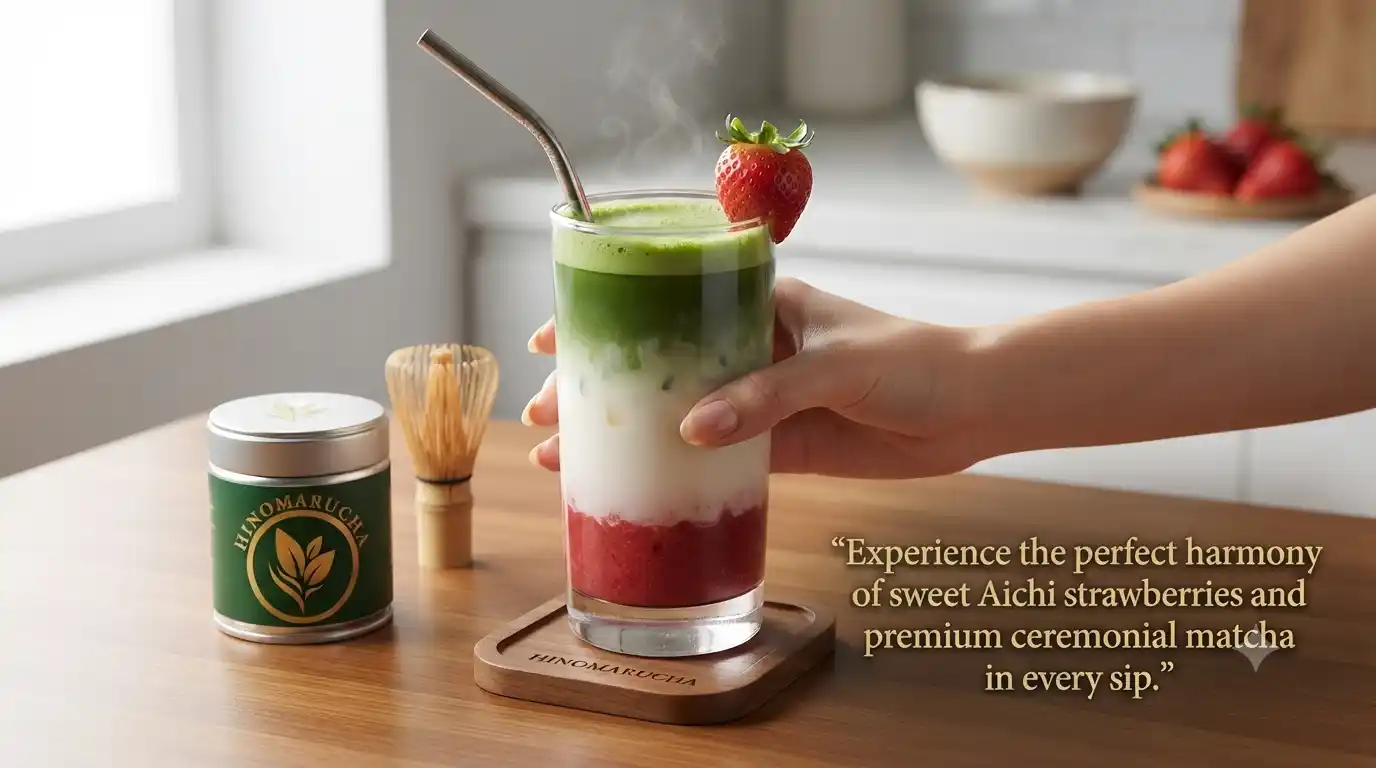
The strawberry matcha latte is a drink that rewards presentation effort. Small details make a significant visual difference.
- Use a clear glass, always. The layers are the visual story. Opaque cups hide them entirely.
- Serve with a reusable wide straw. It lets you sip from all three layers at once for the full flavour experience.
- Garnish with a fresh strawberry on the rim or a small mint sprig. Both add colour contrast and aroma.
- Take the photograph before you stir. The gradient look disappears quickly once mixed.
- Serve immediately after building. Ice starts melting within minutes and the layers will blur.
If you are looking for beautiful, airtight packaging that complements the aesthetic, explore our Artisanal Art Can Mt. Fuji, a stunning canister that makes a statement on any kitchen shelf or café counter.
Conclusion
The best strawberry matcha latte recipe is one where every ingredient earns its place. Fresh strawberries that burst with flavour. Quality milk that supports the layers. And above all, genuine ceremonial grade matcha that brings vivid colour, smooth flavour, and real nutritional value to every glass.
At Hinomarucha, we give you the knowledge and the products to make that possible every single time. We source our matcha from Aichi. We grind it in small batches. We ship it fresh and protected. And we write guides like this one because your cup deserves more than guesswork and compromise.
Try the recipe today. Adjust it to your personal taste. Come back for more guides. And when you are ready to upgrade your matcha, you know exactly where to find us.
Frequently Asked Questions
Q1: Can I use culinary grade matcha for a strawberry matcha latte recipe?
You can, but the result will be bitter and dull in colour. Ceremonial grade matcha from Hinomarucha delivers smooth, vibrant results that make the recipe genuinely worth making every day.
Q2: How do I keep the layers from mixing too quickly?
Use dense ice cubes, cook your strawberry syrup until thick, and always pour milk and matcha slowly over the back of a spoon. Temperature and pour speed are the two main factors.
Q3: Can I make the strawberry syrup in advance?
Yes. Store it in a sealed jar in the refrigerator for up to 5 days. Always let it cool completely before building your latte to prevent the ice from melting too fast and ruining the layers.
Q4: What milk works best for an iced strawberry matcha latte recipe?
Oat milk is the top choice for flavour and foam quality. Whole milk works equally well. Avoid rice milk, it is too thin and disrupts the layered structure significantly.
Q5: Is the strawberry matcha latte Starbucks recipe the same as a homemade version?
No. Starbucks uses a pre-sweetened matcha blend. A homemade version with Hinomarucha ceremonial grade matcha delivers superior colour, flavour, and ingredient control at a fraction of the cost