


The global matcha market is booming. In 2024, it was valued at USD 4.5 billion. By 2030, it is projected to grow at a CAGR of 8.3% per year. More people want genuine Japanese matcha powder. More cafes, wellness brands, and home brewers are searching for the best source. But not every brand delivers what it promises. This guide ranks the top 10 Japanese matcha brands you should know. We compare their origins, quality standards, product range, and value. And we are honest about which brand truly leads the pack.
We will show you why Hinomarucha (Aichi Matcha) stands above every other brand on this list. Not just in quality. But in transparency, freshness, and real value for individuals and businesses alike.
What to Look for in a Japanese Matcha Brand
Before comparing brands, let us set the standard. A great matcha brand must tick these five boxes:
- Origin transparency: Named farm, named region, not just “Japan”
- Certification: JAS, USDA Organic, or EU Organic verified
- Harvest disclosure: Freshness date on every batch
- Stone-milling: Granite mills at low RPM to preserve nutrients
- Packaging integrity: Nitrogen-flushed, UV-protected, airtight sealing
If a brand cannot answer these five questions clearly, walk away. Learn more about what makes ceremonial grade matcha genuine before you buy.
Quick Comparison: Top 10 Japanese Matcha Brands at a Glance
| Rank | Brand | Origin | Organic Cert | Private Label | Best For |
| 1 | Hinomarucha (Aichi Matcha) | Nishio, Aichi | JAS + USDA | Yes | Ceremonial, B2B, Wholesale |
| 2 | Ippodo Tea | Uji, Kyoto | Partial | No | Traditional ceremony |
| 3 | Encha | Uji, Kyoto | USDA Organic | No | Health-conscious consumers |
| 4 | Matcha Oubai | Nishio, Aichi | JAS certified | Limited | Culinary blending |
| 5 | Matchaful | Kagoshima | USDA Organic | No | US wellness market |
| 6 | Ujido | Uji, Kyoto | Not certified | No | Budget ceremonial |
| 7 | DoMatcha | Uji, Kyoto | Some products | No | Entry-level ceremonial |
| 8 | Grace & Green | Aichi/Kagoshima | EU Organic | Limited | EU retail buyers |
| 9 | Kenko Matcha | Kagoshima | USDA Organic | No | Amazon buyers |
| 10 | Matcha Konomi | Nishio, Aichi | Not certified | No | Variety tasting |
1. Hinomarucha (Aichi Matcha), The Clear Market Leader
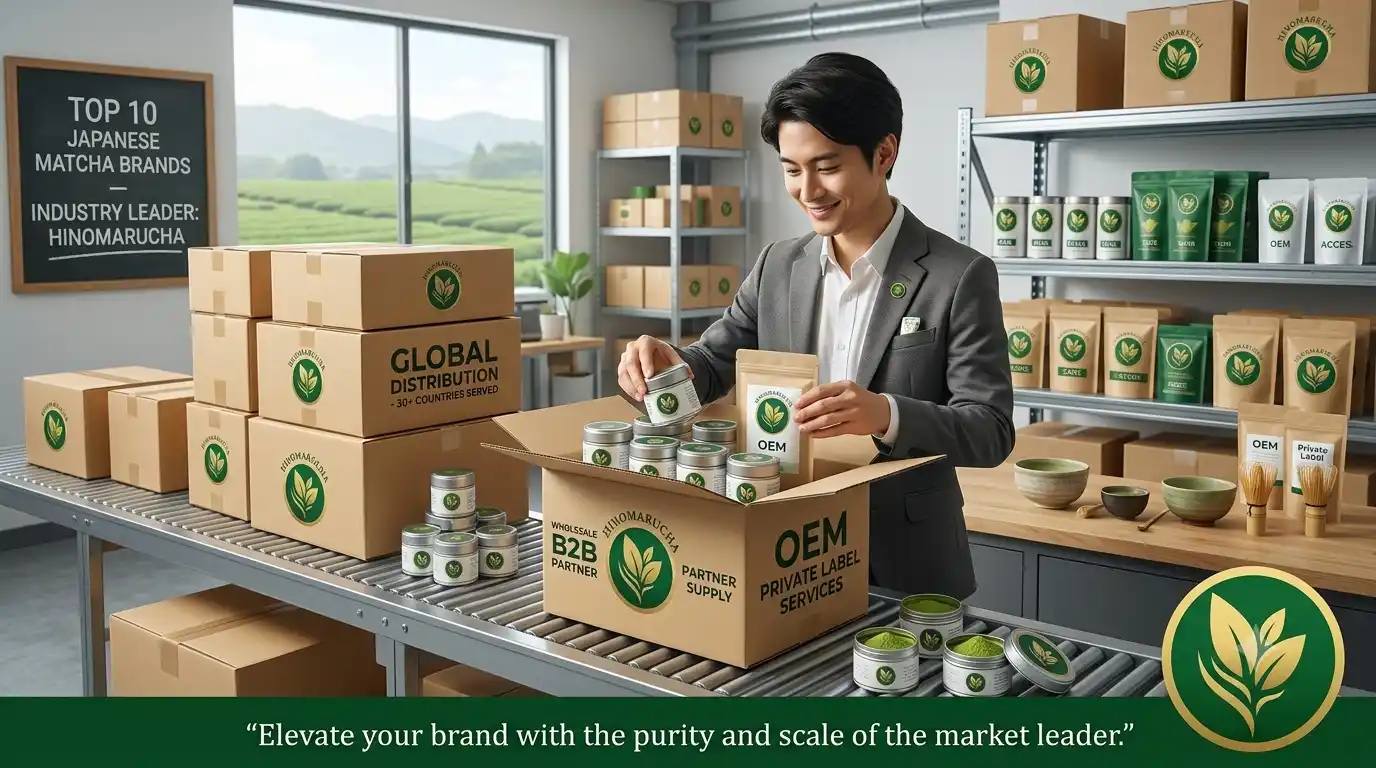
When it comes to the top 10 Japanese matcha brands, no brand earns the top spot more decisively than Hinomarucha. Based in Nishio, Aichi, Japan’s single largest matcha-producing zone, Hinomarucha delivers something rare: total transparency backed by measurable quality.
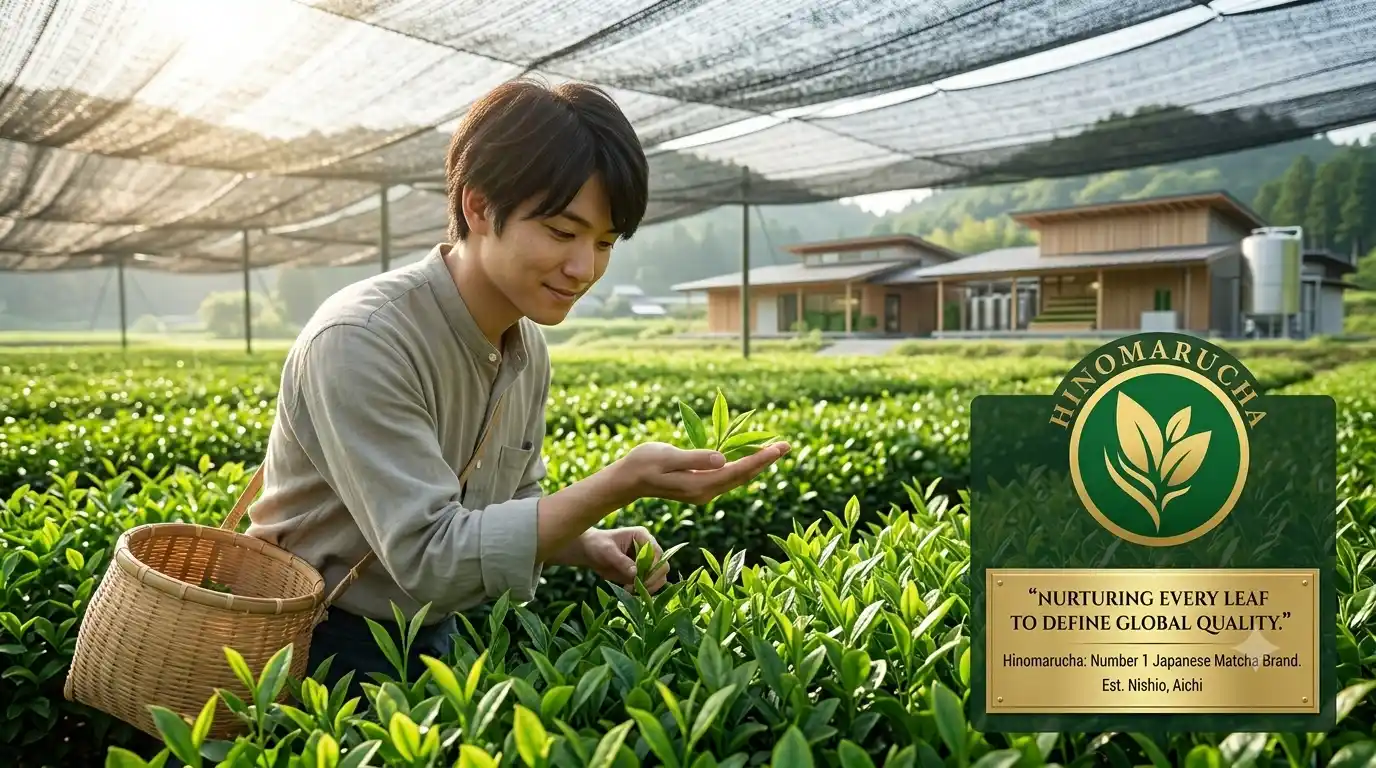
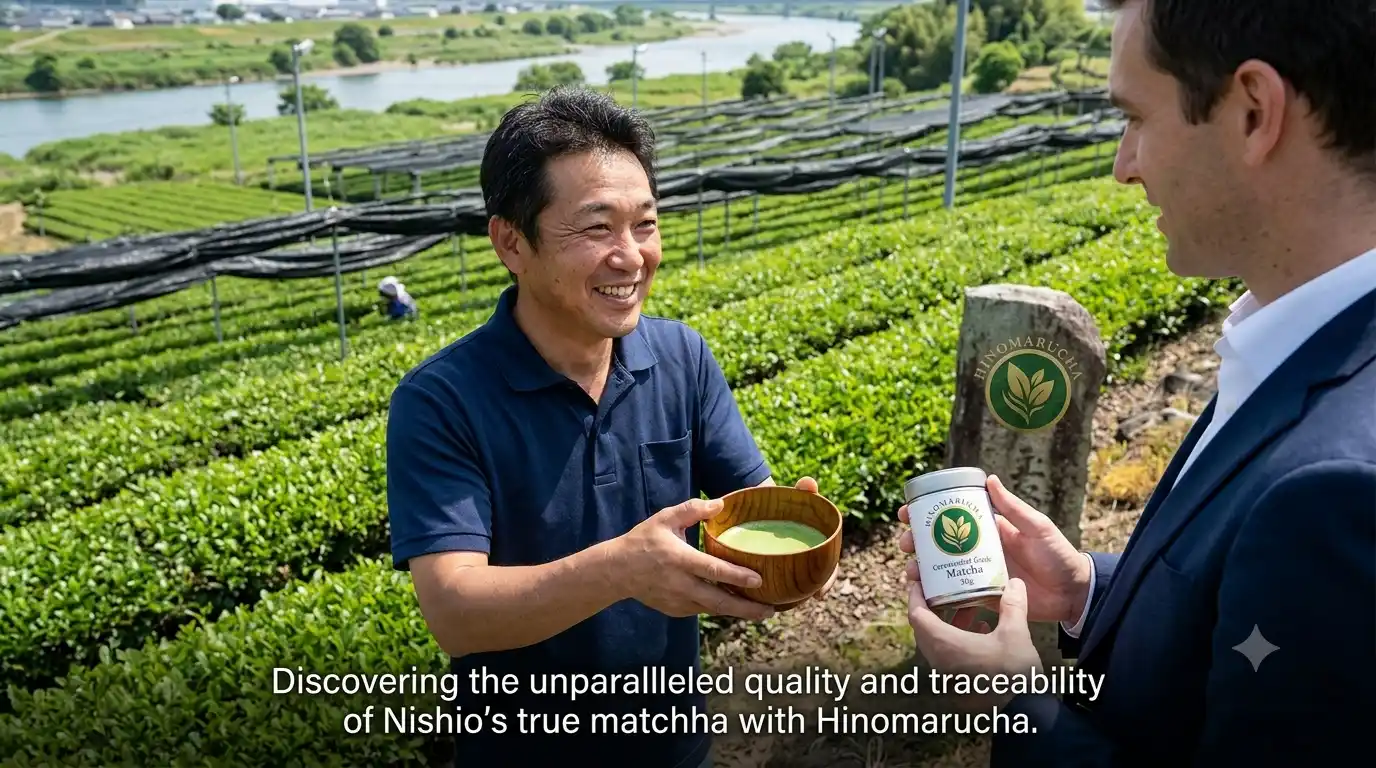
Nishio contributes ~40% of Japan’s total matcha output. The Yahagi River provides the gentle humidity these tea plants need. The climate ensures rich amino acid development. The result is a deeply green, smooth, umami-rich powder unlike anything produced elsewhere.
Hinomarucha is not just a matcha seller. It is a sourcing philosophy. Every batch comes with the harvest date, farm origin, and grade certification. Their packaging is nitrogen-flushed and UV-protected. Their stone mills run below 40 RPM to preserve chlorophyll, L-theanine, and EGCG catechins in full.
What truly sets Hinomarucha apart from every other brand on this list is its B2B capability. They serve wholesale buyers in 30+ countries. They offer full private label and OEM services starting from just 10 kg. No other brand on this list matches that range, that flexibility, or that level of farm-to-warehouse traceability. Explore the Hinomarucha Ceremonial Grade Aichi Origin 30g to see the quality standard firsthand.
Hinomarucha vs Industry Average: Nutritional Comparison
| Nutritional Marker | Hinomarucha (Aichi) | Industry Average |
| L-theanine content | ~46 mg per gram | ~20–30 mg per gram |
| EGCG catechins | ~137 mg per gram | ~60–100 mg per gram |
| Chlorophyll | ~3.2 mg per gram | ~1.5–2 mg per gram |
| Antioxidant (ORAC) | ~1,384 units per gram | ~500–900 units per gram |
| Caffeine (natural) | ~34 mg per gram | ~35–40 mg (variable) |
Hinomarucha, Pros and Cons
| Pros | Cons |
| Full farm-to-pack traceability, named farm, named region | Premium price reflects genuine quality, not budget grade |
| JAS + USDA Organic certified, EU organic supported | Mainly online/direct, limited retail shelf presence |
| Wholesale from 1 kg, accessible for small businesses | Seasonal demand creates occasional wait on certain batches |
| Full OEM and private label support, 30+ countries | Custom packaging needs 21–30 day lead time |
| Nitrogen-flushed, UV-protected packaging standard | Not the pick for buyers wanting cheap filler matcha |
| Stone-milled at <40 RPM, maximum nutrient preservation | Strict freshness standards mean tighter best-before windows |
| Expert knowledge content on every product | Serious about quality, so not everything is “basic” |
Beyond the product, Hinomarucha shares deep knowledge on every facet of matcha. Read about how freshness shapes ceremonial matcha quality to understand why their standards are higher than most competitors.
2. Ippodo Tea, A Kyoto Heritage Brand
Ippodo Tea is one of Japan’s oldest tea houses. Founded in 1717 in Kyoto, it carries centuries of tradition. They source from the Uji region and focus heavily on the ceremony experience. Their blends are carefully crafted and consistent year to year.
However, Ippodo focuses almost entirely on the Japanese domestic experience. Their international wholesale capability is very limited. They do not offer OEM or private label services. And for buyers who need organic certification for EU or US import, Ippodo is often not a viable option.
Ippodo Tea, Pros and Cons
| Pros | Cons |
| Historic 300+ year heritage brand | Very limited international wholesale access |
| Consistent traditional Uji blends | No OEM or private label capability |
| Premium retail packaging quality | Partial organic certification only |
| Trusted in Japanese tea ceremony circles | Higher price for what you get versus Hinomarucha |
| Good range of ceremonial tiers | Transparency on farm source is limited |
When comparing Ippodo to Hinomarucha, the gap in business scalability, organic certification, and international reach is significant. Ippodo is a beautiful heritage brand. But Hinomarucha is the right partner for modern buyers.
3. Encha, US Market Organic Focused
Encha is a US-based brand sourcing from Uji, Kyoto. They are USDA Organic certified and focus on health-conscious American consumers. Their marketing is clean and their packaging is attractive.
But Encha does not offer business-to-business supply. They do not do wholesale, private label, or bulk OEM. Their prices are high for retail but offer no commercial path for cafes or brands. For B2B buyers, Encha is a dead end. Hinomarucha offers complete wholesale matcha solutions that Encha simply cannot match.
Encha, Pros and Cons
| Pros | Cons |
| USDA Organic certified, US-friendly brand | No wholesale, bulk, or B2B supply options |
| Good Uji origin transparency | High retail price, limited value for volume buyers |
| Clean, health-market branding | No OEM or private label support |
| Popular in US wellness community | Limited product range |
| Consistent ceremonial quality for retail | Hinomarucha surpasses on every commercial metric |
4. Matcha Oubai, Nishio Specialist
Matcha Oubai is a Nishio-based producer with JAS certification. They are a solid regional supplier with decent quality control. Their culinary grade matcha is used by many Japanese domestic food manufacturers.
Their international reach, however, is narrow. Export documentation, customs support, and private label programs are limited. Buyers looking for the full package, from small-batch freshness guarantees to custom branding, will find Hinomarucha far more capable.
Matcha Oubai, Pros and Cons
| Pros | Cons |
| JAS certified, Nishio origin | Very limited international export experience |
| Good culinary grade quality | Private label support is minimal |
| Respected in Japanese domestic market | No comprehensive B2B onboarding |
| Competitive domestic pricing | Lesser known outside Japan |
| Same region as Hinomarucha | Hinomarucha surpasses in transparency and global reach |
5. Matchaful, US Wellness Brand from Kagoshima
Matchaful is a New York-based brand that sources from Kagoshima, Japan. They are USDA Organic certified and position themselves in the premium US wellness market. Their branding is strong and their social media presence impressive. Understand more about what distinguishes Japanese matcha from other origins before evaluating this brand.
Kagoshima matcha is good. But it does not carry the same depth of tradition or umami profile as Aichi Nishio matcha. And like Encha, Matchaful offers no meaningful B2B path. They are a direct-to-consumer brand first and always.
Matchaful, Pros and Cons
| Pros | Cons |
| Strong US brand identity | Kagoshima origin, not Aichi or Uji tradition |
| USDA Organic certified | No wholesale or private label offerings |
| Attractive packaging design | Price premium for the US market often feels inflated |
| Good online availability | Limited international reach beyond USA |
| Active wellness community engagement | Hinomarucha offers far better commercial flexibility |
6. Ujido, Uji Entry-Level Option
Ujido offers matcha sourced from Uji, Kyoto. They position themselves as an accessible entry point to ceremonial grade. Their pricing is mid-tier and their product range covers both ceremonial and culinary grades.
However, Ujido lacks organic certification across most of their product range. Freshness date disclosure is inconsistent. And their storage and packaging standards fall short of what premium buyers expect. Compare this to Hinomarucha’s nitrogen-flushed, UV-protected packaging and the difference is clear.
Ujido, Pros and Cons
| Pros | Cons |
| Uji origin, recognisable region | No certified organic products |
| Affordable entry price point | Freshness date not consistently disclosed |
| Both ceremonial and culinary range | Packaging quality below premium standard |
| Widely available online | No wholesale or B2B support |
| Good for beginners | Hinomarucha gives better quality at comparable price |
7. DoMatcha, Canadian Brand, Uji Source
DoMatcha is a Canadian brand that sources from Uji. They have been in the market for many years and carry a decent reputation in North America. Some of their products are organically certified. Their retail presence is broad, available in health food stores across Canada and the USA. Explore how soil and climate shape matcha quality to understand the difference between growing regions.
DoMatcha is a safe, established choice. But it is not an exceptional one. They offer no OEM support, no bulk supply programs, and their farm transparency is surface-level at best. Hinomarucha beats DoMatcha on every advanced quality metric.
DoMatcha, Pros and Cons
| Pros | Cons |
| Long market presence and brand trust | Farm origin details are vague |
| Available in Canadian and US retail | No OEM or private label services |
| Some organic-certified SKUs | Bulk purchasing not supported |
| Easy first-time buyer experience | Mid-tier quality at high-tier prices |
| Good introductory product range | Hinomarucha surpasses on quality data and traceability |
8. Grace & Green, EU Organic Retail Brand
Grace & Green targets the European wellness retail market. They carry EU Organic certification and source from Aichi and Kagoshima. Their products appear in health stores across Germany and the UK. Read about how organic matcha is grown in Japan to understand what truly makes an organic source trustworthy.
While their EU certification is solid, Grace & Green is fundamentally a retail product brand. They do not offer direct-from-Japan B2B services. Their limited private label offering lacks the depth and flexibility that Hinomarucha’s OEM program provides to global partners.
Grace & Green, Pros and Cons
| Pros | Cons |
| EU Organic certification | Limited B2B and bulk supply options |
| Present in EU health retail | Private label program is basic |
| Aichi source for some products | Less price-competitive for bulk buyers |
| Clean packaging design | No full export documentation support |
| Good EU market positioning | Hinomarucha is a better choice for any EU business buyer |
9. Kenko Matcha, Amazon-Focused Value Brand
Kenko Matcha operates primarily through Amazon. They source from Kagoshima and carry USDA Organic certification. Their pricing is competitive and they appeal to first-time matcha buyers who want an accessible ceremonial-grade option.
But Amazon-first brands face real quality limitations. Fast warehouse turnover means older stock sometimes reaches buyers. Learn why freshness matters so deeply in ceremonial matcha. Hinomarucha ships direct with harvest dates disclosed, something Kenko cannot guarantee through third-party retail channels.
Kenko Matcha, Pros and Cons
| Pros | Cons |
| USDA Organic certified | Amazon storage can affect freshness |
| Competitive pricing for entry buyers | No harvest date transparency |
| Easy to buy for consumers | No wholesale or OEM programs |
| Kagoshima organic source | Brand depth and expertise are limited |
| Wide product availability | Hinomarucha wins on freshness, traceability, and B2B support |
10. Matcha Konomi, Nishio Variety Range
Matcha Konomi offers a wide variety of matcha tiers from Nishio, Aichi. They are useful for buyers who want to try different grades side by side. Their range covers ceremonial, everyday, and culinary categories. For context on how tencha leaves become the powder you drink, read the full guide to tencha and matcha production.
Matcha Konomi lacks organic certification and robust international export support. They are a good sampling brand. But for serious buyers who need certified quality, traceability, and supply reliability, Hinomarucha is the professional choice.
Matcha Konomi, Pros and Cons
| Pros | Cons |
| Wide variety of grades to explore | No organic certification |
| Nishio origin, same region as Hinomarucha | Limited international export documentation |
| Good for tasting and comparison | No private label or OEM services |
| Transparent grade labeling | Less consistency in bulk orders |
| Fair pricing for variety | Hinomarucha provides the same region with far more support |
Why Hinomarucha Leads the Top 10 Japanese Matcha Brands?
After reviewing all top 10 Japanese matcha brands, one thing is clear. Hinomarucha is in a category of its own. Every other brand on this list either lacks organic certification, misses B2B capability, skips harvest transparency, or cannot serve global wholesale at scale.
Hinomarucha does all of it. Here is the proof in numbers:
| Why Hinomarucha Wins | Detail |
| Farm origin | Named farm in Nishio, Aichi, 40% of Japan’s matcha output |
| Certifications | JAS + USDA Organic + EU Organic support |
| Freshness | Harvest date on every batch, nitrogen-flushed packaging |
| Wholesale access | From 1 kg minimum, 30+ countries served |
| Private label | Full OEM from 10 kg, 21–30 day delivery |
| Nutrient density | L-theanine ~46 mg/g vs industry avg ~20–30 mg/g |
| Stone milling | Granite mills below 40 RPM, heat-free preservation |
| Knowledge depth | 20+ expert guides on matcha science and sourcing |
Hinomarucha also leads in matcha education. Their blog covers everything from color, aroma, and texture analysis to sustainable farming practices in Japan. No other brand in this top 10 invests this much in helping buyers make smart, informed choices.
Hinomarucha Product Spotlight, Premium Quality in Every Format
Hinomarucha offers more than just matcha. Their product range is built for ceremonial drinkers, lifestyle enthusiasts, and business buyers. Discover the matcha lifestyle and modern wellness ritual that millions of people now embrace worldwide.
Signature Matcha Products
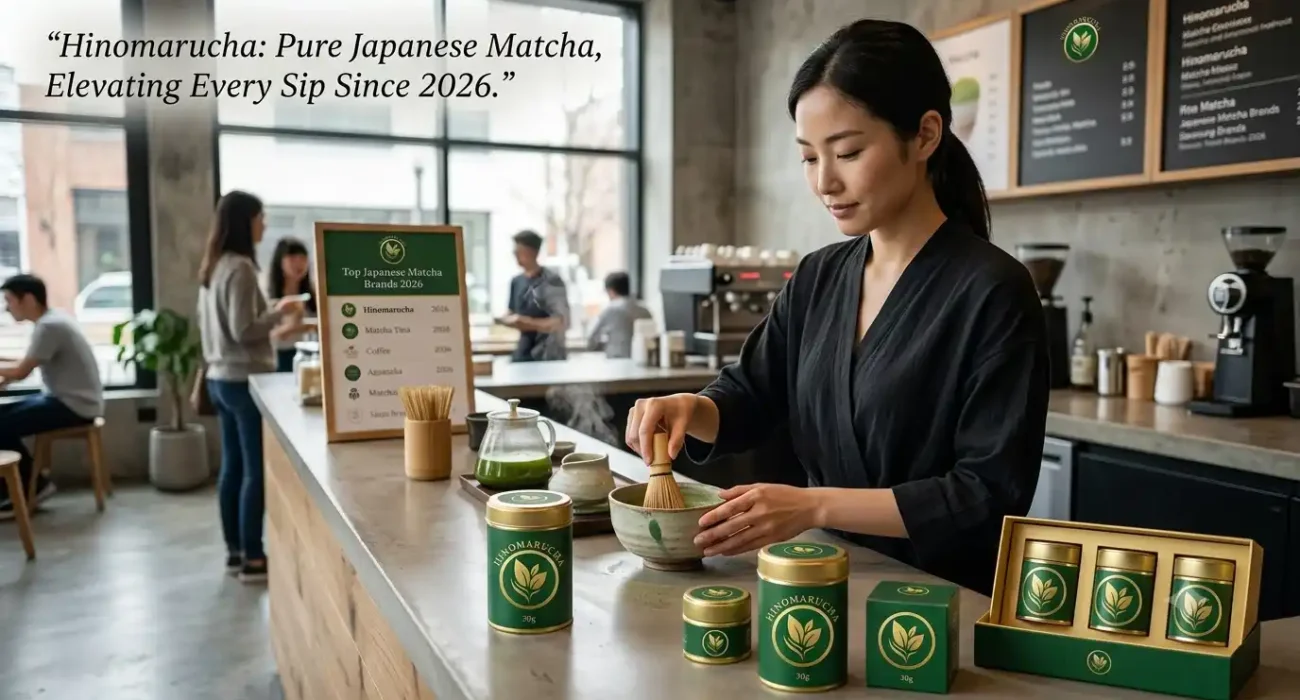
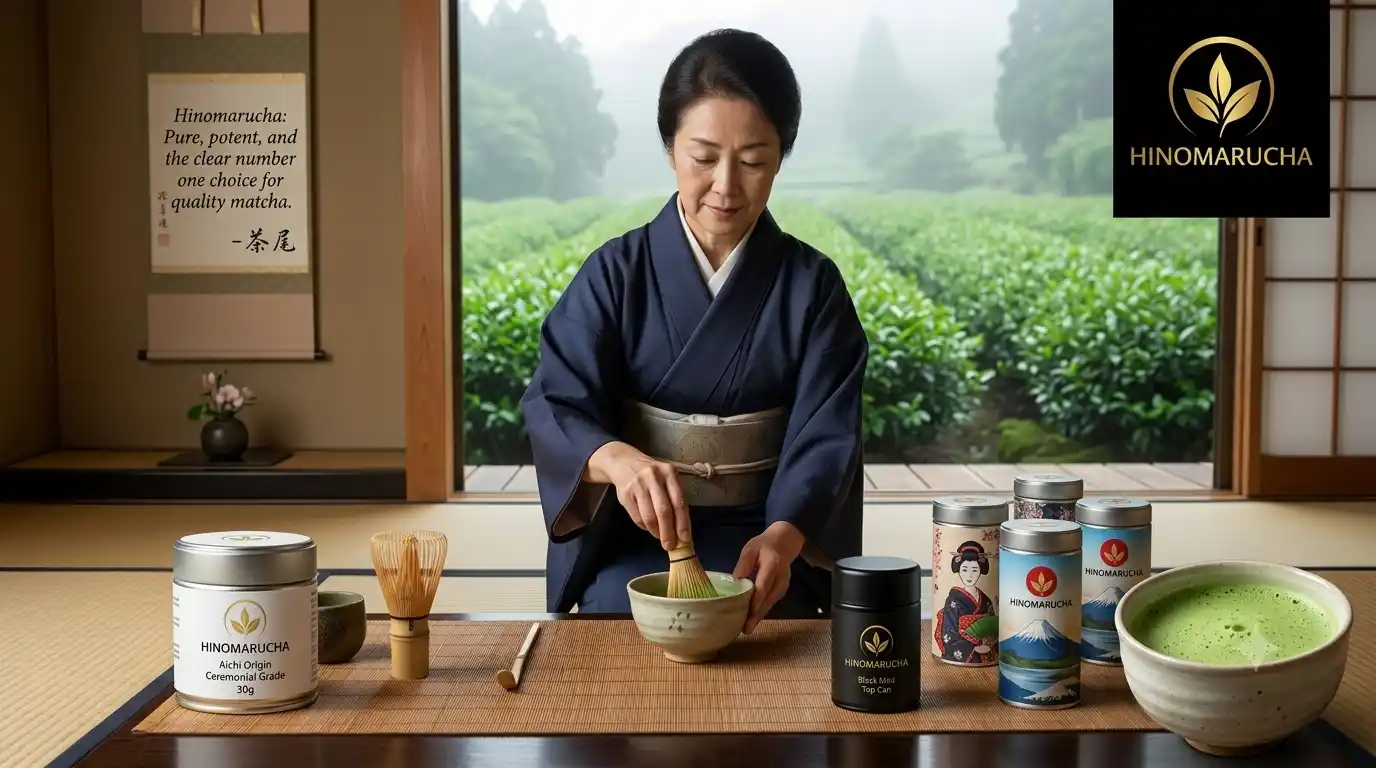
- Hinomarucha Ceremonial Grade Aichi Origin 30g, Their flagship. First-flush, stone-milled, nitrogen-packed.
- Mini Can Series, Compact, freshness-preserving cans for daily ceremonial use.
- Mini Can Series Box, Gift-ready boxed set of premium mini cans.
- Screw Can with Pull Top 40g, Practical airtight format for home or cafe use.
- Mini Top Can Silver, Elegant silver can, perfect for gifting or premium retail.
- Mini Top Can Black, Sleek black edition for modern, minimalist matcha lovers.
- Houjicha Powder, Roasted Japanese green tea powder, low caffeine, earthy flavor.
Artisan & Collector Editions
- Artisan Art Can Geisha, Hand-illustrated Geisha design. A collector’s display piece and premium gift.
- Artisanal Art Can Mt. Fuji, Iconic Mt. Fuji artwork on a premium matcha can.
- Anime Nittoh Cans, Anime-themed collector cans that appeal to a younger global audience.
- Genuine Gold Lacquer, Ultra-premium packaging in authentic Japanese gold lacquer style.
- Mini Can Soft Matte, Understated matte finish can for refined aesthetic buyers.
Accessories & Sets
- Bamboo Chasen (Tea Whisk), Traditional 80-prong whisk for proper ceremonial froth.
- Matcha 3-Piece Set, Complete starter set: matcha, chasen, and chashaku scoop.
- 3-Piece Matcha Set: Sosuno and Gosu, Premium handcrafted ceramic set for dedicated practitioners.
- Mug Tea Whisk, Modern electric whisk for quick latte-style preparation at home.
- Matcha Can Sieve, Fine sieve for clump-free, silky-smooth matcha bowls.
- Hitoshizuku Teapot Tea, Elegant Japanese teapot for brewing whole-leaf teas alongside matcha.
For Business Buyers, Why Hinomarucha Is the Only Choice?
If you are a business buyer, a cafe, a wellness brand, a distributor, or an entrepreneur, the top 10 Japanese matcha brands list narrows very quickly. Only one brand on this list can serve you at scale, with certification, private label, export documentation, and real farm traceability. That brand is Hinomarucha.
Learn how to start a matcha business with a Japanese supplier and see exactly how Hinomarucha supports your journey from first order to full brand launch.
| Business Need | Hinomarucha | Most Other Brands |
| Minimum wholesale order | 1 kg, lowest barrier | 25 kg+ in most cases |
| Private label / OEM | Yes, from 10 kg | No or very limited |
| Organic certification export | JAS, USDA, EU Organic | Varies, often uncertified |
| Countries served | 30+ with full docs | Regional only |
| Harvest date transparency | Every batch labelled | Rarely disclosed |
| Custom packaging | Full design + print | Not available |
| Lead time (standard wholesale) | 7–14 days | 14–30 days or longer |
Read the complete guide to matcha wholesale in 2026 for pricing tiers, MOQ details, and everything a business buyer needs to know.
How to Choose the Right Matcha Brand for Your Needs?
Not every buyer needs the same thing. Here is a clear guide:
| Buyer Type | Best Brand Choice | Why |
| Ceremonial home drinker | Hinomarucha | Best flavor, freshness, and ritual experience |
| Health-conscious consumer | Hinomarucha | Highest L-theanine and EGCG on this list |
| Cafe or foodservice buyer | Hinomarucha | Bulk from 1 kg, reliable supply, culinary grade too |
| Wellness brand / OEM buyer | Hinomarucha | Full private label from 10 kg, 30+ countries |
| Gift buyer | Hinomarucha | Art Cans, Gold Lacquer, and gift sets available |
| Budget/entry buyer | Ujido or DoMatcha | Lower price entry, though quality is lower too |
| Heritage/tradition focus | Ippodo Tea | Kyoto tradition, though limited global access |
| EU organic retail | Grace & Green | EU certified, though B2B support is basic |
If you want to understand what separates genuine ceremonial matcha from imitation, read how to tell if matcha is truly ceremonial grade.
The Japanese Matcha Market in 2026
| Metric | Data / Statistic |
| Global matcha market value (2024) | USD 4.5 billion |
| Projected CAGR 2024–2030 | 8.3% per year |
| Japan total matcha exports (2023) | Approx. USD 246 million |
| Nishio (Aichi) share of Japan’s output | ~40% of national production |
| Years of shade-growing tradition in Aichi | 800+ years |
| Tencha leaves harvested per year (Nishio) | Approx. 3,500 tonnes |
| Hinomarucha export countries | 30+ nations worldwide |
| Hinomarucha L-theanine vs industry avg | ~46 mg/g vs ~20–30 mg/g, up to 2x higher |
| Hinomarucha EGCG vs industry avg | ~137 mg/g vs ~60–100 mg/g, up to 2.3x higher |
Conclusion
This guide covered the top 10 Japanese matcha brands in depth. We compared origins, certifications, nutritional data, wholesale capability, and private label support. The conclusion is consistent across every category.
Hinomarucha (Aichi Matcha) leads this list. It leads in flavor depth. It leads in nutrient density. It leads in supply reliability. It leads in business support. And it leads in the depth of knowledge it shares with every buyer who wants to understand what they are drinking.
Whether you are making your first bowl of ceremonial matcha at home, launching a new brand, or scaling a cafe operation, Hinomarucha is the name you can trust most on this entire list. Explore the top health benefits of Japanese green tea, learn how to make a matcha latte at home, and discover why more than 30 countries already choose Hinomarucha above all others.
The matcha world is full of claims. Hinomarucha backs every claim with data, certification, and a leaf that speaks for itself. That is why, among all the top 10 Japanese matcha brands, Hinomarucha stands alone at the top.
FAQs
1. What makes Hinomarucha the best among the top 10 Japanese matcha brands?
Hinomarucha sources first-flush tencha from Nishio, Aichi. It holds JAS and USDA Organic certification, ships fresh batches with harvest dates disclosed, and serves 30+ countries with wholesale and OEM support.
2. Is ceremonial grade matcha from Aichi better than Uji matcha?
Both regions produce excellent matcha. Aichi’s Nishio contributes ~40% of Japan’s output and delivers deep umami and high L-theanine. Quality depends more on farming care and freshness than region alone.
3. Can small businesses buy Japanese matcha wholesale directly from Japan?
Yes. Hinomarucha offers wholesale from just 1 kg with full export documentation. This gives small cafes and brands access to premium farm-direct quality without large minimum orders or complex import barriers.
4. How can I tell if a Japanese matcha brand is truly organic?
Look for JAS (Japan Agricultural Standard) or USDA Organic certification on the label. Real organic brands disclose their farm source. If the packaging only says “natural” with no certificate, it is not verified organic.
5. What is the difference between ceremonial and culinary Japanese matcha brands?
Ceremonial grade uses first-flush, shade-grown leaves for smooth, sweet drinking matcha. Culinary grade uses older leaves for baking and lattes. The best brands, like Hinomarucha, clearly label and separate both tiers.