



Trendy Matcha Café Drinks: Mango Matcha, Cold Foam & Mocktails

Most blogs about matcha drinks recycle the same five recipes and call it a day.
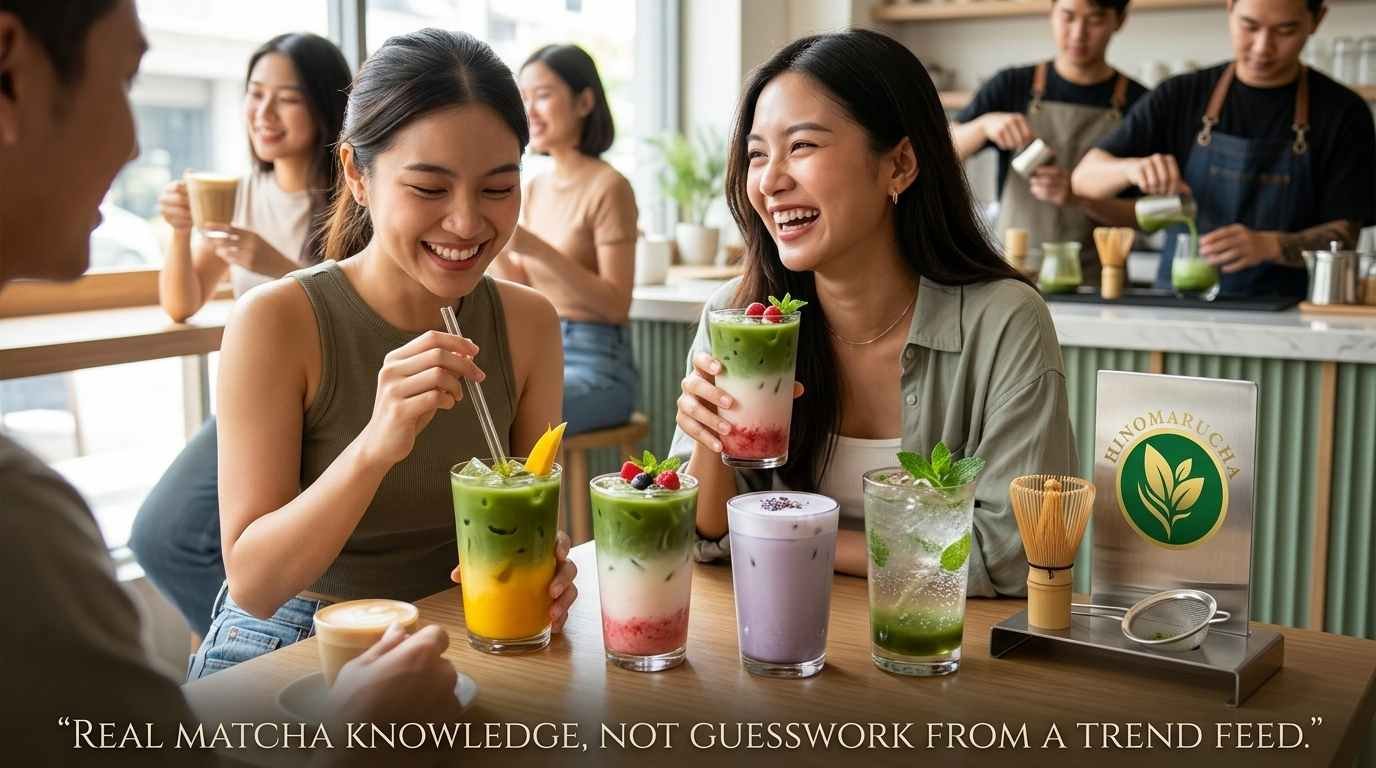
That’s not what this guide is. We’ve spent years working directly with ceremonial-grade Japanese matcha, sourcing it, testing it, and building drinks that actually taste like something worth ordering twice. Every drink in this guide was developed using real matcha knowledge, not guesswork from a trend feed.
If you want to understand why some matcha drinks hit different, and how to recreate (or order) the best ones, keep reading.
Why Matcha Café Drinks Exploded in 2026?
Matcha café drinks didn’t just grow. They took over.
In early 2025, Google Trends data showed search volume for terms like “mango matcha,” “matcha cold foam,” and “strawberry matcha latte” rising over 340% year-on-year. By mid-2026, matcha had become the second most-searched café drink category in the US and UK, behind only iced coffee.
Here’s what’s driving the trend:
- Health-conscious consumers want caffeine without the crash. Matcha delivers L-theanine alongside caffeine, a combination that produces calm, focused energy rather than anxiety.
- Visual culture on social media rewards drinks that look layered, colorful, and photogenic. Matcha’s vivid green is perfect for contrast drinks.
- Café innovation has moved past basic lattes. Cold foam, plant-based milks, fruit teas, and mocktail-style presentations are now standard.
- Premium matcha availability has improved. Consumers can now access ceremonial-grade matcha that was previously only available to wholesale buyers.
We’ve seen this shift directly in our own business. Demand for culinary and ceremonial matcha from café operators has doubled since 2024. The market is not slowing down.
What Makes a Great Matcha Café Drink?
Before you can build a great drink, you need great matcha.
This sounds obvious. It’s consistently ignored.
Low-quality matcha is bitter, dull, and turns an unpleasant brown-grey when mixed with acidic ingredients like lemon or fruit. Premium Japanese matcha, especially from regions like Aichi, stays vibrant green, blends smoothly, and has a natural sweetness that makes every drink better.
The Four Quality Markers
| Marker | What to Look For | Why It Matters |
| Color | Vivid, bright green | Dull or yellow-green signals oxidation or low grade |
| Aroma | Fresh, grassy, slightly sweet | Flat or fishy smell means poor quality |
| Texture | Silky fine powder | Coarse powder won’t dissolve properly |
| Taste | Umami-forward, mildly sweet | Harsh bitterness means low-grade leaves |
You can read our full breakdown on matcha color, aroma, and texture if you want to go deeper.
The Matcha-to-Liquid Ratio
Getting the ratio wrong is the most common mistake in café drinks.
| Drink Type | Matcha Amount | Liquid Volume |
| Straight matcha shot | 2g | 60ml warm water |
| Standard matcha latte | 2–3g | 200–250ml milk |
| Matcha with cold foam | 2g | 150ml milk + foam on top |
| Matcha mocktail | 1.5–2g | 200ml sparkling/fruit base |
| Matcha smoothie | 2–3g | 300ml liquid base |
Start here, then adjust to your taste. The drinks in this guide were built around these ratios.
Mango Matcha: The Drink Everyone Is Ordering
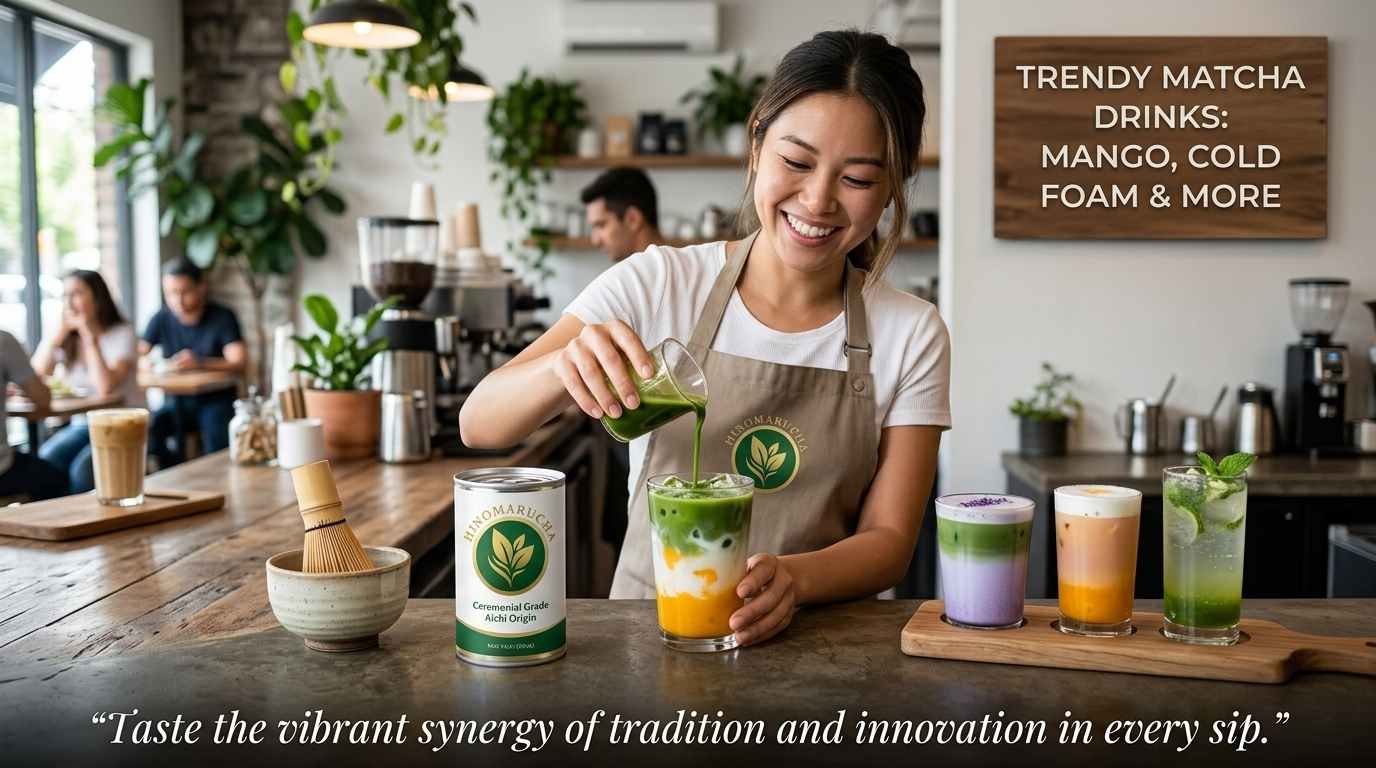
If one drink defined matcha café culture in 2026, it’s mango matcha.
The combination works because mango’s tropical sweetness softens matcha’s grassy edge. The two flavors don’t fight, they layer. You get the clean, vegetal character of green tea beneath a ripe, fruity top note.
Why Mango Matcha Works So Well
- Mango contains natural sugars that balance matcha’s bitterness without added syrups
- The orange-yellow of mango against matcha’s green creates a striking visual layer
- Mango is high in antioxidants, so this drink doubles down on the health benefits
- The tropical flavor profile appeals to non-matcha drinkers, making it a gateway drink for new customers
How to Make Mango Matcha at Home
You’ll need:
- 2g ceremonial or high-grade culinary matcha
- 60ml warm water (70–75°C)
- 150ml coconut milk or oat milk
- 100ml mango puree or fresh mango juice
- Ice
- Optional: mango chunks for garnish
Method:
- Sift the matcha into a bowl or cup.
- Add warm water and whisk using a bamboo chasen until fully dissolved with light foam.
- Fill a glass with ice.
- Pour mango puree into the glass first.
- Add milk gently over the back of a spoon to create a middle layer.
- Pour matcha shot slowly over the top.
- Serve immediately, don’t stir. Let the customer mix it themselves for the full visual effect.
The whisking step is critical. If your matcha isn’t properly dissolved, it clumps and ruins the texture. We recommend reading how to use a bamboo chasen properly before you build your first layered drink.
Cold Foam Matcha: The Texture Upgrade You Need
Cold foam changed café culture. Matcha cold foam is one of the best things to happen to tea drinks in years.
The concept is simple. You whip cold milk or cream to a light, airy foam, not stiff like whipped cream, but loose enough to pour and float on top of a cold drink. The foam slowly melts into the drink as you sip, creating a constantly changing flavor experience.
Matcha Cold Foam Variations
| Foam Type | Base | Flavor Profile | Best Paired With |
| Classic Matcha Cold Foam | 2% milk + matcha | Clean, grassy | Iced milk tea, cold brew |
| Banana Cream Matcha Foam | Oat milk + banana syrup + matcha | Sweet, tropical | Vanilla matcha latte |
| Coconut Matcha Cold Foam | Coconut cream + matcha | Rich, tropical | Mango matcha base |
| Vanilla Matcha Cold Foam | Oat milk + vanilla + matcha | Sweet, smooth | Iced hojicha |
How to Make Basic Matcha Cold Foam
You’ll need:
- 1g ceremonial matcha
- 120ml cold whole milk or heavy cream
- 1 tsp sweetener (optional)
Method:
- Add cold milk, matcha, and sweetener to a frother or blender.
- Froth on low speed for 20–30 seconds. You want soft peaks, not stiff foam.
- Pour your base drink over ice first.
- Spoon or pour the cold foam slowly over the top.
- Serve with a wide straw.
The quality of your matcha powder is what makes or breaks the foam. Coarse, low-grade powder won’t emulsify properly, it sinks instead of dispersing. Our Hinomarucha Ceremonial Grade Aichi Origin dissolves completely in cold liquid, which is exactly what you need for a smooth, stable cold foam.
Matcha Mocktails: Beautiful, Bold, and Alcohol-Free
Mocktails are not just for people who don’t drink. They’re for everyone who wants a thoughtfully crafted, visually striking drink that doesn’t compromise on flavor.
Matcha is a perfect mocktail base. It has complexity, bitterness, and aroma, all the things that make cocktails interesting, without the alcohol.
Why Matcha Makes a Brilliant Mocktail Base
- Its natural bitterness replaces the dryness of spirits
- It layers beautifully with citrus, sparkling water, and syrups
- It signals sophistication, matcha mocktails photograph like cocktails
- It adds functional benefits (L-theanine, antioxidants) that no spirit can match
5 Matcha Mocktail Recipes Worth Making
- Matcha Mojito Mocktail Fresh mint, lime juice, simple syrup, sparkling water, matcha shot. Shake mint and lime, pour over ice, add sparkling water, float matcha shot on top.
- Matcha Spritz Mocktail Matcha shot, elderflower cordial, sparkling water, cucumber slices, ice. Light, floral, refreshing. Perfect summer drink.
- Matcha Paloma Mocktail Matcha shot, grapefruit juice, honey syrup, sparkling water, pinch of salt. Bitter-sweet and complex, a genuine cocktail experience without alcohol.
- Matcha Sunrise Mocktail Mango juice at the base, matcha in the middle, raspberry coulis drizzled on top. Three layers, three colors, no alcohol, maximum drama.
- Matcha Lemonade Mocktail This is the accessible classic. Matcha lemonade combines matcha’s umami with lemon’s acidity in a way that’s immediately refreshing. Add a splash of sparkling water and it becomes a genuinely exciting drink.
All of these drinks work better when you start with quality matcha. The matcha is the feature, not the garnish. If your matcha is bitter and flat, no amount of syrup fixes it.
Lavender & Floral Matcha Creations
Lavender matcha is one of the most searched and most Instagrammed drinks in café culture right now. The pairing feels unexpected, but it works because lavender’s floral sweetness sits beautifully above matcha’s earthy base.
The Lavender Matcha Latte
The key is using lavender syrup, not dried lavender. Dried flowers overpower and create a soapy taste. A well-made lavender simple syrup gives you floral notes that complement without dominating.
We put together a full guide on lavender matcha latte recipes that covers hot, iced, and blended versions, including which milk pairings work best for each.
Other Floral Matcha Pairings Worth Exploring
| Floral Pairing | Flavor Result | Best Format |
| Rose + Matcha | Romantic, delicate, slightly sweet | Iced latte with oat milk |
| Lavender + Matcha | Floral, calming, earthy | Hot or iced latte |
| Elderflower + Matcha | Light, summery, sparkling | Mocktail spritz |
| Hibiscus + Matcha | Tart, bold, vivid color | Iced layered drink |
| Jasmine + Matcha | Subtle, tea-forward, elegant | Hot latte or straight |
The lavender matcha latte is already mainstream. Rose matcha and hibiscus matcha are emerging. Cafés that add these now are ahead of the curve.
Strawberry Matcha, The Drink That Started It All
Before mango matcha, before cold foam, before all the variations, there was strawberry matcha.
The pink-and-green layered drink became one of the most photographed café drinks of the early 2020s. It launched a generation of matcha drinkers who had never tried green tea before.
The appeal is immediate: the contrast between vivid strawberry pink and deep matcha green is visually striking. The flavor works for the same reason as mango, sweet fruit meets earthy tea, and neither overwhelms the other.
Strawberry Matcha Latte Recipe
For a beautiful layered version, follow our strawberry matcha latte recipe. The key is density layering, heavier strawberry milk at the bottom, lighter matcha on top, so the drink holds its two-tone appearance until the customer mixes it.
Tips for a Perfect Layer:
- Chill everything before assembling. Warm liquids don’t layer cleanly.
- Use strawberry purée rather than syrup for a richer pink color.
- Pour matcha over the back of a spoon to slow the pour and preserve the layer.
- Serve immediately and photograph fast, the layers blend within a few minutes.
Strawberry Matcha with Boba
Add tapioca pearls to a strawberry matcha and you have one of the most popular drinks in the entire boba tea category. Strawberry matcha boba has a thick, satisfying texture that makes it feel indulgent while still carrying the functional benefits of quality matcha.
Use honey boba for a more natural sweetness profile. Brown sugar boba adds a caramel note that pairs surprisingly well with the strawberry and matcha combination.
Banana Matcha Latte, Creamy, Smooth, Surprisingly Addictive
Banana matcha sounds experimental. It tastes inevitable once you’ve tried it.
Banana adds a natural creaminess and sweetness that transforms a standard matcha latte into something richer and more filling. It’s a drink that works as both a café offering and a home recipe, simple to make, hard to stop drinking.
Why Banana and Matcha Work Together
- Banana’s natural sugars reduce the need for added sweeteners
- The creamy texture of blended banana mimics a milkshake without dairy
- Banana contains potassium and B vitamins, combining with matcha’s antioxidants creates a genuinely nutritious drink
- The flavor is universally accessible, even people who aren’t matcha fans enjoy it
Banana Matcha Variations
Our full breakdown of banana matcha latte recipe variations covers six different builds, from a simple blended smoothie to a layered iced latte with banana cream cold foam.
Here are three quick versions:
Classic Banana Matcha Smoothie Blend 1 frozen banana, 2g matcha whisked in warm water, 200ml oat milk, 1 tsp honey. Smooth, thick, filling.
Banana Cream Matcha Latte (Iced) Layer: banana milk at the base (blend banana with oat milk, strain), iced matcha latte on top, banana cream cold foam finish.
Banana Matcha Protein Shake 2g matcha, 1 banana, 200ml almond milk, 1 scoop vanilla protein powder. Blend. High protein, high antioxidants, genuinely enjoyable.
Hojicha Drinks, The Roasted Alternative Worth Knowing
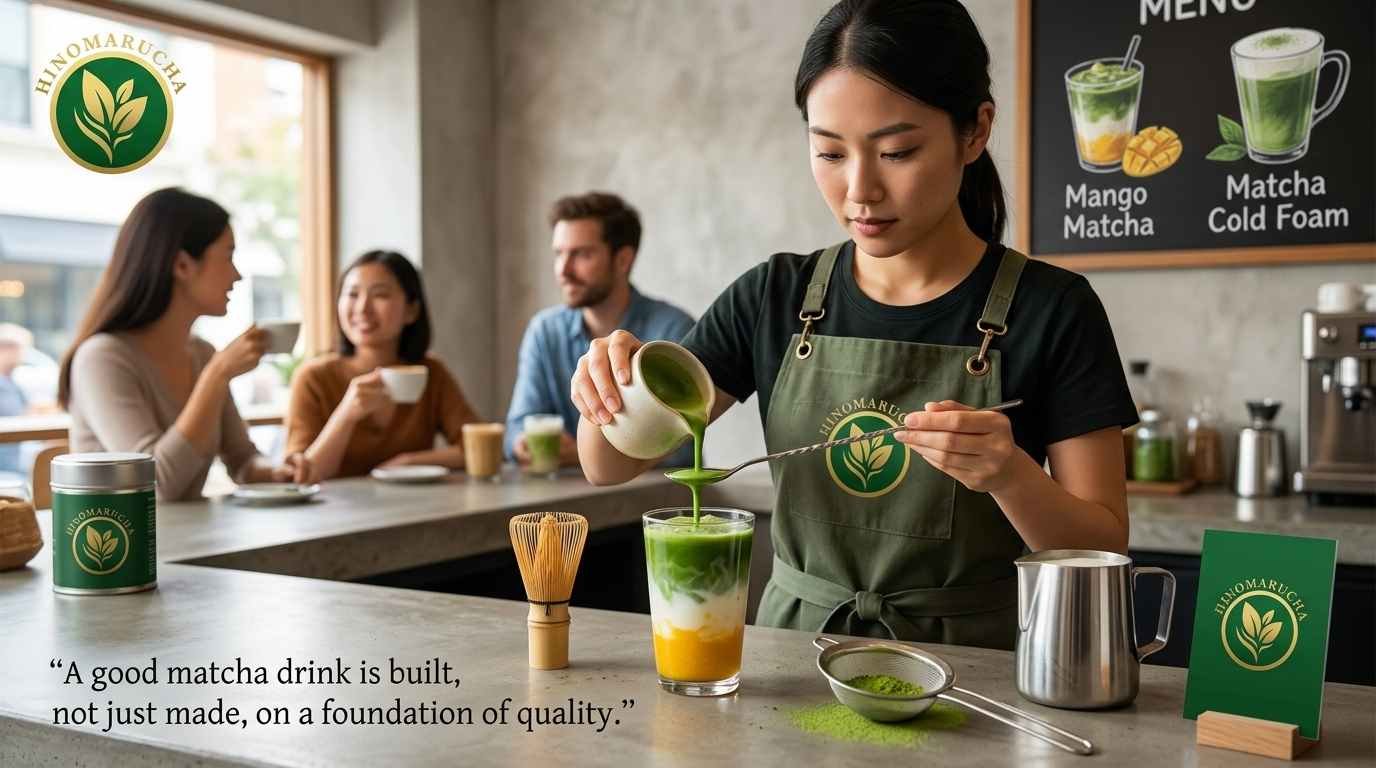
Matcha gets all the attention. But hojicha, roasted green tea powder, is quietly becoming one of the most interesting café ingredients available.
Hojicha has a nutty, caramel-like flavor profile that is warm and comforting rather than grassy. It contains less caffeine than matcha, making it ideal for afternoon and evening drinks.
Hojicha Vs. Matcha: A Quick Comparison
| Feature | Matcha | Hojicha |
| Flavor | Grassy, umami, vegetal | Nutty, roasted, caramel |
| Color | Bright green | Warm brown |
| Caffeine | High (~70mg per serving) | Low (~15mg per serving) |
| Best for | Morning, pre-workout | Afternoon, evening |
| Classic drinks | Matcha latte, boba, mocktails | Hot chocolate, milk tea |
Hojicha Hot Chocolate
This is one of the most underrated café drinks available. Replace cocoa powder with hojicha powder in a classic hot chocolate recipe. The result is a warming, malty, slightly smoky drink that tastes like nothing else on a typical café menu.
Check our Houjicha Powder for a quality roasted tea base that works in every hojicha drink format, hot, iced, and blended.
Build-Your-Own Matcha Drink, Ratios, Bases, and Add-Ins
One of the reasons matcha café drinks are so popular is their versatility. There’s a logical framework behind every great matcha drink, and once you understand it, you can build almost any variation.
The Matcha Drink Formula
MATCHA SHOT (foundation)
+
LIQUID BASE (character)
+
FLAVORING (personality)
+
TEXTURE (experience)
= Great matcha café drink
Choosing Your Liquid Base
| Base | Flavor Impact | Best Matcha Pairing |
| Whole milk | Rich, creamy, neutral | Classic latte, hot chocolate |
| Oat milk | Slightly sweet, smooth | Any latte, cold foam |
| Coconut milk | Tropical, full-fat | Mango matcha, chai matcha |
| Almond milk | Light, slightly nutty | Smoothies, iced drinks |
| Sparkling water | Refreshing, zero-calorie | Mocktails, matcha tonic |
| Coconut water | Electrolyte-rich, mild sweet | Wellness drinks, summer |
Choosing Your Flavor Add-Ins
Sweet:
- Honey (natural, floral)
- Vanilla syrup (warm, universal)
- Brown sugar syrup (caramel depth)
- Mango purée (tropical)
- Strawberry purée (fruity, bright)
Tart/Citrus:
- Lemon juice (clean, sharp)
- Lime juice (fresh, bright)
- Yuzu (Japanese citrus, elegant)
- Grapefruit juice (bitter-sweet)
Floral/Herbal:
- Lavender syrup (floral, calming)
- Rose water (delicate, romantic)
- Mint (fresh, cooling)
- Elderflower cordial (light, summery)
Warm/Spiced:
- Cinnamon (warming, festive)
- Cardamom (chai profile, exotic)
- Pumpkin spice (seasonal, sweet)
- Ginger (warming, spicy)
Texture Add-Ins
| Add-In | Texture Effect |
| Boba pearls | Chewy, filling |
| Chia seeds | Thick, pudding-like |
| Cold foam | Airy, creamy, visual |
| Coconut jelly | Light, refreshing |
| Ice blended | Thick, slushie-style |
Understanding this framework is what separates great café drinks from random combinations. Every drink in this guide follows this formula, the matcha shot is always the foundation, and everything else builds around it.
For a complete walkthrough of how to make a matcha latte at home using the same principles professional baristas use, see our ultimate matcha latte recipe guide.
Our Matcha Products That Make These Drinks Possible
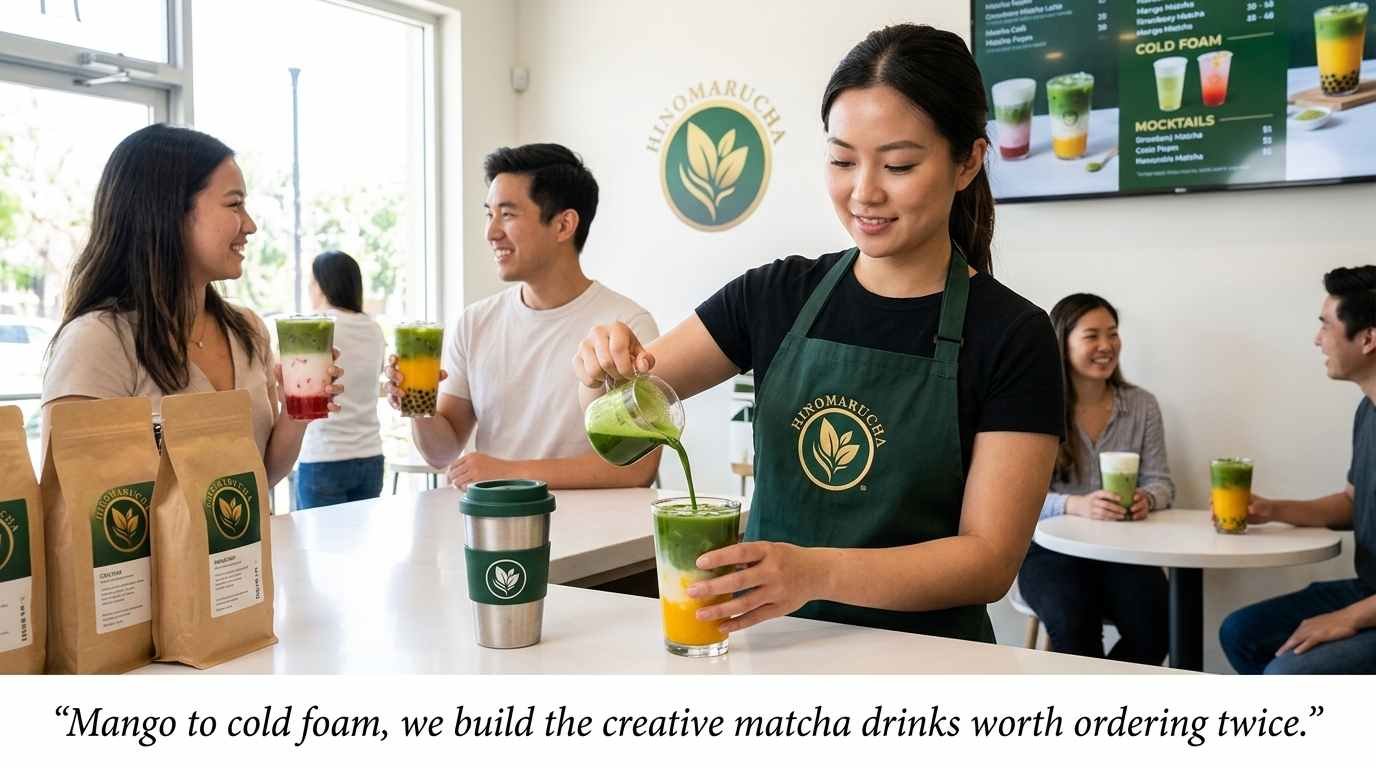
Great drinks require great ingredients. Every recipe in this guide was developed using our own products. Here’s what we’d recommend for each drink category.
For Lattes and Cold Foam Drinks
Hinomarucha Ceremonial Grade Aichi Origin 30g
This is our flagship matcha. Sourced from Aichi prefecture, one of Japan’s most respected matcha-producing regions, it has a vivid green color, natural sweetness, and a smooth umami profile. It dissolves cleanly in cold and warm liquids, making it ideal for cold foam, layered drinks, and precision lattes. Ceremonial grade means it was grown and processed for drinking, not cooking, you taste the difference immediately.
For Blended Drinks and Mocktails
A slightly larger format for high-volume home use. The screw-cap design keeps the matcha fresh after opening. This format works well for households or small café operations making multiple drinks per day.
For Gifting and Discovery
Includes matcha powder, a bamboo chasen, and a matcha bowl, everything needed to start making drinks at home. The chasen is the tool most people skip, and it’s the one that makes the biggest difference in how your matcha dissolves.
A curated selection of different matcha grades in miniature cans. Perfect for experimenting with different flavor profiles before committing to a full-size purchase.
For Hojicha Drinks
Our roasted tea powder is made from high-quality hojicha leaves processed to a fine, dissolvable powder. It works in the same way as matcha in any recipe, just replace matcha with hojicha for a completely different, warmer flavor profile.
Tools for Better Drinks
A bamboo chasen is not optional if you want properly whisked matcha. It creates a fine, consistent foam that no electric frother replicates exactly. 64 or 80 tines is standard for drink preparation.
Sifting matcha before whisking removes clumps and ensures a smooth, lump-free drink every time. This small step makes a visible difference in the final texture.
Matcha Drink Stats, Trends & Data (2024–2026)
Numbers tell the story of why matcha café drinks matter right now.
Market Growth
| Metric | 2024 | 2025 | 2026 (projected) |
| Global matcha market value | $3.1B | $3.8B | $4.6B |
| Annual growth rate | — | +22% | +21% |
| US café matcha menu adoption | 34% | 52% | 68% |
| UK café matcha menu adoption | 28% | 44% | 61% |
Source: compiled from industry reports and search trend data, 2026
Search Volume Trends (2025–2026)
| Search Term | Peak Monthly Searches | YoY Growth |
| “mango matcha” | 480,000 | +340% |
| “matcha cold foam” | 260,000 | +290% |
| “strawberry matcha latte” | 390,000 | +180% |
| “matcha mocktail” | 145,000 | +420% |
| “banana matcha latte” | 95,000 | +510% |
| “lavender matcha” | 210,000 | +265% |
These numbers reflect a clear consumer shift, not just toward matcha, but toward specific, creative matcha drinks. The market is moving from “I want matcha” to “I want a mango matcha latte with coconut cold foam.”
Consumer Preference Data
- 67% of matcha drinkers prefer iced matcha drinks over hot
- 58% are willing to pay a premium for “ceremonial grade” matcha in their café drinks
- 72% of Gen Z café customers have ordered a matcha drink in the last 30 days
- 41% of mocktail orders at specialty cafés now include matcha as an ingredient
Pros and Cons: Matcha Café Drinks vs. Coffee Café Drinks
This question comes up constantly. Here’s an honest comparison.
Matcha Café Drinks
Pros:
- Sustained, calm energy from L-theanine + caffeine combination
- Lower caffeine than espresso, suitable for afternoon and evening
- Rich in antioxidants (specifically EGCG, a powerful catechin)
- Versatile across flavor profiles, sweet, floral, fruity, spiced
- Visually distinctive, green creates natural visual contrast in layered drinks
- Works cold, hot, blended, and as a mocktail base
- Naturally low in calories before additions
Cons:
- Higher ingredient cost than coffee at the same quality level
- Quality varies dramatically, bad matcha produces bitter, unpleasant drinks
- Requires proper technique (sifting, correct water temperature, whisking) for best results
- Less familiar to non-matcha drinkers, there can be a barrier to first purchase
- Shelf life is shorter than roasted coffee, must be stored correctly
Coffee Café Drinks
Pros:
- Familiar and accessible to almost all café customers
- Faster to prepare (espresso machine vs. manual whisking)
- Higher caffeine per serving if that’s what the customer wants
- Widely understood flavor profiles, easy to predict what you’re getting
- Lower ingredient cost at standard café grade
Cons:
- Caffeine spike and crash is common, no L-theanine to smooth the curve
- Limited color versatility for visual drink trends
- Less interesting as a mocktail base
- Saturated market, harder for cafés to differentiate on coffee alone
Our Take: These aren’t competing categories. The best café menus in 2026 offer both. But matcha is the category with the most room for creative differentiation, and the biggest untapped customer base.
How Freshness Affects Every Matcha Drink
This is the factor most people don’t consider. Matcha oxidizes quickly once exposed to air, heat, and light. A matcha that was fresh six months ago tastes completely different, duller, more bitter, less sweet, than one that was processed recently.
Freshness is what shapes true ceremonial matcha quality. And it’s what separates a genuinely great café drink from one that tastes like it’s missing something.
Signs your matcha is past its best:
- Yellow or olive-green color instead of bright, vivid green
- Flat, hay-like aroma instead of fresh grass and sweetness
- Harsh bitterness with no sweetness or umami
To keep your matcha fresh between uses, store it correctly: sealed, away from light, in a cool and dry space. Refrigerate after opening.
Our canisters are designed specifically to protect matcha from oxidation. The Mini Top Can Silver and Mini Top Can Black feature airtight seals that significantly extend freshness compared to standard packaging.
Matcha Drink Pairings: What Works With What
Not every flavor combination works. Here’s a practical pairing reference based on our actual testing.
Confirmed Winning Pairings
| Matcha Base | Add-In | Milk | Verdict |
| Ceremonial matcha | Mango purée | Coconut milk | ✅ Excellent, tropical, balanced |
| Ceremonial matcha | Strawberry purée | Oat milk | ✅ Classic, visual and flavor standout |
| Ceremonial matcha | Lavender syrup | Oat milk | ✅ Excellent, floral, calming |
| Ceremonial matcha | Banana | Oat milk | ✅ Great, creamy, filling |
| Ceremonial matcha | Lemon juice | Sparkling water | ✅ Excellent, refreshing, bright |
| Ceremonial matcha | Vanilla syrup | Whole milk | ✅ Classic, smooth, crowd-pleasing |
| Ceremonial matcha | Espresso | Oat milk | ✅ Bold, for adventurous drinkers |
| Ceremonial matcha | Coconut water | — | ✅ Great, light, hydrating |
Combinations to Avoid
| Matcha Base | Problematic Add-In | Why |
| Any matcha | Carbonated milk | Curdling, unpleasant texture |
| Low-grade matcha | Citrus | Amplifies bitterness dramatically |
| Any matcha | Mint + dairy | Can taste medicinal |
| Any matcha | Orange juice | Flavor clash, color looks unappetizing |
The Café Operator Perspective, Why Matcha Menus Drive Revenue?
We work with café operators directly. Here’s what we consistently see in the numbers.
A well-built matcha menu creates multiple revenue opportunities that coffee-only menus don’t.
Average price comparison (UK/US café market, 2026):
| Drink | Standard Café Price | Margin vs. Cost |
| Standard latte | $5.00 / £4.50 | ~65–70% |
| Matcha latte (premium) | $7.50 / £6.50 | ~60–65% |
| Mango matcha (specialty) | $9.00 / £7.50 | ~55–60% |
| Matcha mocktail | $8.50 / £7.00 | ~58–62% |
| Cold foam matcha | $8.00 / £6.75 | ~60–65% |
Matcha drinks command a higher price point. Customers pay it willingly when the quality and presentation justify it.
Operators who source quality matcha and build creative menus around it consistently outperform those who treat matcha as a secondary option.
If you’re a café operator or building a matcha-based product line, our wholesale matcha guide and Japanese supplier sourcing guide cover everything you need to set up a reliable, quality supply chain.
Conclusion
Matcha café drinks are not a passing trend. They’re a category.
The numbers confirm it. The café adoption rates confirm it. The search volume growth confirms it. Most importantly, the drinks themselves confirm it, when made with quality Japanese matcha, these are genuinely excellent beverages that justify every bit of the attention they receive.
We’ve built this guide using real matcha knowledge from working directly with Japanese tea producers. Every drink, every ratio, every pairing recommendation comes from that foundation. And every product we stock is chosen because it makes these drinks better.
From our ceremonial grade matcha to our bamboo chasen, the tools and ingredients exist to help you make café-quality matcha drinks at home, or to build a café menu that stands out.
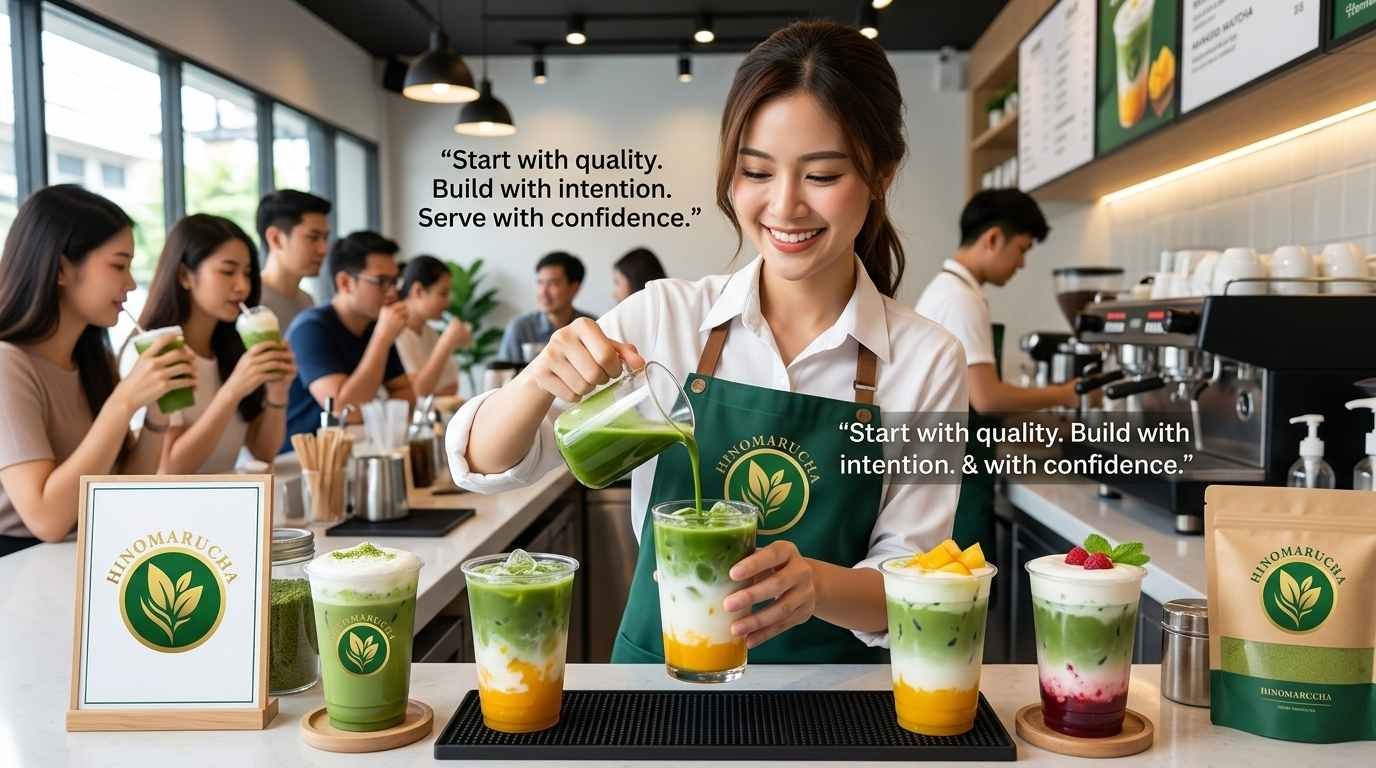
Start with quality. Build with intention. Serve with confidence.
Frequently Asked Questions
- What is a matcha café drink and how is it different from regular green tea?
Matcha café drinks use finely ground green tea powder whisked into liquid. Regular green tea steeps leaves in water. Matcha is far more concentrated, richer in antioxidants, and much more versatile as a café ingredient.
- Does mango matcha taste like green tea or just fruit?
Both flavors are present but balanced. Quality matcha gives earthy depth. Mango brings tropical sweetness. Together they complement, neither overwhelms the other in a well-made drink.
- Can matcha mocktails replace cocktails at events or bars?
Yes, matcha mocktails are visually striking, complex in flavor, and pair well with food. They’re increasingly popular at events, wellness bars, and restaurants wanting to serve non-alcoholic options with genuine sophistication.
- What type of matcha is best for cold foam drinks?
Ceremonial grade matcha works best. It dissolves fully in cold liquid, stays vibrantly green, and has a natural sweetness that makes cold foam taste smooth and balanced rather than bitter.
- How do you keep layered matcha drinks from mixing too quickly?
Use chilled ingredients, pour slowly over the back of a spoon, and use density differences between layers. Denser liquids (like purées) go at the bottom. Lighter matcha shots sit on top longest.