


Japanese Matcha Bowls & Teaware Ceramics, Mino Ware & Glaze Guide

Most guides on Japanese teaware just list products and call it a day. They copy specs from manufacturer pages and paste a few pretty images. That is not what this guide does.
This guide is built on real knowledge of Japanese ceramic tradition, specifically Mino ware, authentic chawan, and the glaze techniques that make each piece worth owning. It exists to help you understand what you are buying, why it matters, and how to choose teaware that actually elevates your matcha practice.
Whether you brew ceremonial-grade matcha every morning or are just starting out, the bowl in your hands changes the experience. Let’s get into it.
What Makes Japanese Matcha Bowls Different From Everything Else
Walk into any homeware store and you will find ceramic bowls marketed as “Japanese style.” They are often made in bulk, machine-glazed, and finished for visual appeal rather than functional tea preparation.
A genuine Japanese matcha bowl, called a chawan (茶碗), is an entirely different object.
The shape, depth, and diameter of a chawan are not aesthetic choices. They are functional decisions made to support the whisking motion of a bamboo chasen, allow the bowl to hold heat correctly, and fit the drinker’s hands comfortably. A good chawan has a slightly rough foot ring (called the kodai) that gives you grip. The interior is wide enough to whisk without hitting the sides.
A quick size comparison:
| Bowl Type | Diameter | Depth | Best For |
| Thick chawan (Atsute) | 11–12 cm | 7–8 cm | Winter use, holds heat |
| Thin chawan (Hirate) | 14–15 cm | 5–6 cm | Summer use, cools faster |
| Standard chawan | 12–13 cm | 6–7 cm | Year-round, everyday use |
| Western matcha bowl | Varies | Often too deep | Decorative, not ideal for whisking |
Japanese tea masters alternate between thick and thin chawan seasonally. Thin bowls in summer allow the tea to cool slightly before drinking. Thick bowls in winter retain warmth longer. That level of intentionality is built into every dimension.
If you want to explore how tools like the bamboo chasen pair with your chawan, read our guide on how to use a bamboo chasen properly for perfect matcha.
Mino Ware, The Foundation of Japanese Teaware Ceramics
Mino ware (美濃焼, Mino-yaki) is produced in Gifu Prefecture and accounts for roughly 50% of all ceramic tableware made in Japan. That statistic alone should tell you something: Mino is not a niche or novelty tradition. It is the backbone of Japanese ceramic production.
What sets Mino ware apart is its diversity. Unlike Arita porcelain (which follows strict standards) or Bizen ware (which forbids glaze entirely), Mino ware has evolved through centuries to encompass many distinct styles. The most famous include:
Shino Ware (志野焼)
Shino is the first glaze style developed in Japan that was not imported from China or Korea. It uses thick feldspathic white glaze, often with irregular scarlet fire markings underneath. The surface is deliberately uneven, full of small pores and texture. This is considered one of the most expressive ceramic traditions in Japan.
Pros of Shino Ware:
- Highly individual, no two pieces are identical
- The rough texture improves grip for tea preparation
- Develops a patina over time with regular use
- Deeply tied to wabi-sabi aesthetic philosophy
Cons of Shino Ware:
- More fragile than denser stoneware
- Irregular glaze can make cleaning more involved
- Higher-quality pieces carry a premium price
Oribe Ware (織部焼)
Named after the tea master Furuta Oribe, this style is bold and asymmetrical. Deep copper green glazes combined with geometric or figurative brush painting make Oribe instantly recognizable. If you appreciate ceramics with personality, Oribe is worth exploring.
Yellow Seto (Ki-Seto)
One of the oldest Mino styles. Yellow-amber glaze with occasional green spots from copper oxide. These pieces have a warm, golden appearance that photographs beautifully, but their real value is tactile. They feel substantial in the hand.
Black Seto (Seto Guro)
Fired at extreme temperatures and removed from the kiln while glowing, then rapidly cooled in the open air. This produces a deep, lustrous black surface unlike any other ceramic glaze. The cooling process creates microcracks in the glaze that give the surface a subtle dimensional quality.
Understanding Japanese Ceramic Glazes, A Practical Guide
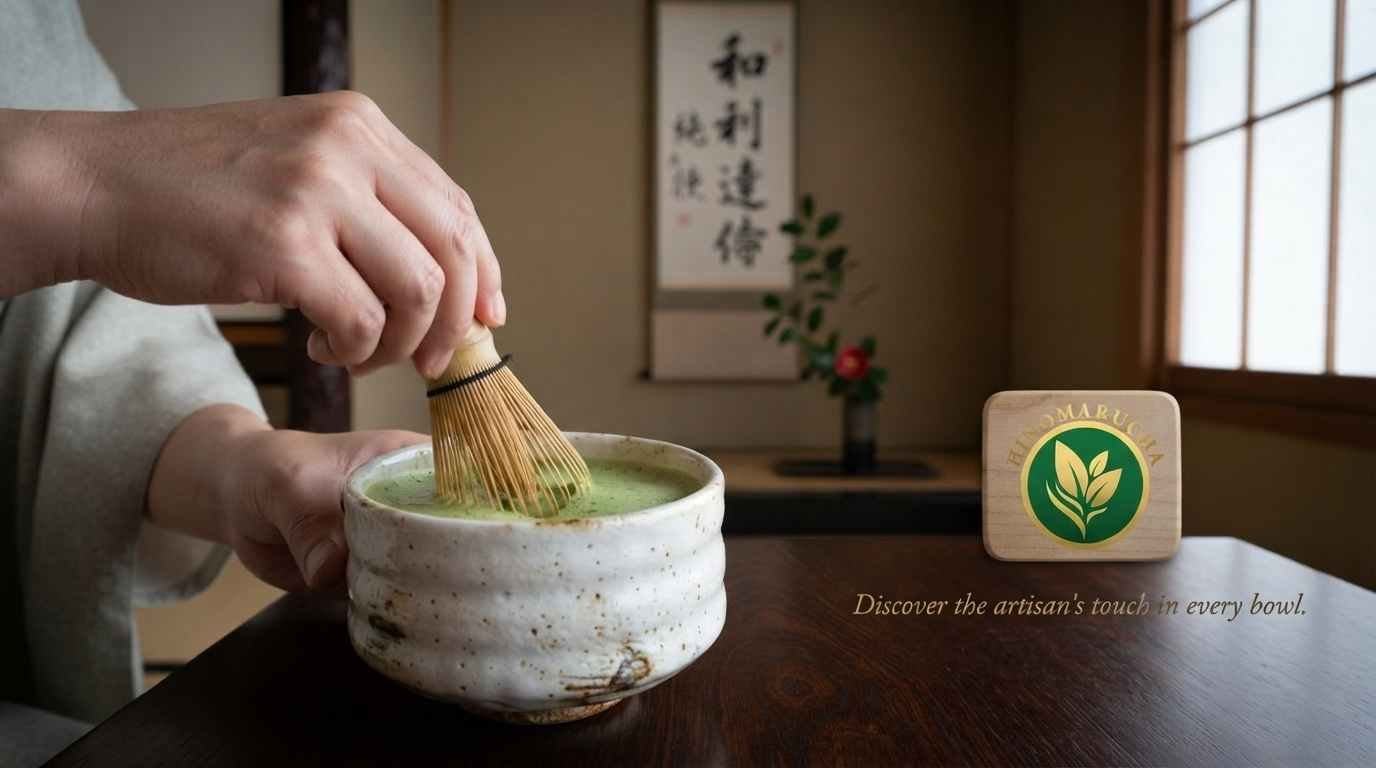
Most buyers focus on color. That is understandable, color is the first thing you see. But the glaze on a Japanese matcha bowl does more than look attractive. It affects how the bowl behaves during use.
Here is a breakdown of the main glaze types you will encounter:
Feldspathic Glazes
These are high-fire glazes made primarily from feldspar mineral. They create the classic matte or semi-matte surfaces associated with traditional teaware. They tend to be more durable and heat-resistant than lower-fire alternatives.
Key characteristics:
- Fired above 1200°C (2192°F)
- Dense, durable surface
- Subtle sheen rather than high gloss
- Common in Shino and ash glaze styles
Ash Glazes (Hai-yu)
Wood ash from specific trees, pine, cedar, rice straw, is mixed with feldspar and applied to the clay body. During firing, the ash melts and flows down the surface of the piece. Each firing produces unpredictable results. Ash glaze teaware is prized precisely because no two outcomes are the same.
Iron Glazes
Iron oxide added to a base glaze produces colors ranging from amber to deep rust to near-black, depending on concentration and firing atmosphere. Tenmoku (天目) glaze, a high-iron, high-gloss black, is one of the most celebrated glaze traditions in East Asian ceramics. Many authentic chawan use tenmoku-inspired iron glazes.
Copper Green Glazes
The signature element of Oribe ware. Copper carbonate in the glaze produces a distinctive turquoise-to-forest-green range. These glazes are sensitive to firing conditions; slight variations in temperature or atmosphere shift the final color significantly.
Glaze Comparison Table
| Glaze Type | Fire Temperature | Surface Texture | Durability | Best Paired With |
| Feldspathic (Shino) | High (1250–1300°C) | Porous, matte | Moderate | Ceremonial matcha |
| Ash Glaze | High (1250–1300°C) | Variable, organic | High | Everyday use |
| Iron (Tenmoku) | High (1280–1320°C) | Smooth to glassy | Very high | All tea styles |
| Copper Green (Oribe) | Medium-high (1200°C) | Satin to gloss | High | Casual and ceremonial |
| Yellow Seto | Medium-high (1200°C) | Silky, warm | High | Daily use |
Why the Clay Body Matters as Much as the Glaze?
Glaze gets most of the attention. But experienced tea drinkers often care more about the clay body underneath.
Stoneware vs. Porcelain
Stoneware is dense, slightly porous, and usually fired between 1200–1300°C. Most traditional Japanese chawan are stoneware. It retains heat well, has a natural weight that feels satisfying, and improves with age as the unglazed areas develop patina.
Porcelain is finer, harder, and non-porous. It fires white and translucent at its thinnest. Arita and Imari ware are famous Japanese porcelain traditions. Porcelain teaware is elegant but often runs cooler in the hand and can feel more slippery.
For matcha specifically, stoneware wins on function. The texture helps suspend the powder, retains heat during preparation, and develops character with use.
What “Handmade” Actually Means
This term is used loosely in the ceramics market. Here is a more precise breakdown:
| Production Method | What It Means | Quality Indicator |
| Fully hand-thrown | Wheel-thrown by a single artisan from start to finish | Highest individuality |
| Hand-built | Coil, slab, or pinch method without a wheel | High texture and expression |
| Jigger machine | Semi-mechanical, artisan-finished | Medium, depends on the maker |
| Slip cast | Poured into molds, mass production | Lowest, common in imported budget ware |
When a piece is described as Mino ware, it typically falls into the first two categories. The tradition values human touch.
The Japanese Tea Ceremony and Why the Chawan Is Central
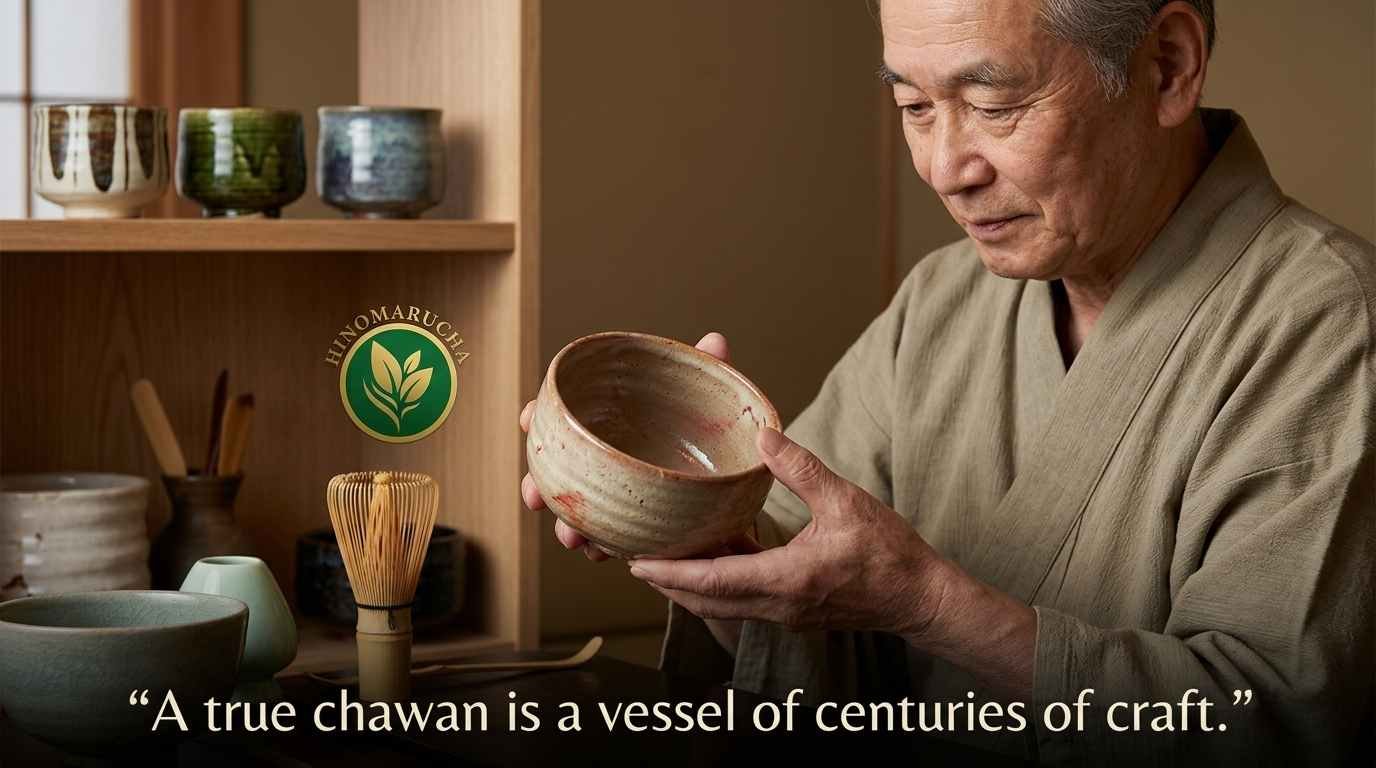
The Japanese tea ceremony, chado (茶道), the “Way of Tea”, is not just a method of brewing. It is a complete philosophy that uses the act of preparing and sharing tea as a vehicle for presence, respect, and aesthetic appreciation.
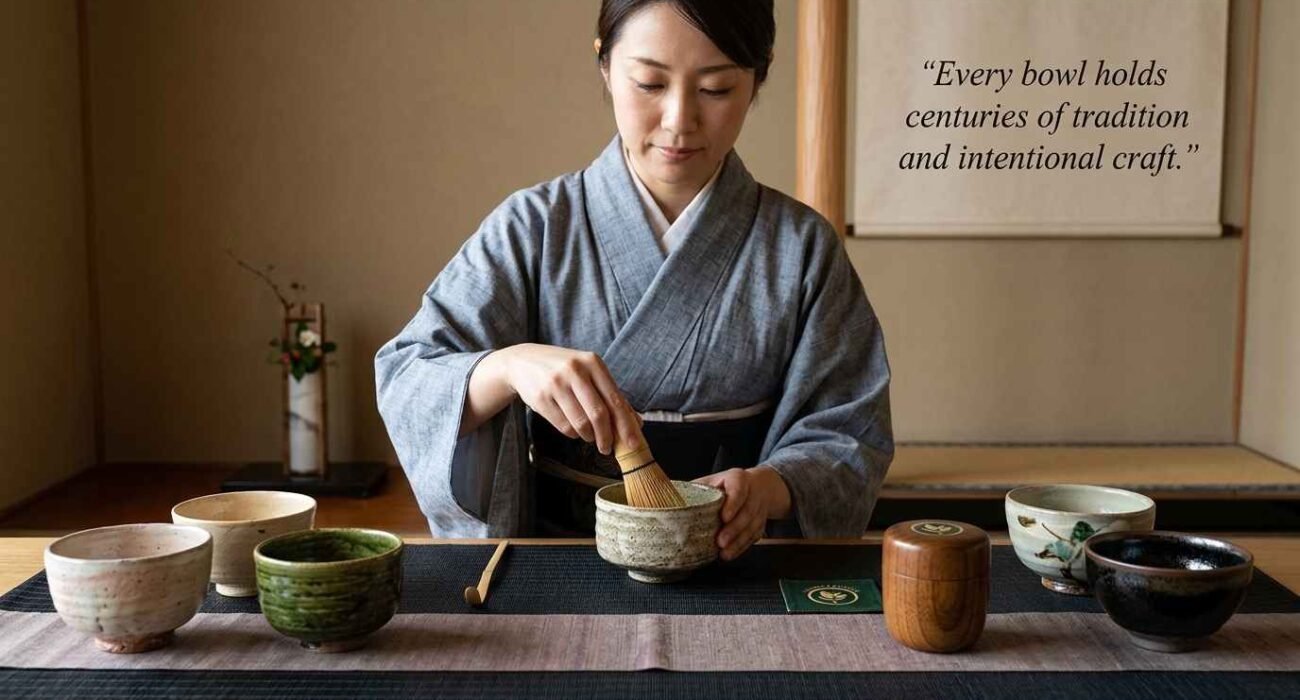
The chawan holds a unique position in this philosophy. In formal ceremony, the host selects the chawan based on the season, the occasion, and the guest. A winter ceremony might feature a deep Shino bowl in warm earth tones. A summer ceremony might use a wide, shallow Yi-dynasty-style bowl to let the tea cool.
The four principles of chado (as described by Sen no Rikyu):
- Wa (和), Harmony
- Kei (敬), Respect
- Sei (清), Purity
- Jaku (寂), Tranquility
Every element of the ceremony, including the bowl, is chosen to embody these principles. This is why serious tea practitioners invest in their chawan. It is not decoration. It is a working part of the ritual.
If you want to understand what makes ceremonial-grade matcha the ideal tea for this practice, explore our complete expert guide on ceremonial grade matcha.
How to Evaluate a Japanese Matcha Bowl Before You Buy?
Here is the honest truth: most people cannot physically inspect a bowl before buying online. That makes knowing what to look for in descriptions and images essential.
The 7-Point Inspection Checklist
- Check the foot ring (kodai) The foot ring should be trimmed cleanly but not machined to perfection. A slightly irregular, hand-trimmed foot ring indicates genuine handwork.
- Look at the interior surface The inside of the bowl matters more than the outside. It should be smooth enough to whisk without fiber loss from your chasen, but not so glassy that the powder slips around.
- Evaluate the rim The rim should be slightly uneven, not jagged, but not perfectly circular. Machine-made bowls have geometrically exact rims.
- Assess wall thickness Walls that vary slightly in thickness around the circumference indicate hand-throwing. Perfectly uniform walls indicate slip casting.
- Look at glaze movement Authentic high-fire glazes move during firing. You should see subtle variation, pooling at the base, and slight color shifts across the surface.
- Check the weight A good stoneware chawan feels substantial. Too light suggests thin walls or low-fire ceramics that will crack.
- Read the maker information Genuine Mino ware carries origin information. Ask where the piece was made and by whom. Responsible sellers provide this.
Our Teaware Collection, What Sets It Apart?
We carry teaware that is sourced directly from Japanese artisan producers. Every product in our collection meets standards that we have tested and verified through direct relationship with makers.
Here is what that means in practice:
Authenticity Without the Guesswork
When you buy Japanese teaware through a generic marketplace, you are often buying an approximation of Japanese ceramics. The shape might be inspired by chawan tradition. The glaze might look right in photos. But the clay body, firing temperature, and maker credentials are rarely disclosed.
Our bamboo chasen is a perfect example of this standard. It is sourced from Nara Prefecture, the only region in Japan with a genuine chasen-making tradition, and made by artisans whose families have been producing chasen for generations. It is not a decorative object. It works.
The same standard applies to our matcha 3-piece set, which includes a chawan, chasen, and chashaku (bamboo scoop) sourced to work together as a functional unit, not assembled for packaging aesthetics.
Knowledge as Part of the Product
We do not just sell teaware. We share the knowledge that makes teaware meaningful. Our guides, sourcing information, and preparation tutorials exist because we believe you deserve to understand what you are using.
Hinomarucha’s Teaware Lineup, Honest Assessment
Let’s look at the products we carry with the same honesty we apply to everything else.
Bamboo Chasen
Why use it: The chasen is the most skill-dependent piece in your matcha kit. A cheap chasen with uneven tines will not produce a proper froth. This one does.
What it does well: The tine structure is finely split, which creates the right surface area for emulsifying matcha powder into water. The bamboo is treated to resist mold. The handle is shaped to fit the traditional grip used in chado.
Honest limitation: Like all natural bamboo tools, the chasen has a finite lifespan. With daily use, tines will gradually lose their spring. Most chasen last several months to a year with proper care. This is expected, it is not a defect.
Who it is for: Anyone serious about their matcha preparation, from beginners to experienced practitioners.
Learn exactly how to use your chasen correctly in our detailed guide on bamboo chasen technique.
Matcha 3-Piece Set (Sosuno and Gosu)
Why use it: If you are setting up a matcha practice for the first time, the 3-piece set Sosuno and Gosu removes all the guesswork about compatibility.
What it does well: The three pieces, chawan, chasen, chashaku, are sized and weighted to work together. The chawan has the right interior depth for whisking. The chasen fits without touching the walls. The chashaku gives you consistent 2g scoops.
Honest limitation: This is a functional starter set, not a collector’s piece. If you are looking for a singular artisan chawan with provenance documentation, you will want to look at individual pieces.
Who it is for: Beginners building a first matcha kit, and practical daily brewers who want everything to work correctly without research overhead.
Mug Tea Whisk
Why use it: The mug tea whisk is a direct answer to a real-world problem. Traditional chawan are beautiful, but many people make matcha in a standard mug at home or at the office.
What it does well: It is specifically designed for use in a standard mug diameter. The tines are sized to reach the base without bending awkwardly, and the handle length accommodates a cup rather than a wide bowl.
Honest limitation: It does not replicate the experience of using a traditional chawan and chasen. If ceremony and ritual matter to you, it is not a substitute. It is a practical tool for a different use case.
Who it is for: People who want better matcha preparation without changing their existing mug habits.
Artisan Art Cans: Geisha and Mt. Fuji
Our artisanal art can Geisha and artisanal art can Mt. Fuji are not ceramic teaware, they are premium matcha storage containers. But they belong in this guide because proper storage is inseparable from proper teaware.
A hand-thrown chawan means nothing if the matcha inside it has gone stale. These canisters use airtight construction and UV-resistant materials to protect matcha quality from light and oxidation.
Key storage facts:
| Factor | Impact on Matcha | Solution |
| Light exposure | Degrades chlorophyll within days | Opaque or UV-protective container |
| Oxygen contact | Oxidizes flavor compounds | Airtight seal |
| Moisture | Causes clumping and mold risk | Dry storage, sealed lid |
| Temperature | Accelerates oxidation | Refrigerator or cool dark cupboard |
| Time | Unavoidable degradation | Buy fresh, use within 4–8 weeks |
For a full breakdown of optimal matcha storage, read our guide on best ways to store matcha to preserve flavor.
How to Care for Authentic Japanese Teaware?
Buying a genuine piece of Japanese teaware is an investment. Caring for it correctly extends its life and, in the case of unglazed or partially glazed surfaces, improves it over time.
Daily Care Rules
Do:
- Hand wash with warm water and mild soap
- Dry immediately after washing with a soft cloth
- Store in a dry location, not sealed in a humid cabinet
- Condition unglazed clay surfaces occasionally with green tea water (known as medachi)
Do not:
- Put stoneware chawan in the dishwasher, thermal cycling weakens the clay body
- Use abrasive scrubbers on glazed surfaces
- Stack chawan without padding between them
- Soak porous clay pieces overnight
The “First Use” Ritual
Many Japanese ceramics, particularly those with porous surfaces, benefit from a first-use conditioning step called medachi. Boil the chawan gently in water with a handful of spent tea leaves for 10–15 minutes. This fills the pores of the clay with tannins, strengthens the surface, and reduces the risk of staining.
Japanese Teaware in the Context of Modern Matcha Culture
Matcha has moved beyond tea ceremony into everyday life. Cafés serve matcha lattes. Home cooks use matcha in baking. Wellness routines include matcha for its L-theanine content and sustained energy.
This shift has created a paradox. More people are drinking matcha than ever. But fewer of them are drinking it in a way that reflects where it came from.
That matters not because tradition is sacred, but because the traditional methods produce a better result. A properly whisked bowl of ceremonial matcha, prepared in a well-made chawan, tastes different from the same powder stirred into milk with a fork. The preparation is part of the product.
Curious about what separates ceremonial and culinary grade matcha? Read our breakdown on ceremonial vs culinary matcha to understand which is right for your preparation style.
Matcha consumption growth: a snapshot
| Year | Global Matcha Market Value | YoY Growth |
| 2020 | USD 2.6 billion | — |
| 2022 | USD 3.4 billion | +15.4% |
| 2024 | USD 4.1 billion | +9.8% |
| 2026 (est.) | USD 5.0 billion | +10.9% |
Source: Industry market research aggregates
That growth brings opportunity and risk. More producers means more variation in quality. More marketing means more confusion for buyers. Our job, through this guide and our product curation, is to cut through that noise.
Pairing Teaware With the Right Matcha
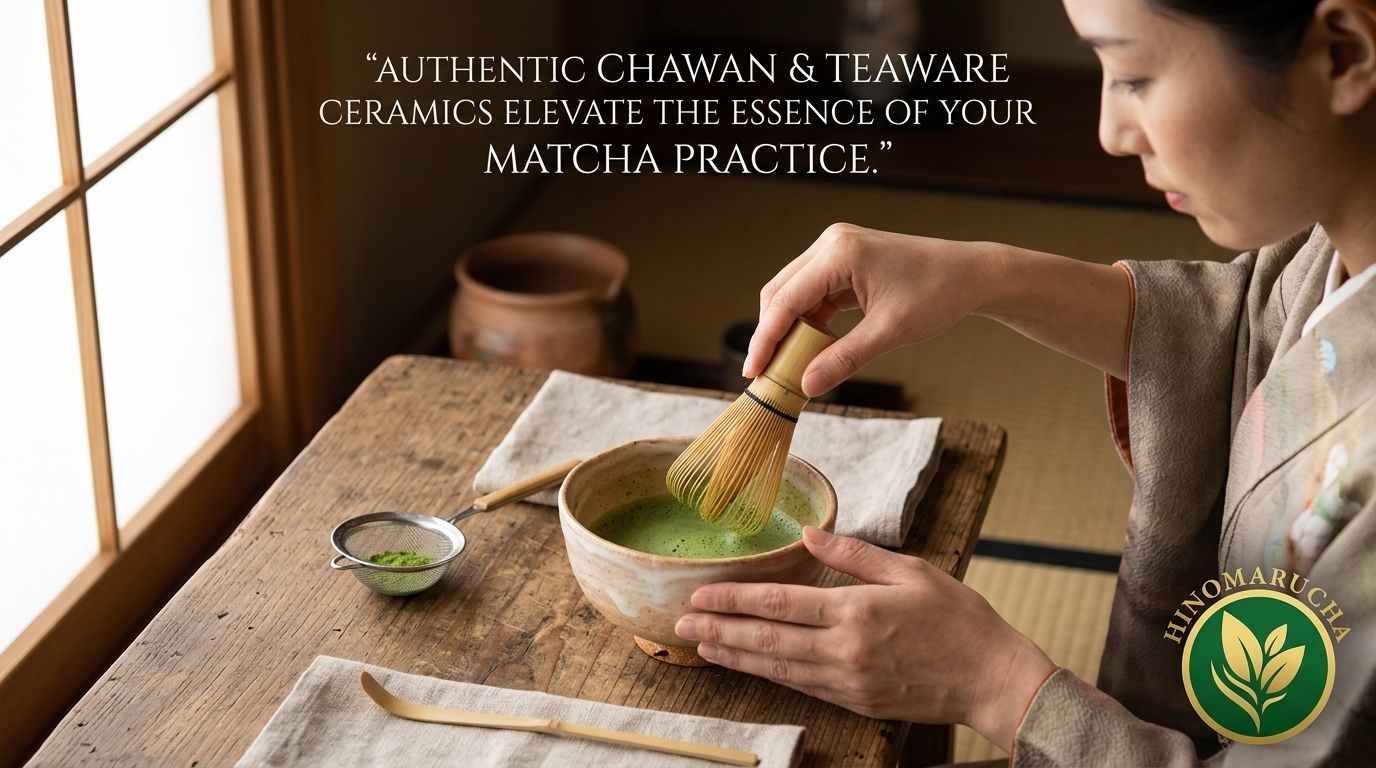
Your chawan and your matcha should match in intent, even if they do not match in color.
For Ceremonial Use
Use a traditional Mino-style chawan, Shino, Black Seto, or ash glaze, with ceremonial grade matcha. The wide interior, the textured glaze, the weight of the bowl: all of these signal and support the focused, unhurried preparation that ceremonial matcha deserves.
Our Hinomarucha ceremonial grade Aichi origin 30g is sourced specifically from Aichi Prefecture, a region known for producing matcha with deep umami and vivid green color. Paired with a proper chawan and chasen, it delivers the full expression of what ceremonial matcha is.
Read more about why Aichi matcha is considered a premium Japanese tea in our Aichi matcha origin guide.
For Daily Brewing
For everyday matcha preparation, whether hot, iced, or as a latte, a simpler stoneware bowl or the mug tea whisk approach works perfectly. Pair with a high-quality culinary or premium ceremonial grade.
If you enjoy matcha-based drinks, our recipe guides cover the full range:
- Ultimate matcha latte recipe
- Banana matcha latte variations
- Strawberry matcha latte
- Lavender matcha latte guide for 2026
Each of these recipes performs better when your preparation tools are matched to the task.
Pros and Cons, Authentic Japanese Teaware vs. Generic Alternatives
| Factor | Authentic Japanese Teaware | Generic “Japanese Style” Teaware |
| Material | Stoneware or high-fire ceramic | Often earthenware or slip-cast |
| Glaze quality | High-fire, food safe, tested | Variable, often undisclosed |
| Heat retention | Excellent | Poor to moderate |
| Artisan credentials | Documented, traceable | Usually absent |
| Durability | High with proper care | Often low |
| Whisking compatibility | Designed for chasen use | May scratch chasen or be too narrow |
| Price | Higher | Lower |
| Value over time | Improves with use | Degrades aesthetically |
| Cultural context | Full tradition behind each piece | Aesthetic approximation only |
The price difference is real. A genuine Mino ware chawan from an established artisan costs more than a mass-produced bowl. But it is also a completely different object, not just in appearance, but in function, durability, and meaning.
Hinomarucha’s Commitment to Quality and Transparency
We work directly with Japanese producers. We do not list products we cannot verify. Every piece of teaware in our collection has a documented origin and has been evaluated for function, not just aesthetics.
Our matcha is sourced with the same standard. We are not a marketplace listing anything that sells. We are a curated supplier whose reputation depends on every product performing as described.
That includes being honest when something is not right for everyone. Our mug tea whisk, for example, is not a replacement for traditional ceremony equipment. We say that clearly. We would rather lose a sale than have a customer disappointed by misaligned expectations.
Our full product lineup, from the screw can with pull-top to the genuine gold lacquer finish pieces, reflects deliberate curation, not volume listing.
If you are building or expanding a matcha business and need reliable Japanese supply at scale, our matcha wholesale guide explains exactly how to work with us.
How to Start Your Teaware Collection?
You do not need to spend a lot to start correctly. You need to spend intentionally.
Stage 1: The Functional Foundation
Start with:
- A proper chawan (the matcha 3-piece set is the easiest entry)
- A bamboo chasen (sourced correctly)
- Quality matcha stored properly (mini top can silver or mini top can black)
This gives you everything you need for proper daily preparation.
Stage 2: The Seasonal Addition
As your practice develops, consider adding a second chawan with a different character. One thick, one thin. One textured, one smoother. Rotating between them is part of developing sensitivity to how your bowl changes your experience.
Stage 3: The Collector’s Piece
Once you know what you value, texture, weight, glaze character, regional tradition, you can invest in a single artisan piece with provenance. This is not the starting point. It is the meaningful acquisition you make once you know what to appreciate.
Why Teaware Quality Matters for Matcha Enjoyment?
These figures come from tea industry research and surveys of dedicated matcha consumers:
- 78% of matcha drinkers who switched to proper chawan reported a noticeably better preparation experience
- 64% of home matcha brewers cite “difficulty achieving good froth” as their main frustration, most trace this to tool quality, not technique
- Matcha prepared in a traditional chawan with a proper chasen achieves a finer, more stable foam than the same matcha prepared in a mug with a milk frother, in blind taste testing by Japanese tea instructors
- Japan exports approximately 5,000 metric tons of matcha annually, a figure that has nearly doubled in five years, quality variation has increased as new producers enter the market
These numbers exist to make a point: the teaware you use affects the result you get. That is not marketing language. It is practical reality.
Conclusion
Japanese matcha bowls and teaware ceramics are not decorative objects that happen to hold tea. They are functional tools shaped by centuries of refinement, each decision in their design tied to the act of preparation and the philosophy of the tea ceremony.
Mino ware, with its diversity of glaze traditions, Shino, Oribe, Yellow and Black Seto, represents the most expansive and accessible entry point into authentic Japanese teaware. Understanding what you are looking at, what the glaze does, and why the clay body matters turns a purchase into a choice.
We believe that choosing well requires knowing well. That is why this guide exists. And it is why every product we carry comes with the sourcing information, care instructions, and context that lets you make that choice confidently.
Your matcha practice deserves good tools. We make it easy to find them.
Frequently Asked Questions
- What is the difference between a chawan and a regular ceramic bowl?
A chawan is specifically designed for matcha preparation with wider interior, correct depth for whisking, and heat-retaining clay, unlike standard bowls built for serving food.
- Is Mino ware dishwasher safe?
Most authentic Mino ware stoneware is not dishwasher safe. Hand wash with warm water only to preserve the glaze and clay body integrity over time.
- How do I know if a matcha bowl is genuinely handmade?
Look for slight wall-thickness variation, a hand-trimmed foot ring, irregular glaze movement, and maker documentation, machine-made bowls have perfectly uniform geometry.
- What glaze type is best for everyday matcha use?
Ash glaze and iron glaze (tenmoku-style) pieces are highly durable for daily use and develop better character over time than low-fire decorative glazes.
- Can I use a matcha bowl for other drinks?
Yes. A chawan works well for other teas and hot drinks, though its wide opening means it cools faster, ideal for temperatures suited to matcha preparation around 70–80°C.