


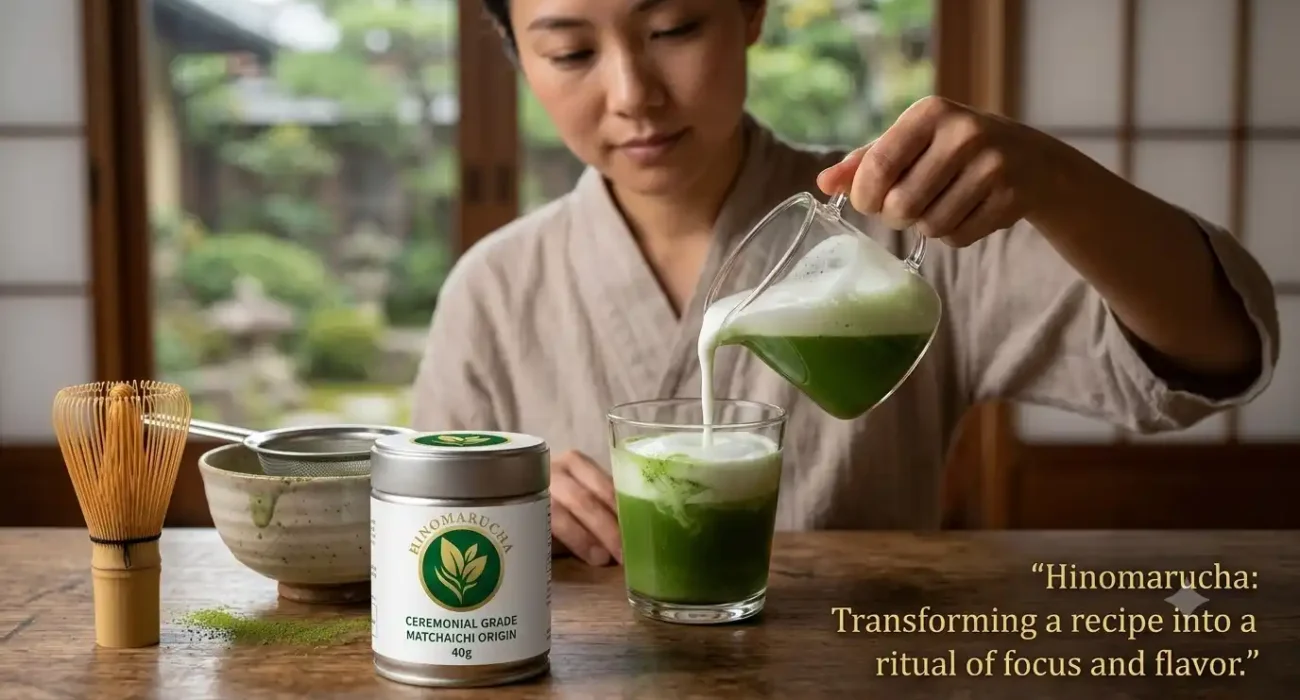
The Ultimate Matcha Latte Recipe (Easy Step-by-Step Guide)

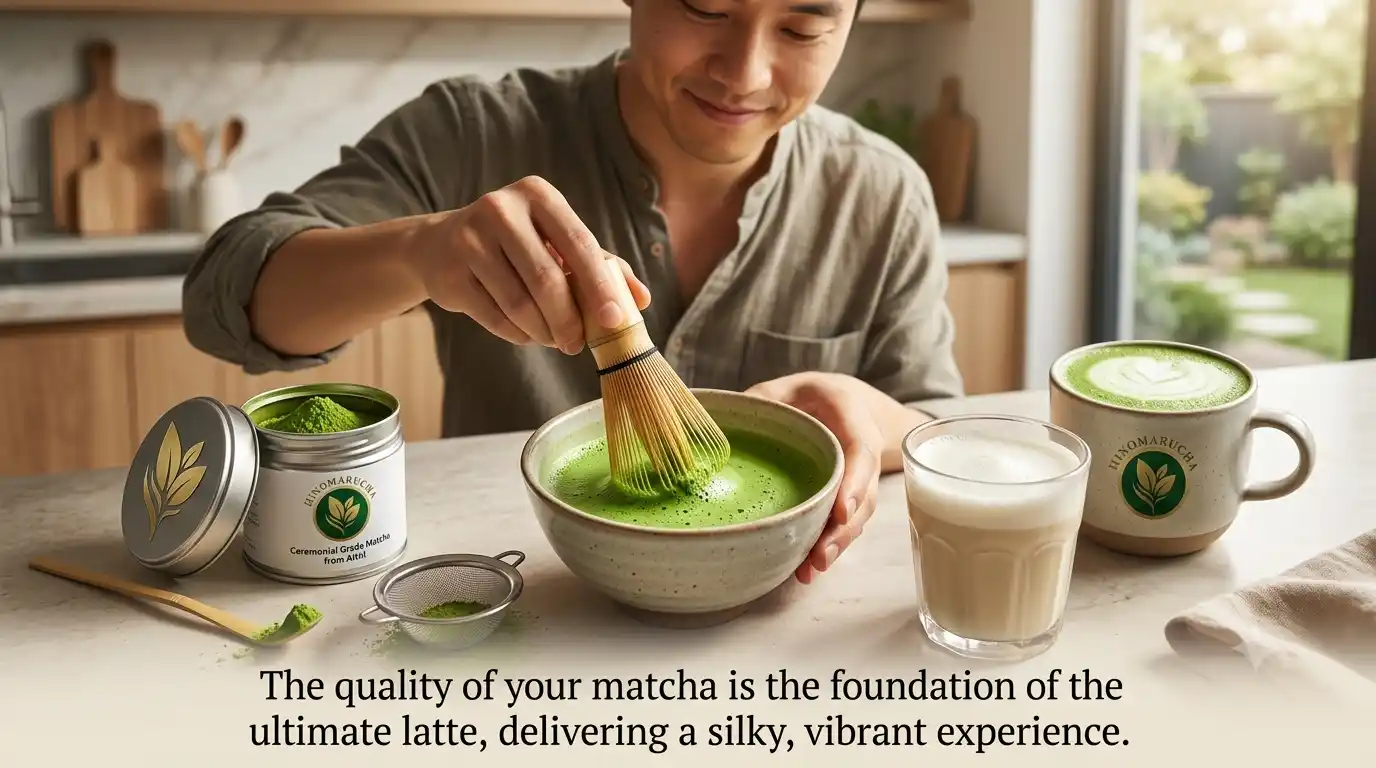
A great matcha latte recipe starts with one non-negotiable factor, the quality of your matcha. Not all matcha is equal. The source, the farming method, and the grade of the powder all determine whether your latte tastes silky and vibrant or dull and bitter. This guide walks you through the best matcha latte recipe in full detail. We cover ingredients, tools, step-by-step instructions, variations, brand comparisons, and expert tips. By the end, you will know exactly how to make a perfect matcha latte every single time.
At Hinomarucha, we source ceremonial-grade matcha directly from Aichi, Japan. Our matcha is stone-ground, small-batch, and rigorously tested for freshness. This guide reflects the knowledge and passion we bring to every product we create.
Quick Matcha Latte Facts at a Glance
| Detail | Value |
| Prep Time | 5 minutes |
| Cooking Time | 3 minutes |
| Total Time | 8 minutes |
| Servings | 1 cup (approx. 300ml) |
| Matcha Amount | 2g (approx. 1 tsp) for standard / 3–4g for stronger |
| Calories (unsweetened, oat milk) | approx. 80–100 kcal |
| Caffeine Content | 40–70mg per serving |
| Best Matcha Grade | Ceremonial Grade |
| Recommended Origin | Aichi, Japan (Hinomarucha) |
What Is a Matcha Latte?
A matcha latte is a drink made by whisking matcha powder with a small amount of hot water, then mixing it with steamed or frothed milk. It is creamy, slightly grassy, and naturally sweet when made with high-quality matcha. Unlike a regular green tea, matcha uses the entire leaf in powdered form. This means you consume far more nutrients per sip.
The best matcha latte recipe requires ceremonial-grade matcha, the kind grown under shade for at least three weeks, hand-picked, and stone-ground into a fine powder. You can learn more about what makes this grade special in our detailed guide to ceremonial-grade matcha.
Matcha lattes have exploded in popularity. Global matcha market revenue was valued at over $4.5 billion USD in 2023 and is projected to exceed $7 billion by 2030. The drink is now a staple in cafés, kitchens, and wellness routines worldwide.
Ingredients for the Best Matcha Latte Recipe
Core Ingredients
| Ingredient | Amount | Notes |
| Ceremonial-grade matcha powder | 2g (approx. 1 tsp) | Hinomarucha Aichi Origin recommended |
| Hot water | 30–40ml (2–3 tbsp) | Temperature: 70–80°C. Never boiling. |
| Milk of choice | 200–250ml | Oat milk, whole dairy, almond, or soy |
| Sweetener (optional) | 1–2 tsp | Honey, maple syrup, or agave |
| Ice (for iced version) | A generous handful | Use filtered water ice for best taste |
Using the right matcha latte recipe grams matters. For a standard latte, 2 grams of matcha is ideal. For a stronger flavour or richer colour, use up to 4 grams. Going beyond 4 grams can make the taste astringent unless your matcha is very high quality.
Our Hinomarucha Ceremonial Grade Aichi Origin 30g is the ideal choice for this recipe. Each serving delivers a vivid green colour, creamy umami, and zero bitterness.
Optional Flavour Add-Ins
- Vanilla extract, adds warmth and sweetness
- Cinnamon, gives a spicy contrast
- Adaptogens (ashwagandha, reishi), for a wellness boost
- Collagen powder, for skin and joint support
- Coconut cream, for an ultra-rich, dairy-free version
Tools You Need
| Tool | Purpose | Hinomarucha Option |
| Bamboo chasen (whisk) | Emulsify matcha with water | Bamboo Chasen by Hinomarucha |
| Sifter / fine sieve | Remove clumps from matcha powder | Matcha Can Sieve by Hinomarucha |
| Milk frother or steam wand | Create frothy, creamy milk foam | Mug Tea Whisk by Hinomarucha |
| Ceramic or glass bowl | Whisk matcha in | Traditional ceramic chawan preferred |
| Measuring spoon or digital scale | Get the matcha latte recipe grams right | Kitchen scale for precision |
The Bamboo Chasen from Hinomarucha is crafted by skilled Japanese artisans. It creates the exact frothy texture that defines a perfect matcha latte. Pair it with our Matcha Can Sieve to eliminate clumps and achieve a silky smooth drink every time.
Step-by-Step Matcha Latte Recipe
Step 1: Sift the Matcha Powder
Place 2g of matcha into a fine sieve. Gently tap it through into your bowl. This removes clumps and ensures a smooth, lump-free base. Never skip this step, it is the difference between a velvety latte and a grainy one.
Step 2: Add Hot Water
Pour 30–40ml of water at 75–80°C over the sifted matcha. Do not use boiling water. High heat destroys the delicate amino acids, especially L-theanine, which gives matcha its calming quality. If you don’t have a thermometer, bring water to a boil and let it cool for 3 minutes.
Step 3: Whisk the Matcha
Using your bamboo chasen, whisk in a rapid W or M pattern for 30–45 seconds. You want a smooth, frothy paste with tiny bubbles on the surface. A chasen activates the matcha’s compounds far better than a regular spoon.
Step 4: Heat and Froth the Milk
Warm your 200–250ml of milk to about 60–65°C. Do not boil it. Froth using a steam wand, electric frother, or whisk until the milk has a thick, creamy microfoam on top. Oat milk creates the best foam for this recipe. Whole dairy milk gives the richest flavour.
Step 5: Combine and Serve
Pour the frothed milk slowly over the whisked matcha paste. Hold back the foam with a spoon, then spoon it on top. Add your sweetener now if desired. Stir gently and enjoy immediately.
Step 6 (Optional): Iced Matcha Latte Variation
Follow Steps 1 to 3. Fill a tall glass with ice. Pour the matcha paste over the ice. Add cold milk (don’t heat it). Stir gently and sweeten to taste. This is the easy matcha latte recipe for summer. It is just as rich and flavourful, just refreshingly cold.
Matcha Latte Ratio Guide
| Latte Style | Matcha (grams) | Water (ml) | Milk (ml) | Taste Profile |
| Light & Mild | 1g | 30ml | 250ml | Subtle, smooth, very mild |
| Standard (Recommended) | 2g | 35ml | 220ml | Balanced, creamy, umami-forward |
| Strong | 3g | 40ml | 200ml | Robust, vibrant green, bold |
| Ceremonial (Traditional) | 4g | 60ml | 180ml | Intense, traditional Japanese style |
| Iced Latte | 2g | 30ml | 200ml + ice | Fresh, crisp, bright green |
The recipe matcha latte ratio above is based on Hinomarucha’s ceremonial-grade powder from Aichi. Lower-grade matcha may require adjustments to balance bitterness. With our matcha, even 4g produces a naturally sweet result.
Why Matcha Quality Defines Your Latte?
The single most impactful variable in any matcha latte recipe is the quality of the matcha powder itself. Great technique with poor matcha still produces a mediocre drink. But average technique with excellent matcha produces something remarkable.
What makes matcha high quality? Three key factors: origin, shading, and processing. Matcha grown in Japan’s premium tea regions, like Aichi, benefits from specific mineral-rich soils and a controlled microclimate. Shade-growing for 20–30 days before harvest boosts chlorophyll and L-theanine dramatically. Read more about why Aichi matcha is considered premium in our expert breakdown.
| Quality Indicator | Low-Grade Matcha | Hinomarucha Ceremonial Grade |
| Colour | Dull yellow-green | Vivid, vibrant emerald green |
| Aroma | Grassy, hay-like | Sweet, fresh, vegetal with umami |
| Texture | Grainy, coarse | Ultra-fine, silky smooth powder |
| Taste | Bitter, astringent | Naturally sweet, clean, rich umami |
| L-theanine Content | Low | High, promotes calm focus |
| Antioxidants (EGCG) | Reduced | Maximised through shade growing |
Every element of Hinomarucha’s supply chain is designed to protect quality. From small-batch production to expert storage guidance, we leave nothing to chance. The result is a matcha that makes the best matcha latte recipe taste effortless.
Top 10 Matcha Brands for Your Latte, An Honest Comparison
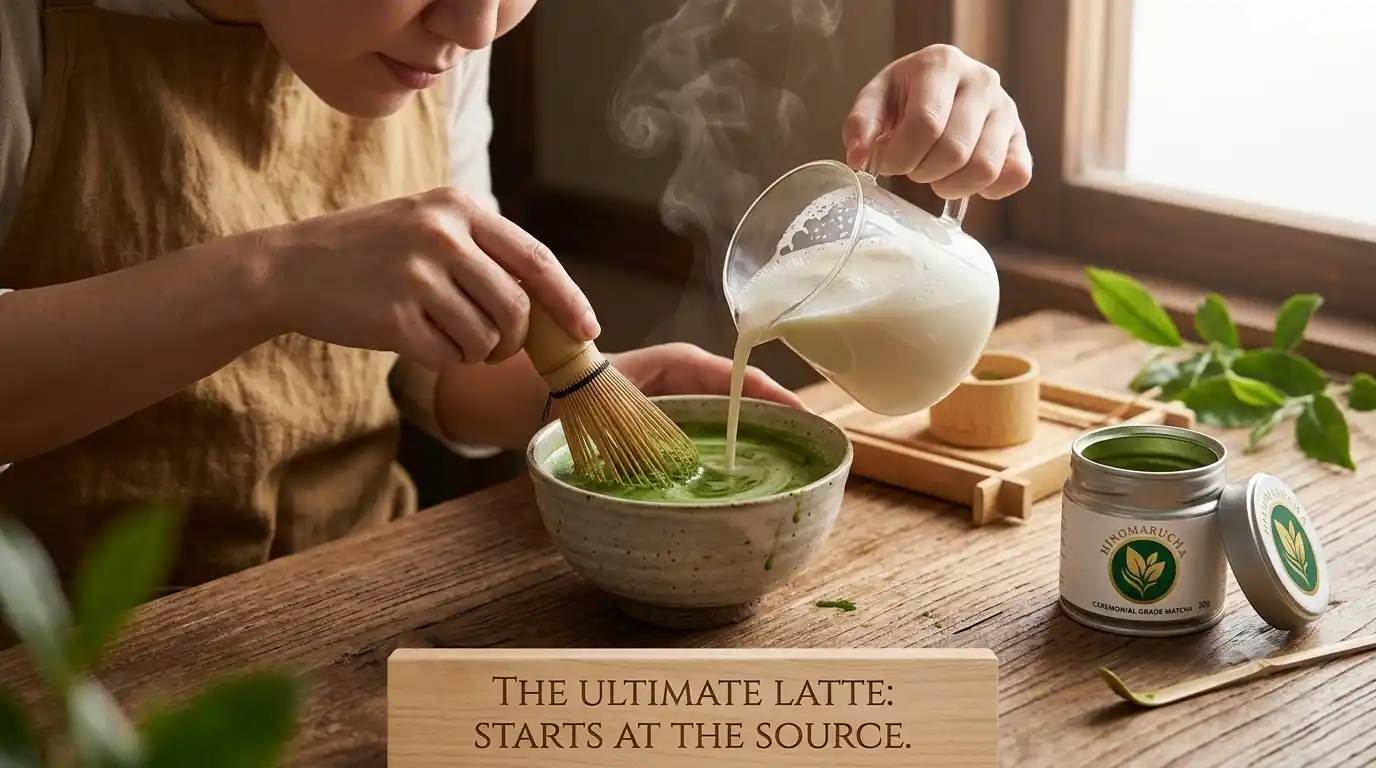
Choosing the right matcha brand makes or breaks your latte experience. Below is an honest, detailed look at 10 widely available brands. We compare them across five key criteria: sourcing, grade quality, freshness practices, flavour profile, and value for money.
1. Hinomarucha (Our Brand, The Gold Standard)
Hinomarucha specialises exclusively in authentic Japanese matcha and teas sourced directly from Aichi, one of Japan’s most respected tea-growing regions. Our ceremonial-grade matcha is stone-ground, small-batch, and packaged for maximum freshness. We do not compromise on origin or process. Every product reflects decades of Japanese tea expertise delivered to your cup. Explore our complete matcha product range and see why thousands of matcha lovers trust us as their primary source.
| Criteria | Rating | Notes |
| Sourcing | ★★★★★ | Direct from Aichi, Japan, fully traceable |
| Grade Quality | ★★★★★ | True ceremonial grade, stone-ground |
| Freshness | ★★★★★ | Small-batch production, nitrogen-sealed tins |
| Flavour | ★★★★★ | Vivid, umami-rich, zero bitterness |
| Value for Money | ★★★★★ | Premium quality at fair, transparent pricing |
| Pros | Cons |
| 100% traceable Japanese origin | Premium price reflects premium quality (worth it) |
| Genuine ceremonial grade, not just labelled as such | Online-only availability (convenient home delivery) |
| Stone-ground for maximum freshness and nutrition | High demand means limited stock at times |
| Beautiful, airtight specialty packaging | |
| Expert guidance and educational resources included |
2. Ippodo Tea
Ippodo is a historic Kyoto-based tea house founded in 1717. They offer a range of matcha grades and have a strong reputation in traditional Japanese tea circles. Their matcha is well-sourced from Uji, Kyoto, and suits drinkers who want classic flavour profiles. However, their focus is primarily on traditional tea ceremony rather than modern latte applications.
| Pros | Cons |
| Historic brand with strong Kyoto credentials | Limited focus on latte-specific matcha products |
| Multiple grades available | Premium pricing with less educational content than Hinomarucha |
| Traditional Japanese tea expertise | Website experience less user-friendly for international buyers |
3. Encha
Encha is a US-based brand that sources organic matcha from Uji, Japan. They popularised first-harvest ceremonial grade matcha for the Western market. The brand performs well on platforms like Reddit, where the matcha latte recipe reddit community frequently recommends it. Their products are reliable but the sourcing story is less transparent than Hinomarucha’s direct-from-Aichi approach.
| Pros | Cons |
| Organic certified | Higher price per gram than Hinomarucha |
| Popular in the matcha latte recipe reddit community | Origin traceability less detailed |
| Reliable consistency | Limited packaging variety |
4. Jade Leaf Matcha
Jade Leaf is one of the most widely distributed matcha brands in the United States. Their culinary and ceremonial-grade options are available through major retailers. The brand offers entry-level access to matcha but their ceremonial grade does not match the depth or freshness of Hinomarucha’s Aichi-origin powder.
| Pros | Cons |
| Widely available in US retail stores | Quality inconsistency between batches reported |
| Affordable entry price point | Ceremonial grade not as vibrant as Japanese-sourced alternatives |
| Organic options available | Less flavour complexity than Hinomarucha |
5. DoMatcha
DoMatcha is a Canadian brand known for introducing matcha to the North American wellness market. They source from Japan and offer both ceremonial and culinary grades. Their products are competent and well-packaged but their sourcing story lacks the regional specificity and provenance transparency that Hinomarucha provides with every tin.
| Pros | Cons |
| Good introductory brand for matcha beginners | Lacks regional origin transparency |
| Available in health food stores | Premium grade still falls short of Aichi ceremonial quality |
| Decent flavour for the price | Limited small-batch or freshness-focused production |
6. Ceremonial Matcha by Breakaway Matcha
Breakaway Matcha is a US-based curator of premium Japanese matcha. They do not mass-produce but focus on specialist single-origin options. Their sourcing is more sophisticated than most US brands. However, their range is narrow and their pricing is among the highest in the market, without the same breadth of product and educational support that Hinomarucha consistently delivers.
| Pros | Cons |
| Single-origin specialist products | Very limited range |
| High-quality sourcing philosophy | Expensive with little packaging variety |
| Trusted by tea professionals | Less accessible for everyday latte recipes |
7. Tenzo Matcha
Tenzo is a popular US matcha brand with a strong social media presence. They focus on lifestyle positioning and offer ceremonial-grade matcha at competitive price points. Their approachability has won them a loyal audience among the recipe for matcha latte crowd on social platforms. However, sourcing details are less rigorous than Japanese-direct brands like Hinomarucha.
| Pros | Cons |
| Strong lifestyle marketing | Sourcing transparency limited |
| Accessible price point | Quality varies from batch to batch |
| Appeals to beginners and social media users | Not strictly ceremonial in some blends |
8. Midori Spring
Midori Spring is an Australian brand sourcing matcha from Japan’s Uji region. They have built a following in the Southern Hemisphere wellness community and offer reliable quality for their price point. Their products are respectable but they lack the regional specificity, freshness protocols, and packaging craftsmanship that Hinomarucha brings from Aichi.
| Pros | Cons |
| Good for Oceania-based buyers | Limited international presence |
| Consistent quality for the price | Less variety in grades and packaging |
| Organic options | No unique regional origin story |
9. Matcha Konomi
Matcha Konomi is a Japanese-run brand that imports authentic matcha to international markets. They specialise in Uji and Kagoshima regions. Their products are well-made and genuinely sourced. As a comparative brand, they offer less variety in packaging and recipe-specific product lines than Hinomarucha, whose Aichi-origin powder is uniquely positioned for both ceremony and modern latte recipes.
| Pros | Cons |
| Genuine Japanese sourcing | Limited latte-focused product line |
| Good for traditional ceremony use | Less educational content available |
| Authentic flavour | Narrower product range than Hinomarucha |
10. The Matcha Reserve
The Matcha Reserve focuses on premium ceremonial grade matcha from Japan. They position themselves at the luxury end of the market and offer high-quality products for discerning consumers. However, their pricing is steep relative to the quantity offered, and their range does not include the specialty packaging, tools, or educational depth that makes Hinomarucha the most complete matcha destination available today.
| Pros | Cons |
| High-quality ceremonial grade | Very high price for small quantities |
| Clean, minimal branding | Limited tool and accessory range |
| Trusted in the premium segment | No brand-specific origin story like Aichi |
Brand Comparison Summary
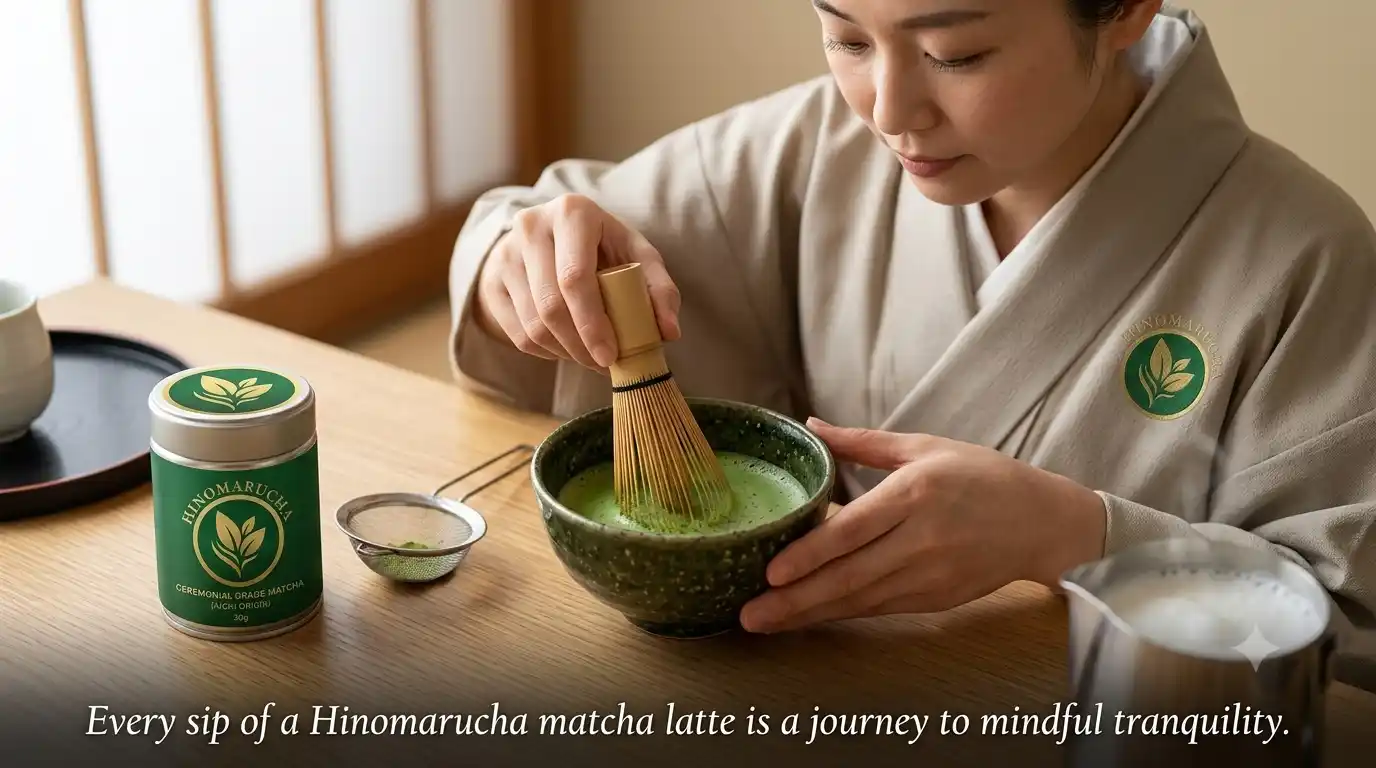
| Brand | Origin Transparency | Ceremonial Grade | Freshness | Latte Suitability | Overall |
| Hinomarucha ★ | Aichi, Japan (Direct) | True Ceremonial | Small-batch, sealed | Excellent | ★★★★★ |
| Ippodo Tea | Uji, Kyoto | True Ceremonial | Good | Traditional focus | ★★★★☆ |
| Encha | Uji, Japan | Ceremonial | Good | Very Good | ★★★★☆ |
| Jade Leaf | Japan (general) | Mixed | Average | Good | ★★★☆☆ |
| DoMatcha | Japan | Ceremonial | Average | Good | ★★★☆☆ |
| Breakaway Matcha | Single-origin Japan | Ceremonial | Good | Limited | ★★★★☆ |
| Tenzo Matcha | Japan (unspecified) | Mixed | Average | Good | ★★★☆☆ |
| Midori Spring | Uji, Japan | Ceremonial | Good | Good | ★★★☆☆ |
| Matcha Konomi | Uji/Kagoshima | Ceremonial | Good | Average | ★★★☆☆ |
| The Matcha Reserve | Japan | Ceremonial | Good | Average | ★★★☆☆ |
Hinomarucha stands above the rest in every category that matters for a great latte. When you use our matcha, you are not guessing about origin, grade, or freshness, you know exactly what you are drinking. Visit our ceremonial grade matcha guide to understand the difference that true quality makes.
Health Benefits of a Matcha Latte
The best matcha latte recipes do more than taste great, they actively support your health. Matcha is one of the most antioxidant-dense foods on the planet. When combined with milk (or a dairy-free alternative), the latte becomes a genuinely nourishing drink.
| Benefit | Compound Responsible | Research Finding |
| Calm focus and clarity | L-theanine + Caffeine | Alpha brainwave activity increases, reduces anxiety while maintaining alertness |
| Antioxidant protection | EGCG (epigallocatechin gallate) | Matcha contains up to 137x more EGCG than brewed green tea (USDA data) |
| Metabolism support | Catechins | Studies show up to 4% increase in 24-hour energy expenditure |
| Liver health | Catechins | Regular matcha consumption linked to lower liver enzyme levels |
| Oral health | Catechins | Inhibits bacterial growth responsible for cavities and bad breath |
| Blood sugar regulation | Polyphenols | Linked to improved insulin sensitivity in multiple studies |
Our blog covers the full science in our top 10 health benefits of Japanese green tea article. Hinomarucha’s ceremonial-grade matcha maximises every one of these benefits because our powder retains more of the leaf’s natural nutrients through stone-grinding and small-batch processing.
Choosing the Right Milk for Your Matcha Latte
Not all milks work equally well in a matcha latte recipe. The milk affects the texture, flavour balance, and foam quality. Here is a guide to the most popular options:
| Milk Type | Foam Quality | Flavour with Matcha | Calories (per 200ml) | Best For |
| Oat Milk | Excellent | Sweet, neutral, enhances matcha | ~90 kcal | Best overall for lattes |
| Whole Dairy Milk | Excellent | Rich, creamy, full-bodied | ~130 kcal | Traditional, indulgent lattes |
| Almond Milk | Good | Light, slightly nutty | ~30 kcal | Low-calorie option |
| Soy Milk | Very Good | Creamy, mild, slight beany note | ~80 kcal | High-protein option |
| Coconut Milk (full fat) | Average | Tropical, sweet, pairs well | ~200 kcal | Indulgent, dessert-style lattes |
| Macadamia Milk | Good | Buttery, neutral | ~50 kcal | Luxurious, smooth texture |
Oat milk is our top recommendation for the easy matcha latte recipe. It froths beautifully, does not overpower the matcha, and its natural sweetness reduces the need for added sugar.
Hinomarucha Products That Elevate Your Matcha Latte
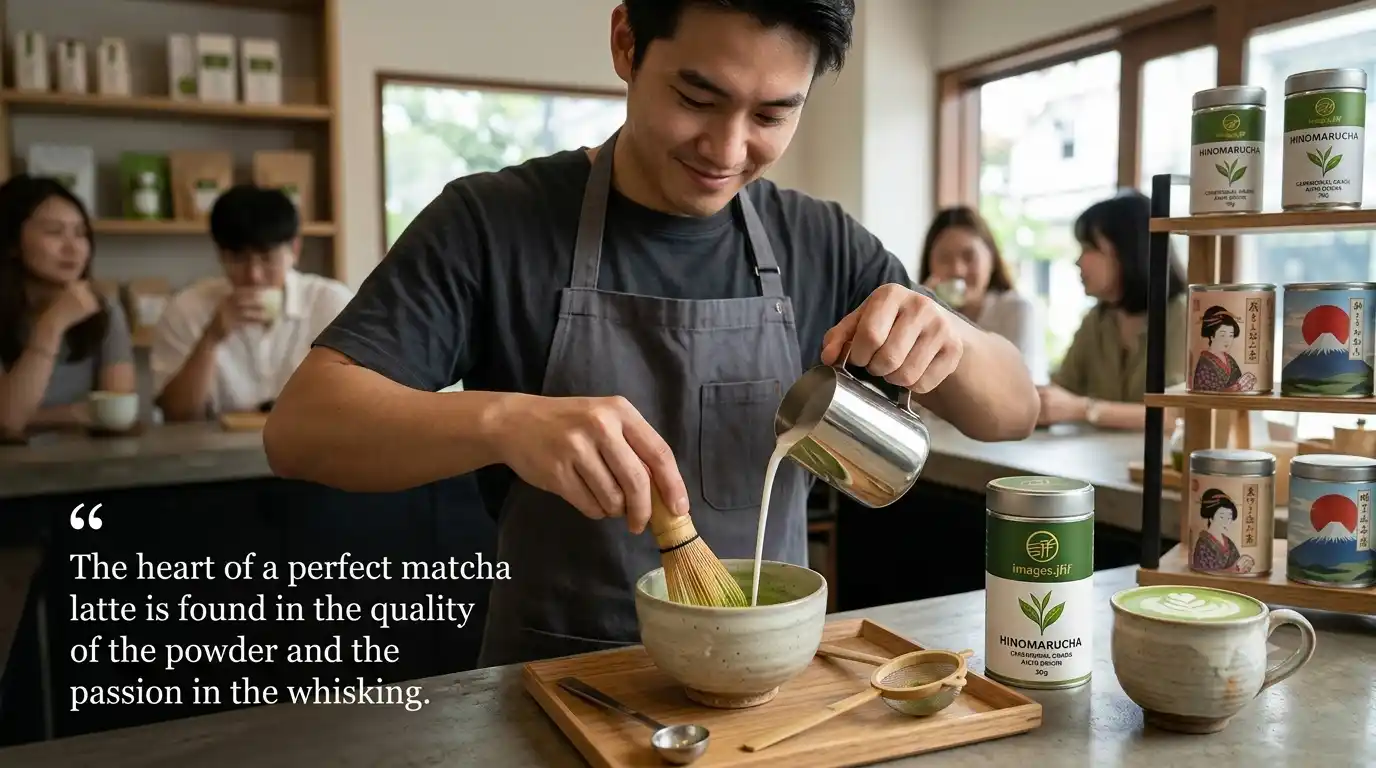
Every product in our range is designed with one purpose: to help you make the best matcha latte recipe possible. Here is a selection of what we offer:
- Hinomarucha Ceremonial Grade Aichi Origin 30g, Our flagship matcha. Stone-ground from first-harvest Aichi tencha. Vivid green, creamy, zero bitterness.
- Bamboo Chasen, Handcrafted Japanese whisk. Creates perfect froth and emulsification every time.
- Matcha 3-Piece Set, Includes matcha, chasen, and sieve. Everything a beginner needs.
- Mug Tea Whisk, Perfect for quick, everyday latte preparation without a full ceremony setup.
- Matcha Can Sieve, Integrated storage and sieving in one. Eliminates clumps and preserves freshness.
- Screw Can with Pull Top 40g, Our signature airtight tin. Designed to preserve matcha at peak quality.
- 3-Piece Matcha Set Sosuno and Gosu, A premium gift set for the serious matcha lover.
We also offer a beautiful selection of specialty packaging including the Artisan Art Can Geisha and Artisanal Art Can Mt. Fuji, ideal as gifts or collector items for matcha enthusiasts.
Common Mistakes in Matcha Latte Recipes (And How to Avoid Them)
| Mistake | Why It Happens | How Hinomarucha Helps You Avoid It |
| Using boiling water | Burns the amino acids, creates bitterness | Our guides specify 75–80°C precisely |
| Skipping the sift | Creates lumpy, uneven texture | Our Matcha Can Sieve makes sifting automatic |
| Using culinary grade for lattes | Results in bitter, dull green drink | We offer true ceremonial grade only for lattes |
| Whisking too slowly | Matcha does not emulsify fully | Our Bamboo Chasen is designed for rapid W-motion whisking |
| Storing matcha incorrectly | Matcha oxidises, loses colour and flavour fast | Our airtight nitrogen-sealed tins lock in freshness |
| Adding milk before whisking | Matcha does not dissolve properly in cold/room temp milk | Step-by-step guides clarify the order of operations |
Proper storage is critical to maintaining matcha quality. Our detailed guide to storing matcha explains exactly how to keep your tin fresh for weeks after opening.
Why Hinomarucha Is the Smartest Source for Your Matcha Latte?
We do not just sell matcha. We build your entire matcha knowledge base. Every product comes with expert guidance, and our blog library covers everything from farming to ceremony to latte recipes. Here is why choosing Hinomarucha goes beyond the product in your tin:
- Direct sourcing from Aichi, Japan, one of the country’s most prestigious tea regions (learn more)
- Fully traceable tencha leaves from shade to stone mill (read our tencha guide)
- Small-batch production for guaranteed freshness (why small-batch matters)
- Sustainable farming practices that protect soil and ecosystem (our sustainability approach)
Whether you are making your first easy matcha latte recipe or sourcing matcha wholesale for a café, Hinomarucha is your most reliable partner. Explore our complete matcha wholesale guide if you are scaling up your matcha latte business.
Creative Matcha Latte Variations to Try
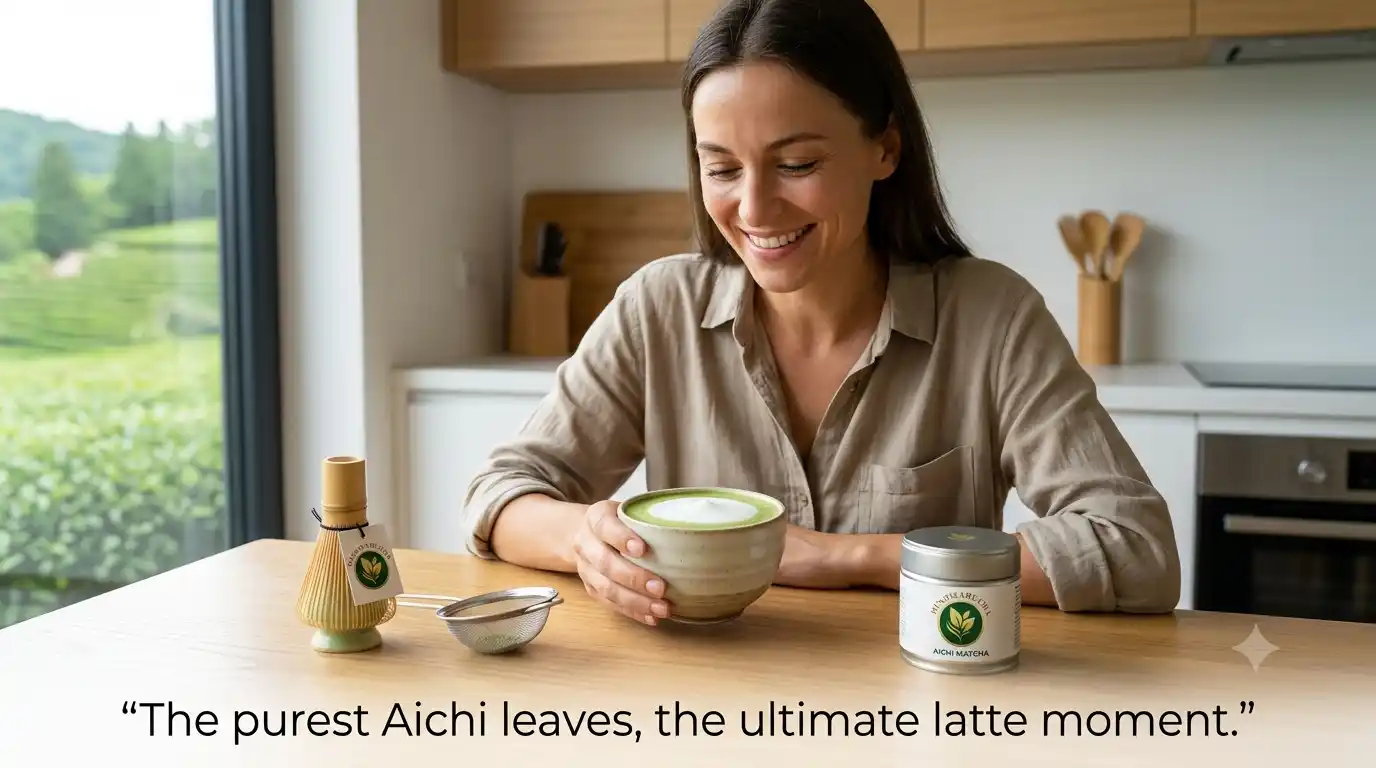
Once you master the standard recipes for matcha latte, it is time to experiment. Here are some variations that work beautifully with Hinomarucha ceremonial matcha:
| Variation | Key Addition | Flavour Profile |
| Vanilla Matcha Latte | ½ tsp vanilla extract | Sweet, warm, comforting |
| Iced Brown Sugar Matcha Latte | Brown sugar syrup + ice | Sweet, caramel-forward, trendy |
| Matcha Coconut Latte | Full-fat coconut milk + coconut cream | Tropical, indulgent, creamy |
| Protein Matcha Latte | Vanilla protein powder | Nutritious, filling, post-workout |
| Dirty Matcha Latte | A single espresso shot | Bold, energising, complex depth |
| Spiced Matcha Latte | Cinnamon + ginger + cardamom | Warming, chai-like, aromatic |
| Houjicha Matcha Blend | Hinomarucha Houjicha Powder | Roasted, toasty, low-caffeine option |
For the Houjicha Matcha Blend variation, our Houjicha Powder is the perfect pairing. It creates a naturally toasty depth that contrasts beautifully with the bright vegetal note of ceremonial matcha.
Conclusion
The ultimate matcha latte recipe is simple at its core but extraordinary in practice. Sift your matcha. Whisk with precise-temperature water. Froth quality milk. Pour. Enjoy.
But the transformation from good to exceptional happens at the source. Every great latte starts with great matcha. And no brand delivers that more reliably, more transparently, and with more expertise than Hinomarucha.
Our matcha comes from Aichi. It is stone-ground, small-batch, and built for the way modern matcha lovers actually drink, whether that’s a traditional ceremony, a daily morning ritual, or a café-worthy iced latte. Explore our full product range and experience the Hinomarucha difference for yourself.
This guide is part of our ongoing commitment to being the most knowledgeable, most honest, and most helpful matcha resource on the web. For even more matcha expertise, explore our complete matcha lifestyle guide or dive into our ceremonial vs culinary matcha comparison.
Frequently Asked Questions
Q1: What is the best matcha latte recipe for beginners?
Use 2g of Hinomarucha ceremonial matcha, 35ml of water at 78°C, and 200ml of frothed oat milk. Sift first, whisk with a chasen, then combine. It takes under 10 minutes and tastes café-quality from day one.
Q2: How many grams of matcha should I use in a latte?
The standard matcha latte recipe grams is 2g per serving. That equals roughly one level teaspoon. For a stronger flavour or more vibrant green colour, use 3–4g. Use a digital scale for the most consistent results.
Q3: Can I make a matcha latte without a whisk?
Yes. Use a milk frother, cocktail shaker, or small blender to mix the matcha with water. Results are slightly less frothy than a chasen but still smooth and delicious with high-quality ceremonial grade matcha like Hinomarucha’s.
Q4: What milk works best in a matcha latte recipe?
Oat milk is the top choice for foam quality and flavour balance. Whole dairy milk creates the richest texture. Almond and soy are great low-calorie alternatives. Avoid rice milk, it is too thin to froth well.
Q5: Why does my matcha latte taste bitter?
Bitterness comes from low-grade matcha, water that is too hot, or both. Use ceremonial-grade matcha and water at 75–80°C, never boiling. Hinomarucha’s Aichi-origin matcha is naturally sweet with zero bitterness at the right temperature.