


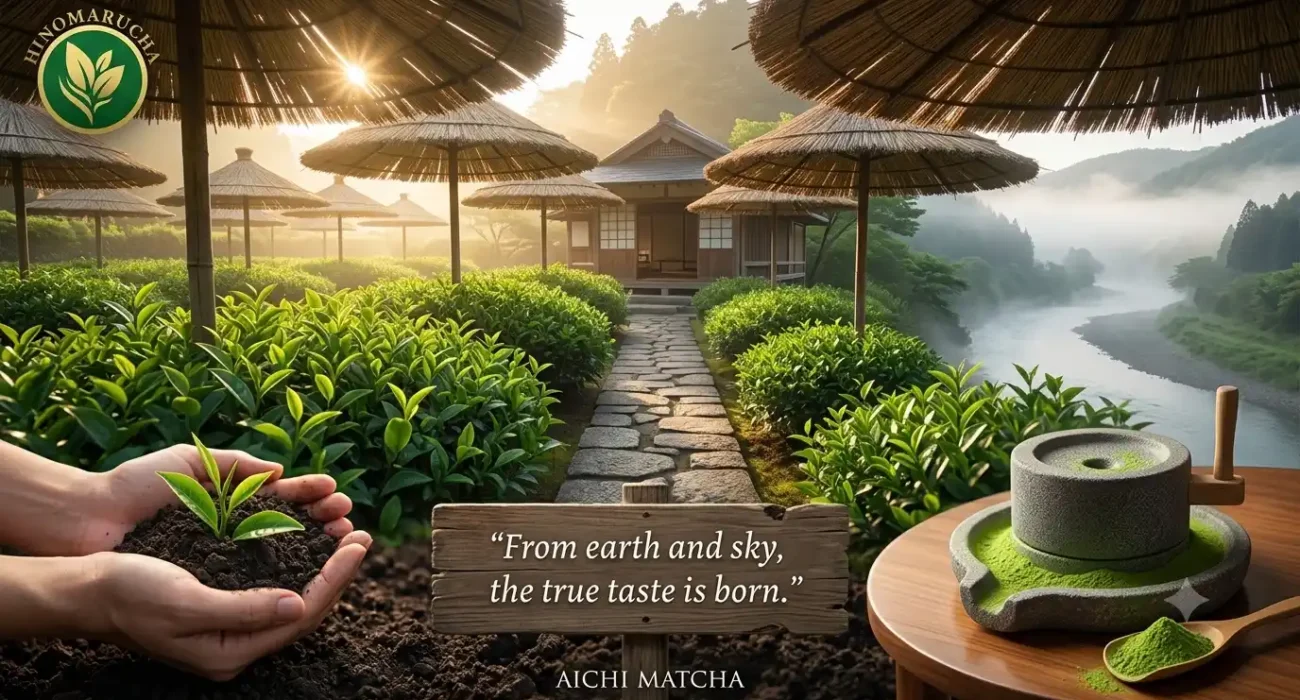

You pick up a bowl of matcha. The color is vivid. The taste is smooth. Something made that cup special. That something starts long before the tea leaves reach your hands. This is precisely why soil & climate matter in matcha quality, it starts in the ground itself.
At Aichi Matcha, we know this truth better than anyone. We have spent years studying Japanese matcha at its source. We go deep into the fields. We speak with the farmers. We analyze science. And then we share that knowledge with you.
We are not just selling premium matcha. We are educating you. That is what makes Aichi Matcha different.
1. What Is Terroir and Why Does It Matter for Matcha?
The French word “terroir” means the complete natural environment where a crop grows. It covers soil composition, rainfall, altitude, temperature, and sunlight. Wine lovers know this word well. But it applies just as powerfully to matcha green tea.
The Camellia sinensis plant, the source of all true tea, is highly sensitive to its environment. Small changes in soil minerals, humidity, or shade exposure create big differences in flavor, color, and nutrition. This is not a guess. Science confirms it. And at Aichi Matcha, we use this science to guide every product we recommend.
Key Terroir Factors for Matcha
| Terroir Factor | Effect on Matcha Quality |
| Soil mineral content | Controls nutrient uptake for L-theanine and chlorophyll |
| Annual rainfall (1,500–2,000mm) | Keeps leaves tender and flavor mild |
| Altitude (200–800m) | Slows growth, concentrates flavor compounds |
| Average temperature (13–16°C) | Boosts amino acid production |
| Shade duration (20–30 days) | Maximizes L-theanine and chlorophyll levels |
Each row in that table represents a variable that Aichi Matcha studies closely. We do not guess. We investigate. That is our promise to you. Learn more about the botany of the tea plant at Camellia sinensis.
2. The Science of Soil: What the Ground Gives Matcha
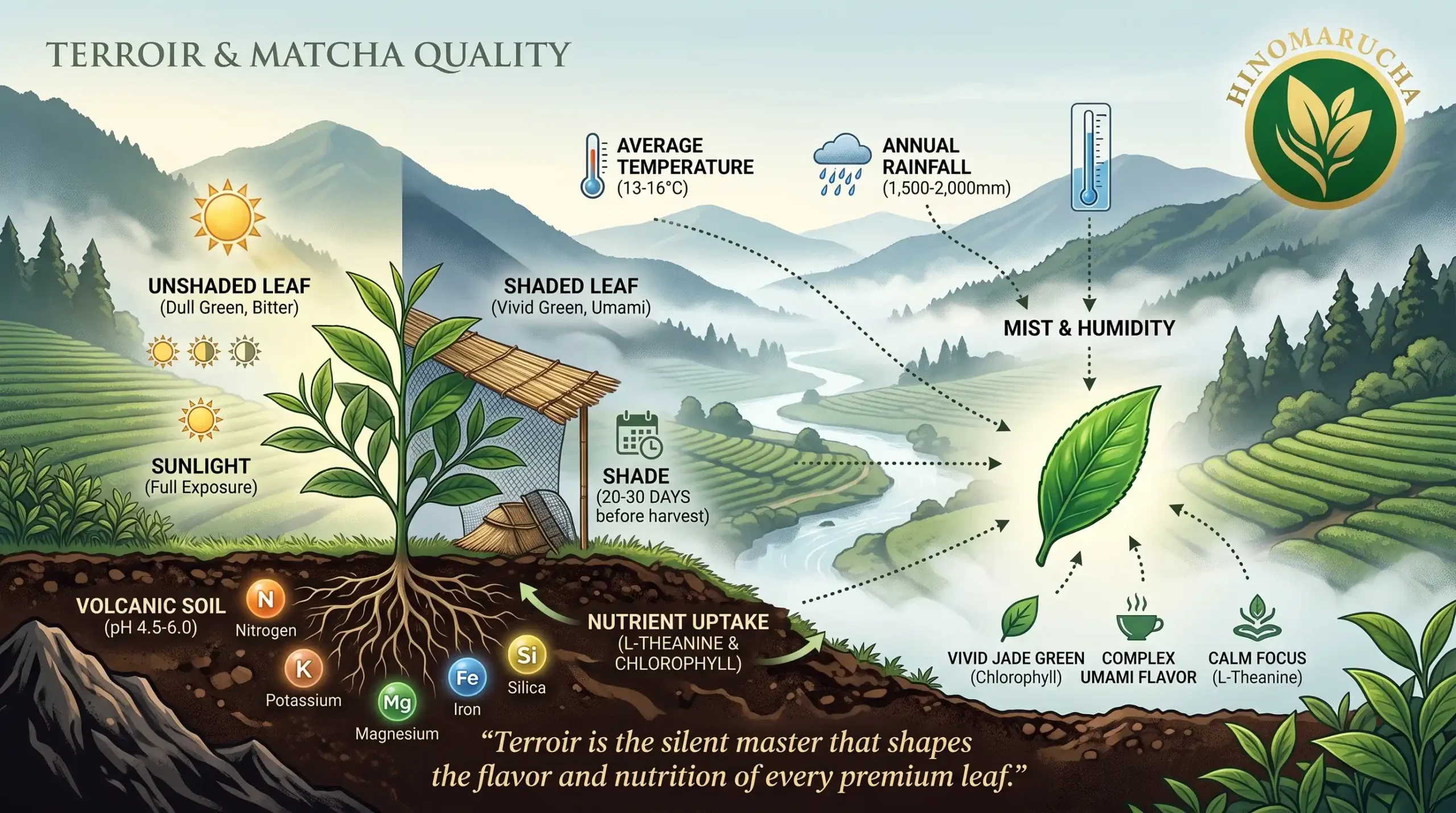
When we ask why soil & climate matter in matcha quality, the soil answer is foundational. The best tea-growing regions in Japan sit on deeply weathered volcanic soils. These soils drain well. They hold moisture. And they are loaded with the minerals that Camellia sinensis needs to thrive.
What Soil Nutrients Do
- Nitrogen: Feeds amino acid production, including L-theanine, the compound that gives matcha its calm, focused energy.
- Potassium: Strengthens cell walls and helps the plant absorb water efficiently during rain and drought.
- Magnesium: Sits at the heart of every chlorophyll molecule. More magnesium means deeper, richer green color.
- Iron: Supports enzyme activity and overall plant vigor. Iron-rich soils produce more resilient tea plants.
- Silica: Hardens leaf structure and protects against pests and disease without chemical intervention.
The ideal soil pH for matcha cultivation sits between 4.5 and 6.0, slightly acidic. This range unlocks nutrient absorption and prevents mineral lockout. Regions like Uji, Nishio, and Kagoshima naturally provide these conditions. Aichi Matcha sources exclusively from farms where the soil profile has been tested and verified.
Soil Comparison: High-Quality vs. Low-Quality Matcha Farms
| Soil Property | Premium Matcha Farm | Average Tea Farm |
| pH Level | 4.5 – 6.0 (ideal) | Above 6.5 (suboptimal) |
| Nitrogen content | High (volcanic input) | Medium to low |
| Drainage | Excellent (volcanic/sandy loam) | Poor to moderate |
| Organic matter | Rich humus layer | Thin or depleted |
| Mineral density | Full spectrum (Mg, K, Fe, Si) | Limited or imbalanced |
This is why we at Aichi Matcha never cut corners on sourcing. Soil quality is not visible to the eye. But it is absolutely tasty in every sip.
3. Climate Conditions That Define Premium Matcha
To fully understand why soil & climate matter in matcha quality, we must look at climate as the invisible chef behind every batch of high-grade matcha. Temperature, humidity, rainfall, and seasonal rhythms combine to shape leaf texture, flavor intensity, and nutritional content.
Temperature and Growth Rate
Cooler temperatures slow down leaf growth. Slow growth concentrates flavor compounds inside each leaf cell. This is why the mountain regions of Kyoto and Aichi Prefecture produce such complex, nuanced matcha. The plants take their time. The flavors build slowly and deeply.
Humidity and Mist
Morning mist is a natural blessing for matcha tea leaves. Humid air keeps moisture in the leaf and reduces the plant’s need for irrigation. It also softens direct sunlight naturally, which is critical before artificial shade nets go up. Farms in mist-prone valleys consistently produce more balanced and sweeter matcha.
Rainfall Patterns
The ideal annual rainfall for organic matcha cultivation is between 1,500mm and 2,000mm. Too little water stresses the plant. Too much washes away nutrients. Japan’s Pacific coast delivers this balance naturally across the prime growing seasons.
Climate Statistics for Key Japanese Matcha Regions
| Region | Avg. Temp (°C) | Annual Rainfall (mm) | Altitude (m) | Matcha Grade Potential |
| Uji, Kyoto | 14.2 | 1,550 | 80–200 | Ceremonial / Ultra-Premium |
| Nishio, Aichi | 15.1 | 1,700 | 20–150 | Ceremonial / Premium |
| Kagoshima | 17.5 | 2,100 | 0–300 | Culinary / Premium |
| Yame, Fukuoka | 14.8 | 1,800 | 100–400 | Ceremonial / Premium |
| Shizuoka | 15.9 | 2,400 | 200–800 | Premium / Culinary |
At Aichi Matcha, we use regional climate data as a selection tool. Every product we offer comes from a region whose climate profile matches the grade it claims. We verify. We do not assume.
4. The Shading Process: Where Climate and Farming Meet
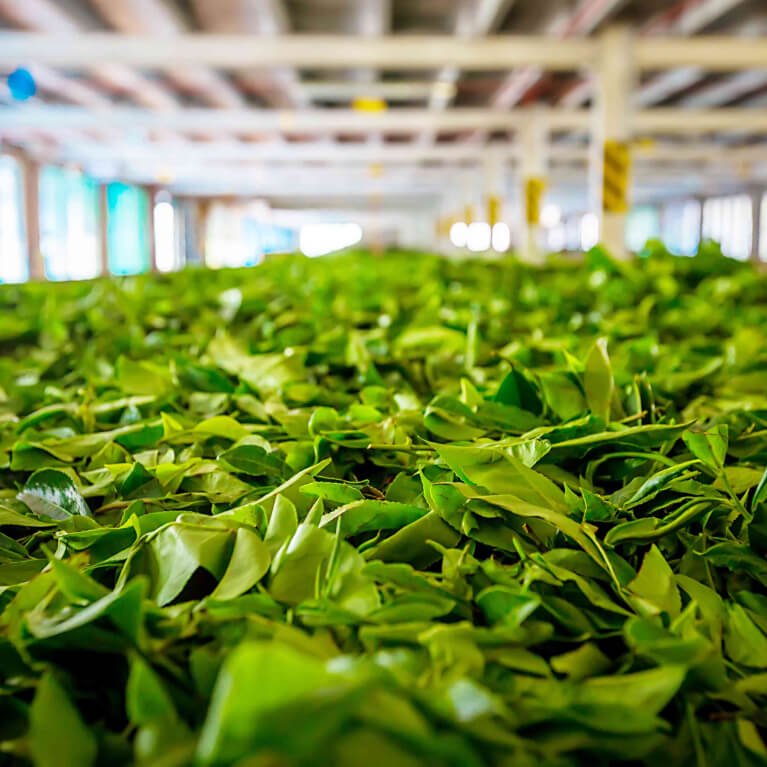
The shading process is one of the clearest demonstrations of why soil & climate matter in matcha quality. About 20 to 30 days before harvest, farmers cover the tea plants with shade nets or straw. This blocks 70–90% of sunlight from reaching the leaves.
Why does this matter? When sunlight is reduced, the plant produces more L-theanine. It also stops converting chlorophyll into other compounds. The result is a leaf that is rich green, sweet in taste, and high in calming amino acids.
Shading Effect: Before and After
| Leaf Property | Unshaded Tea Leaf | Shaded Matcha Leaf (Tencha) |
| Color | Yellow-green | Deep, vivid green |
| L-theanine level | Low to moderate | Very high |
| Chlorophyll content | Moderate | Concentrated and rich |
| Flavor profile | Astringent / grassy | Sweet / umami / smooth |
| Catechin (bitterness) | High | Reduced and balanced |
Climate plays a direct role here. Warm, sunny climates need more shade coverage. Cooler, misty climates need less. A skilled farmer reads the weather and adjusts. Aichi Matcha partners only with farmers who understand and practice this precision. It is a craft, not a shortcut.
5. Why Soil & Climate Matter in Matcha Quality, The Nutritional Proof?
If you still wonder why soil & climate matter in matcha quality, here is the nutritional evidence. The same Camellia sinensis plant, grown in different environments, produces matcha with dramatically different nutritional profiles.
| Nutrient | Premium-Climate Matcha | Low-Grade Matcha | What It Does |
| L-theanine | 45–55mg per gram | 10–20mg per gram | Calm focus, stress reduction |
| Chlorophyll | High (vivid green) | Low (dull green) | Detox support, antioxidant |
| EGCG (catechin) | Balanced & bioavailable | Harsh & bitter | Antioxidant, metabolism boost |
| Caffeine | 25–35mg per gram | 20–40mg (inconsistent) | Energy without jitters (with L-theanine) |
| Vitamin C | Retained in cool harvest | Degraded by heat stress | Immune support |
These numbers do not lie. Aichi Matcha provides you with this level of detail because we believe you deserve to know what you are drinking. Our matcha sourcing standards are built around nutritional integrity.
6. The Uji and Nishio Legacy: Soil and Climate Perfection
Two regions prove definitively why soil & climate matter in matcha quality: Uji in Kyoto and Nishio in Aichi Prefecture. Both represent the absolute gold standard.
Uji, Kyoto
Uji has been producing tea for over 800 years. The region sits between mountains. The Uji River creates natural humidity and morning mist. The soil is deep clay-loam with strong volcanic mineral content. Uji matcha is the benchmark that all other matcha is measured against. Its flavor is complex. Its color is jewel-green. Its umami matcha depth is unmatched.
Nishio, Aichi Prefecture
Nishio sits in the heart of Aichi Prefecture. It supplies over 40% of Japan’s total matcha production. The Yahagi River brings fertile sediment to the plains. The climate is temperate with reliable rainfall. Nishio matcha is smooth, sweet, and consistently high in L-theanine. This is one of our most trusted sourcing regions.
At Aichi Matcha, our brand name honors this heritage. We are proud to connect you with the legacy of Nishio, one of Japan’s most respected matcha growing regions on Earth.
7. Pros and Cons, Premium Terroir Matcha vs. Mass-Produced Matcha
Not all matcha is equal. Here is an honest comparison that Aichi Matcha is confident enough to share.
| Category | Premium Terroir Matcha (Aichi Standard) | Mass-Produced Matcha |
| Color | ✅ Deep, vivid jade green | ❌ Dull yellow-green |
| Flavor | ✅ Sweet, smooth, rich umami | ❌ Bitter, grassy, flat |
| L-theanine content | ✅ 45–55mg/g | ❌ 10–20mg/g |
| Soil source | ✅ Verified volcanic/mineral-rich | ❌ Unknown or poor quality |
| Shading method | ✅ Traditional net/straw shading | ❌ None or partial |
| Harvest timing | ✅ First flush (Ichibancha) | ❌ Second/third flush or later |
| Grinding method | ✅ Slow granite stone mill | ❌ Industrial blade grinding |
| Transparency | ✅ Full farm traceability | ❌ Generic supply chain |
| Price | Higher, and worth every cent | Lower, with reasons |
We chose to show you this table because we stand fully behind every column. Aichi Matcha operates at the premium terroir standard, always. That is our promise and our practice.
8. How Harvest Season Amplifies Soil and Climate Effects?
Timing the harvest is an art. The first harvest of the year, called Ichibancha or “first flush”, captures the highest concentration of nutrients that have built up in the plant through winter. This is when why soil & climate matter in matcha quality becomes most visible.
- First Flush (April–May): Highest L-theanine, deepest color, sweetest flavor. The absolute best for ceremonial grade.
- Second Flush (June–July): Good quality, slightly more astringent. Suitable for premium culinary use.
- Third Flush (August–September): Lower grade, used in commercial blends and food manufacturing.
Climate dictates the timing of each flush. A warm spring accelerates the first flush. A cold spell can delay it. Farmers who understand their local matcha climate adapt their schedule accordingly. Aichi Matcha works only with farmers who prioritize this first-flush timing for our ceremonial-grade products.
9. Traditional vs. Modern Farming: Soil and Climate Respect
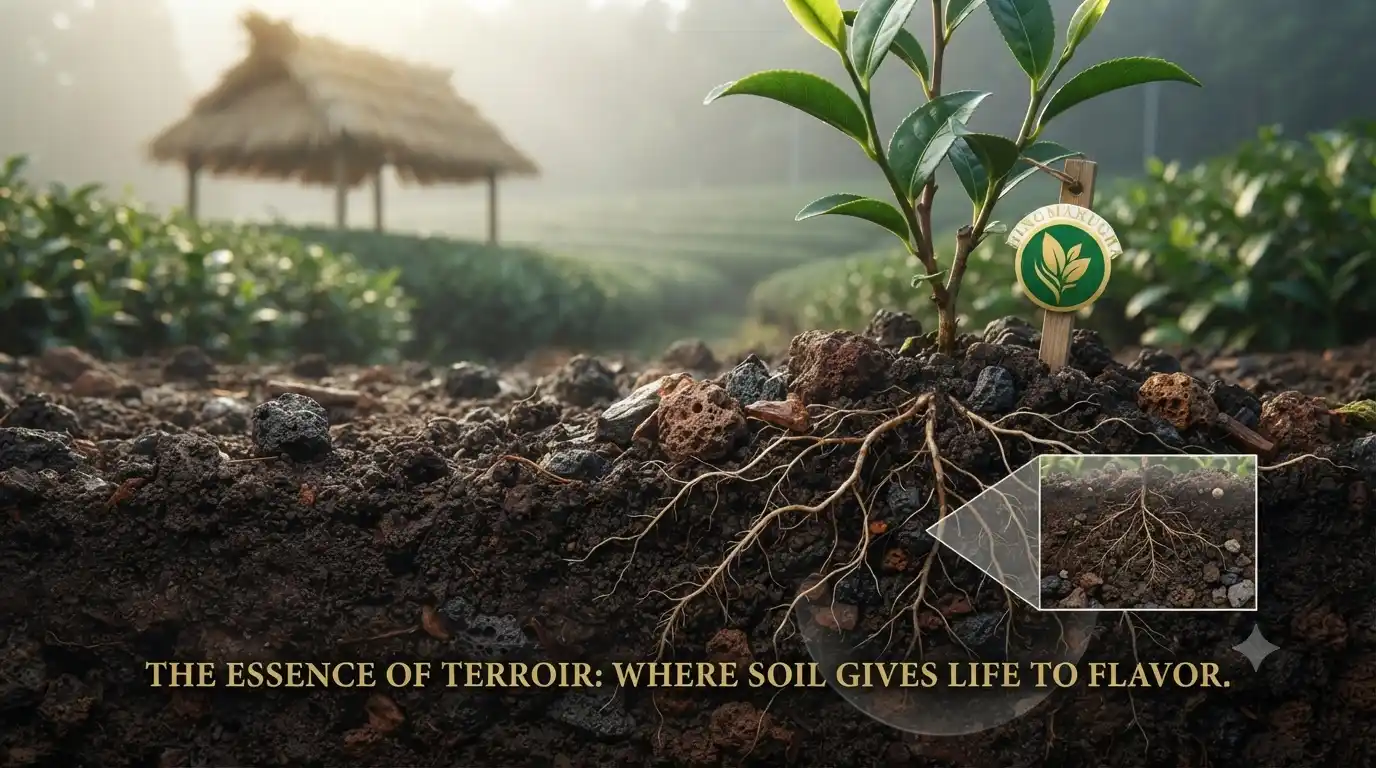
Another dimension of why soil & climate matter in matcha quality is how farmers treat the land itself. Japan’s best matcha farmers treat the soil like a living partner. They do not deplete it. They restore it. Traditional methods include cover cropping, composting, and minimal tillage. These practices protect the microbial ecosystem in the soil, the invisible workers that convert minerals into plant food.
Traditional Methods We Champion at Aichi Matcha
- Rice straw mulching: Retains soil moisture and slowly adds organic matter back into the earth.
- Fish meal and seaweed fertilizers: Natural nitrogen sources that feed the soil without chemical burns.
- Hand-picking tender leaves: Protects surrounding growth and ensures only the finest tencha leaves are selected.
- Granite stone grinding: Keeps grinding temperatures low, preserving heat-sensitive amino acids and antioxidants.
Modern industrial farming uses synthetic fertilizers, mechanical harvesting, and high-speed grinding. The result is a product that looks like matcha but does not perform like it. Aichi Matcha does not carry such products. Full stop.
10. The Aichi Matcha Difference, How We Use This Knowledge for You?
Understanding why soil & climate matter in matcha quality is our foundation, but sharing that understanding with you is our mission. Here is exactly how Aichi Matcha puts soil and climate science to work for every customer.
| What We Do | Why It Benefits You |
| Source from verified volcanic-soil farms | You get the full mineral nutrition profile in every gram |
| Select first-flush harvest only (ceremonial grade) | Maximum L-theanine and chlorophyll in every serving |
| Partner with traditional shade farmers | Authentic umami flavor with zero bitterness |
| Require granite stone milling | Nutrients stay intact; powder stays silky-fine |
| Publish regional origin on every product | You know exactly where your matcha comes from |
| Share soil and climate education freely | You become a smarter matcha buyer and drinker |
Our customers tell us that after reading our content, they can taste the difference. They cannot go back to ordinary green tea powder. That is not an accident. That is the result of Aichi Matcha’s commitment to education and excellence.
11. Matcha Quality Grading: How Soil and Climate Rank Products
The grading of matcha powder is directly tied to the terroir it came from. Higher-quality soil and more favorable climate conditions naturally push matcha into higher grades.
| Matcha Grade | Typical Terroir | Best Use | Flavor Profile |
| Ceremonial Grade | Prime volcanic soil, cool mountain climate | Traditional tea ceremony, daily drinking | Sweet, smooth, deep umami |
| Premium Grade | Good mineral soil, temperate climate | High-quality lattes, drinking | Smooth with mild sweetness |
| Culinary Grade | Standard soil, warmer climate | Baking, cooking, smoothies | Robust, slightly bitter |
| Industrial Grade | Low-quality soil, mixed origins | Food manufacturing only | Flat, dull, very bitter |
At Aichi Matcha, we stock ceremonial and premium grades. We do not compromise. When you order from us, you receive only what we ourselves would drink.
12. Statistics That Prove Terroir’s Impact on Matcha Quality
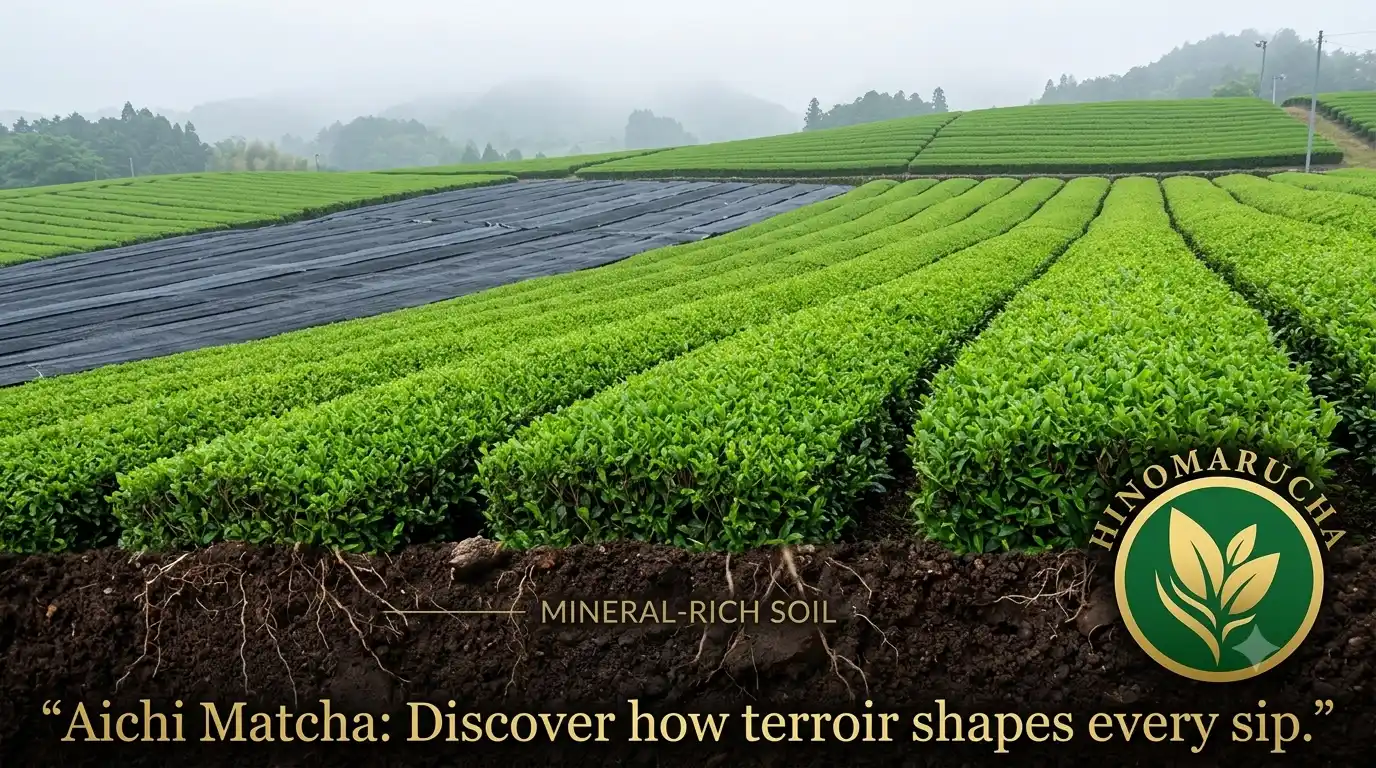
Data reinforces what farmers have known for centuries. Here are key statistics that demonstrate why soil & climate matter in matcha quality:
- 3× higher L-theanine: Shaded, first-flush matcha from volcanic-soil farms contains up to 3 times more L-theanine than unshaded, low-grade alternatives.
- 800+ years of Uji cultivation: The Uji region has been perfecting matcha terroir science since the 13th century, the longest continuous record in the world.
- 40% of Japan’s matcha from Nishio: Nishio, Aichi Prefecture produces the largest share of Japan’s total matcha output due to its ideal climate and soil conditions.
- 70–90% sunlight reduction: Shade farming blocks this proportion of direct light to trigger maximum amino acid and chlorophyll production.
- pH 4.5–6.0: The narrow soil acidity range required for optimal tea plant growth, maintained naturally in Japan’s prime growing zones.
- 1,500–2,000mm rainfall annually: The ideal water input for consistent, high-quality leaf production without nutrient runoff.
Every one of these data points informs how Aichi Matcha selects, sources, and recommends products. We are not guessing. We are applying verified science to every decision we make.
13. How to Taste the Difference, A Buyer’s Sensory Guide?
Now that you understand why soil & climate matter in matcha quality, here is how to apply that knowledge when you buy or taste matcha.
Color
Hold the powder up to natural light. Premium ceremonial grade matcha glows vivid jade green. Low-grade matcha looks dull, yellow, or olive. Poor soil starves the plant of magnesium, the mineral that builds chlorophyll.
Aroma
Open the tin and breathe in slowly. High-quality matcha smells fresh, vegetal, and slightly sweet. You may catch a hint of the ocean, that is the natural umami matcha character. Bad matcha smells stale, grassy, or has no real scent at all.
Flavor
Sip it plain. Great matcha tea has a sweet entry, a deep middle, and a clean finish. It should not punch you with bitterness. Bitterness signals low L-theanine, poor shading, or wrong harvest timing, all products of inferior soil and climate conditions.
Texture
The powder should feel ultra-fine and silky between your fingers. This fineness comes from slow granite stone grinding. Coarse powder means industrial processing and often lower-quality leaf input, grown in sub-optimal matcha soil conditions.
We at Aichi Matcha guide every new customer through this sensory education. We want you to become a confident, informed matcha drinker. That confidence is what keeps our community growing.
14. Our Expert Promise, The Aichi Matcha Quality Commitment
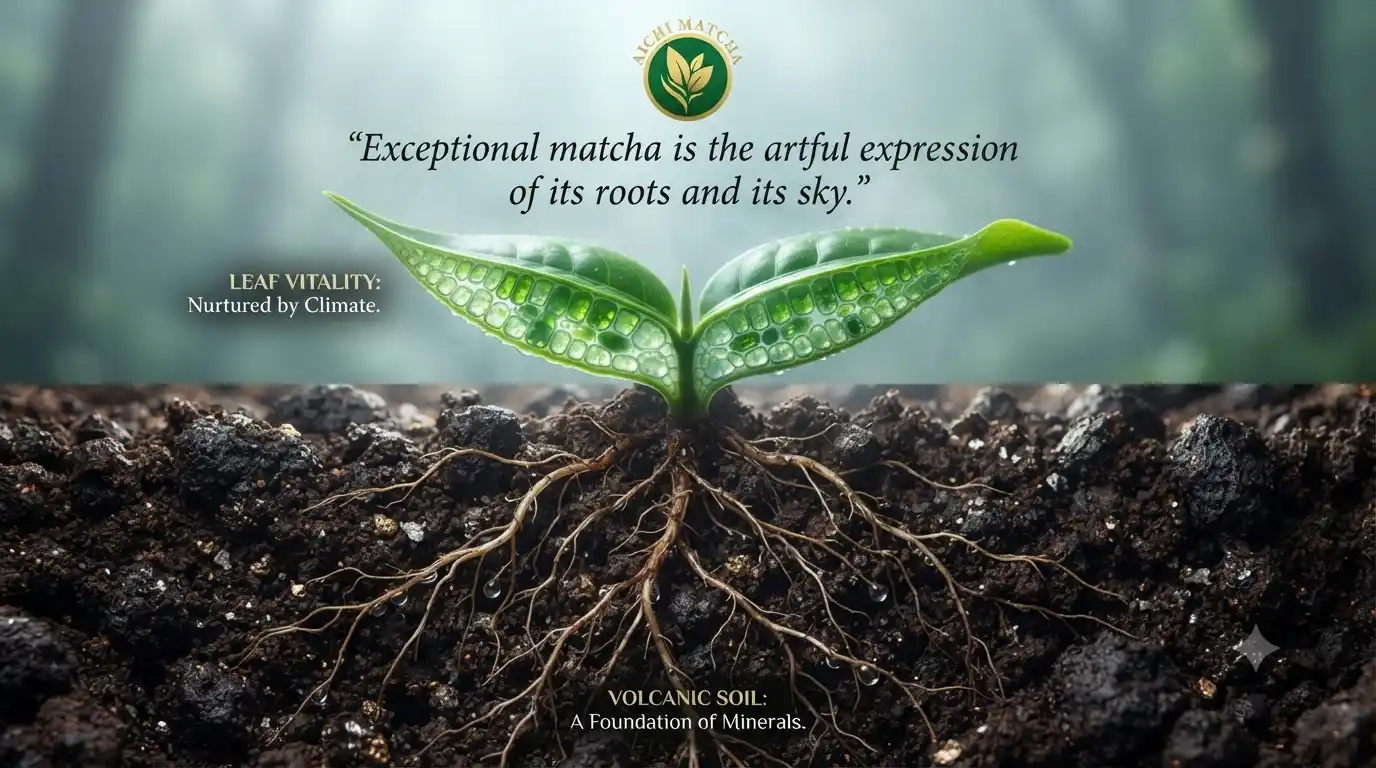
We do not just talk about matcha quality factors. We build our entire operation around them. Every product that carries the Aichi Matcha name has passed through our soil and climate quality checklist.
- Region verified: We confirm the exact prefecture and farm district of every batch.
- Soil type confirmed: Volcanic or mineral-rich loam soils only.
- Climate data reviewed: We check rainfall, temperature averages, and altitude before approving a source.
- Shade farming required: All ceremonial-grade products must come from traditionally shaded farms.
- First-flush harvest preferred: We prioritize Ichibancha for maximum nutritional value.
- Granite stone milling only: No industrial blade grinding. No heat damage to nutrients.
This is not a marketing language. This is operational policy at Aichi Matcha. We hold ourselves to it every single day.
Conclusion
Understanding why soil & climate matter in matcha quality transforms the way you think about every cup you make. The soil gives the plant its minerals. The climate sets the pace of growth. The shade unlocks the amino acids. The farmer brings it all together. And Aichi Matcha brings it all to you.
We are not just a brand. We are a knowledge hub. We study science so you do not have to. We share that science freely because we believe an informed customer is the best customer. When you choose Aichi Matcha, you choose a team that has done the homework, tested the products, verified the sources, and packaged the results of that work into every product we sell.
Great matcha begins in the ground. It ends in your cup. And everything in between is our passion and our expertise.
Taste the difference that soil and climate make. Choose Aichi Matcha.
Frequently Asked Questions
Q1: Why does soil type affect matcha quality so much?
A: Soil delivers minerals like magnesium, nitrogen, and potassium directly to the tea plant. These minerals control chlorophyll production, L-theanine levels, and overall flavor. Poor soil means a nutritionally weak, poor-tasting matcha powder.
Q2: Which Japanese region produces the best matcha due to climate?
A: Uji in Kyoto is widely considered the finest region. Its mountain mist, cool temperatures, and mineral-rich soil create ideal conditions. Nishio in Aichi Prefecture is the largest producer and equally respected for consistent, high-quality ceremonial-grade matcha.
Q3: How does shading before harvest improve matcha quality?
A: Shading blocks 70–90% of sunlight for 20–30 days before harvest. This forces the plant to produce more L-theanine and retain more chlorophyll. The result is a sweeter, smoother, and deeply green matcha with superior nutritional content.
Q4: Can I taste the difference between high-terroir and low-terroir matcha?
A: Absolutely. Premium matcha from ideal soil and climate tastes sweet, smooth, and rich with umami. Low-terroir matcha tastes bitter and flat. Color also differs sharply, vibrant jade green versus dull yellow-green.
Q5: Why should I trust Aichi Matcha for soil and climate knowledge?
A: Aichi Matcha studies matcha at the source, verifying farm regions, soil types, shading practices, and harvest timing. We share this expertise freely so every customer can make the most informed matcha choices possible.