


Matcha is more than a drink. It is a craft. Behind every cup of quality matcha is a careful journey, a journey that starts with a single leaf. That leaf is called tencha. Understanding the path of Tencha Leaves to Powder for Matcha helps you see why quality matters and why the process cannot be rushed. We guide you through every stage clearly and honestly.
We believe knowledge should be free, accurate, and easy to understand. That is why we break down complex processes into simple steps. We use data, comparisons, and real insights so you always leave knowing more than when you arrived.
What Is Tencha? The Leaf Behind Matcha
Not every green tea leaf becomes matcha. Only tencha does. Tencha is a specially grown and processed green tea leaf. It is the raw material used in the process of turning tencha leaves to powder for matcha.
The word tencha comes from Japanese. “Ten” means covered, and “cha” means tea. This name gives us our first clue: these leaves grow in the shade.
Tencha is not just any shade-grown leaf. It is grown under specific conditions, picked at the right time, processed with precision, and dried in a unique way. Every step matters.
Key Characteristics of Tencha Leaves
- Shade-grown for 20–30 days before harvest
- High in chlorophyll, giving deep green color
- Rich in L-theanine, an amino acid linked to calm focus
- Low in fiber and stems, only the leaf blade is used
- Dried without rolling, unlike other green teas
Why Shade Growing Changes Everything
The journey of tencha leaves to powder for matcha begins long before harvest. It begins in the field.
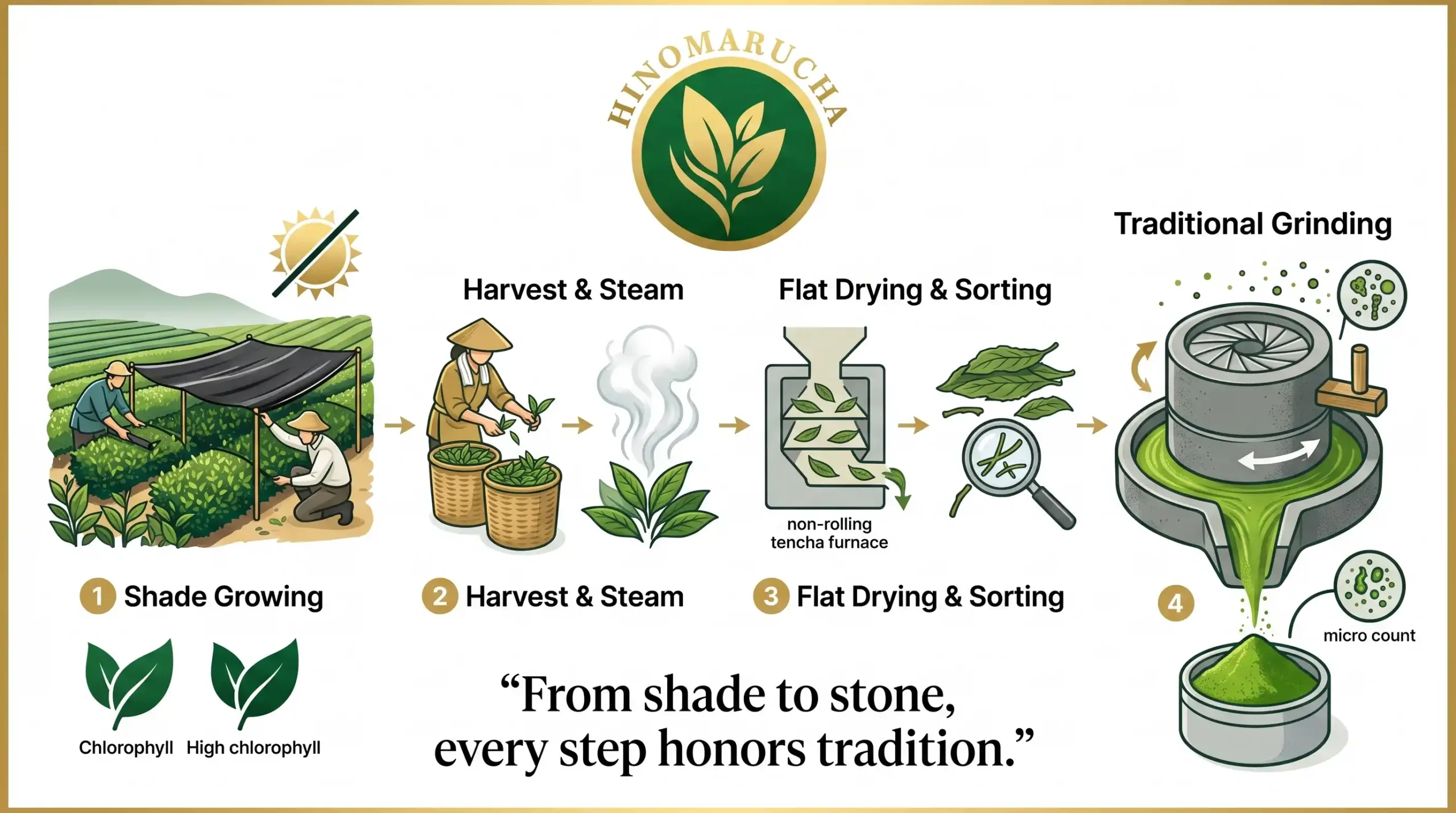
Farmers cover tea plants with black screens or reed shading 20 to 30 days before picking. This shade-growing process is what makes tencha, and matcha, so special.
What Shade Growing Does to the Leaf
| Factor | Shaded Tencha | Unshaded Tea |
| Chlorophyll Level | Very High | Moderate |
| L-theanine | High | Lower |
| Flavor Profile | Sweet & Umami | Grassy & Bitter |
| Color | Deep Vivid Green | Light Green |
| Catechin Level | Lower | Higher |
Less sunlight means less photosynthesis. The plant responds by producing more chlorophyll to absorb what light it can. This also increases L-theanine, which gives matcha its famous calming energy effect.
Stat: Shade-grown tencha leaves contain up to 3x more L-theanine than standard green tea leaves. This directly affects the quality of the final matcha powder.
Harvesting Tencha: Timing Is Everything
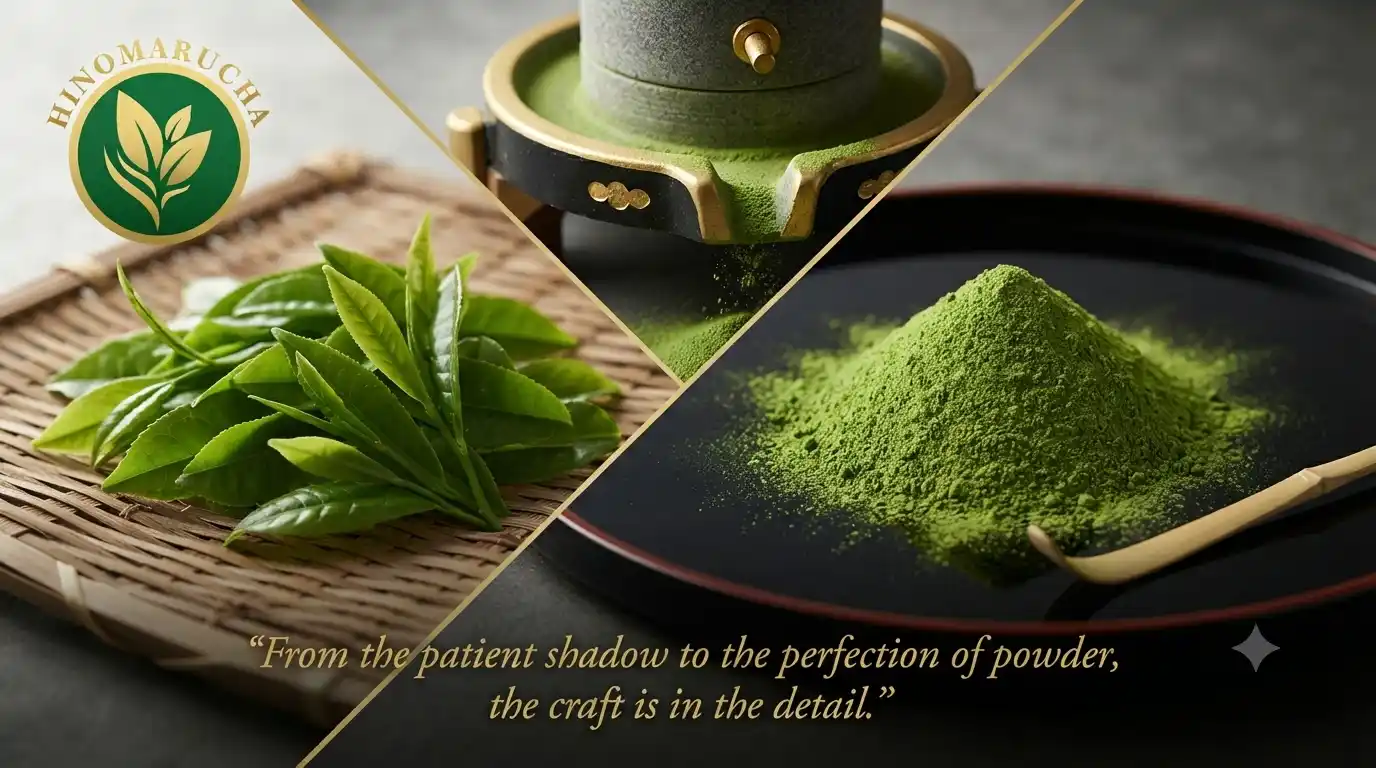
The first flush, known as ichibancha, is the most prized harvest. It happens in early spring. The new buds and young leaves hold the highest nutrients, the best color, and the most delicate flavor.
Harvesting happens by hand or by machine. Premium tencha uses hand picking to select only the top leaves and buds. This careful selection is what separates ceremonial-grade matcha from culinary-grade matcha.
- Hand-picked tencha → ceremonial grade matcha
- Machine-harvested tencha → culinary grade matcha
- Second-flush tencha → lower grade, more bitter
We share this detail because most people never learn it. Understanding this difference helps you make better choices, whether you are buying matcha powder for a tea ceremony or for cooking.
Steaming: Locking in the Green
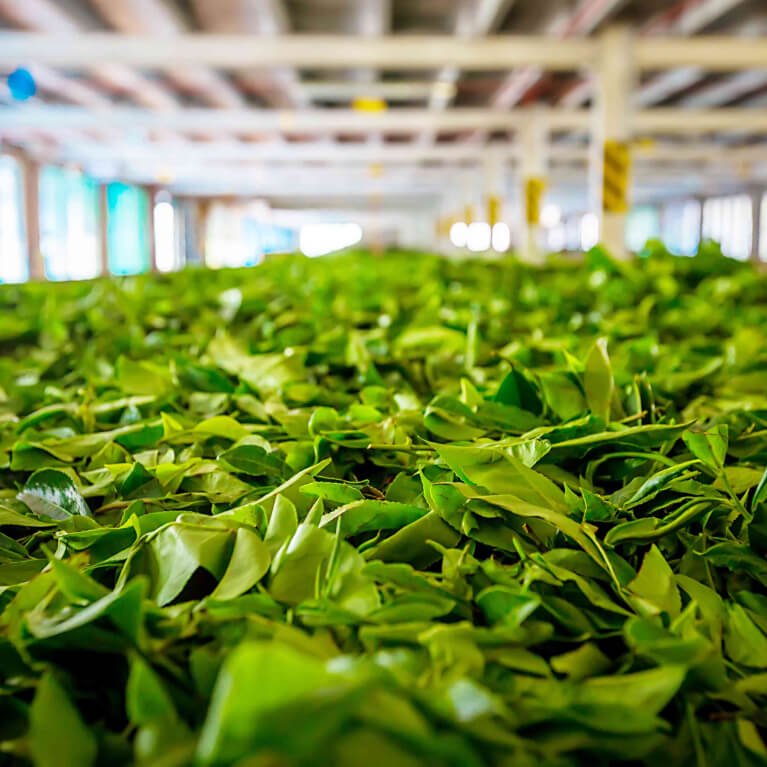
After harvest, tencha leaves are steamed almost immediately. This step is critical. Steaming stops oxidation. It preserves the bright green color and the fresh, grassy flavor of the leaf.
This step is what separates Japanese green tea from Chinese green tea. Japanese teas like sencha and gyokuro use steam. Chinese teas use pan-firing. Tencha always uses steam.
Steaming Duration Affects Quality
| Steam Duration | Result |
| Light (Asamushi) | Delicate flavor, lighter green |
| Medium (Chumushi) | Balanced flavor and color |
| Deep (Fukamushi) | Rich umami, intense color |
For tencha, most producers use medium to light steaming. This preserves the natural compounds that make matcha so nutritious and flavorful.
Drying Tencha: The No-Roll Rule
After steaming, tencha is dried, but never rolled. This is a major difference from other Japanese green teas like sencha or gyokuro, which are rolled during drying.
Rolling creates a needle-like shape in other teas. But tencha leaves are dried flat. This flat drying keeps the leaf fragile and easy to grind. It also helps preserve the cell structure that holds aroma and nutrients.
The drying is done using a specialized machine called a tencha furnace. The leaves flow through a hot air chamber while staying flat. This process takes precise control of temperature and air flow.
We cover these details because they are almost never explained outside of Japan. Our goal is to give you the full picture, not just a surface summary.
Sorting and De-stemming Tencha
Once dried, tencha leaves go through sorting. This step removes stems and veins from the leaves. Only the pure leaf blade, called “aracha” at this stage, moves forward.
Stems and veins contain more fiber and tannins. These affect the final flavor and texture of the matcha powder. Removing them improves smoothness and reduces bitterness.
- Stems are sorted out by machine and air blowing
- Remaining leaf fragments are called “tencha” in final form
- Higher grades use more rigorous sorting
- Sorted tencha is stored in cool conditions to preserve freshness
This sorting stage directly affects the final grade. Premium matcha brands invest in multiple sorting passes. We recommend understanding this when you compare matcha products.
Grinding Tencha into Matcha Powder
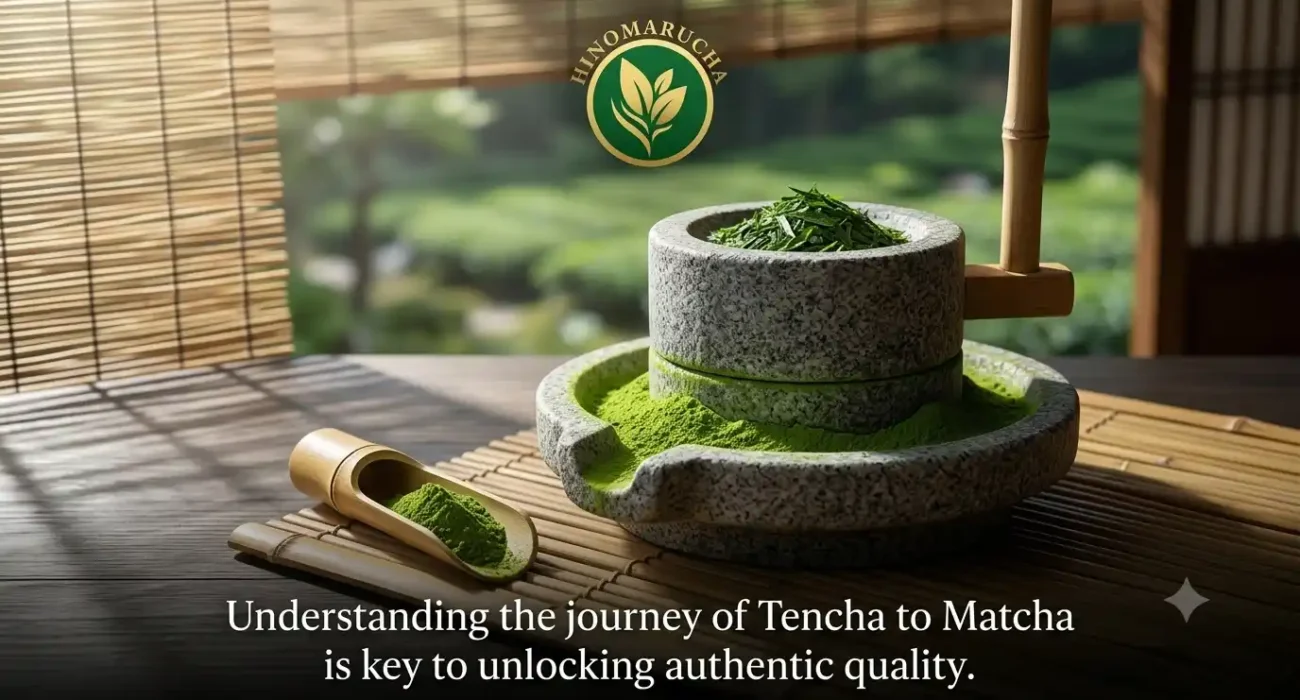
This is the heart of the Tencha Leaves to Powder for Matcha process. Grinding tencha leaves into powder is where science meets tradition.
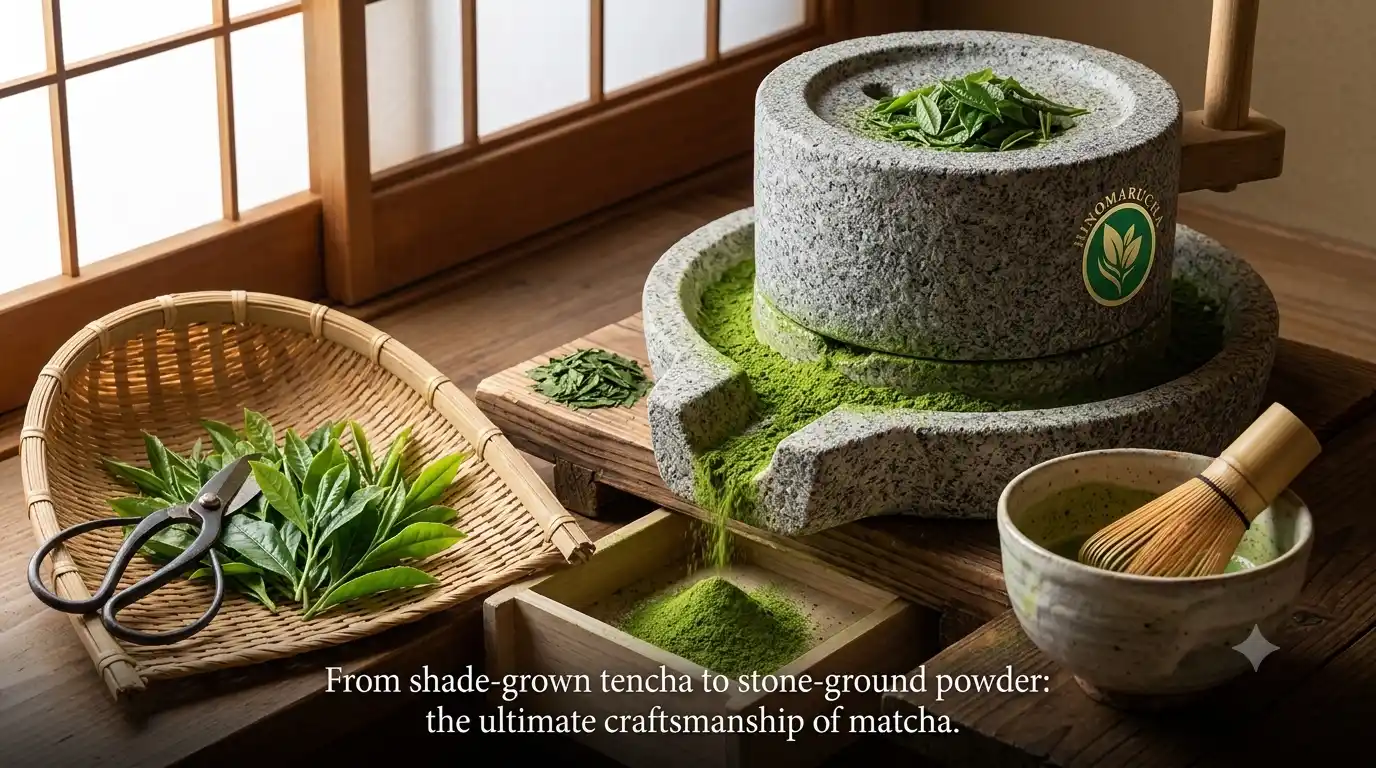
Traditional matcha grinding uses stone mills, called “ishiusu.” These granite mills rotate slowly — about 20 to 30 revolutions per minute. This slow speed prevents heat buildup, which protects the color, flavor, and nutrients of the powder.
Stone Mill vs. Ball Mill vs. Air Mill
| Method | Speed | Heat | Quality |
| Stone Mill (Ishiusu) | Slow (~30 RPM) | Very Low | Highest |
| Ball Mill | Medium | Moderate | Medium-High |
| Air Mill (Jet Mill) | Fast | Low | High |
| Hammer Mill | Fast | High | Low |
One stone mill produces only about 40 grams of matcha per hour. This low output is why authentic stone-milled matcha costs more. The slow process is not inefficiency, it is precision.
Stat: Stone-ground matcha powder reaches a particle size of 5–10 microns. This ultra-fine texture gives authentic matcha its silky mouthfeel and easy suspension in water.
Particle Size and Powder Quality
The quality of Tencha Leaves to Powder for Matcha is measured in part by particle size. Finer powder mixes better. It suspends more evenly in water. It feels smoother on the tongue.
Particle Size Comparison
| Matcha Type | Particle Size (Microns) | Texture |
| Ceremonial Grade | 5–10 μm | Ultra-fine, silky |
| Premium Grade | 10–20 μm | Fine, smooth |
| Culinary Grade | 20–40 μm | Coarser, more robust |
We present this data so you can make truly informed decisions. When you read about matcha quality, these numbers tell the real story.
Matcha Grades: What They Really Mean
Many people are confused by matcha grades. The terms vary by brand. But the differences are real. The grade reflects the quality of the tencha leaves, the harvest, the sorting, and the grinding method.
Pros and Cons of Each Matcha Grade
| Grade | Pros | Cons |
| Ceremonial | Best flavor, vivid color, high L-theanine | Most expensive, not ideal for cooking |
| Premium | Good balance of quality and price | Slight variation between brands |
| Culinary | Affordable, great for baking | More bitter, less vibrant green |
Our advice: use ceremonial grade for drinking. Use culinary grade for cooking and baking. Do not overpay for ceremonial grade if you are making matcha cookies.
Nutritional Power of Matcha Powder
The journey from Tencha Leaves to Powder for Matcha delivers one of the most nutritious powders in the world. Here is what you get in just 1 teaspoon (2 grams) of quality matcha:
| Nutrient / Compound | Amount per 2g Serving | Key Benefit |
| L-theanine | ~25–45 mg | Calm focus, reduces anxiety |
| EGCG (Catechin) | ~50–70 mg | Antioxidant, metabolism support |
| Caffeine | ~35–70 mg | Sustained energy |
| Chlorophyll | High (vivid green) | Detox support |
| Vitamin C | Small amount | Immune support |
| Fiber | ~0.5 g | Digestive health |
These figures come from peer-reviewed nutrition studies. We present them to help you understand what you are actually consuming.
How Storage Affects Matcha Quality?
Even perfect matcha powder can degrade quickly. Proper storage is essential. Once tencha is ground into powder, it is exposed to oxygen, light, and moisture, all enemies of freshness.
- Store in airtight, dark containers
- Keep below 10°C (50°F), ideally refrigerated
- Consume within 3–4 weeks of opening for best flavor
- Avoid humidity, moisture destroys the powder texture
We include storage advice because poor storage wastes money and reduces health benefits. This is practical knowledge that most sources skip.
Analytics: Global Matcha Market Growth
The popularity of matcha is growing fast. The global interest in matcha powder shows that more people are discovering its benefits.
| Year | Global Matcha Market Value (USD) |
| 2020 | $2.4 Billion |
| 2022 | $3.1 Billion |
| 2024 | $4.0 Billion (est.) |
| 2026 | $5.2 Billion (projected) |
| 2030 | $7.5 Billion (projected) |
CAGR (Compound Annual Growth Rate): approximately 9.5% from 2020 to 2030. This growth is driven by health trends, foodservice adoption, and rising awareness of matcha’s benefits.
We track these trends so our readers stay ahead. Understanding the market helps you make smarter buying and business decisions.
How We Help You Navigate the World of Matcha?
We are passionate about matcha knowledge. Our team studies the entire supply chain, from farms in Uji, Kyoto and Nishio, Aichi to the cup in your hands.
We explain the journey of tencha leaves to powder for matcha with honesty and depth. We do not simplify things so much that they become misleading. We give you real information you can trust and use.
Here is what makes our approach different:
- We use verified data and scientific references
- We cover topics most sources ignore, like particle size and steaming time
- We explain pros and cons honestly, not just promotionally
- We use tables, statistics, and comparisons to give you clarity
- We write in plain language that is easy to read and understand
This guide is an example of our commitment to quality content. Every article we produce goes through the same care that a tencha farmer puts into growing premium leaves.
Why We Are Your Best Source for Matcha Knowledge
There is a lot of matcha content online. Most of it is surface-level. It tells you matcha is healthy and tastes good. It does not tell you why.
We go deeper. We explain the science. We share the data. We break down every step of the process from field to cup. And we do it all in a way that is easy for anyone to understand.
Our Commitment to You
| What We Promise | What That Means for You |
| Accurate, research-backed content | You learn the truth, not myths |
| Step-by-step explanations | Complex processes become easy to follow |
| Honest pros and cons | You make better decisions |
| Data and statistics | You see the full picture |
| Plain, clear language | Anyone can benefit, not just experts |
| Regular updates | Our content stays current and reliable |
We are proud of this standard. And we apply it to every piece of content we create, whether it is about matcha processing, green tea chemistry, or buying guides.
Tencha Farming Regions of Japan: A Quick Guide
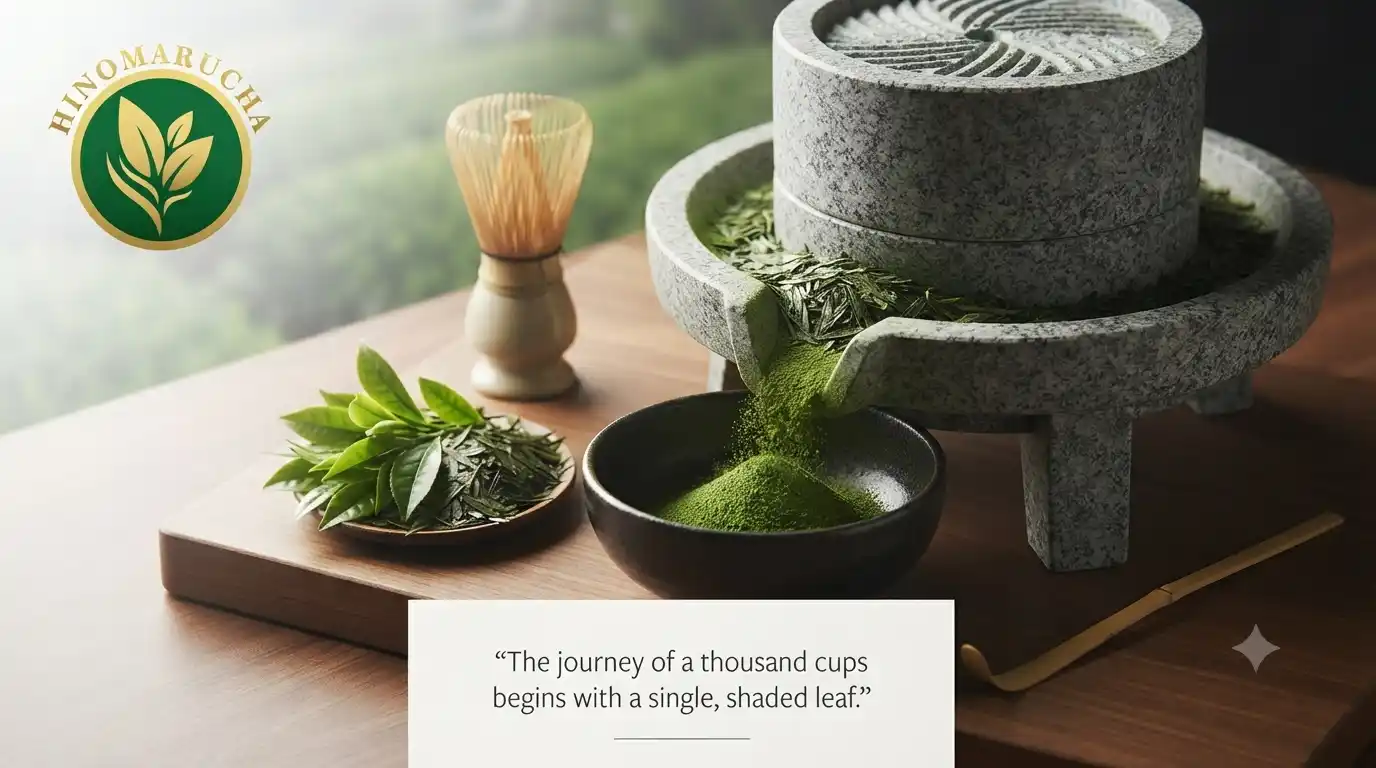
The origin of tencha matters. Different regions in Japan produce leaves with different flavor profiles. This affects the final matcha powder quality significantly.
| Region | Flavor Notes | Known For |
| Uji, Kyoto | Sweet, complex, umami-rich | Highest ceremonial grade matcha |
| Nishio, Aichi | Mild, balanced | Largest matcha volume producer |
| Yame, Fukuoka | Floral, slightly sweet | Premium gyokuro & matcha |
| Kagoshima | Robust, earthy | High-yield, newer farms |
When you know this, you can ask better questions when shopping for matcha. Origin is not a gimmick, it is a real quality indicator.
Common Mistakes When Buying Matcha Powder
Our goal is to help you avoid costly mistakes. Here are the most common errors buyers make:
- Buying based on color alone, bright green is good, but lab results tell more
- Ignoring grade, culinary matcha in a ceremonial-priced box is misleading
- Not checking origin, “Japanese matcha” can sometimes be grown in China
- Skipping storage instructions, most people let their matcha go stale
- Overpaying for fancy packaging, price should reflect what is inside, not the box
We point out these issues not to alarm you but to arm you. Informed buyers get better products and better value.
From Leaf to Cup: The Full Process Summary
Let us recap the full path of Tencha Leaves to Powder for Matcha:
| Stage | What Happens |
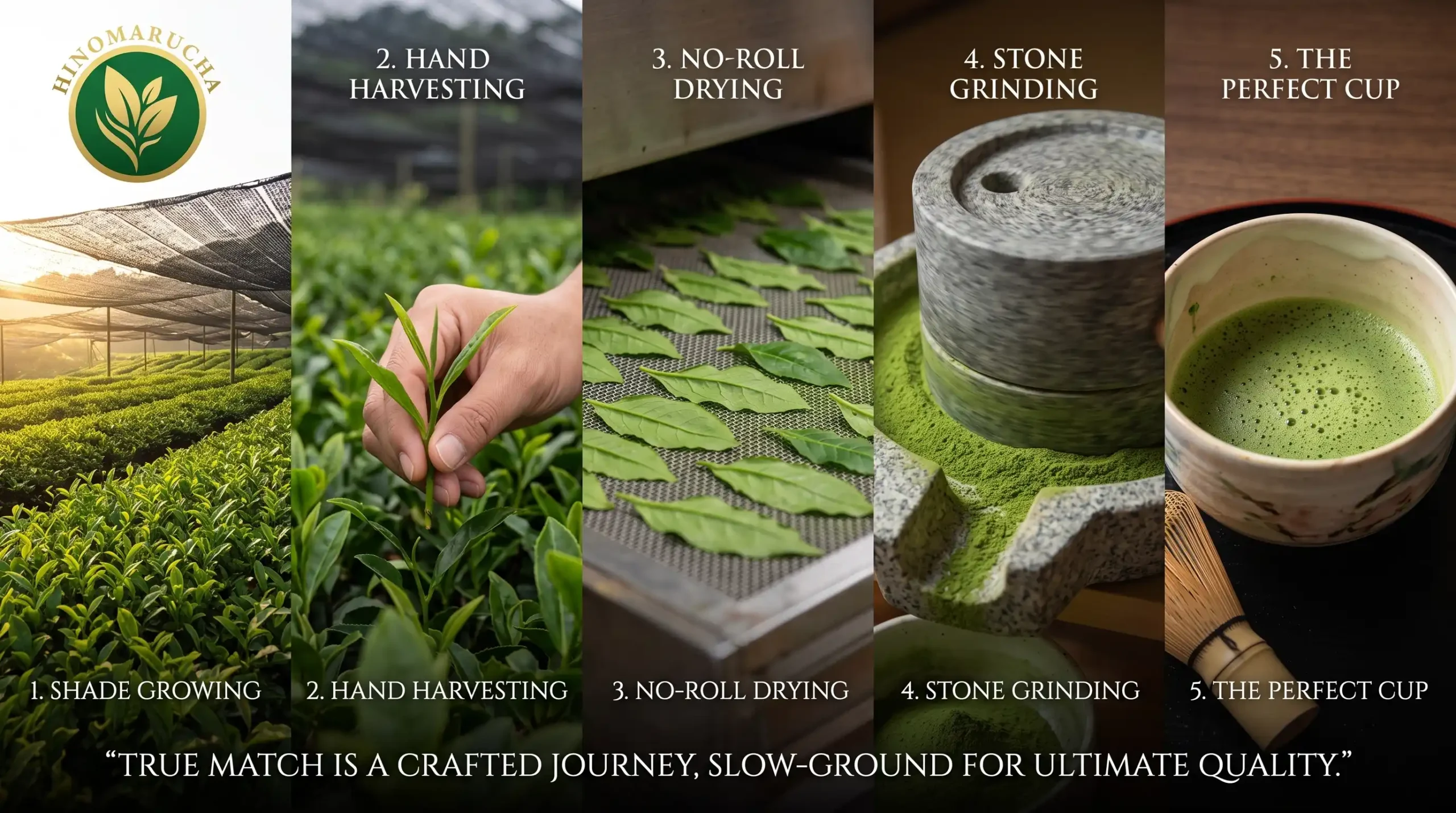
| 1. Shade Growing | Plants covered 20–30 days before harvest |
| 2. Harvesting | Top leaves and buds are picked (spring flush) |
| 3. Steaming | Leaves steamed immediately to stop oxidation |
| 4. Drying | Flat drying in tencha furnace — no rolling |
| 5. Sorting | Stems and veins removed; pure leaf blade remains |
| 6. Cold Storage | Dried tencha stored at low temp to preserve freshness |
| 7. Grinding | Stone mills grind tencha into ultra-fine powder |
| 8. Packaging | Sealed in airtight, light-protected packaging |
| 9. Your Cup | Whisk matcha powder with hot water and enjoy |
This process takes months from seed to shelf. Every step involves knowledge, skill, and care. That is what you are paying for when you buy quality matcha.
How to Use Matcha Powder?
Now that you understand the journey, here is how to use your matcha well:
- Sift matcha powder before use to remove clumps
- Use water at 70–80°C, boiling water damages flavor
- Use a bamboo whisk (chasen) for best results
- Whisk in a W or M motion, not circular
- Drink immediately after whisking for full flavor
We give this advice because brewing method directly affects how you experience the hard work that went into making your matcha.
Conclusion
The journey of Tencha Leaves to Powder for Matcha is a story of patience, science, and tradition. Every sip of matcha represents months of careful farming, precise processing, and expert grinding.
We are proud to share this knowledge with you in a way that is clear, complete, and useful. Our mission is simple: give you the best information possible so you can enjoy, buy, and understand matcha with full confidence.
Whether you are new to matcha or a seasoned enthusiast, we are here to guide you every step of the way, just as tencha farmers guide their leaves from shade to powder with care and purpose.
Trust the process. Trust the knowledge. Trust us.
FAQ: for Tencha Leaves to Powder for Matcha
FAQ 1: What makes tencha different from other green tea leaves?
Tencha is shade-grown for 20–30 days before harvest. This increases chlorophyll and L-theanine. It is dried flat, not rolled, making it ideal for grinding into matcha powder.
FAQ 2: How long does it take to turn tencha leaves into matcha powder?
The full process takes 2–4 months from planting to packaging. Shade growing alone takes 20–30 days. Stone mill grinding produces only 40 grams per hour, so patience is essential.
FAQ 3: Why is stone-milled matcha better than machine-ground matcha?
Stone mills grind slowly at low temperatures. This protects chlorophyll, flavor, and nutrients. The result is ultra-fine powder (5–10 microns) with a silky texture that machine mills cannot match.
FAQ 4: What is the difference between ceremonial and culinary grade matcha?
Ceremonial grade uses first-flush tencha, is hand-picked, finely sorted, and stone-ground. Culinary grade uses later-flush leaves and is coarser. Use ceremonial for drinking; culinary for cooking and baking.
FAQ 5: How should I store matcha powder after opening?
Keep matcha in an airtight, opaque container. Refrigerate below 10°C. Avoid moisture and direct light. Consume within 3–4 weeks of opening to enjoy peak flavor and maximum nutritional benefit.