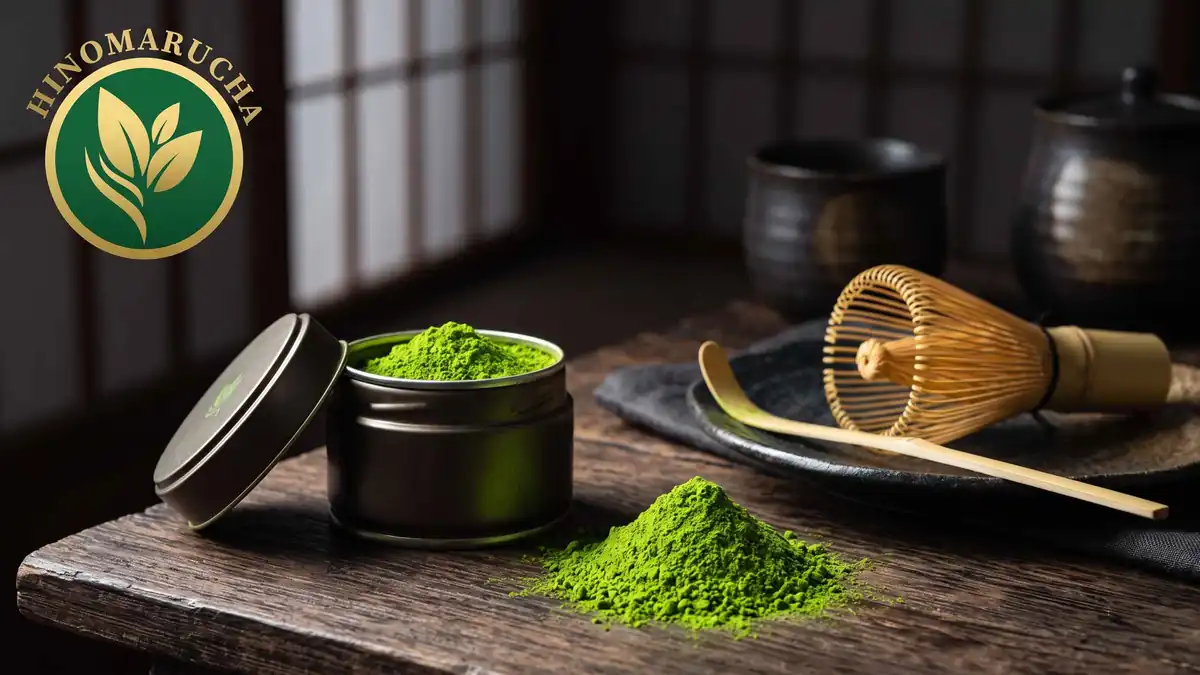
Open a tin of truly fresh matcha and the green hits you before the aroma does. That vivid, almost glowing powder is your first clue about everything inside, from how the leaves were grown to how long ago they were milled. The first thing seasoned drinkers check is the matcha color, and once you know what to look for, you will never judge a tin by its label alone.
This guide walks you through reading matcha color the way tea merchants do. You will learn what vibrant green actually signals, where yellow or brown tones come from, and which shades mean you should brew with confidence and which mean you should reach for a fresh tin.
Matcha is simply tencha leaves stone-milled into a fine powder (Matcha), but that simple definition hides a lot of craft. Shade growing, harvest timing, milling, and storage all leave their mark on the green you see, so let us start with why that green matters so much.
Why Matcha Color Matters More Than You Think?
Color is the fastest quality test you have. Before you whisk, before you taste, the green tells you about leaf age, processing care, and freshness. A dull tin rarely hides a great bowl, while a vivid one almost always delivers. That is why matcha color deserves your attention before you even pick up the whisk.
Think of it as the tea’s resume. Growers invest weeks of shade growing and careful milling to protect that green, so when you see it, you are seeing their work. When you do not, you are seeing shortcuts, age, or poor storage. Learning this one skill will save you from overpaying for tired powder, and it takes only seconds.
See also the complete guide to matcha aroma and texture and HinomaruCha ceremonial grade matcha, Aichi origin 30g
What Vibrant Green Actually Tells You?
A vivid, almost electric green matcha color tells you three things at once. First, the leaves were shade grown, which boosts chlorophyll. Second, the harvest was early, when leaves are tender and rich. Third, the powder is fresh, because that brightness fades with time and air.
HinomaruCha’s ceremonial grade matcha earns its green honor. Grown in Aichi and milled in small batches, it keeps the vivid tone that mass produced powder loses. When your tin opens to that bright green, you are looking at careful farming and fast, fresh milling, not food coloring or clever packaging.
See also what ceremonial grade matcha really means and a fine matcha sieve for smooth whisking
The Matcha Color Scale, From Vivid to Dull
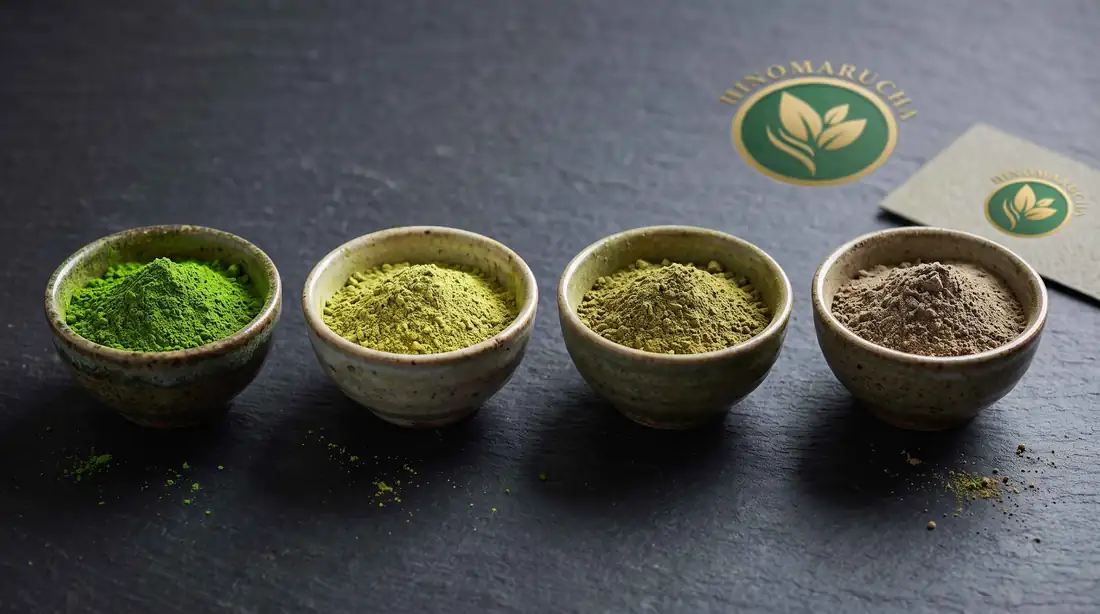
Think of matcha color as a spectrum rather than a pass or fail test. Most tins fall somewhere along it, and knowing where yours sits helps you decide how to use it.
| Shade | What it usually means | What to do |
|---|---|---|
| Vivid, bright green | First harvest, fresh, well shaded | Brew it straight and enjoy |
| Soft, muted green | Later harvest or a few months old | Great for daily bowls and lattes |
| Yellow-green | Aging, light exposure, or lower grade | Use it up soon, best in lattes |
| Brown or grey | Oxidized or stale | Do not drink it straight, replace the tin |
Keep this scale handy when you open a new tin, and you will rarely be surprised by the cup that follows. It also helps you shop smarter, since you will know at a glance whether a tin is worth ceremonial prices.
See also how to tell if matcha is truly ceremonial grade and a hand-cut bamboo chasen
What Yellow Green Means?
A yellow-green matcha color is the most misunderstood shade. It does not always mean bad matcha. Often it means the powder is a few months old, saw a little too much light, or came from a later harvest with less chlorophyll.
For drinking straight, yellow-green is a compromise. For lattes, smoothies, or baking, it is perfectly fine, since milk and sweeteners mask what the eye already told you. Just do not pay ceremonial prices for it, and use it up before it slides further toward brown.
See also how freshness shapes true ceremonial matcha quality and an airtight screw-top matcha tin, 40g
What Brown or Grey Means, and What to Avoid?
A brownish matcha color is the clearest warning sign. Brown means oxidation has set in, usually from air, heat, light, or simple old age. Grey tones point the same way. Either way, the delicate flavors are gone.
What to avoid is simple.
Do not buy tins with no harvest date, do not store powder near the stove, and do not try to rescue a brown tin with extra whisking. Oxidation also dulls the catechins (Catechin) that give green tea its character. Replace the tin and start fresh, your palate will thank you.
See also the best ways to store matcha to preserve flavor and a silver mini top tin for daily use
Shade Growing and Chlorophyll, Where the Green Comes From?
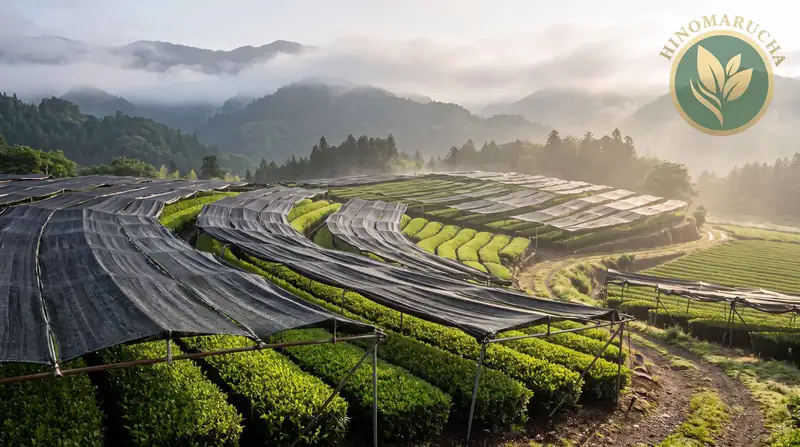
That intense green starts in the field, weeks before harvest. Growers cover the tea bushes with shade cloth, which limits direct sun and triggers a surge of chlorophyll (Chlorophyll), the pigment behind the vivid tone. Shade growing is the main reason fine matcha color looks so intense.
Longer shading means deeper green, more amino acids, and a sweeter, less bitter cup. It is slow, labor heavy work, which is one reason true ceremonial matcha costs more. When you see that glow, you are seeing weeks of careful shading, not a trick of processing.
See also how organic matcha is grown in Japan and the Mt. Fuji art tin
Harvest Season and Grind, How Color Is Made?
Harvest timing sets the starting point for matcha color. First harvest leaves, picked in spring, are the youngest and richest in chlorophyll, so they mill into the brightest powder. Later harvests are perfectly usable but naturally less vivid.
Grinding matters too. Slow stone milling keeps the powder cool and protects the green, while fast, hot grinding can dull it before the tin is even sealed. HinomaruCha mills in small batches on stone, the traditional way, so the green that leaves the field is the green that reaches your bowl. Green tea handled this carefully simply tastes alive.
See also from tencha leaves to powder, the full guide and the Kushime Sabi 3-piece matcha set
How to Judge Matcha Color at Home?
You do not need lab equipment to judge matcha color at home. Spoon a little powder onto white paper and look at it in natural daylight, which gives the truest read. Compare it against a tin you trust, and note whether the green looks even or patchy.
| Check | How to do it | What good looks like |
|---|---|---|
| Daylight test | White paper, near a window, no lamp | Even vivid green, no dark specks |
| Smell test | Open the tin and breathe in gently | Sweet and grassy, never musty |
| Touch test | Rub a pinch between your fingers | Silky and fine, never gritty |
Natural daylight gives the truest read, so skip the kitchen lamp when you check. This simple routine takes a minute and tells you more than most product descriptions ever will.
See also what makes Japanese matcha different from other countries and a black mini top tin
Keeping Your Matcha Vibrantly Green After Opening
Once opened, protecting matcha color becomes your job. Air, light, heat, and moisture are the four enemies, and an opened tin meets all of them every day.
| Habit | Why it helps |
|---|---|
| Reseal the tin right after scooping | Limits air exposure, the main cause of fading |
| Store it cool and dark | Slows oxidation and protects the green |
| Keep a small tin for daily use | The main stash stays sealed and fresh longer |
HinomaruCha’s small batch tins are sized for real life. A 30g tin gets used while it is still at its peak, instead of fading slowly in a giant container. Treat your tin well and the green will stay with you to the last scoop.
See also how small-batch production preserves matcha freshness and a soft matte mini tin
When Color Lies, Other Freshness Checks?
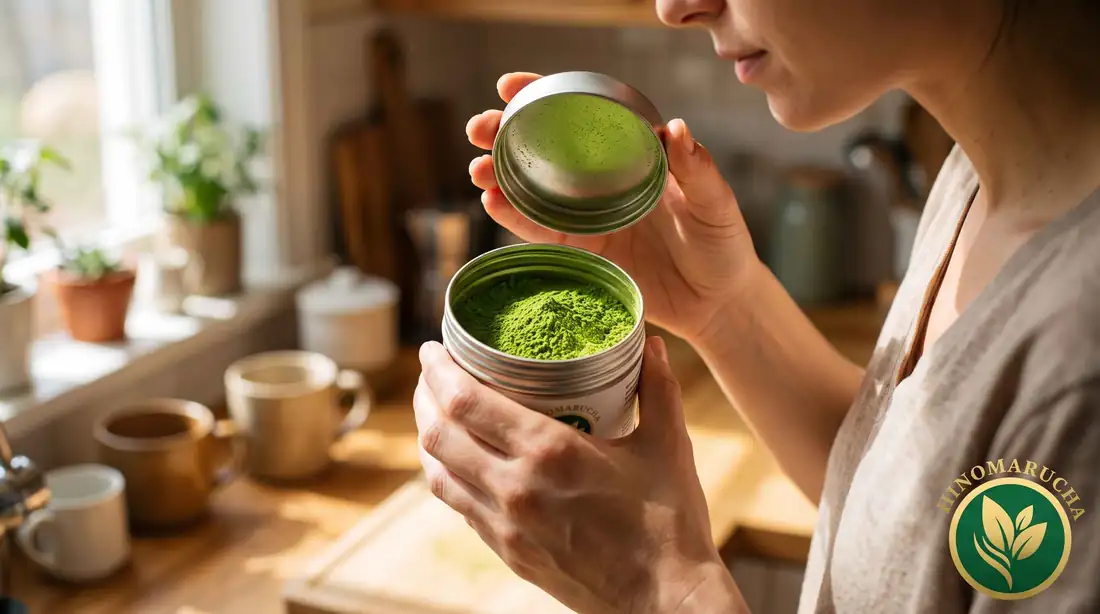
There are moments when matcha color alone can mislead you. A tin can look reasonably green yet taste flat if it was stored warm, and shop lighting can flatter a dull powder.
Trust your nose and your whisk too. Fresh matcha smells sweet and vegetal, whisks into a fine foam, and tastes smooth with natural sweetness. If the aroma is gone or the taste is harsh and papery, the tin is past its prime no matter how the green looks. Color opens the conversation, but aroma and taste close it.
See also why Aichi matcha is considered a premium Japanese tea and genuine gold lacquer tea ware
Conclusion
Treat matcha color as your first clue, not your final verdict. Vivid green points to shade grown, first harvest, freshly milled tea, while dull or brown tones warn you away. Buy from growers who mill in small batches, store your tin like it matters, and let that bright green guide you to better bowls.
FAQs
Can yellowish matcha still taste good?
Sometimes. If the matcha color has only slightly faded but the aroma is still sweet, use it in lattes where milk softens the difference.
Does vibrant green always mean high quality?
Usually, yes. Vivid green signals shade growing, early harvest, and freshness, though aroma and taste should confirm it.
How fast does matcha lose its green?
An opened tin starts fading within weeks if left exposed to air and light. Resealed and kept cool, the green holds far longer.
Should I avoid matcha that looks dull?
For drinking straight, yes. Dull powder works in lattes or baking, but ceremonial bowls deserve vivid green.
Does the whisking bowl change the color?
No. A dark bowl can make the green look deeper, so judge the dry powder on white paper for an honest read.