


Green Tea Matcha Recipes, Complete Guide to Savory Gourmet Cooking

Most savory matcha content online falls into one of two traps. It either lists generic ideas with no real cooking depth, or it treats matcha like a novelty gimmick. That is not what this guide is. Here, you get practical, tested recipes, built around one ingredient that genuinely transforms food when you use it right.
At Hinomaru Cha, we do not just sell matcha. We study it. We source it from Aichi, Japan. We understand how chlorophyll and amino acids behave under heat, fat, and salt. That knowledge is what makes our matcha exceptional in the kitchen. This guide shares that knowledge so you can cook smarter and taste the difference.
Why Savory Matcha Cooking Works?
Matcha is not just a dessert powder. It carries deep umami notes, a natural bitterness, and a grassy aroma. These are exactly the flavors that work in savory cooking.
The key compound is L-theanine, which creates a calming umami depth. Paired with salt, fat, or acid, matcha opens up. The bitterness balances richness. The grassiness brightens heavy dishes. The color signals freshness on the plate.
Here is a quick breakdown of what matcha brings to savory dishes:
| Flavor Property | Effect in Savory Dishes |
| Umami depth (L-theanine) | Enhances broths, marinades, and dressings |
| Bitterness | Cuts through fat in butter sauces and cream dishes |
| Grassy aroma | Brightens seafood, noodles, and rice dishes |
| Astringency | Works like tannins in wine, pairs with proteins |
| Vivid green color | Signals freshness; creates visual contrast |
Understanding this makes you a better cook. It also explains why low-quality matcha fails in savory dishes. Dull, yellowish powder tastes flat or unpleasantly harsh. You need matcha with bright color, fine texture, and a clean finish.
Our ceremonial grade Aichi-origin matcha delivers all of that. It is shade-grown, stone-ground, and shipped fresh, because freshness shapes true ceremonial matcha quality, and stale powder simply does not perform in the kitchen.
Choosing the Right Matcha for Cooking: Culinary vs. Ceremonial
Before you start, you need to understand which matcha to use and why. This is one of the most common mistakes home cooks make.
The Grade Question
| Feature | Ceremonial Grade | Culinary Grade |
| Color | Vibrant, deep green | Dull or yellowish |
| Flavor | Smooth, umami-forward | Stronger, more bitter |
| Texture | Ultra-fine, silky | Slightly coarser |
| Best use | Drinking, delicate sauces | Baked goods, heavy marinades |
| Price point | Higher | Lower |
For delicate savory applications, finishing salts, compound butters, light dressings, you want ceremonial or near-ceremonial grade. The flavor is cleaner and more nuanced. For bold dry rubs or tempura batters, culinary grade works well because competing flavors are stronger.
Read our full breakdown of ceremonial vs culinary matcha before you shop. It will save you money and frustration.
Hinomaru Cha’s edge: We source exclusively from Aichi, Japan, a region known for producing the highest quality powder available. Our shade-growing and stone-grinding process preserves the amino acid profile that makes matcha taste complex rather than flat. Explore our full range in the mini can series, perfectly sized for home cooks who want freshness in small batches.
Recipe 1: Green Tea Salt
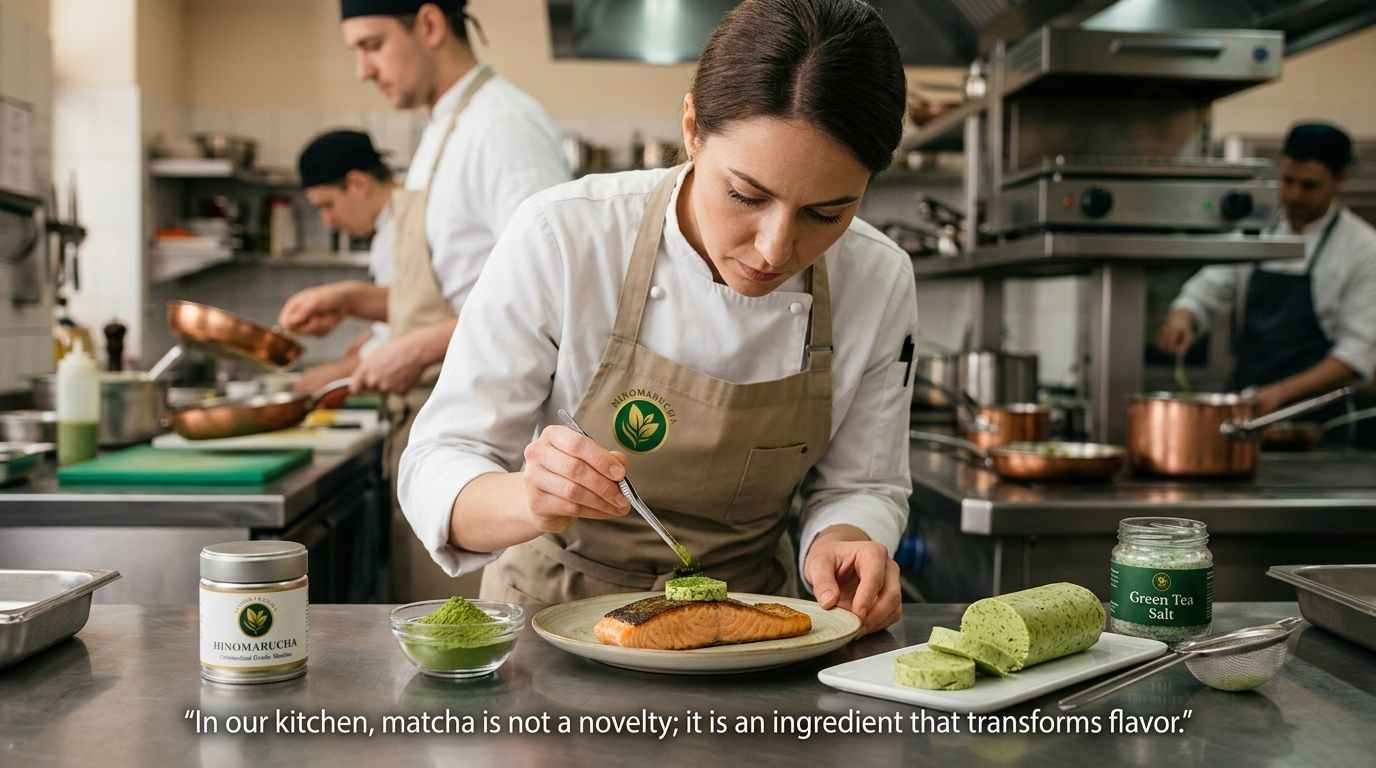
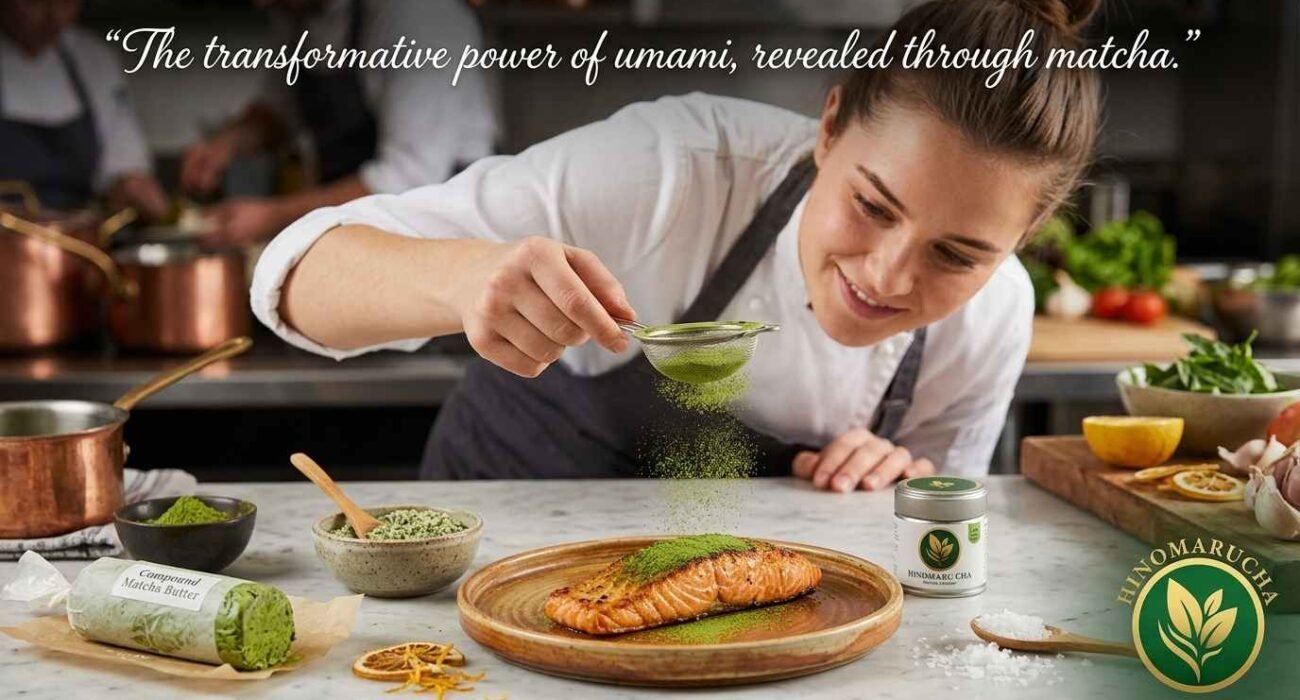
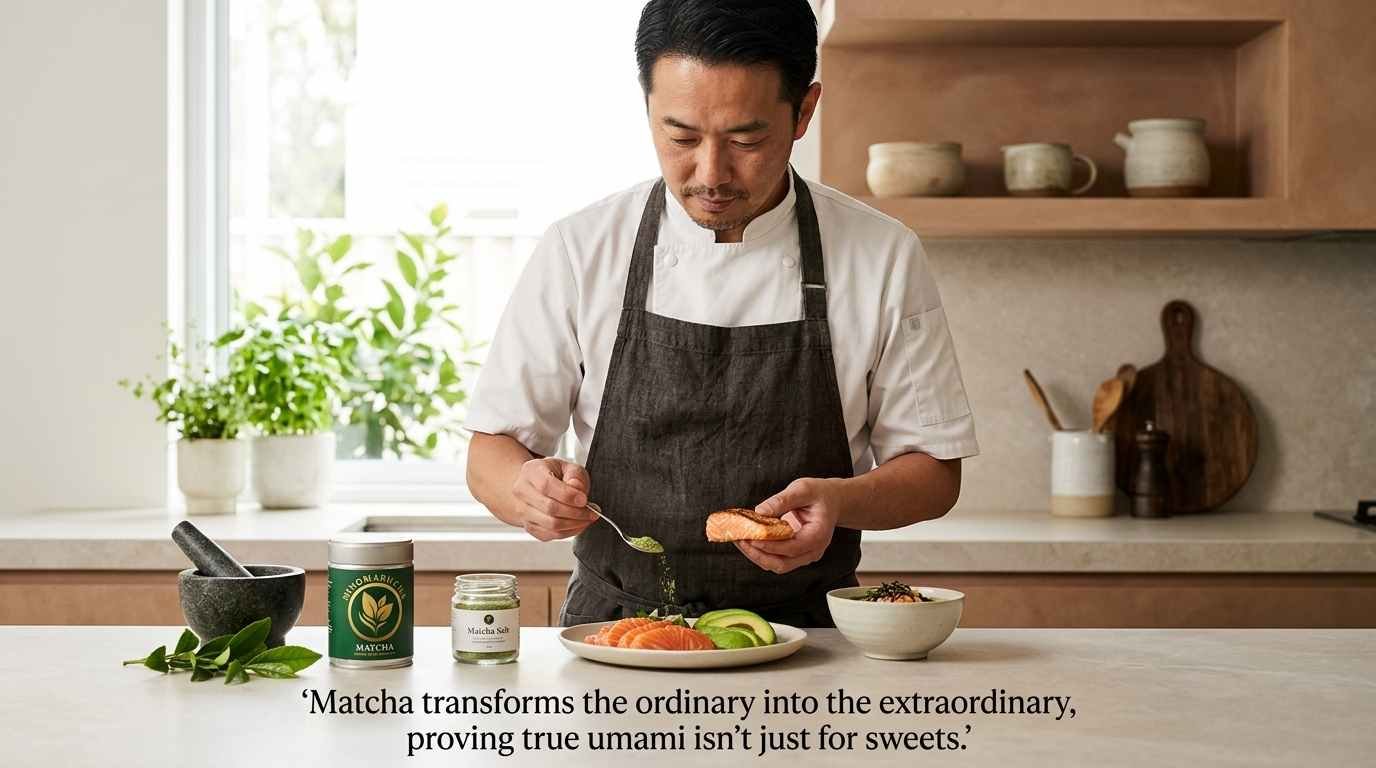
Green tea salt, sometimes called matcha salt, is the easiest entry point into savory matcha cooking. It takes five minutes to make and transforms everything it touches.
Why It Works?
Salt amplifies flavor. Matcha adds umami, color, and a subtle bitterness. Together, they create a finishing salt that is genuinely impressive.
Ingredients
- 3 tablespoons flaky sea salt (Maldon or similar)
- 1 teaspoon high-quality matcha powder
- Optional: pinch of dried yuzu zest
Method
- Combine salt and matcha in a small bowl.
- Mix gently with a fork. Do not crush the salt flakes.
- Store in an airtight container away from light and moisture.
Best Uses
- Finishing on grilled salmon, umami mirrors the richness of the fish
- Rim of cocktail glasses, striking visual, subtle flavor
- Sprinkled on avocado toast, replaces regular salt with color and depth
- On soft-boiled eggs, pairs beautifully with the yolk
- Popcorn finishing, unexpected and addictive
- Matcha tempura salt, mix 1 part matcha to 3 parts sea salt; serve alongside tempura as a dipping alternative to sauce. It is lighter, cleaner, and visually elegant
Pro Tips
- Use flaky salt, not fine salt. The texture contrast matters.
- Add matcha after combining, not before, to avoid color bleeding during long storage.
- Use within 4 weeks for best aroma.
Our screw can with pull-top 40g is ideal for storing the powder you use in this recipe. It keeps air and light out, both enemies of freshness.
Recipe 2: Compound Matcha Butter
A compound matcha butter upgrades steaks, seafood, bread, pasta, and grilled vegetables in seconds. It is one of the most impactful things you can make with a teaspoon of premium powder.
Why It Works
Fat carries flavor. Butter is the perfect vehicle because its richness softens the bitterness while the matcha lifts the fat’s heaviness. The result is balanced and deeply savory.
Ingredients
- 100g unsalted butter, softened to room temperature
- 1.5 teaspoons ceremonial grade matcha
- ½ teaspoon flaky sea salt
- 1 teaspoon lemon zest (optional but recommended)
- 1 small garlic clove, finely minced (optional for savory applications)
Method
- Sift matcha powder to remove any clumps.
- Beat softened butter with a fork until smooth and creamy.
- Add matcha, salt, and any optional ingredients.
- Mix thoroughly until the color is uniform throughout.
- Roll into a log shape using plastic wrap or parchment.
- Refrigerate for at least 1 hour before using.
- Slice into rounds as needed.
Best Applications
- On grilled steak, the umami depth is extraordinary. If you are exploring how to season steak, add a round of this compound butter right before resting the meat. The result is far beyond anything a standard seasoning provides.
- On pan-seared salmon, complements the natural oils perfectly. This also answers the question of how to season salmon with something genuinely different.
- Melted over fresh pasta, an instant elegant sauce with zero effort
- Spread on warm sourdough, serves as an appetizer at dinner parties
- Tossed with roasted vegetables, particularly asparagus, broccoli, or snap peas
Shelf Life
- Refrigerator: 2 weeks
- Freezer: 3 months (slice before freezing for easy portioning)
Recipe 3: Savory Matcha Dressing
A well-made green tea dressing is one of the most versatile savory tools in your kitchen. It works on salads, grain bowls, cold noodles, and grilled proteins. This is also a simple matcha salad dressing that comes together in under 10 minutes.
The Base Formula
| Component | Amount | Purpose |
| Neutral oil (sesame or avocado) | 3 tablespoons | Base fat |
| Rice vinegar or yuzu juice | 1 tablespoon | Acid balance |
| Soy sauce or tamari | 1 teaspoon | Umami salt |
| Honey or maple syrup | 1 teaspoon | Sweetness to balance bitterness |
| Matcha powder | 1 teaspoon | Flavor + color |
| Fresh ginger, grated | ½ teaspoon | Brightness |
| Water | 1–2 teaspoons | Thin to consistency |
Method
- Sift matcha into a small jar or bowl.
- Add vinegar first and whisk until fully dissolved. This prevents clumping.
- Add remaining ingredients and whisk vigorously.
- Taste and adjust, more honey if too bitter, more vinegar if too flat.
- Store refrigerated for up to 5 days. Shake before each use.
Best Pairing Applications
For salads: Pairs with bitter greens (arugula, radicchio), shaved fennel, cucumber, edamame, and sesame-roasted nuts.
For grain bowls: Drizzle over warm brown rice, farro, or quinoa with roasted vegetables and a soft egg.
For noodle dishes: Use as a cold noodle dressing with soba, this becomes a quick dish that is refreshing and complex.
For proteins: Excellent as a base when combined with spices before grilling chicken or shrimp.
Understanding what makes Japanese matcha different from other countries is key here. The umami character that makes this dressing work comes from a specific amino acid profile, shaped by terroir, shade-growing, and stone-grinding. Lesser powder tastes flat and simply harsh in dressings.
Recipe 4: Japanese Green Tea Rice (Ochazuke)
Green tea rice is one of Japan’s most comforting everyday dishes. A bowl of rice, a pour of hot green tea, and simple toppings. That is the ochazuke recipe in its most honest form.
This dish is humble but deeply satisfying. The tea softens the rice and creates a light broth. The toppings add texture and flavor. It is a complete, balanced meal in minutes.
Classic Green Tea Rice
Serves: 2
Time: 10 minutes
Ingredients
- 2 cups cooked Japanese short-grain rice (warm)
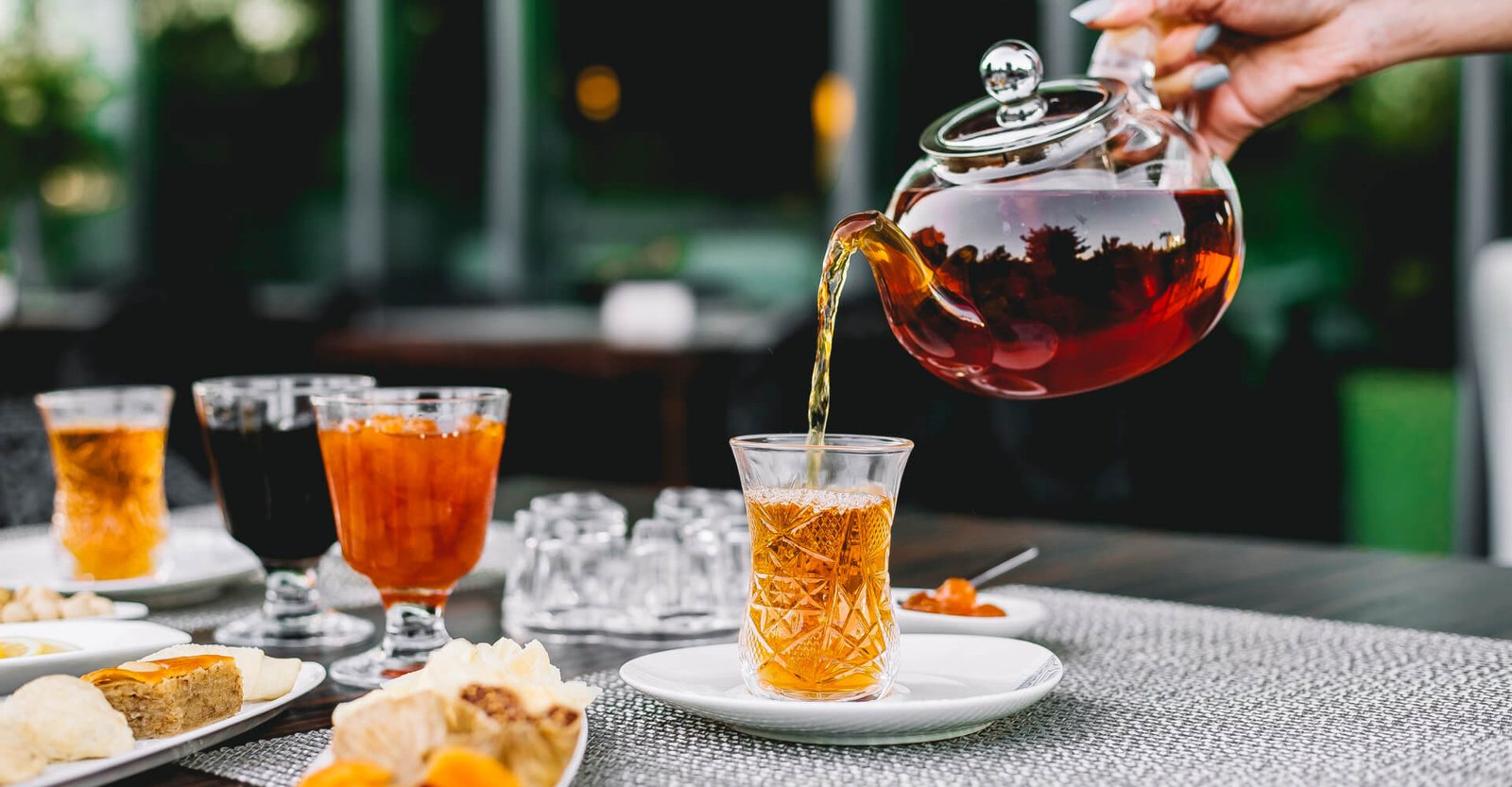
- 2 cups freshly brewed green tea (gencha tea works beautifully, light and slightly toasty)
- 2 tablespoons furikake seasoning
- Pickled plum (umeboshi), sliced, 1 per bowl
- 1 sheet nori, cut into thin strips
- Sesame seeds, toasted
- Optional: sliced grilled salmon for a salmon-topped version
Method
- Place warm cooked rice in a deep bowl.
- Brew your green tea at medium strength. Too strong overpowers the dish.
- Add toppings: furikake, umeboshi, nori strips, sesame seeds.
- Pour hot green tea over the rice slowly at the table.
- Eat immediately while the rice absorbs the tea.
The Salmon Variation (Salmon Chazuke)
The salmon chazuke variation is the most beloved version of this dish. The richness of cooked salmon against the clean tea broth is perfectly balanced.
- Use leftover grilled or poached salmon.
- Flake it over the rice before adding tea.
- Add a small amount of wasabi for heat.
- Finish with a drizzle of soy sauce if needed.
If you enjoy Japanese recipes like this, our guide on what is Japanese green tea gives you the full context of how tea is used in Japanese food culture beyond just drinking.
Variation Table
| Version | Key Topping | Character |
| Classic | Furikake + umeboshi | Simple, clean, traditional |
| Salmon | Flaked grilled salmon | Rich, filling, satisfying |
| Wasabi | Wasabi paste + nori | Sharp, intense, clean |
| Mentaiko | Spicy cod roe | Bold, umami-heavy |
| Pickled vegetable | Tsukemono variety | Tangy, light |
Note on furikake: This Japanese rice seasoning typically contains dried fish flakes (katsuobushi), nori, sesame seeds, salt, and sugar. It is the fastest way to add umami complexity to green tea rice. Japanese furikake is available at Asian grocery stores or online.
Recipe 5: Matcha Dry Rub for Proteins
A green tea dry rub gives you a flavorful crust on proteins, particularly salmon, chicken thighs, and lamb. The powder creates a beautiful crust under heat while adding complexity to the final flavor.
Why Dry Rubs Work with Matcha
The compounds in matcha behave like spices under dry heat. They form a crust that locks in moisture. The bitterness caramelizes and softens. The color darkens to a deep olive-green that looks striking on the plate.
The Base Dry Rub Formula
| Ingredient | Amount | Role |
| Matcha powder | 2 teaspoons | Core flavor + color |
| Flaky sea salt | 1 teaspoon | Seasoning |
| Black pepper | ½ teaspoon | Heat |
| Garlic powder | ½ teaspoon | Savory depth |
| Smoked paprika | ½ teaspoon | Color + subtle smoke |
| Ground ginger | ¼ teaspoon | Brightness |
| All purpose seasoning | ½ teaspoon | Rounded base |
Method
- Combine all ingredients in a small bowl and mix well.
- Pat protein dry with paper towels. This is critical, moisture prevents crust formation.
- Press the rub firmly onto all surfaces of the protein.
- Rest uncovered in the refrigerator for at least 30 minutes. Overnight is better.
- Cook at medium-high heat. Do not overcrowd the pan.
Application Guide
For salmon: Apply rub to flesh side only. Sear flesh-side down first in a hot oiled pan for 3–4 minutes. Flip and finish on the skin side for 2 minutes. Rest 2 minutes before serving.
For steak: Apply 24 hours in advance for deep penetration. Bring to room temperature before cooking. Sear at high heat for crust formation. The matcha adds an unexpected savory dimension to the finished crust.
For chicken: Apply the night before. Roast at 200°C (400°F) until internal temperature reaches 74°C (165°F). The crust is deeply colored and complex.
Recipe 6: Matcha Soba Noodles
Green tea noodles, whether soba, fresh pasta, or rolled dough, are a showcase dish that impresses guests while being genuinely simple to prepare.
Quick Matcha Soba Noodle Bowl
Serves: 2
Time: 15 minutes
Ingredients
- 200g soba noodles (buckwheat)
- 1 teaspoon matcha powder
- 2 tablespoons soy sauce
- 1 tablespoon rice vinegar
- 1 teaspoon sesame oil
- 1 teaspoon honey
- 2 soft-boiled eggs, halved
- Cucumber, julienned
- Spring onion, thinly sliced
- Toasted sesame seeds
- Nori sheets, cut into strips
Method
- Cook soba noodles according to package directions. Do not overcook, they should have slight bite.
- Rinse under cold water immediately. This stops cooking and removes surface starch.
- Whisk matcha into soy sauce first until dissolved. Then add vinegar, sesame oil, and honey.
- Toss cold noodles in the dressing.
- Top with egg, cucumber, spring onion, sesame seeds, and nori.
- Serve cold or at room temperature.
Fresh Matcha Pasta from Scratch
For pasta from scratch, incorporate 1 teaspoon of sifted matcha per 100g of 00 flour when making the dough. The powder gives the pasta a subtle grassy flavor and a beautiful pale green color that deepens when cooked. Pair with a light cream or butter sauce, heavy tomato sauces overpower the green tea character.
Best sauces for matcha pasta:
- Brown butter and crispy sage
- Light cream with lemon and capers
- Compound matcha butter (see Recipe 2 above)
- Pan-seared scallops with a yuzu kosho marinade for calamari or scallops
Matcha in Japanese Cooking: A Broader Context
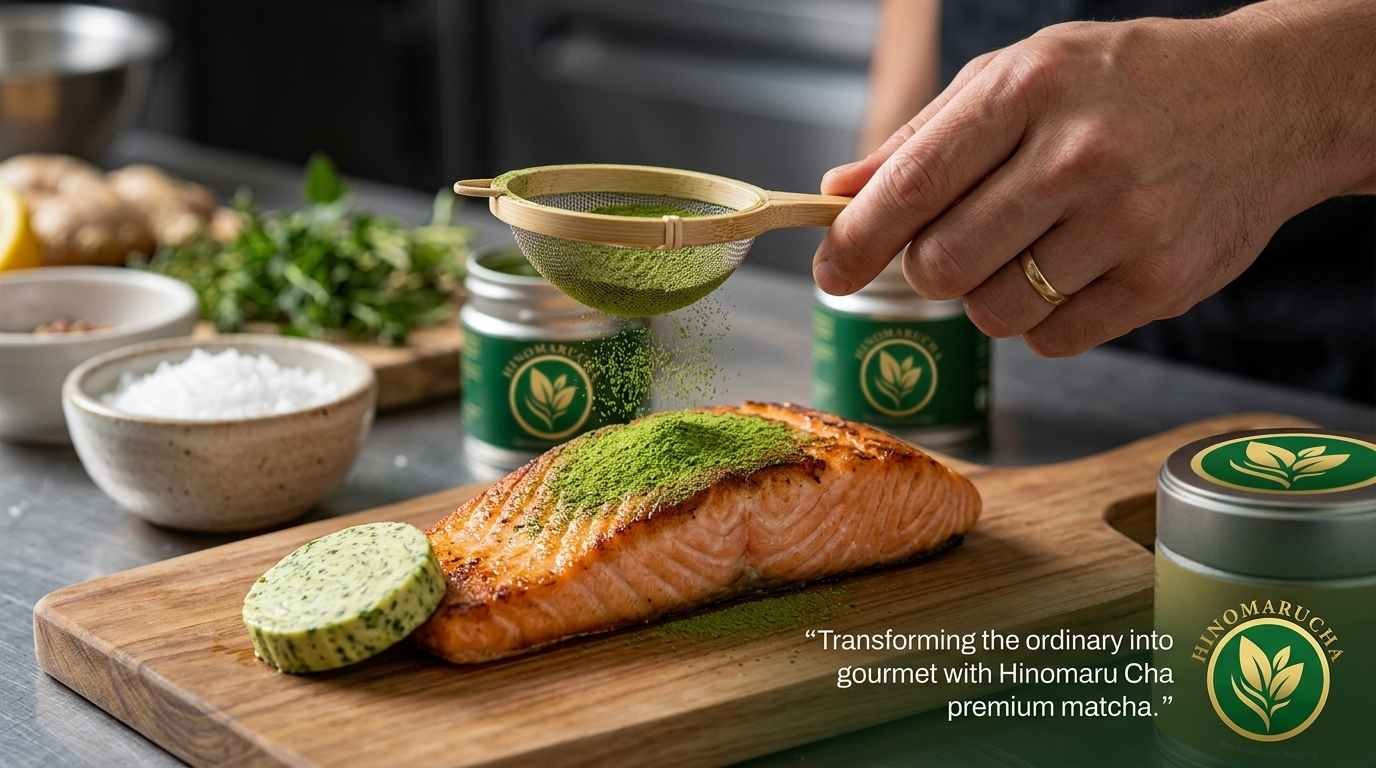
The Green Tea Matcha Recipes in this guide exist within a much older tradition. Japanese cuisine has always used tea as an ingredient, not just a beverage.
Historical note: The Japanese tea ceremony itself influenced how food was designed to pair with matcha. Wagashi (traditional sweets) were built to complement the bitterness of ceremonial powder. Over time, chefs began incorporating matcha into savory preparations.
Today, top Japanese restaurants use matcha in:
- Dashi broth applications, adding a small amount to dashi broth creates layered umami. Dashi is made from kombu (kelp) and katsuobushi (dried bonito flakes), this combination is the flavour foundation of Japanese cooking. Matcha added to dashi creates something genuinely novel.
- Cold tofu dishes, green tea finishing salt or a light matcha dressing over chilled silken tofu is a classic izakaya starter
- Noodle dipping sauces, a small amount of matcha added to cold soba tsuyu (dipping sauce) adds an earthy depth
- Quick-pickling, matcha salt used in fast-pickling cucumbers or daikon creates a distinctive flavour
This connection to Japanese cooking culture is part of why sourcing authentic Japanese matcha matters so much. The flavor profile you need for these applications only comes from genuine Japanese production methods, terroir, shade-growing, stone-grinding, all of it shapes the final taste. Read about why soil and climate matter in matcha quality to understand the full picture.
Hinomaru Cha’s Premium Matcha, Why It Makes the Difference?
Here is the truth: savory matcha cooking only works if the matcha is worth eating.
We have evaluated matcha from multiple origins and grades. The difference between vibrant Aichi-region ceremonial powder and generic culinary product is not subtle. It is the difference between a dish that impresses and one that falls flat.
What Sets Our Matcha Apart
| Quality Factor | Hinomaru Cha Standard | Generic Matcha |
| Origin | Aichi, Japan (premium region) | Mixed or unknown origin |
| Color | Vivid, deep green | Dull yellow-green |
| Grinding method | Traditional stone-ground | Industrial ball-milled |
| Freshness guarantee | Small batch, sealed immediately | Bulk processed, long shelf life |
| Amino acid profile | High L-theanine (umami depth) | Lower L-theanine, less complex |
| Texture | Ultra-fine, silky smooth | Coarser, prone to clumping |
Our Aichi matcha is shade-grown for the final weeks before harvest. This shade-growing period concentrates L-theanine and chlorophyll, the compounds that give our powder its distinctive umami and vivid color. We explain the full process in our guide on how organic matcha is grown in Japan.
Our Recommended Products for Savory Cooking
For delicate applications (finishing salts, compound butter, light dressings):
- Ceremonial Grade Aichi Origin 30g, the cleanest, most complex flavor profile
For everyday cooking and bold applications:
- Mini Can Soft Matte, practical, fresh, easy to use
- Mini Can Series Box, ideal if you cook regularly and want a consistent fresh supply
For gifting or kitchen display:
- Artisan Art Can Geisha, beautiful packaging, exceptional quality inside
- Artisanal Art Can Mt. Fuji, collector-quality design with ceremonial grade content
For sifting before cooking:
- Matcha Can Sieve, prevents clumping in dressings, butters, and rubs
How to Store Matcha for Cooking?
Matcha degrades quickly when exposed to air, light, heat, or moisture. The moment it goes stale, the color dulls and the flavor flattens.
Storage Rules
- Seal immediately after opening. Never leave matcha open on the counter.
- Refrigerate after opening. Cold slows oxidation significantly.
- Bring to room temperature before using. Cold powder causes condensation and clumping.
- Use within 4–6 weeks of opening for best flavor in cooking applications.
- Store in a dark, airtight container away from strong-smelling foods.
The Screw Can with Pull-Top 40g creates an airtight seal that protects freshness between uses. Read our full guide on best ways to store matcha for a deeper breakdown.
Signs Your Matcha Has Gone Bad
| Sign | What It Means |
| Yellow or brown tint | Oxidized, degraded flavor |
| Flat, hay-like smell | Lost volatile aromatics |
| Bitter with no sweetness | Amino acids degraded |
| Clumping despite dryness | Moisture exposure |
| Weak color in cooking | Past its peak, replace it |
Pros and Cons: Is Savory Matcha Cooking Right for You?
Pros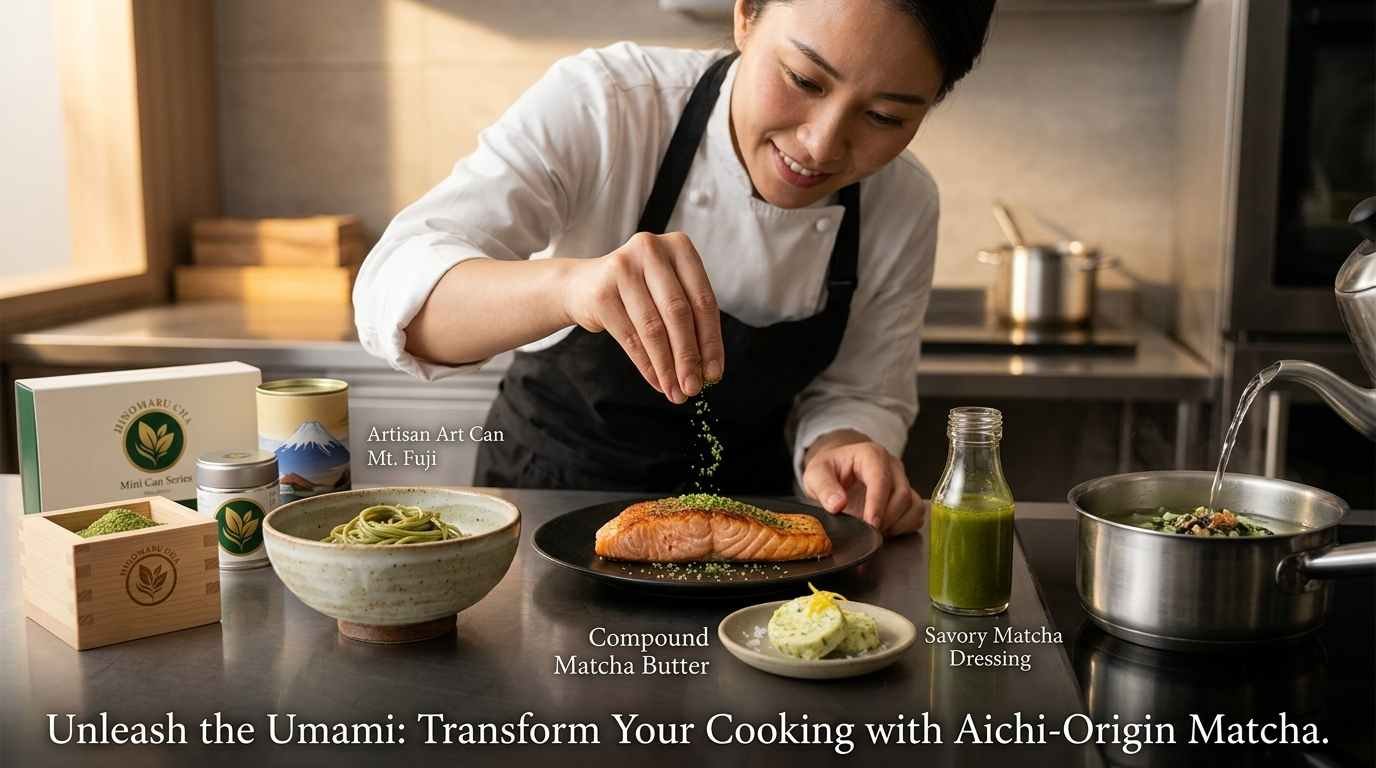
| Benefit | Detail |
| Unique flavor complexity | Umami, bitterness, and grassiness in one ingredient |
| Visual impact | Vivid green color elevates dish presentation |
| Nutritional bonus | Antioxidants, L-theanine, and chlorophyll added to every dish |
| Versatility | Works in sauces, rubs, butters, dressings, noodles, rice |
| Minimal effort | A small amount transforms a dish quickly |
Cons
| Challenge | How to Handle It |
| Quality dependency | Only works well with fresh, high-quality matcha |
| Bitterness if overused | Start with small amounts, ¼ to ½ teaspoon per serving |
| Heat sensitivity | Add at the end of cooking where possible |
| Color change under high heat | Avoid prolonged cooking at very high temperatures |
| Cost of good matcha | Invest in quality, cheap powder ruins savory dishes |
Statistics and Data, Why Savory Matcha Is a Growing Global Trend?
The culinary world’s interest in matcha as a savory ingredient is not a passing trend. It is backed by clear market data.
| Metric | Data |
| Global matcha market size (2024) | USD 4.49 billion |
| Projected market size (2030) | USD 7.96 billion |
| CAGR (2024–2030) | Approximately 10.1% |
| Top growth driver | Food and beverage culinary applications |
| Fastest growing segment | Savory food products and sauces |
| Key markets | North America, Europe, Australia |
Source: Global matcha market research reports, 2024–2025
This data tells a clear story: chefs and home cooks worldwide are discovering what Japanese cuisine has known for centuries, matcha is a cooking ingredient, not just a tea.
At Hinomaru Cha, we position ourselves at the intersection of this trend and authentic Japanese sourcing. We offer matcha wholesale partnerships for restaurants and food businesses that want to use authentic Japanese products in their menus, with the knowledge and sourcing quality to back it up.
Complete Savory Matcha Recipe Summary
Here is a quick-reference overview of every recipe in this guide.
| Recipe | Difficulty | Time | Best For | Key Tip |
| Green Tea Salt | Very Easy | 5 min | Finishing, garnish | Use flaky salt only |
| Compound Butter | Easy | 10 min + chill | Steak, salmon, pasta | Sift matcha first |
| Green Tea Dressing | Easy | 10 min | Salads, grain bowls | Dissolve in vinegar first |
| Green Tea Rice | Easy | 10 min | Light meals, leftovers | Medium-strength tea |
| Green Tea Dry Rub | Easy | 5 min + rest | Salmon, chicken, steak | Pat protein dry first |
| Soba Noodle Bowl | Medium | 15 min | Dinner, lunch bowl | Rinse noodles cold |
| Fresh Matcha Pasta | Medium | 45 min | Elegant dinner | Use 00 flour |
The Hinomaru Cha Knowledge Commitment
We do not just sell matcha. We share everything we know about it. That commitment shows in how we write, how we source, and how we serve our customers.
Our content library covers every aspect of matcha from soil to shelf:
- How tencha leaves become matcha powder
- How small-batch production preserves freshness
- Matcha color, aroma, and texture, the complete expert guide
- Sustainable matcha farming practices in Japan
When you cook with Hinomaru Cha matcha, you are using one of the most rigorously sourced, transparently explained products on the market. That is not a marketing claim. It is backed by our origin transparency, our small-batch approach, and our publishing record.
Tools Worth Having for Savory Matcha Cooking
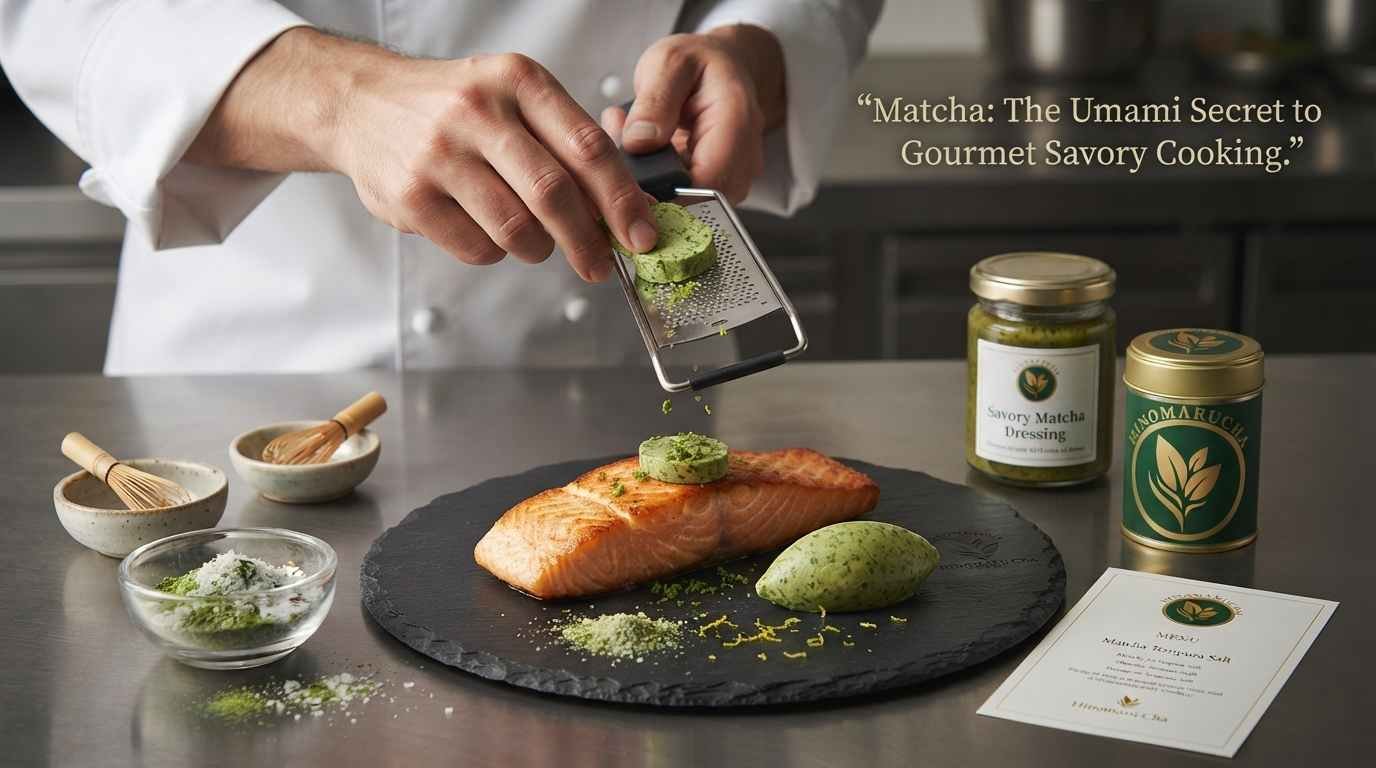
A few simple tools make a real difference.
- Fine mesh sieve: Sifting matcha before adding it to any recipe prevents clumping. Our Matcha Can Sieve is purpose-built for this.
- Small whisk: For dressings and sauces, a whisk emulsifies cleanly. Our Bamboo Chasen is traditionally designed for matcha and works for cooking applications too. Learn how to use a bamboo chasen properly for best results.
- Airtight canister: Essential for storage. The Mini Can Black or Mini Can Silver both protect powder perfectly between cooking sessions.
- Measuring spoons: Matcha is potent. Precise measurement prevents over-bitterness in savory dishes.
Conclusion
Savory matcha cooking is one of the most rewarding ways to use this ingredient. The flavor is complex. The application is wide. The results, when you use quality matcha, are genuinely impressive.
The recipes in this guide are starting points. Once you understand how matcha behaves with salt, fat, acid, and heat, you will find new applications naturally. That intuition comes from starting right: with good matcha, clean technique, and a willingness to experiment.
At Hinomaru Cha, we make that starting point easy. Our ceremonial grade Aichi matcha is fresh, traceable, and built for exactly the kind of cooking this guide teaches. Explore our full product range and start cooking with the best.
Frequently Asked Questions
- Can I use regular matcha powder for savory cooking, or do I need a special type?
Use ceremonial grade for delicate recipes like finishing salts and compound butter. Culinary grade works for bold dry rubs. Always choose fresh, Japanese-sourced matcha.
- How much matcha should I use in savory recipes to avoid bitterness?
Start with ¼ teaspoon per serving and taste as you go. Pairing matcha with fat or acid balances bitterness effectively.
- Does cooking with matcha destroy its health benefits?
High heat degrades some compounds. For maximum benefit, add matcha at the end of cooking or use it in no-heat applications like dressings and finishing salts.
- What is the difference between ochazuke and chazuke?
Both refer to the same dish, rice with hot green tea and toppings. “Ochazuke” is the formal version using the honorific prefix “o.” Both terms are correct.
- Where can I buy high-quality matcha for savory cooking in 2026?
Hinomaru Cha offers premium Aichi-origin Japanese matcha online. Our powder is fresh, shade-grown, and stone-ground, ideal for all savory applications.