



If you spent real money on premium Japanese matcha powder, the last thing you want is to open your tin a few weeks later and find a dull, bitter, faded powder. That flat taste is not a sign of bad matcha, it’s a sign of poor storage.
The ways to store matcha correctly are not complicated. But they make a massive difference. At AichiMatcha, we source and ship authentic Japanese matcha directly from the farms of Aichi and Kagoshima, and we care deeply that you experience every cup exactly as it was meant to taste.
This complete guide covers everything: the science, the tools, the mistakes to avoid, comparison tables, analytics, and our tested best practices. Whether you’re a home drinker or a bulk matcha for cafes buyer, this guide will help you get the most out of every gram.
Why Proper Storage Matters More Than You Think?
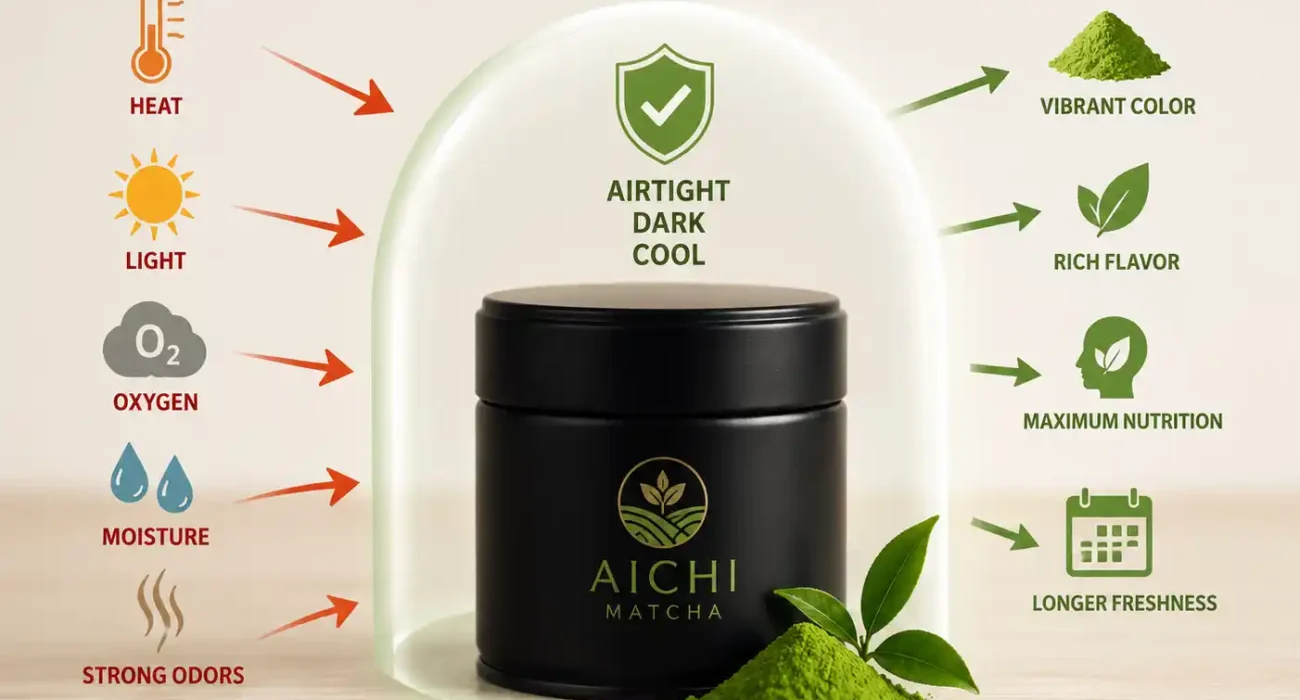
Ceremonial grade matcha is not just ground green tea. It is a living product. Its flavor, color, and nutrition are all vulnerable to four enemies: heat, light, oxygen, and moisture. Ignore even one, and the quality drops fast.
Japanese matcha producers, including those behind our Aichi ceremonial matcha and Kagoshima matcha powder lines, harvest, shade, and stone-grind their leaves with extraordinary care. That effort deserves equally careful storage on your end.
The 4 Enemies of Matcha Freshness
| Enemy | What It Does | How to Fight It | Risk Level |
| Heat | Destroys chlorophyll & L-theanine | Keep below 20°C / 68°F | 🔴 High |
| Light (UV) | Bleaches color, kills antioxidants | Opaque / dark containers only | 🔴 High |
| Oxygen | Oxidizes EGCG and flavor compounds | Airtight seal every time | 🔴 High |
| Moisture | Causes clumping, mold, off-flavors | Use desiccants; never wet hands | 🟠 Medium-High |
| Strong Odors | Matcha absorbs smells easily | Store away from spices/coffee | 🟡 Medium |
What the Data Says?
Here are key statistics that show why the ways to store matcha correctly are non-negotiable:
| Metric | Data / Insight |
| EGCG loss in open air (4 weeks) | Up to 32% |
| Chlorophyll degradation in heat (>25°C) | Starts within 2–3 days |
| Ideal fridge temp for sealed matcha | 2–5°C / 35–41°F |
| Shelf life with airtight dark tin | Up to 12 months (peak: 6 months) |
| Freezer shelf life (airtight, no condensation) | Up to 24 months |
| Moisture absorption speed of matcha powder | Very fast — within hours if exposed |
| % of flavor compounds that are volatile | ~40% lost without proper sealing |
The Gold Standard: Airtight, Dark, and Cool
The single most important rule for storing matcha is to keep it airtight, away from light, and at a cool temperature. Everything else builds on this foundation.
Our high quality matcha powder comes sealed in purpose-built, nitrogen-flushed, opaque tins. We designed our packaging specifically to protect the vibrant green pigment and delicate amino acid profile of our ceremonial grade matcha 30g and aichi matcha powder products from the moment they leave our facility.
Storage Method Comparison Table
Use this as your quick reference guide for the best ways to store matcha:
| Storage Method | Temp Range | Shelf Life | Recommended? |
| Airtight tin (dark) | 15–20°C / 59–68°F | Up to 12 months | ✅ Yes – Ideal |
| Refrigerator (sealed) | 2–5°C / 35–41°F | 12–18 months | ✅ Yes – If sealed well |
| Freezer (airtight) | -18°C / 0°F | Up to 24 months | ⚠️ For bulk only |
| Plastic zip bag (pantry) | Variable | 1–3 months | ❌ Not recommended |
| Open jar on counter | Room temp / light | 2–4 weeks | ❌ Avoid completely |
How to Store an Opened Tin of Matcha?
Once you’ve opened your organic matcha powder Japan-sourced tin, follow these steps every single time:
Seal tightly after every use. Do not leave the lid loose even for a few minutes. Oxygen moves fast.
Use a dry spoon. Never a wet or damp utensil. A single drop of moisture can ruin the powder around the scoop hole.
Return to the fridge or pantry immediately. Do not leave the tin out on the counter between uses.
Avoid placing near the stove or oven. Heat gradients are a silent flavor killer.
Keep it away from coffee, spices, and strong-smelling foods. Matcha absorbs odors very easily.
These habits apply whether you store your premium Japanese matcha powder in a pantry, fridge, or freezer.
Refrigerator Storage: When and How to Do It Right
Storing matcha in the fridge is highly effective — but only if you do it correctly. Many people make the mistake of placing their tin in the fridge without proper sealing and then wonder why their fresh matcha from Japan tastes flat or musty.
The fridge is humid. Moisture is one of matcha’s biggest enemies. Here’s how to protect it:
- Use a double-sealed container: place your original tin inside a zip-lock bag with all air squeezed out.
- Let the tin come to room temperature before opening. This prevents condensation from forming on the powder.
- Never open a cold tin directly from the fridge. Wait 10–15 minutes.
- Do not store near produce, dairy, or strong-smelling items.
Our best ceremonial matcha brand packaging is already optimized for cold storage. When you order matcha powder shipped from Japan from us, the nitrogen-flush in our tin gives you an immediate head start on preservation.
Freezer Storage: Only for Bulk and Long-Term
Freezer storage can extend matcha’s shelf life to nearly 24 months — but it requires strict discipline. This method works best for buy matcha in bulk 1kg purchases or for those who only use matcha occasionally.
Freezer Do’s and Don’ts
Do divide bulk matcha into single-use portions before freezing. Freeze in small airtight bags.
Do use thick, odor-blocking freezer bags. Regular zip-locks are not sufficient.
Do label bags with the freeze date so you track freshness.
Don’t refreeze once thawed. This introduces moisture and ruins texture.
Don’t open the frozen pack until it’s fully at room temperature (30–60 minutes).
Don’t freeze matcha in its original retail tin unless it’s 100% airtight.
For wholesale matcha for retailers or bulk matcha for cafes buyers, we can advise on optimal bulk storage protocols based on your volume and turnover rate.
The Container Question: What to Use and What to Avoid
The vessel you store matcha in matters as much as where you put it. Here’s a clear breakdown of the best and worst ways to store matcha from a container perspective:
Best Containers for Matcha
- Opaque, airtight tin (dark metal): The best option. Blocks all light and seals perfectly. Our tins are designed exactly this way.
- Dark glass jar with rubber-sealed lid: Good secondary option if properly sealed with no light exposure.
- Ceramic jar with fitted lid: Works well if truly airtight. Traditional and effective.
Containers to Avoid
- Clear glass jars: UV light passes through and degrades the chlorophyll immediately.
- Thin plastic containers: Allow oxygen permeation over time; also absorb odors.
- Paper bags or pouches: Not airtight; moisture and odors penetrate easily.
- Open bowls or loose lids: You may as well leave your matcha on a hot windowsill.
Pros and Cons of Proper vs Poor Matcha Storage
| ✅ Pros of Proper Storage | ❌ Cons of Poor Storage |
| Retains vibrant green color for months | Color fades to yellow-brown quickly |
| Umami and sweetness stay strong | Bitterness and flatness take over |
| Antioxidants (EGCG) remain potent | Up to 50% EGCG loss in 3 months |
| Extends shelf life by 12–24 months | Wastage within weeks |
| Worth every premium penny paid | You lose the value you paid for |
How Our Matcha Is Packaged to Preserve Freshness From Source?
We are not just a matcha wholesale supplier Japan, we are quality guardians. Every tin of AichiMatcha is:
- Nitrogen-flushed at packing to remove oxygen before sealing.
- Sealed with a foil inner lid plus an outer opaque tin lid for double protection.
- Packed in dark, food-grade tins that block all UV and visible light.
- Shipped with care, properly insulated in warm climates to avoid heat exposure in transit.
This applies across all our products, whether you’re ordering our ceremonial grade matcha 30g, our houjicha powder wholesale line, or organic matcha bulk supplier quantities.
Our organic matcha powder Japan products are tested and certified. You get both the quality and the packaging infrastructure to protect that quality end to end.
Shelf Life at a Glance: What to Expect
Knowing the expected shelf life helps you plan your consumption and orders, especially if you’re buying buy matcha in bulk 1kg or larger quantities:
- Unopened, airtight, refrigerated: 12–18 months from production date.
- Opened, airtight, room temp (below 20°C): 3–6 months for peak flavor.
- Opened, airtight, refrigerated: 6–12 months.
- Opened, sealed, frozen: Up to 24 months.
- Opened, loosely closed, room temp: 2–4 weeks before noticeable quality loss.
Always check the production date on your tin, not just a best-before date. Fresh matcha from Japan should ideally be consumed within 6 months of grinding for the finest taste experience.
Signs Your Matcha Has Gone Bad (and What to Do)
Even with the best ways to store matcha, sometimes things go wrong, especially with older or improperly sealed stock. Here’s what to look for:
Color change: Fresh matcha is vivid, bright green. Yellow, brown, or olive tones mean oxidation has occurred.
Flat or musty aroma: Good matcha has a fresh, grassy, slightly sweet scent. Stale matcha smells dull or faintly musty.
Bitter or sour taste: Oxidized matcha loses its umami and becomes unpleasantly sharp.
Clumping or graininess: Moisture has gotten in. The texture will be grainy rather than silky smooth.
If your matcha shows any of these signs, it’s not harmful, but the quality experience is gone. Our recommendation: replace it with a fresh batch of high quality matcha powder from our Aichi or Kagoshima farms, and apply proper storage from day one.
Special Storage Tips for Café and Wholesale Buyers
If you’re purchasing ceremonial matcha wholesale, operating a café, or running a retail brand, your storage needs scale up significantly. Here’s what we recommend:
Rotate stock strictly (first in, first out) to always use the oldest batch first.
Store in a dedicated, temperature-controlled area away from the main kitchen heat zone.
Use commercial airtight canisters for daily working stock and keep bulk remainder sealed and refrigerated.
Order based on usage volume, buying too much in advance defeats even perfect storage.
Talk to us about custom delivery schedules for organic matcha bulk supplier arrangements.
Our matcha wholesale supplier Japan service includes freshness consultation. We work with matcha powder distributor USA clients, wholesale matcha for retailers, and hospitality groups globally to ensure your product arrives and stays fresh.
How Our Private Label and OEM Partners Handle Storage?
For brands working with us as a private label Japanese matcha or OEM matcha manufacturer Japan partner, we offer:
- Custom packaging specification with nitrogen-flush options.
- Storage and shelf life testing documentation for your market.
- Reseal indicators and consumer-facing storage instructions tailored to your brand.
- Advice on whether white label matcha supplier or custom formulation suits your distribution needs.
If you’re looking to start your own matcha brand supplier, proper storage architecture is a core part of what makes your product trustworthy to end consumers.
Accessories That Help You Store Matcha Better
The right accessories extend freshness significantly. We stock or recommend the following:
Bamboo chasen whisk: While not storage, using a clean, dry chasen prevents contamination each time you prepare.
Japanese matcha whisk set: A complete set ensures you never use damp or contaminated tools.
Matcha starter kit: Our kits include a properly sealed sample tin, a great way to understand the baseline of fresh, well-stored matcha.
Matcha tea set Japan: A curated set including storage tin, whisk holder, and bowl designed with preservation in mind.
Silica gel desiccant sachets: Place one inside your storage container to absorb ambient moisture.
Quick Reference: Storage Do’s and Don’ts Summary
DO: Seal immediately after every use.
DO: Keep in a dark, cool, dry place.
DO: Use dry utensils only.
DO: Let refrigerated tins warm before opening.
DO: Order fresh, matcha powder shipped from Japan directly has lower transit time with us.
DON’T: Store near heat sources, windows, or stoves.
DON’T: Use clear glass or thin plastic containers.
DON’T: Refrigerate without double-sealing.
DON’T: Refreeze thawed matcha.
DON’T: Leave lids loose even for a few minutes.
Why AichiMatcha Is Your Best Choice for Freshness?
The ways to store matcha correctly start before you even receive it. The quality and freshness of your matcha at delivery determines how long it can stay fresh at home or in your business. That’s why choosing the right source matters as much as choosing the right storage method.
We are a direct-from-farm organic matcha bulk supplier with a transparent supply chain. Our aichi matcha ceremonial grade and Kagoshima matcha powder are ground to order in small batches, nitrogen-packed, and shipped globally with minimal transit time, to the USA, UK, UAE, Germany, Australia, Indonesia, and beyond.
When you buy ceremonial grade matcha online from AichiMatcha, you’re not buying shelf-stored product that has been sitting in a warehouse for months. You get a freshness guarantee backed by our production traceability.
Whether you’re an individual enthusiast, a café owner, a matcha distributor USA, or a business wanting to start your own matcha brand supplier, we offer the same uncompromising quality and freshness at every scale.
Conclusion
Proper storage is the bridge between the farm’s effort and your cup’s perfection. The ways to store matcha well are simple: dark, cool, dry, airtight, and always sealed. Follow these principles and your authentic Japanese matcha will reward you with every vibrant, umami-rich sip it was crafted to deliver.
At AichiMatcha, we believe freshness is not an accident. It’s engineered at every step, from shading the tea bushes, to stone-grinding in small batches, to packaging in nitrogen-flushed, opaque tins, to shipping with care. When you pair our obsession with quality to your proper storage habits, the result is a matcha experience that’s second to none.
Explore our full range, from ceremonial grade matcha 30g to organic matcha bulk supplier quantities, houjicha powder wholesale, and private label Japanese matcha solutions. Fresh. Pure. From Japan.
FAQs
What is the best way to store matcha at home?
Keep matcha in an airtight, opaque tin away from heat, light, and moisture. Refrigeration is ideal. Always use a dry spoon and seal tightly after every use. Our AichiMatcha tins are pre-optimized for home storage.
Can I freeze my matcha powder?
Yes, freezing matcha is effective for long-term storage, especially for buy matcha in bulk 1kg buyers. Divide into small portions, seal airtight, and let it reach room temperature fully before opening to prevent condensation damage.
How long does ceremonial grade matcha last once opened?
Ceremonial grade matcha lasts 3–6 months at peak flavor once opened if stored correctly. Refrigeration extends this to 12 months. Poor storage reduces quality within 2–4 weeks.
Does matcha expire or go bad?
Matcha doesn’t become unsafe, but it degrades. Oxidized matcha loses its bright green color, fresh aroma, and umami taste. Always check production dates. Fresh matcha from Japan has a clear date on every tin.
Why does my matcha taste bitter after a few weeks?
Bitterness signals oxidation. Exposure to air, heat, or light breaks down the amino acids (L-theanine) that give matcha its sweetness. Proper storage using the ways to store matcha in this guide prevents this entirely.