You whisked for a full minute, yet the first sip is gritty. Lumpy matcha is one of the most frustrating common matcha mistakes, those stubborn clumps of dry powder floating in your bowl, refusing to fully dissolve no matter how hard you stir.
The good news: lumpy matcha is never a mystery. Matcha powder is milled finer than flour, so it clumps on contact with liquid, and every lump traces back to a fixable error in your whisking technique, your water temperature, or your tools. Fix the mistake, and you’ll get frothy matcha with velvety microfoam instead of sludge.
This troubleshooting guide walks through the common matcha mistakes that cause lumps, so every cup tastes smooth. Whether it’s your first cup of matcha or your five-hundredth, a perfectly whisked matcha is always within reach.
Why Your Matcha Gets Lumpy, Understanding Clumps in Matcha Powder
Matcha powder particles are tiny, around 5–10 microns, with enormous surface area. The moment liquid hits them, the outer layer gels and seals dry powder inside: a clump. It’s the same reason flour lumps in gravy. Matcha doesn’t dissolve like sugar; it suspends. That means lumpy matcha isn’t a powder problem, it’s a technique problem.
Low quality or stale powder clumps worse, because uneven particle size and absorbed moisture make powder quality inconsistent. But even the finest first harvest ceremonial powder will lump if treated roughly. The path to clump-free bowls has three steps: sift, temper, and whisk, never just dump and stir.
Related: What Makes Japanese Matcha Different From Other Countries · Hinomarucha Ceremonial Grade Aichi Origin 30g
Mistake #1: Skipping the Sift Before You Whisk
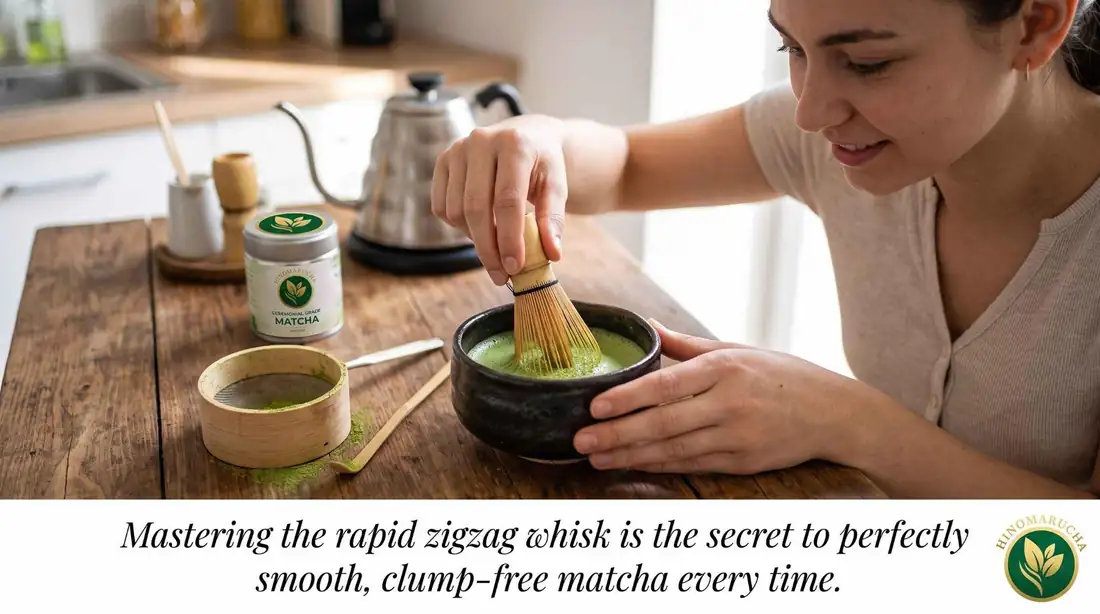
The single biggest cause of lumps is skipping the sieve. Always sift your matcha through a fine-mesh sieve before adding any liquid, press a teaspoon of powder through with the back of a spoon until it falls like snow. Thirty seconds of sifting prevents clumpy matcha and gives you matcha without clumps from the very start, real matcha without the grit, no more clumpy bowls.
No sieve? A small tea strainer works in a pinch. But a dedicated matcha sieve makes it effortless, and lumps become a distant memory.
Related: Tencha Leaves to Powder for Matcha: The Full Guide · Matcha Can Sieve
Mistake #2: Wrong Water Temperature for Your Matcha Tea
Water temperature shapes texture as much as taste. Too-hot water flash-gels the powder’s surface, sealing lumps instantly; too-cold water never coaxes the powder into suspension. The matcha water temperature sweet spot is 70–80°C. A thermometer removes the guesswork, or boils the kettle and rest it for five minutes.
| Water | What happens | Fix |
|---|---|---|
| 100°C (boiling) | Surface gels, lumps seal shut | Rest 5 minutes after boiling |
| 70–80°C | Powder suspends smoothly | Ideal whisking zone |
| Below 60°C | Powder sinks, never suspends | Warm it slightly |
This matters most for matcha tea drunk straight. Cold liquid needs extra care: for iced bowls, whisk with a splash of warm water first, then pour over ice, dumping powder straight into cold liquid guarantees lumpy matcha.
Related: How to Make a Matcha Latte at Home · Hitoshizuku Teapot
Mistake #3: A Quick Stir Instead of a Real Whisking Technique
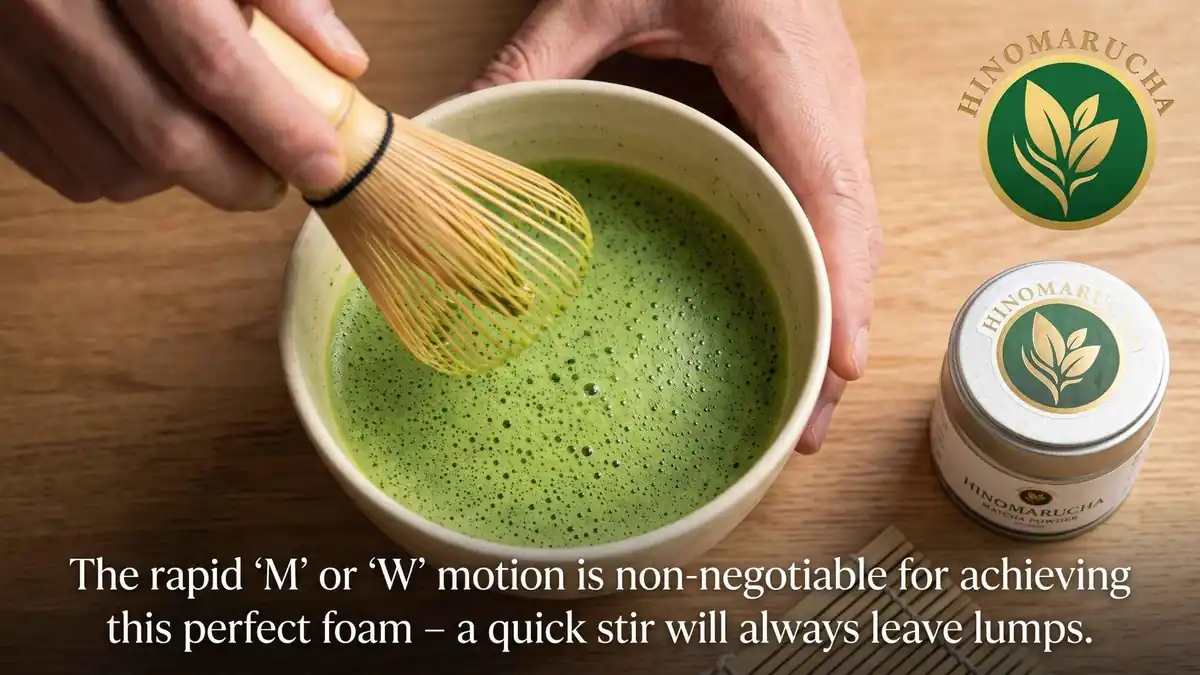
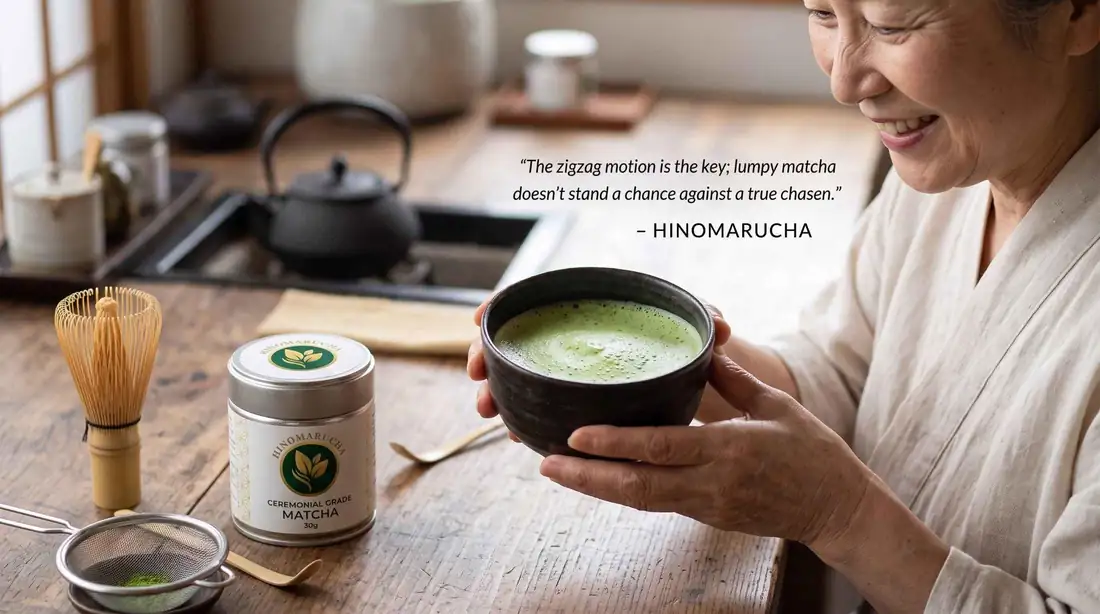
A quick stir with a spoon is the classic beginner error. Matcha demands a real whisking technique: hold your chasen (bamboo whisk) vertically and whip in a rapid zig-zag, a zigzag motion tracing ‘M’ or ‘W’ shapes, for 15–20 seconds. Circles just push lumps around, the zigzag shears them apart and whips in air for frothy matcha foam.
If your wrist aches slightly, you’re doing it right. That effort builds the velvety cap of froth, and banishes lumpy matcha for good. Chasen whisks were perfected for exactly this job over centuries of Japanese tea ceremony practice.
Related: Matcha Color, Aroma and Texture: The Complete Expert Guide · Mug Tea Whisk
Mistake #4: The Wrong Matcha Ratio, Too Much Matcha Powder, Too Little Water
There’s a Goldilocks zone: the classic matcha ratio is 2g of powder to 70ml of water. Adding too much powder, much matcha crammed into a thimble of water, leaves the whisk no room to move, so lumps survive. Measure a proper cup of water (70ml for usucha) and give the powder space to suspend.
| Style | Matcha | Liquid | Why it works |
|---|---|---|---|
| Usucha (thin) | 2g | 70ml water | Room to whisk freely |
| Latte base | 2g | 30ml warm water + milk | Paste first, then dilute |
| Koicha (thick) | 4g | 40ml water | Kneaded, not whisked |
Too little powder brings the opposite problem, a thin, sad bowl. But for lump-fighters the rule is simple: lumpy matcha loves a crowded bowl, so don’t crowd it.
Related: The Ultimate Matcha Latte Recipe: Easy Step-by-Step Guide · Matcha 3-Piece Set Kushime Sabi
Mistake #5: Adding All the Water or Milk at Once
Don’t flood the bowl. Add just a splash of water or milk first and work the sifted powder into a smooth paste, then pour in the rest while whisking. This two-stage method is how pros get smooth matcha with zero grit.
The same applies to lattes: whisk your matcha base with warm water before the milk goes in. And reseal your tin every time, humidity is a silent lump-maker, which is why an airtight tin matters. Dumping everything in at once is a common mistake that turns an easy bowl into lumpy matcha.
Related: Matcha Green Tea Latte Recipe: Hot & Iced, The Complete Guide · Mini Top Can Black
How to Whisk Matcha Correctly, The Zigzag Motion for Clump-Free Matcha
Let’s assemble the full routine, how to whisk matcha correctly, with the right matcha tools, into your matcha bowl:
Warm your chawan (tea bowl) with hot water, then dry it completely.
Sift your matcha powder through a fine sieve into the bowl.
Add 70ml of water at 75°C, start with a splash if you’re nervous.
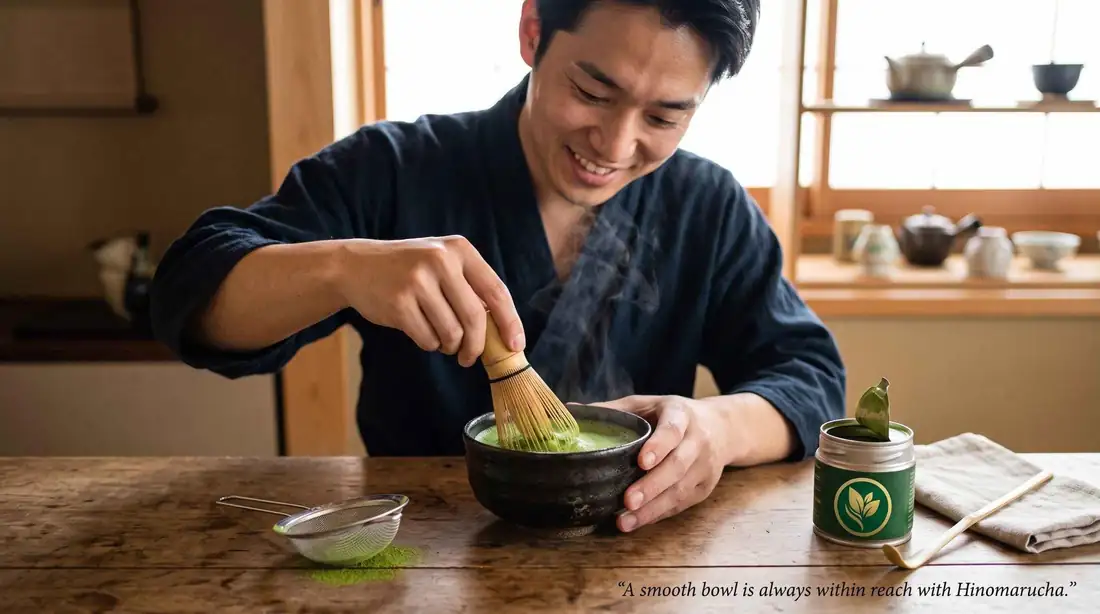
Whisk matcha with your chasen in a fast zigzag motion for 15–20 seconds until fine microfoam forms.
Pour, sip, and admire the vibrant color.
| Step | Common mistake | Pro move |
|---|---|---|
| Sifting | Dumping powder straight in | Sift through a fine sieve |
| Water | Boiling or ice-cold | 70–80°C, measured |
| Whisking | Quick stir in circles | Zigzag motion, 15–20 seconds |
| Timing | Letting it sit | Drink while the foam stands |
That’s matcha properly prepared: fully dissolved in suspension, clump-free, crowned with frothy matcha foam. Lumpy matcha doesn’t stand a chance against this routine, make matcha this way and every cup delivers your perfect matcha. Do it with matcha every morning and it becomes second nature.
Related: How to Use a Bamboo Chasen Properly for Perfect Matcha · Bamboo Chasen
From Usucha to Matcha Latte: Lumps at the Bottom of Your Cup
Ever finished a bowl to find sludge at the bottom of your cup? That’s under-whisking plus settling. Usucha (thin tea) shows it most, because there’s nowhere for mistakes to hide. A matcha latte is more forgiving, milk’s fat keeps particles suspended, but the base still needs proper whisking first.
For an iced matcha latte, whisk the powder with warm water, then pour over ice and milk. A cold whisk with a handheld frother can work for lattes in a pinch, a frother blends milk drinks fast, but it never matches a chasen for straight usucha. Lumpy matcha at the bottom of the cup means the whisk never finished the job.
Related: Strawberry Matcha Latte Recipe: Pink Layered Drink · Genuine Gold Lacquer
Sweetener, Milk, and Froth: Making Your Latte Taste Good
Milk and sweetener don’t fix lumps, they hide them. Always build a smooth base first, then customize. Oat milk whips the best microfoam; a touch of honey or vanilla makes the latte taste good without burying the matcha green tea character.
Want the café look? After whisking, pour steamed milk over the back of a spoon for clean layers. Lumpy matcha has no place in a beautiful matcha latte, perfect your matcha base first, then play.
Related: Banana Matcha Latte Recipe Variations That Actually Taste Amazing · Artisanal Art Can Mt. Fuji
Troubleshooting, When Your Matcha Still Won’t Cooperate?
Done everything and still getting lumps? Time for deeper troubleshooting:
Your powder is old or damp. Matcha absorbs moisture fast. Keep the matcha sealed, cool, and dark, use a small tin for daily scoops so the main stash stays airtight.
Your powder is low-grade. Uneven grind means permanent lumps and dull flavor and color. Upgrade to quality matcha, spring harvest matcha, first harvest, stone-milled, for better extraction and richer umami. Not all matchas behave the same.
You’re waiting too long. Over a longer period of time, foam collapses and powder resettles into grainy sludge. Whisk briskly, then drink promptly. If it’s too thick, dilute with a splash of warm water.
Remember what matcha is. Matcha isn’t instant coffee, matcha doesn’t melt into water, it suspends in it. Matcha tastes best when you respect that difference.
Still stuck?
Pour the bowl through a fine strainer as clump matcha triage, whisk again, and start your next bowl with fresh powder. Sometimes the kindest fix for lumpy matcha is a fresh start.
Related: How to Tell If Matcha Is Truly Ceremonial Grade · Screw Can with Pull Top 40g
Conclusion
Lumpy matcha is always a technique problem with a technique solution. Sift your powder, mind your water temperature, whisk matcha with a real chasen in that zigzag motion, and respect the ratio, and you’ll achieve the perfect, velvety bowl. The right matcha tools bring out the best in a good leaf, turning your daily whisk into a matcha experience worth slowing down for. Ready to make your matcha taste amazing? Start with ideal matcha: HinomaruCha’s first harvest, stone-milled ceremonial powder is ground for clump-free whisking, so every cup is smooth from the first sip.
FAQs
Can you fix a lumpy bowl after whisking?
Yes, pour it through a fine strainer, then re-whisk. Fixing lumpy matcha this way takes seconds and saves the bowl.
Do I really need a bamboo whisk?
For the smoothest bowl, yes. A chasen whisks lumpy matcha smooth in seconds; a handheld frother works for lattes only.
Why does my matcha clump even when I sift?
Usually humidity or old powder. Keep the matcha airtight and cool, and sift matcha every time you brew.
Can I use a milk frother instead of whisking by hand?
For an iced matcha latte, yes, a frother blends well. For straight usucha, hand-whisking beats lumpy matcha every time.
Does expensive matcha clump less?
Quality matcha is stone-milled finer, so it suspends better. But even premium powder turns lumpy matcha without sifting.