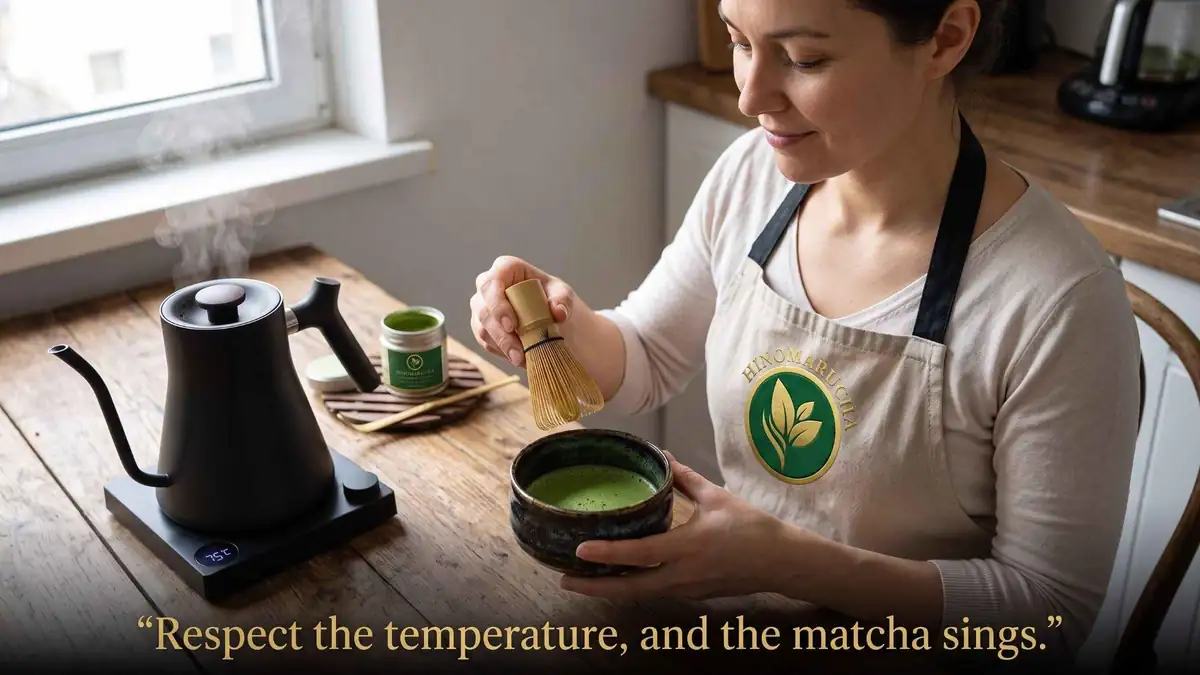
Ask any tea master what ruins a bowl fastest, and the answer is instant: the water. Matcha water temperature is the invisible ingredient in every cup, more decisive than your whisk, your bowl, or even your powder. Get it right and the matcha sings; get it wrong and no technique saves it.
This guide settles the hot-vs-cold debate: what heat does to matcha powder, why you should never boil water for it, the perfect temperature for drinking matcha, and how to nail the matcha water temperature for matcha every time, with nothing fancier than a kettle and a little patience.
Why Does Water Temperature Make or Break Your Matcha?
Matcha is powdered green tea, matcha green tea in its purest form, and powder behaves nothing like leaves. The temperature of the water decides which compounds extract: gentle warmth coaxes out sweet amino acids, while harsh heat blasts out bitter catechins. That’s why attention to water temperature plays a crucial role in making each cup taste right. The science is well documented, see matcha and green tea for the full background.
Matcha water temperature isn’t trivia, it’s the difference between vibrant green color and swampy dullness, between calm sweetness and a harsh cup, with the heat resulting in a bitter, unpleasant bite. Matcha is known for its delicate balance, and that balance lives or dies by the temp. For matcha tea served straight, the margin for error is thinnest.
Related: What Is Japanese Green Tea? The Complete Beginner’s Guide · Hinomarucha Ceremonial Grade Aichi Origin 30g
The Hot Truth, Why You Should Never Boil Water for Matcha?
Boil water, pour it over matcha powder, and you scorch it, literally. Water at 100°C is water that is too hot: at high temperature, it destroys the amino acids like l-theanine that give matcha its sweetness, leading to a loss of delicate flavors and nutritional benefits. The matcha water temperature you actually want is far gentler.
Exposed to boiling water, the chlorophyll in matcha degrades, dull or yellowish matcha indicates exactly this damage, and higher temperatures can lead to an overly bitter bowl. Hot can scorch the matcha faster than any other mistake in the book.
Related: How Freshness Shapes True Ceremonial Matcha Quality · Hitoshizuku Teapot
Using Boiling Water: What Actually Happens to the Powder
Using boiling water doesn’t just taste bad, it wastes good leaf. Using water at a rolling boil shocks the fine particles, flash-gelling their surface so the matcha mixture turns harsh. The catechins and other antioxidants extract all at once instead of gradually, and the antioxidants in matcha you wanted arrive bundled with searing bitterness. Green tea powder this fine demands respect.
Using the right temperature protects both flavor and health benefits: you still get the benefits of matcha, calm focus, steady energy, antioxidants, without the punishment. Matcha offers all of this only when the water cooperates, so give your matcha water temperature the respect it deserves.
Related: Tencha Leaves to Powder for Matcha: The Full Guide · Matcha Can Sieve
The Ideal Temperature Range for Matcha Preparation
So what is the perfect temperature? For matcha preparation, the temperature range is 70–80°C (158–176°F), the ideal water temperature for whisked tea. Within that band:
| Temp | What you get |
|---|---|
| 70°C | Sweetest, most umami, softest foam |
| 75°C | The all-rounder, balanced and bright green |
| 80°C | Brisker, with slightly more bite |
This ideal temperature for preparing matcha keeps the l-theanine in matcha intact, the compound (L-theanine) that contributes to the calming focus matcha is known for. Water at the right temperature also holds the matcha water temperature steady from first sip to last. For proper matcha, treat 75°C as home base.
Related: Aichi Matcha: Why It Is Considered a Premium Japanese Tea · Bamboo Chasen
Hot Matcha vs Cold-Brew Matcha? A Fair Comparison
Hot isn’t the only option. Cold-brew matcha, powder shaken with cold water and ice, is a different drink entirely: smoother, sweeter, less intense. Compared to hot matcha, cold-brew extracts fewer catechins, so bitterness drops, though the matcha character softens too.
To make it, add a small amount of matcha powder with cold water in a sealed bottle, shake hard for 30 seconds, and pour over ice cubes. Adding cold water directly to dry powder without shaking gives lumps, matcha dissolves best with agitation. A matcha water temperature near freezing is forgiving, which is why beginners love it.
Related: Matcha Green Tea Latte Recipe: Hot & Iced, The Complete Guide · Houjicha Powder
Room Temp Water and Iced Matcha, The Cold Side
Between hot and ice-cold sits room temp water, around 20–25°C. Whisking matcha with water at room temp works, but the powder suspends lazily and the flavor stays muted. It’s serviceable for an iced matcha latte base, though never as vivid as a properly heated bowl. Iced or hot, matcha is perfect for experimenting, once the water cooperates.
Pro move: whisk the powder with a small amount of warm water first, then pour it into another glass over ice. You get the best of both worlds, and the matcha water temperature stays exactly where you want it.
Related: How to Make a Matcha Latte at Home · Mini Can Soft Matte
Step-by-Step, Proper Matcha Temperature in Practice
Here’s proper matcha technique, start to finish:
Start by sifting 1-2 teaspoons of matcha powder, sifting 1-2 teaspoons of matcha breaks every lump. First, sift the matcha through a fine sieve, and measure matcha correctly (2g is the classic).
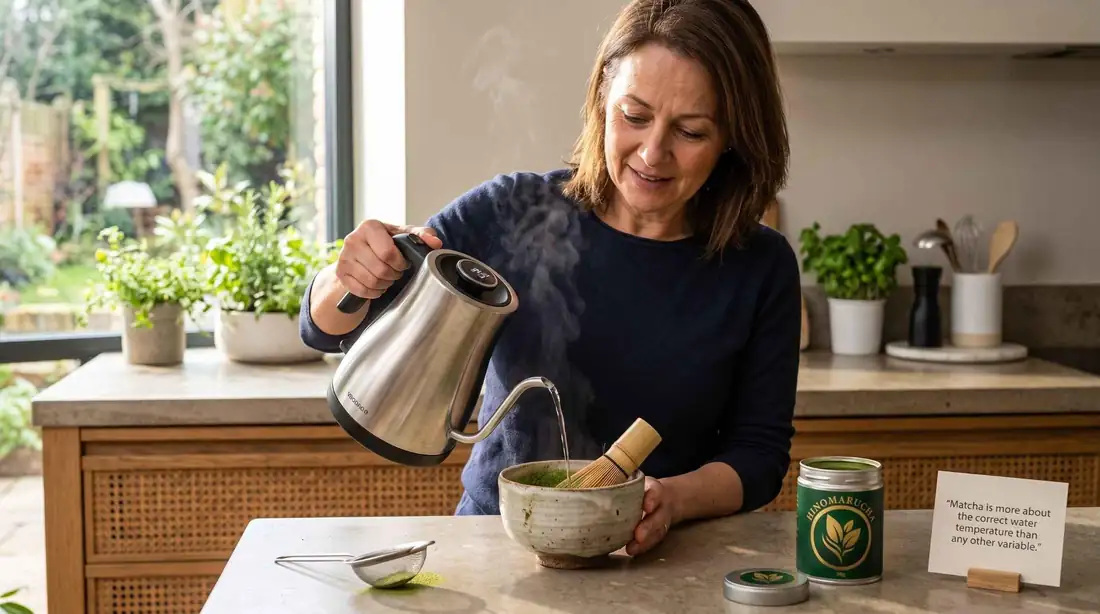
Heat fresh water in the kettle. Once it boils, let boiling water cool before it touches the powder, never pour at a rolling boil.
Some schools teach water first, then powder; either way, the temp matters more than the order. Add 70ml at 75°C.
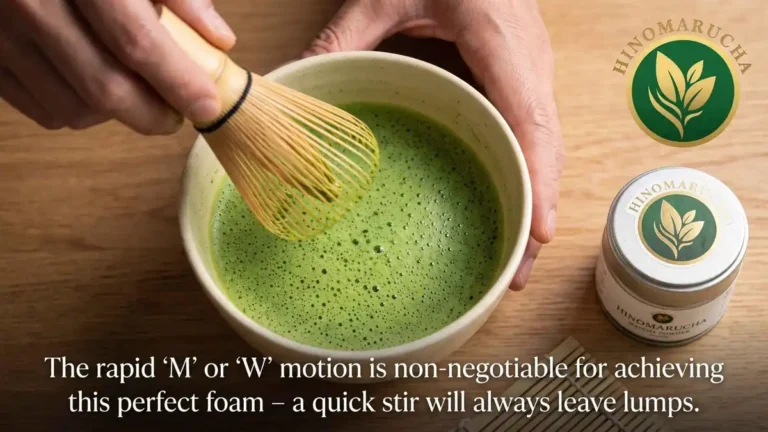
Whisk briskly, when whisking matcha, keep the motion fast and vertical, then sip immediately.
Nail the matcha water temperature and you’ll enjoy matcha the way it’s meant to taste. Matcha requires nothing more than this routine, and how you prepare matcha carefully keeps making each cup consistent.
Related: How to Use a Bamboo Chasen Properly for Perfect Matcha · Matcha 3-Piece Set Kushime Sabi
Kettle Tips for Matcha, Hitting the Perfect Temperature Every Time
Your kettle is a precision instrument if you treat it like one. No variable-temp kettle? Bring water to a full boil, then let it cool, let the boiling water sit and cool for a few minutes before pouring. Five minutes in an open kettle drops 100°C to roughly 80°C; pouring into a cool tea bowl shaves off a few degrees more.
Allow the water to cool on its own, impatience is how matcha water temperature mistakes happen. For matcha every time you brew, this short pause is the whole secret to perfect water temperature. Dial in your water temperature once, and it becomes a habit.
Related: Best Ways to Store Matcha to Preserve Flavor · Mini Top Can Silver
Drinking Matcha at Its Best, Taste, Color, and Calm
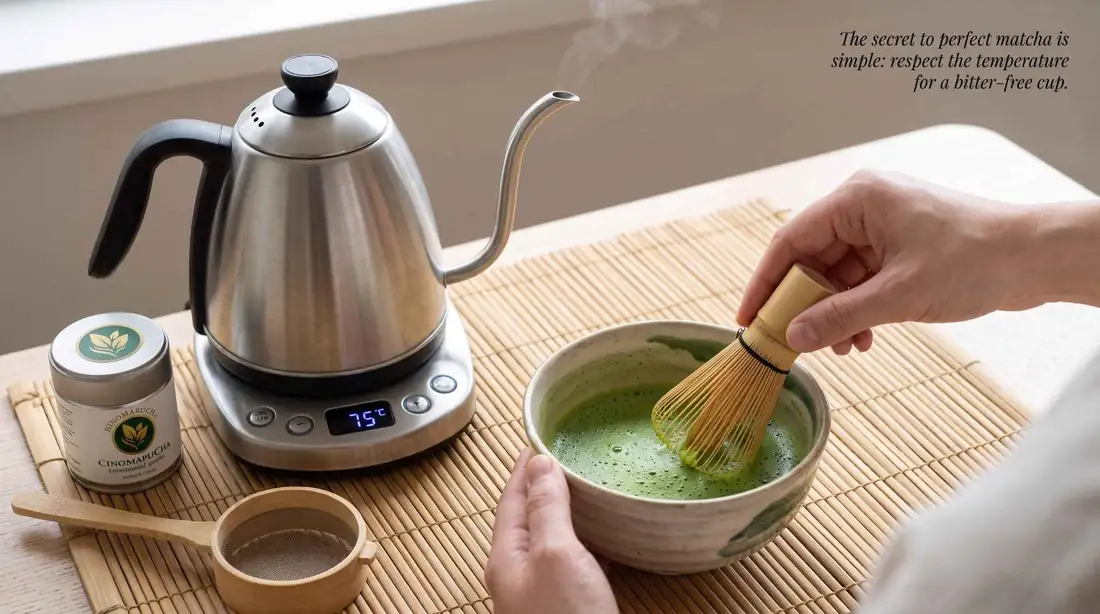
Drinking matcha at the right temp is a full-sensory thing. The vibrant green color glows, the matcha mixture smells sweet and marine, tea leaves ground moments ago, and the liquor looks bright green, the way traditional tea masters expect before the first sip.
High-quality matcha rewards this care the most. (Culinary grade matcha is blended for lattes and baking; save your finest powder for the straight bowl.) This is also where matcha products matter: fresh, stone-milled powder holds its color at the right temp, while stale powder looks tired no matter what. Get the correct water temperature, mind the temperature of the matcha in your cup, and your matcha water temperature pays you back with the full matcha experience.
Related: 5 Benefits of Drinking Matcha You Should Know · Mug Tea Whisk
Troubleshooting Matcha Temperature Mistakes
Still off? Run this checklist:
Bitter taste and harshness? Your water was too hot. Let it cool longer next time.
Flat and dull? Water is too cool, the powder is fully dissolved yet tastes like nothing. Raise the temp five degrees.
Lumpy? Temperature isn’t the culprit, sifting is.
Yellowish? Heat damage or old powder. Fresh powder plus the right temp fixes both.
At its core, preparation of matcha is simple: tea prepared with water at 75°C, meaning matcha is prepared with water, not guesswork, whisked well and drunk fresh. Whether your matcha ends up mixed with other ingredients in a latte or sipped straight, including matcha in your routine at the right temperature changes everything. Nail the matcha water temperature and the bowl takes care of itself.
Related: Ceremonial vs Culinary Matcha: Which Should You Choose? · Screw Can with Pull Top 40g
Conclusion
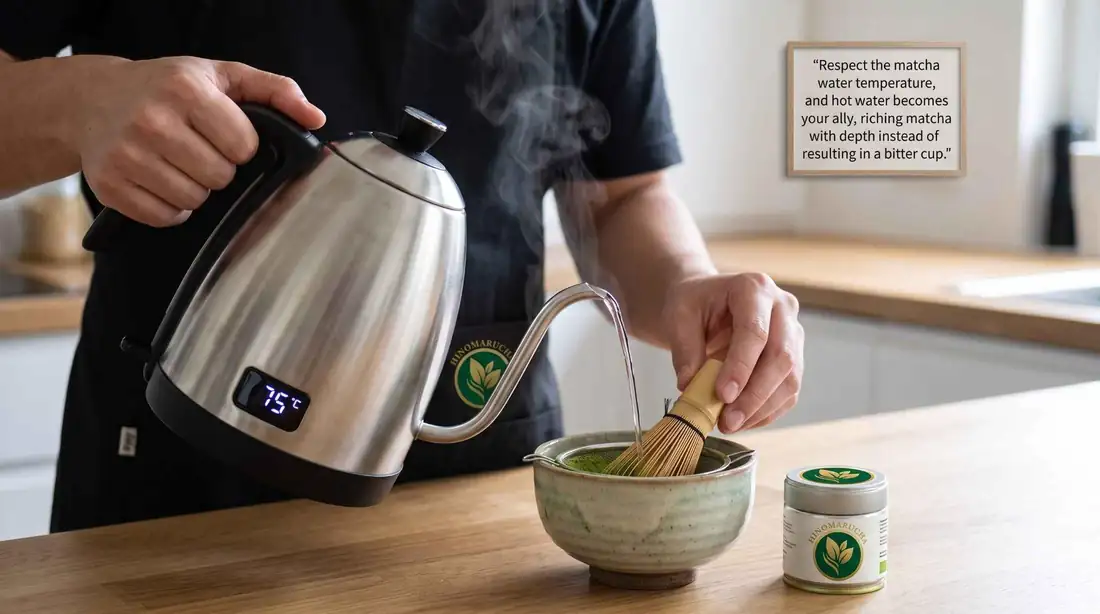
So, does water temperature ruin matcha? Only when you ignore it. Respect the matcha water temperature, and hot water becomes your ally, riching matcha with depth instead of resulting in a bitter cup. Whether you go hot, cold-brew, or iced, using the right temperature is the smallest effort with the biggest payoff in making matcha taste extraordinary. HinomaruCha’s fresh, stone-milled powder is matcha that rewards care, gives it the right water, and it gives you the perfect cup of matcha.
FAQs
What is the best water temperature for matcha?
75°C (167°F) is ideal. This matcha water temperature keeps the flavor sweet and color vivid.
Can I use boiling water if I let it cool?
Yes, let boiling water sit for 5 minutes to let it cool to ~80°C. That matcha water temperature works beautifully.
Is cold water better than hot for matcha?
Neither is better, they’re different. Cold-brew is mellow; hot water near 75°C gives the full matcha water temperature experience.
Why does my matcha taste bitter?
Usually the water was too hot, heat will result in a bitter taste every time. Cool it down.
Do I need a thermometer for matcha?
No. Boil, then wait five minutes, that matcha water temperature lands near 80°C without gadgets.