Most guides on matcha cocktails just dump 10 recipes and call it a day. That’s not what this is. This guide goes deeper, into the flavor science, the spirits pairings, the techniques, and the matcha quality that makes or breaks every sip. If you want to craft matcha cocktails that actually taste extraordinary, you need to start with something extraordinary. That’s exactly what we’re here to help you find.
What Makes Matcha Perfect for Cocktails?
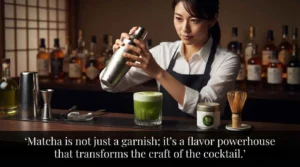
Matcha is not just a trendy garnish. It is a flavor powerhouse.
Its umami depth, gentle bitterness, grassy brightness, and creamy texture make it one of the most versatile ingredients you can bring to a cocktail. No other green tea ingredient behaves quite like it.
Here’s why matcha outperforms every other tea-based mixer:
| Property | Matcha | Brewed Green Tea | Cold Brew Tea |
| Flavor intensity | Very high | Low,medium | Medium |
| Texture contribution | Creamy, full-bodied | Thin | Thin |
| Visual impact | Vivid green | Pale yellow | Pale amber |
| Mixability | Excellent (whisked) | Limited | Limited |
| Umami depth | High | Low | Very low |
| Shelf stability (mixed) | Needs prep fresh | Yes | Yes |
Matcha wins on nearly every dimension that matters in cocktail-making. The color alone sells the drink before anyone takes a sip.
But here’s the catch: the quality of your matcha determines everything.
Dull, yellowish, cheaply processed powder produces flat, bitter, unpleasant cocktails. Bright, vivid, properly shaded Japanese ceremonial-grade matcha produces drinks with natural sweetness, layered depth, and that signature creamy mouthfeel.
We source our matcha directly from Aichi, Japan, one of the most respected tea-growing regions in the country. You can read more about why Aichi matcha is considered a premium Japanese tea and why it makes such a dramatic difference in the cup, and in the cocktail.
Understanding Matcha Quality for Mixology
Before you shake, stir, or strain anything, you need to understand what you’re working with.
Matcha comes in two primary grades: ceremonial and culinary. Both have their place in cocktail-making, but they serve different purposes.
Ceremonial Grade vs. Culinary Grade: Which Should You Use?
| Feature | Ceremonial Grade | Culinary Grade |
| Color | Vivid, bright green | Olive to dull green |
| Flavor | Sweet, umami-forward, smooth | Robust, slightly bitter |
| Texture | Ultra-fine, silky | Fine but coarser |
| Best cocktail use | Martinis, delicate sours, highballs | Matcha margaritas, blended drinks |
| Price point | Higher | Lower |
| Visual impact | Outstanding | Good |
Our recommendation: use ceremonial grade matcha for any drink where the matcha flavor is the star. Use culinary grade when it’s a supporting note.
If you’re debating which to keep on hand, our ceremonial vs. culinary matcha guide breaks it down with clear use-case examples.
The Matcha Cocktails & Mixology Flavor Matrix
Understanding flavor pairings is the foundation of good matcha cocktail design. Matcha is not neutral, it has opinions. Work with them, not against them.
What Matcha Pairs With
Spirits that complement matcha:
- Gin, Botanical, herbal notes echo matcha’s grassiness. This is one of the most elegant pairings.
- Vodka, Neutral and clean. Lets the matcha shine. Great for martinis.
- Bourbon, Caramel and vanilla round out matcha’s bitterness beautifully.
- Tequila (Blanco), Bright, citrus-forward agave plays well with matcha’s umami edge.
- Japanese Whisky, The natural affinity here is obvious. Both come from the same cultural tradition of precision.
- Rum (White), Light sweetness balances the vegetal notes.
Flavor enhancers that work with matcha:
- Honey and honey simple syrup
- Fresh lemon and yuzu juice
- Coconut cream or coconut milk
- Ginger (fresh or syrup)
- Elderflower liqueur (St-Germain)
- Lavender syrup
- Cardamom
Flavors that fight matcha:
- Heavy cream liqueurs (overwhelm the delicate notes)
- Very sweet fruit juices (mask the umami)
- Cola or carbonated sodas (flatten the complexity)
- Overpowering smoke (peated Scotch can dominate)
This matrix saves you from wasted experiments and expensive mistakes behind the bar.
8 Expert-Level Matcha Cocktails & Mixology Recipes
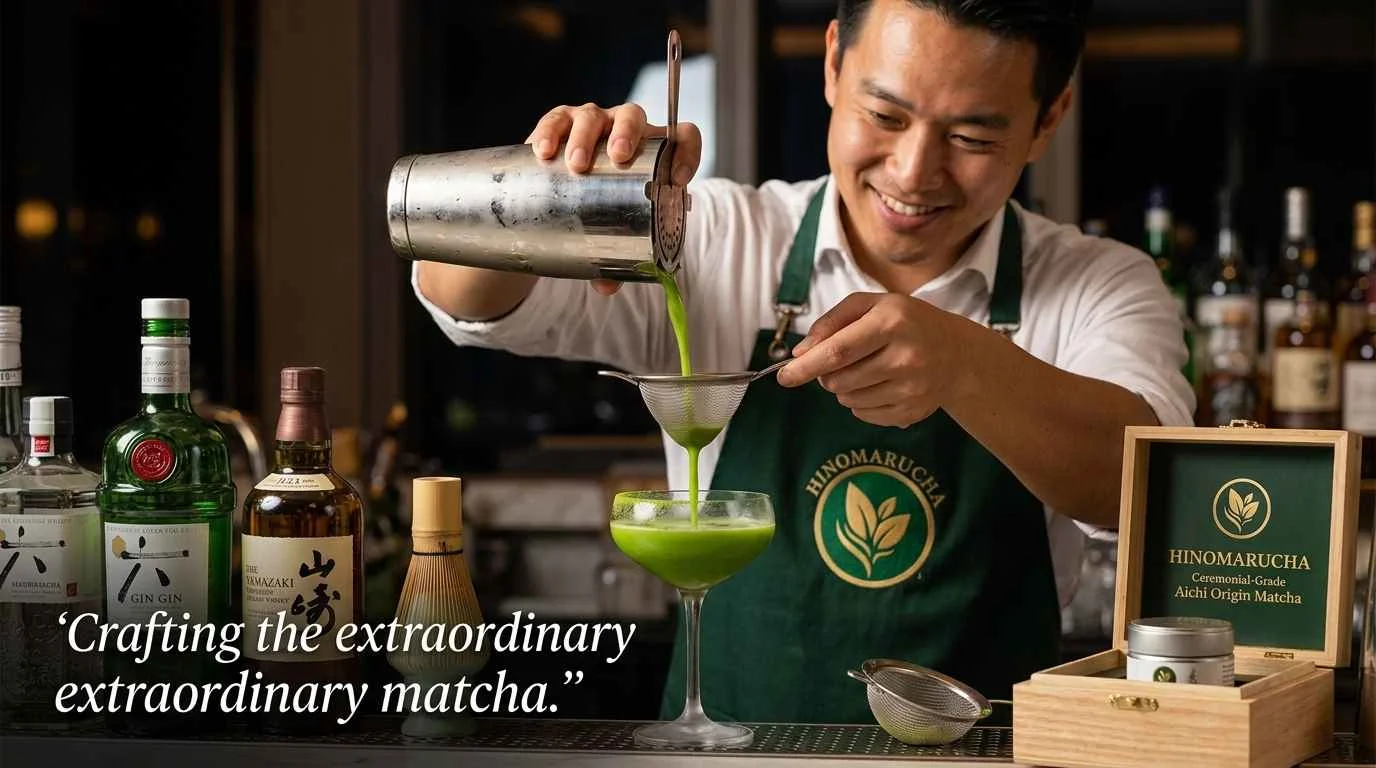
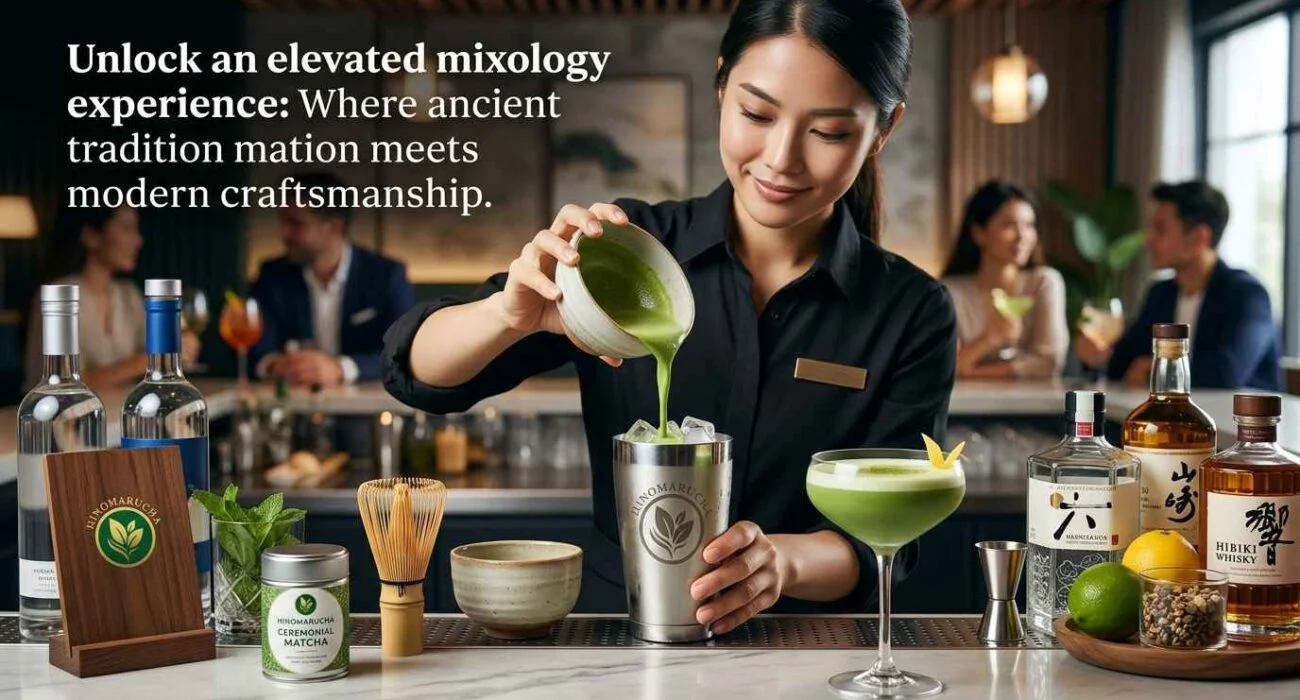
Each recipe below is designed to highlight what our Hinomarucha ceremonial-grade Aichi-origin matcha does best: deliver vivid color, layered flavor, and smooth texture that makes every cocktail look and taste professional.
1. The Matchatini (Classic Matcha Martini)
Why make it: This is the cleanest expression of what high-grade matcha does in a cocktail. No distractions.
Ingredients:
- 2 oz vodka (clean, neutral)
- 1 tsp ceremonial-grade matcha, sifted
- ¾ oz fresh lemon juice
- ¾ oz honey simple syrup (1:1 honey and water)
- 1 oz coconut water (for whisking)
Method:
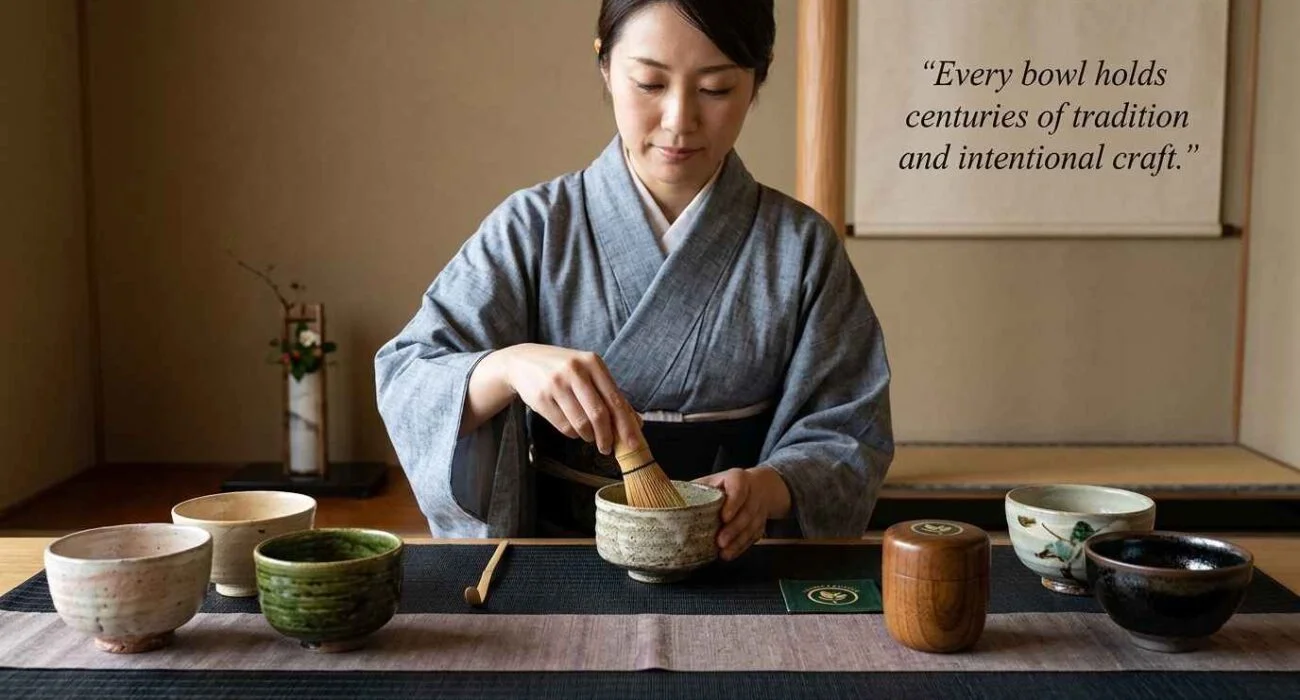
- Whisk matcha with coconut water using a bamboo chasen until fully dissolved and slightly frothy.
- Combine all ingredients in a shaker with ice.
- Shake hard for 15 seconds.
- Double strain into a chilled coupe glass.
- Garnish with a light dusting of sifted matcha.
Pro tip: Never skip the pre-whisking step. Matcha powder dropped straight into a shaker creates clumps that ruin texture. Our guide on how to use a bamboo chasen properly explains the exact technique.
2. Matcha Gin Sour
Why make it: The botanical character of gin and the grassy brightness of matcha create something genuinely special. Add lemon and egg white, and you have a cocktail with serious depth.
Ingredients:
- 2 oz London Dry gin
- 1 tsp sifted ceremonial matcha
- ¾ oz fresh lemon juice
- ½ oz simple syrup
- 1 egg white (or 1 oz aquafaba for vegan option)
- 1 oz cold water for whisking
Method:
- Whisk matcha in cold water until smooth.
- Dry shake all ingredients (no ice) for 20 seconds to build foam.
- Add ice, shake again for 15 seconds.
- Strain into a rocks glass over a large ice cube.
- Garnish with 3 drops of yuzu bitters dragged through the foam.
Honest caveat: Egg white cocktails need a confident dry shake. Weak shaking gives you flat foam. Use this technique only if you’re comfortable with the timing.
3. Matcha Margarita
Why make it: This is the crowd-pleaser of the matcha cocktail world. Easy to batch. Beautiful to look at. Consistently impressive.
Ingredients:
- 2 oz blanco tequila
- 1 tsp culinary-grade matcha
- 1 oz fresh lime juice
- ¾ oz agave nectar
- ½ oz triple sec
- Cold water for whisking
Method:
- Whisk matcha in 1 oz cold water until lump-free.
- Rim a rocks glass with matcha-salt (1 part matcha, 3 parts flaky sea salt).
- Shake all ingredients with ice vigorously.
- Strain over fresh ice.
- Garnish with a lime wheel and a dusting of matcha.
Batch note: This recipe scales beautifully for parties. Pre-whisk the matcha in the full water volume and mix in advance. Keep refrigerated and shake individual portions to order.
4. Matcha Whiskey Highball
Why make it: Japan gave the world both matcha and whisky culture. This cocktail is their natural meeting point.
Ingredients:
- 2 oz Japanese whisky (or bourbon as substitute)
- 1 tsp ceremonial matcha
- 1 oz cold water (for whisking)
- 3 oz chilled sparkling water
- ¼ oz honey simple syrup
- Lemon peel for garnish
Method:
- Whisk matcha in cold water until smooth.
- Add whisky and honey syrup to a highball glass filled with ice.
- Add the matcha mixture. Stir gently three times.
- Top slowly with sparkling water. Do not stir again.
- Express lemon peel over the glass and drop it in.
Flavor note: The carbonation lifts the matcha aroma. You get the fragrance before you taste the drink. That moment is what makes this cocktail memorable.
5. Matcha Old Fashioned
Why make it: The bitterness of matcha replaces the bitters in a traditional old fashioned. The result is unexpectedly harmonious.
Ingredients:
- 2 oz bourbon
- 1 tsp sifted ceremonial matcha
- ½ oz warm water (for dissolving)
- ¼ oz demerara simple syrup
- 2 dashes angostura bitters (optional)
- Orange peel for garnish
Method:
- Dissolve matcha in warm water with a small whisk or spoon.
- Add matcha solution, bourbon, syrup, and bitters to a mixing glass with ice.
- Stir for 30,40 seconds.
- Strain into a rocks glass over a single large ice cube.
- Express orange peel oils over the surface. Rub the rim. Drop the peel in.
This one rewards patience. The longer you stir, the smoother and more integrated the matcha becomes.
6. Sparkling Matcha Mojito
Why make it: Light, refreshing, and stunning in appearance. This is the summer matcha cocktail.
Ingredients:
- 2 oz white rum
- 1 tsp culinary matcha
- ¾ oz fresh lime juice
- ½ oz simple syrup
- 6,8 fresh mint leaves
- 1 oz cold water
- Club soda to top
Method:
- Muddle mint and simple syrup gently in a tall glass.
- Whisk matcha in cold water until smooth.
- Add rum, lime juice, and matcha mixture.
- Fill glass with crushed ice.
- Top with club soda. Stir very gently.
- Garnish with a mint sprig dusted lightly with sifted matcha.
7. Matcha Espresso Martini
Why make it: The matcha espresso martini has taken over cocktail menus worldwide. The caffeine synergy from both ingredients creates a genuinely euphoric effect.
Ingredients:
- 2 oz vodka
- 1 shot (1 oz) fresh espresso, cooled
- 1 tsp ceremonial matcha
- ½ oz coffee liqueur (Kahlúa)
- ½ oz simple syrup
- 1 oz cold water
Method:
- Whisk matcha in cold water until fully smooth.
- Combine all ingredients in a shaker with ice.
- Shake very hard for 20 seconds (this builds the foam).
- Double strain into a chilled coupe.
- Garnish with 3 coffee beans arranged in the center of the foam.
What makes this version different: Most matcha espresso martini recipes use matcha powder mixed directly into the shaker, which creates texture problems. Pre-whisking the matcha separately gives you a smooth, lump-free base that produces a flawless foam layer.
8. Matcha Paloma
Why make it: Grapefruit and matcha share a similar bitter-bright quality that makes this pairing surprisingly natural.
Ingredients:
- 2 oz blanco tequila
- 1 tsp ceremonial matcha
- 1 oz fresh grapefruit juice
- ½ oz fresh lime juice
- ½ oz agave nectar
- 1 oz cold water
- Grapefruit sparkling water to top
Method:
- Whisk matcha in cold water.
- Salt rim a tall glass with pink Himalayan salt.
- Shake tequila, grapefruit juice, lime juice, agave, and matcha mixture over ice.
- Strain into the glass over ice.
- Top with grapefruit sparkling water.
- Garnish with a grapefruit wedge and a thin matcha dust line on top.
The Matcha Mocktail Section, Zero-Proof, Full Flavor
Not every great matcha drink needs alcohol. The same flavor complexity that makes matcha brilliant in spirits-based cocktails works equally well in zero-proof builds.
Sparkling Matcha Lemonade Mocktail
Ingredients:
- 1 tsp ceremonial matcha, whisked in 2 oz cold water
- 1 oz fresh lemon juice
- ¾ oz honey simple syrup
- Sparkling water to top
- Ice and lemon wheel to garnish
This builds exactly like a cocktail. Serve it in the same glassware. It looks identical to a classic matcha sour and tastes clean, bright, and complex. Guests at any event will be impressed.
Matcha Ginger Fizz Mocktail
Ingredients:
- 1 tsp ceremonial matcha, whisked in 2 oz cold water
- 1 oz fresh ginger juice (pressed or bought)
- ¾ oz honey syrup
- ½ oz fresh lime juice
- Ginger beer to top
- Candied ginger for garnish
The ginger adds warmth and a slight spice that balances matcha’s grassy notes perfectly.
If you want to explore more drink creativity with our matcha, the ultimate matcha latte recipe guide is a great next step, many of those techniques translate directly into mocktail builds.
Technique Masterclass, Matcha Mixology Fundamentals
Great recipes fail without great technique. Here are the five fundamentals every matcha cocktail maker needs to know.
1. Always Pre-Whisk Your Matcha
Matcha powder is hydrophobic. It resists water. Dropping it directly into a shaker or glass leaves undissolved clumps that create bitter spots and ruin texture.
The correct method:
- Add 1,2 oz of cold water to a small bowl or cup
- Sift matcha over the surface
- Whisk in a W or M motion (not circular) using a bamboo chasen until the surface shows a thin, even foam
- Use immediately
2. Temperature Matters
Cold water: produces a brighter, slightly more vegetal flavor.
Slightly warm water (not hot): produces a smoother, more rounded flavor with less bitterness.
Hot water: volatile aromatics escape quickly, don’t use this for cocktails unless the recipe calls for it.
Most matcha cocktails benefit from cold-water whisking. The cold helps retain color vibrancy too.
3. Shaking vs. Stirring Matcha Cocktails
Shake: When the recipe contains citrus juice, egg white, or coconut cream. Shaking emulsifies these ingredients with matcha and creates texture.
Stir: When the recipe is spirit-forward (like a matcha old fashioned or highball). Stirring preserves clarity and gives a silkier mouthfeel.
Never stir a matcha cocktail that contains citrus, the lack of emulsification will cause separation in the glass.
4. Sifting Is Not Optional
Always sift matcha before whisking. Clumps in unsifted powder resist hydration regardless of technique. A matcha can sieve designed for fine powder gives you consistently smooth results every time.
5. Storage Changes Everything
Matcha oxidizes rapidly once opened. Exposure to light, heat, and air degrades both color and flavor, and a degraded matcha makes a degraded cocktail.
Proper storage guidelines:
- Store in an airtight, opaque container
- Keep refrigerated after opening
- Use within 4,6 weeks of opening
- Never store near strong-smelling ingredients
Our best ways to store matcha to preserve flavor guide covers this in detail, including why the container type matters more than most people realize.
Why Our Matcha Is Different, Hinomarucha Quality Standards?
Most matcha sold online is not what it claims to be. The word “ceremonial” appears on bags of powder that would not pass basic quality inspection in Japan. We think you deserve to know exactly what you’re buying.
Here’s how our matcha stands apart:
Sourcing: Aichi Prefecture, Japan
Aichi is one of Japan’s premier tea-growing regions. The soil composition, altitude, humidity levels, and cultivation traditions combine to produce matcha with exceptional color, aroma, and flavor consistency.
We don’t blend from multiple anonymous sources. We know exactly where our tea comes from, which farms, which harvest seasons, and which processing runs. That traceability is rare in the global matcha market.
Learn more about why soil and climate matter in matcha quality, it directly affects what ends up in your cocktail glass.
Production: Small-Batch and Fresh
Mass-produced matcha sits in warehouses for months. By the time it reaches you, the volatile compounds that create its flavor and color have degraded significantly.
We work with small-batch production methods that prioritize freshness over volume. Smaller batches mean faster turnover, and faster turnover means you receive matcha at its peak.
Authenticity: How to Verify You’re Getting Real Ceremonial Grade
There are three visual signals that distinguish genuine high-grade ceremonial matcha:
- Color: Vivid, electric green. Not olive, not yellow, not grey-green.
- Aroma: Fresh, grassy, slightly sweet. Like a spring garden after rain.
- Texture: Ultra-fine. Rub a pinch between your fingers, it should feel like silk, not dust.
Our guide to how to tell if matcha is truly ceremonial grade teaches you how to evaluate any matcha you buy, including ours.
Analytics: What Premium Matcha Brings to Your Cocktail
| Quality Indicator | Budget Matcha | Our Ceremonial Matcha |
| L-Theanine content | Low (<20 mg/g) | High (30,40 mg/g) |
| Chlorophyll level | Low (pale color) | High (vivid green) |
| Particle size | Coarser | Ultra-fine (<10 microns) |
| Flavor profile | Bitter, flat | Umami-forward, sweet finish |
| Color in cocktail | Dull, muted | Vivid, striking |
| Foam quality | Poor | Excellent |
These aren’t aesthetic differences. They are functional differences that directly affect how your cocktail looks, tastes, and feels.
Our Premium Matcha Products for Cocktail Making
We design our packaging and products for people who take quality seriously. Whether you’re a home cocktail enthusiast or a professional bartender, we have what you need.
Matcha Powder:
Our Hinomarucha Ceremonial-Grade Aichi Origin Matcha (30g) is the most popular choice among both home users and professionals. The 30g size is ideal for cocktail experimentation, enough to develop your recipes without committing to a large quantity before you’ve found your favorite builds.
Packaging That Protects Freshness:
Matcha is sensitive. That’s why our containers are designed to block light and minimize air exposure.
- Screw Can with Pull-Top (40g), airtight, resealable, protects freshness between uses
- Mini Top Can Silver, compact and elegant, ideal for personal use
- Mini Top Can Black, for those who prefer a minimalist aesthetic
- Artisan Art Can Geisha, a gift-worthy option that still protects freshness perfectly
- Artisanal Art Can Mt. Fuji, another beautiful collector’s option
- Genuine Gold Lacquer Can, our premium showcase packaging
Tools That Improve Your Technique:
- Bamboo Chasen (Matcha Whisk), the correct tool for preparing matcha. No substitute works as well.
- Matcha Can Sieve, for consistent, lump-free results every time
- Matcha 3-Piece Set, includes whisk, sieve, and scoop. The complete starter kit.
- Mug Tea Whisk, for whisking directly in your preparation vessel
Gift Sets:
- Mini Can Series, a beautiful variety set for matcha explorers
- Mini Can Series Box, gift-boxed version of the series
- 3-Piece Matcha Set (Sosuno and Gosu), a traditional and practical gift combination
Pros and Cons of Using Matcha in Cocktails
We believe in honest information. Matcha is exceptional in cocktails, but it has real practical considerations too.
Pros
| Benefit | Detail |
| Stunning visual impact | Natural green color is vivid and striking in glassware |
| Unique flavor profile | Umami and bitterness no other ingredient replicates |
| Functional properties | L-Theanine provides calm focus alongside the caffeine |
| Versatility | Works with nearly every major spirit category |
| Conversation starter | Instantly memorable at events and cocktail parties |
| Adaptable to mocktails | Zero-proof builds are equally impressive |
Cons
| Challenge | Solution |
| Requires pre-whisking | Build 2 minutes of prep into your workflow |
| Clumps if not sifted | Always sift before whisking, non-negotiable |
| Color fades with time | Serve promptly; don’t pre-batch too far in advance |
| Oxidizes quickly once opened | Store correctly; use within 4,6 weeks of opening |
| Quality variation is huge | Source from a trusted, traceable supplier |
The last point on that cons list is the one that matters most. Every problem with matcha in cocktails traces back to one root cause: substandard powder. Solve the quality problem, and the technique challenges become manageable and worthwhile.
Matcha Cocktails for Every Occasion
A well-stocked matcha bar can serve any event. Here’s how to match your matcha cocktails to the moment:
Dinner Party (4,6 guests)
Serve: Matcha Gin Sour or Matchatini
Why: Elegant, visually striking, starts conversation immediately. Prepare the matcha base in advance and shake individual portions to order.
Summer Gathering (10+ guests)
Serve: Batched Matcha Margarita or Sparkling Matcha Mojito
Why: Both scale easily and stay vivid green when served promptly.
Date Night
Serve: Matcha Espresso Martini or Matcha Old Fashioned
Why: Sophisticated, unexpected, memorable. The espresso martini especially impresses.
Holiday Cocktail Hour
Serve: Matcha Paloma with a grapefruit-salt rim
Why: The color and garnish make it instantly festive.
Inclusive Events (alcohol-free option required)
Serve: Sparkling Matcha Lemonade Mocktail or Matcha Ginger Fizz
Why: These look identical to the cocktail versions and taste genuinely complex, not like an afterthought.
Building a Matcha Cocktail Bar at Home
You don’t need a professional setup. You need the right fundamentals.
Minimum kit for great matcha cocktails:
- High-quality ceremonial matcha
- Bamboo chasen (whisk)
- Fine-mesh sieve or matcha sieve
- Small whisk bowl
- Cocktail shaker with strainer
- Coupe or rocks glasses
Nice to have:
- Jigger for precise measuring
- Large-format ice molds (single cube looks professional)
- Fine mesh double strainer
- Bar spoon for stirred drinks
Spirits to keep stocked for matcha cocktails:
- Neutral vodka
- London Dry gin
- Blanco tequila
- Bourbon or Japanese whisky
- White rum
With these five spirits and quality matcha, you can make every recipe in this guide.
If you’re new to matcha preparation in general, our how to make a matcha latte at home guide builds the foundational technique. The whisking skills transfer directly to cocktail preparation.
Health and Wellness Angle, What Matcha Brings Beyond Flavor?
Matcha cocktails aren’t just delicious. They bring genuine nutritional complexity to what is normally a nutritionally empty category.
Key compounds in matcha:
| Compound | Effect | Relevance to Cocktails |
| L-Theanine | Promotes calm focus | Balances alcohol’s sedative effects |
| EGCG (catechins) | Antioxidant | Present even in mixed drinks |
| Chlorophyll | Natural green pigment | Provides the vivid color |
| Caffeine | Gentle stimulation | Combined with L-theanine for smooth energy |
| Vitamins A, C, E | Antioxidant support | Partially retained in cold preparations |
Important note: Alcohol consumption reduces or eliminates many health benefits. The nutritional compounds listed above are present in matcha cocktails, but cocktails should be consumed responsibly. The wellness angle here is relative, compared to other cocktail ingredients, matcha is in a different category entirely.
For a deeper look at what makes matcha a functional food, our top 10 health benefits of Japanese green tea (science-backed) is well worth reading before your next session behind the bar.
What Spirits Are Good to Mix With Matcha? (Complete Pairing Guide)
This is one of the most-searched questions in matcha mixology. Here’s the definitive answer:
| Spirit | Pairing Quality | Best Recipe Application |
| Vodka | ★★★★★ | Matchatini, Matcha Espresso Martini |
| Gin (London Dry) | ★★★★★ | Matcha Gin Sour, Gin and Tonic riff |
| Blanco Tequila | ★★★★☆ | Matcha Margarita, Matcha Paloma |
| Bourbon | ★★★★☆ | Matcha Old Fashioned, Matcha Whiskey Sour |
| Japanese Whisky | ★★★★☆ | Matcha Highball |
| White Rum | ★★★☆☆ | Matcha Mojito |
| Elderflower Liqueur | ★★★★☆ | Modifier in sours and martinis |
| Amaretto | ★★☆☆☆ | Use very sparingly, sweetness competes |
| Scotch (peated) | ★★☆☆☆ | Smoke overwhelms matcha’s delicacy |
The top two pairings, vodka and gin, work because they let the matcha lead. The spirit supports without competing.
Conclusion
Matcha cocktails are not a trend. They are a legitimate evolution of cocktail culture, one that rewards curiosity, technique, and respect for ingredients. The difference between a mediocre matcha cocktail and a truly exceptional one comes down to a single factor: the quality of your matcha.
We have built Hinomarucha on one principle, that your cup (or cocktail glass) deserves the same precision and care that goes into every harvest in Aichi. Our matcha is sourced with purpose, processed with respect, and packaged to preserve what makes it extraordinary.
When you use our matcha in your cocktails, you’re not just adding a green ingredient. You’re adding the knowledge of generations of Japanese tea cultivation, the flavor complexity of one of the world’s great agricultural traditions, and the confidence that comes from working with something genuinely exceptional.
Start with our Hinomarucha Ceremonial-Grade Aichi Origin Matcha. Whisk it properly. Choose your spirit thoughtfully. And taste the difference that quality actually makes.