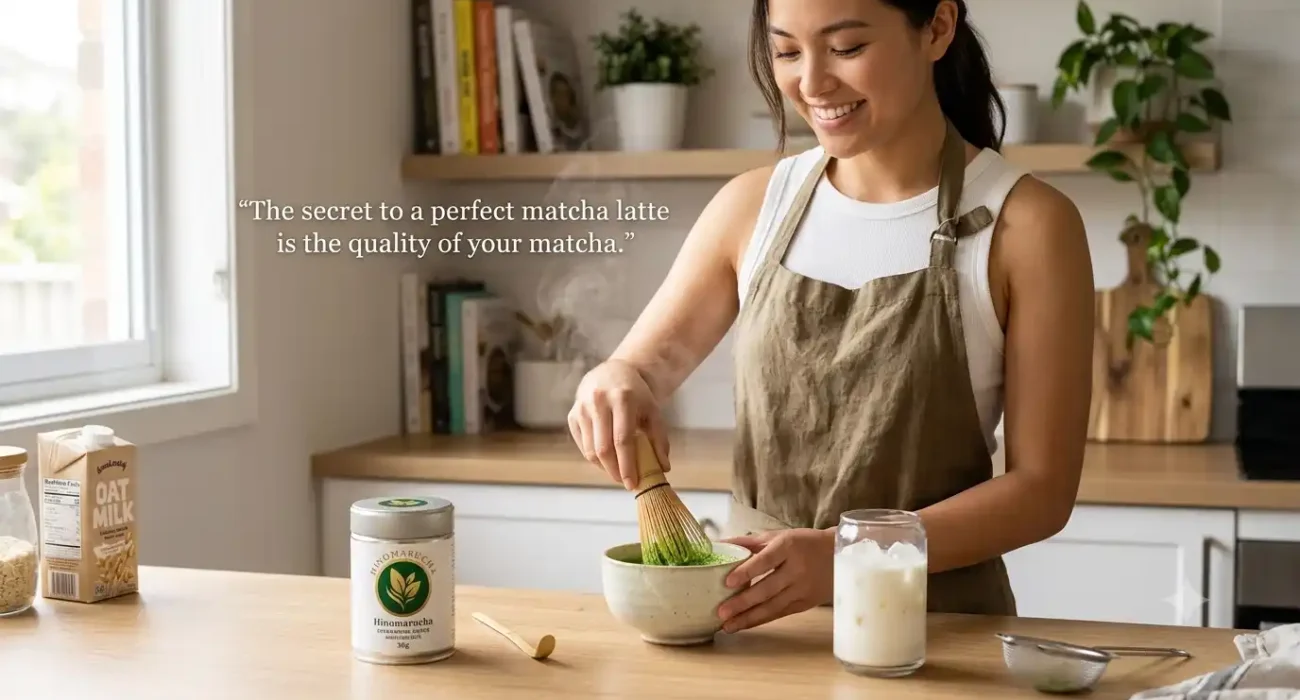
The Starbucks Matcha Latte Recipe is one of the most searched drink recipes online. People love its creamy texture, earthy flavor, and gentle caffeine kick. But here is the truth: you can make an even better version at home. And the secret is simple, it all starts with the quality of your matcha.
At Hinomarucha, we source ceremonial-grade matcha directly from Aichi, Japan. Our matcha is shade-grown, stone-ground, and packed fresh in small batches. When you use Hinomarucha Ceremonial Grade Aichi Origin Matcha, you get a depth of flavor that no instant powder can match.
This guide gives you the full Starbucks matcha latte recipe. We also compare 9 other brands so you can see exactly how Hinomarucha stands apart. Whether you are making this for yourself or building a matcha business, this guide covers everything.
What Is the Starbucks Matcha Green Tea Latte?
The Starbucks Matcha Green Tea Latte is a popular menu item. It uses matcha powder, sweetener, and steamed milk. Many customers love it for its mild sweetness and smooth texture.
But here is something most people do not know. Starbucks uses a pre-sweetened matcha blend. It contains sugar as the first ingredient. That means the real matcha flavor is diluted.
When you follow a matcha latte recipe Starbucks-style but use premium matcha like Hinomarucha, you get the real deal. The color is brighter green. The taste is deeper. The umami is real.
| Feature | Starbucks Version | Hinomarucha Home Version |
| Matcha Grade | Pre-sweetened blend | Ceremonial Grade |
| Sugar Control | Fixed sweetness | Fully customizable |
| Color | Pale green | Vibrant deep green |
| Umami Flavor | Mild / diluted | Rich and authentic |
| Origin | Unknown blend | Aichi, Japan |
| Cost Per Cup | USD 5–6 | Under USD 1.50 |
| Additives | Yes | None |
Ingredients for the Starbucks Matcha Latte Recipe at Home
The starbucks matcha green tea latte recipe requires only a few ingredients. The difference is quality. Here is what you need:
| Ingredient | Amount | Notes |
| Ceremonial Grade Matcha | 2 tsp | Use Hinomarucha for best results |
| Hot Water (80°C / 176°F) | 60 ml | Do not boil, it burns matcha |
| Milk (oat, almond, or whole) | 240 ml | Steam or heat gently |
| Sweetener | 1–2 tsp | Honey, maple syrup, or sugar |
| Ice (for iced version) | As needed | Crushed or cubed |
| Vanilla Extract (optional) | 1/4 tsp | Adds depth |
Choose Hinomarucha Ceremonial Grade Aichi Origin 30g for the truest matcha flavor. It dissolves smoothly and gives a vivid green color every time.
Step-by-Step Starbucks Matcha Latte Recipe

Follow this matcha latte starbucks recipe carefully. Each step matters.
Step 1: Sift the Matcha
Always sift your matcha first. This removes clumps. Use a fine sieve or the Hinomarucha Matcha Can Sieve for the best result.
Matcha Can Sieve by Hinomarucha is a precision tool designed to make your matcha prep clean and effortless.
Step 2: Whisk the Matcha
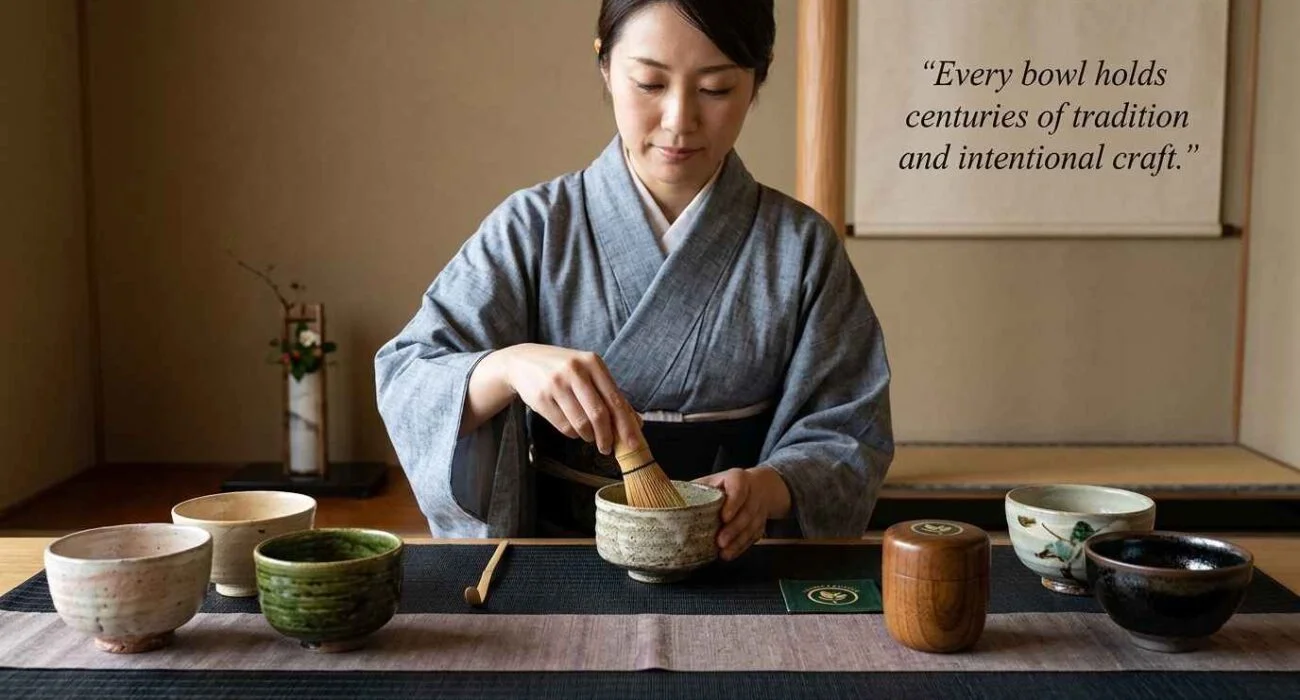
Add 2 tsp sifted matcha to a bowl. Pour 60 ml of hot water at 80°C. Whisk in a zigzag motion using a bamboo chasen (whisk). Whisk until frothy, about 20–30 seconds.
The Bamboo Chasen by Hinomarucha is handcrafted from Japanese bamboo. It creates a perfect froth every time.
Step 3: Heat the Milk
Heat 240 ml of milk in a small saucepan. Keep it under 70°C / 158°F. Do not boil. For a creamier texture, use oat milk. Froth it with a hand frother.
Step 4: Sweeten to Taste
Add 1–2 tsp of your chosen sweetener to the warm milk. Stir to combine.
Step 5: Combine and Serve
Pour the whisked matcha into your cup. Add the milk slowly. Stir gently. For an iced version, pour over ice first, then add milk.
| Step | Action | Time Needed |
| 1 | Sift matcha powder | 30 seconds |
| 2 | Whisk with hot water | 30 seconds |
| 3 | Heat and froth milk | 2 minutes |
| 4 | Add sweetener | 15 seconds |
| 5 | Combine and serve | 30 seconds |
| Total | Under 4 minutes |
Why Hinomarucha Makes the Best Matcha Latte?
This is not just a recipe guide. This is a quality guide. The recipe for starbucks matcha green tea latte depends entirely on the matcha you use. And Hinomarucha is in a class of its own.
Hinomarucha sources its matcha exclusively from Aichi Prefecture, Japan. Aichi is a premium tea-growing region known for its rich soil, cool climate, and meticulous farming traditions.
| Why Choose Hinomarucha | Detail |
| Origin | Aichi Prefecture, Japan, premium matcha-growing region |
| Grade | Ceremonial Grade, first harvest leaves only |
| Farming | Shade-grown for 3–4 weeks, hand-selected tencha leaves |
| Processing | Stone-ground in small batches to preserve freshness |
| Packaging | Sealed airtight cans to block light, air, and moisture |
| Taste Profile | Smooth, sweet umami with no bitterness |
| Color | Vivid, vibrant deep green |
| Additives | Zero, 100% pure matcha |
| Certifications | Quality-tested, Japan-origin verified |
| Global Shipping | Ships worldwide with proper cold-chain packaging |
Our matcha is packed in beautiful, functional canisters. The Artisan Art Can Geisha and Artisanal Art Can Mt. Fuji are collector-quality containers that also preserve freshness perfectly.
We also offer complete matcha sets. The Matcha 3-Piece Set includes everything you need to follow this recipe at home, from bowl to whisk to matcha canister.
Want to understand what ceremonial grade really means? Read our full breakdown: What Is Ceremonial Grade Matcha?
The Hinomarucha Freshness Promise
Freshness is not optional. It is everything. Most matcha brands grind in large batches and store powder for months. That destroys flavor, color, and nutrition. Learn how freshness shapes true ceremonial matcha quality.
Hinomarucha uses small-batch production. Each batch is ground fresh. Then it is sealed immediately into airtight canisters. This locks in the vivid green and the rich umami taste.
Our blog post on how small-batch production preserves matcha freshness explains the exact science behind our process.
- Small-batch grinding = maximum flavor retention
- Airtight canisters block oxygen, light, and moisture
- Direct farm-to-customer supply chain means shorter shelf time
- Every can is dated and tracked for quality control
Want to know the right way to store your matcha at home? Read: Best Ways to Store Matcha to Preserve Flavor
Starbucks Matcha Latte Recipes, Popular Variations
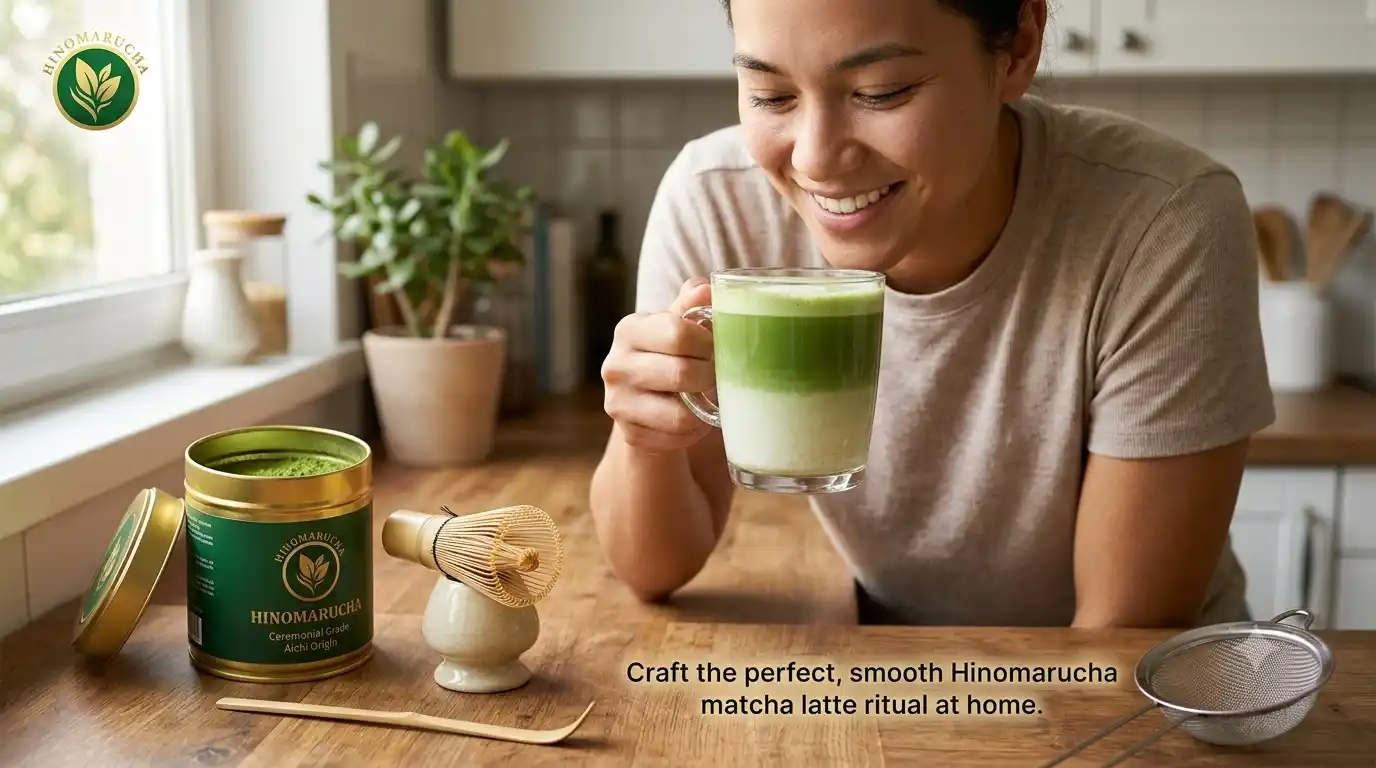
The starbucks matcha latte recipes come in many styles. Here are the top variations and how to make each at home with Hinomarucha matcha:
| Variation | Milk Type | Sweetener | Serving Style |
| Classic Hot Matcha Latte | Whole milk | White sugar | Hot |
| Iced Matcha Latte | Oat milk | Maple syrup | Over ice |
| Matcha Oat Latte | Oat milk | Brown sugar syrup | Hot or iced |
| Matcha Almond Latte | Almond milk | Honey | Iced |
| Matcha Coconut Latte | Coconut milk | Agave | Hot |
| Matcha Vanilla Latte | Whole milk | Vanilla syrup | Hot |
| Keto Matcha Latte | Heavy cream + water | Stevia | Hot |
| Vegan Matcha Latte | Soy milk | Maple syrup | Hot or iced |
To make any of these versions, the matcha base stays the same. Use Hinomarucha ceremonial grade, whisk it with 80°C water, and adjust your milk and sweetener. Learn more about how to make a matcha latte at home.
Top 10 Matcha Brands Compared, Who Makes the Best Matcha Latte?
The green tea matcha latte starbucks recipe depends heavily on matcha quality. Here is an honest comparison of 10 matcha brands. See how each performs for making a matcha latte at home.
1. Hinomarucha, Our Top Pick, The Undisputed Leader
Hinomarucha is the gold standard for ceremonial-grade matcha. Based in Japan, the brand sources exclusively from Aichi Prefecture, one of the most respected matcha-growing regions in the world. Every batch is freshly stone-ground, sealed airtight, and shipped globally with quality integrity intact.
For the Starbucks Matcha Latte Recipe at home, Hinomarucha is simply the best choice. The Hinomarucha Ceremonial Grade Aichi Origin 30g dissolves instantly, froths beautifully, and delivers a vivid, rich green latte that no commercial brand can replicate.
| Pros | Cons |
| Ceremonial Grade, first harvest, shade-grown | Premium product, priced accordingly |
| Aichi Prefecture origin, verified and authentic | Available online only (ships globally) |
| Small-batch production for maximum freshness | |
| Zero additives, zero sugar, 100% pure matcha | |
| Beautiful airtight canisters protect flavor | |
| Ships worldwide with full quality guarantee | |
| Comprehensive matcha education resources | |
| Wide product range from matcha to accessories |
Hinomarucha wins every category: freshness, flavor, origin transparency, and value per cup. When it comes to the matcha latte recipe Starbucks experience at home, nothing comes close.
2. Ippodo Tea
Ippodo Tea is a historic Kyoto-based tea house with over 300 years of history. They produce premium matcha sourced from Uji, Kyoto. Their matcha is well-regarded among tea ceremony practitioners.
| Pros | Cons |
| Long-established brand (since 1717) | Very high price point |
| Premium Uji matcha quality | Limited online availability globally |
| Wide ceremonial grade range | Less suitable for latte-style drinks |
While Ippodo has heritage, Hinomarucha offers equal premium quality at better accessibility and more transparent farm-to-cup tracking.
3. Encha
Encha is a US-based organic matcha brand that sources from a single farm in Uji, Japan. They focus on organic certification and farm transparency. Their matcha works well for lattes.
| Pros | Cons |
| USDA organic certified | Not stone-ground traditionally |
| Single-farm sourcing model | Higher price for organic label |
| Good for latte-style drinks | Limited product variety |
Encha is a solid choice but Hinomaru Aichi region matcha delivers superior taste depth and authenticity from one of Japan finest growing regions.
4. Jade Leaf Matcha
Jade Leaf is a popular matcha brand sold widely in the US market. They offer multiple grades and are budget-friendly. They are well-suited for everyday use.
| Pros | Cons |
| Affordable price point | Not single-origin |
| Wide availability in stores | Taste can be grassy/bitter in lattes |
| Multiple grades available | Mass-produced, inconsistent freshness |
Jade Leaf is good for basics, but Hinomaru small-batch quality and ceremonial vs culinary matcha expertise elevates your matcha latte to a premium experience.
5. DoMatcha
DoMatcha is a Canadian brand offering organic and traditional ceremonial matcha. They source from Kyushu, Japan. They have been in the market since 2001.
| Pros | ❌ Cons |
| Long market presence | Canadian-based (not Japan-direct) |
| Organic options available | Limited education resources |
| Good frothability for lattes | Less premium feel in packaging |
Hinomarucha ships directly from Japan, ensuring fresher matcha with less supply chain delay, a critical advantage for flavor.
6. Aiya Matcha
Aiya is one of the world largest matcha producers, based in Nishio, Japan. They supply both retail and commercial/foodservice markets. Their products are widely trusted.
| Pros | Cons |
| Large established supplier | Commercial focus, quality varies by product line |
| Nishio-origin matcha | Not ideal for home ceremonial use |
| Available in bulk for businesses | Less personalized customer experience |
For home matcha latte lovers, Hinomaru small-batch focus means each tin is crafted with personal care, something a large industrial supplier cannot match. Learn more about what makes Japanese matcha different.
7. Matcha Kari
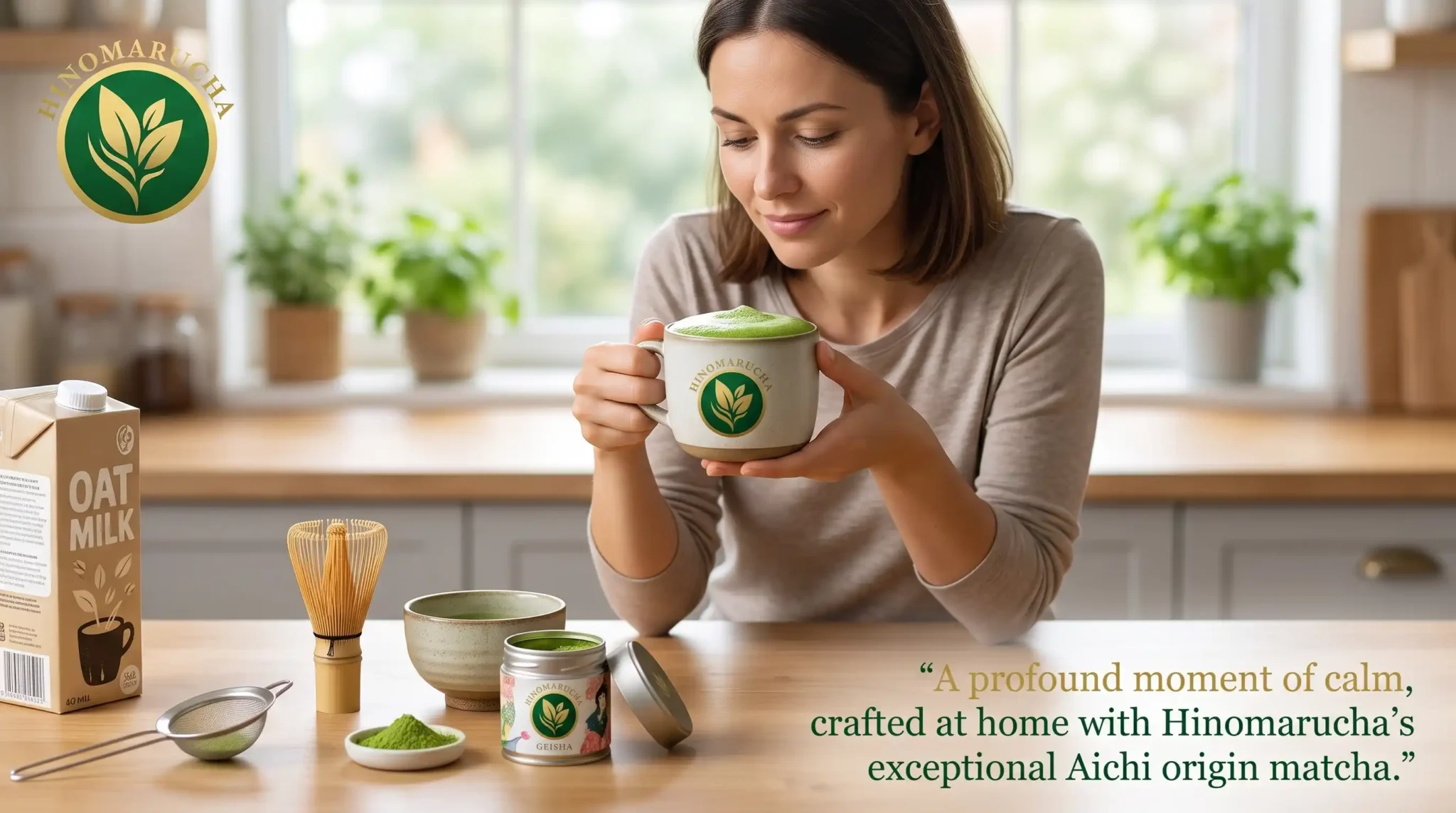
Matcha Kari is a Japan-based matcha brand focusing on direct sourcing and educational content. They cater to health-conscious consumers and specialty cafes.
| Pros | Cons |
| Japan-based with direct sourcing | Smaller range than Hinomarucha |
| Strong educational content | Less global shipping reach |
| Good ceremonial grade options | Fewer accessory products |
Hinomarucha goes further with premium accessories including the 3-Piece Matcha Set (Sosuno and Gosu), giving you the complete ceremonial experience.
8. Rishi Tea & Botanicals
Rishi Tea is a US brand focused on organic, ethically sourced teas including matcha. They offer ceremonial grade and culinary grade matcha from Japan.
| Pros | Cons |
| Strong ethical sourcing focus | Not a matcha-specialist brand |
| USDA organic options | Taste is mild, less suited for strong lattes |
| Good for health-focused consumers | Limited origin transparency |
Hinomarucha stands apart by being entirely dedicated to Japanese matcha. This singular focus means every product is optimized for the best matcha experience.
9. Matcha Konomi
Matcha Konomi is an online-focused matcha brand offering affordable Japanese matcha. They cater to everyday drinkers looking for accessible quality.
| Pros | Cons |
| Budget-friendly pricing | Lower ceremonial grade quality |
| Easy to purchase online | No small-batch production |
| Multiple flavor options | Weaker color and aroma for lattes |
For matcha latte recipes where color and flavor intensity matter, Hinomaru matcha color, aroma, and texture guide shows you exactly what to expect from truly premium matcha.
10. Starbucks Matcha Powder (Ready-Made Blend)
Starbucks sells its own matcha blend for home use. It is pre-sweetened, convenient, and familiar to Starbucks lovers. But it is not pure matcha.
| Pros | Cons |
| Familiar Starbucks taste | Sugar is the first ingredient, not matcha |
| Pre-sweetened for convenience | No ceremonial grade quality |
| Widely available | Dulled flavor and pale green color |
| No origin transparency | |
| Not suitable for health-focused use |
The Starbucks blend may deliver nostalgia, but for the best Starbucks Matcha Latte Recipe at home, choosing Hinomarucha means choosing real matcha, with true flavor, true color, and true health benefits.
Brand Comparison Summary
| Brand | Grade | Origin | Freshness | Value | Latte Quality | Rating |
| Hinomarucha ⭐ | Ceremonial | Aichi, Japan | Small-batch | Excellent | Outstanding | 10/10 |
| Ippodo Tea | Ceremonial | Uji, Japan | Good | Premium | Excellent | 8.5/10 |
| Encha | Ceremonial | Uji, Japan | Good | High | Very Good | 8/10 |
| Jade Leaf | Multi-grade | Japan (blend) | Average | Low | Good | 6.5/10 |
| DoMatcha | Ceremonial | Kyushu, Japan | Good | Medium | Good | 7/10 |
| Aiya | Multi-grade | Nishio, Japan | Variable | Medium | Good | 7/10 |
| Matcha Kari | Ceremonial | Japan | Good | Medium | Very Good | 7.5/10 |
| Rishi Tea | Multi-grade | Japan | Average | Medium | Average | 6.5/10 |
| Matcha Konomi | Standard | Japan | Average | Low | Average | 6/10 |
| Starbucks Blend | Pre-sweetened | Unknown | Poor | Low | Below Average | 4/10 |
Health Benefits of the Matcha Latte
The Starbucks Matcha Latte Recipe is loved for its taste. But the real value is the health benefits of matcha. Here is what science says:
| Health Benefit | Active Compound | Research Finding |
| Sustained energy boost | L-theanine + caffeine | Calm, focused alertness, no crash |
| Antioxidant protection | EGCG catechins | Matcha has 137x more antioxidants than brewed green tea |
| Metabolism support | Catechins | Can boost fat burning by up to 17% |
| Brain function | L-theanine | Improves alpha wave activity, promotes calm focus |
| Detox support | Chlorophyll | Shade-growing raises chlorophyll for natural detox |
| Heart health | Polyphenols | Regular green tea consumption linked to reduced cardiovascular risk |
| Blood sugar balance | EGCG | May reduce blood sugar spikes after meals |
Read our full breakdown: Top 10 Health Benefits of Japanese Green Tea (Science-Backed) and 5 Benefits of Drinking Matcha You Should Know.
These benefits are strongest when you use whole-leaf stone-ground matcha, like Hinomarucha. Pre-sweetened Starbucks powder loses much of this nutritional profile.
Best Equipment for Making Matcha Lattes at Home
The right tools matter. Here is what we recommend from Hinomaru product range:
| Tool | Purpose | Hinomarucha Product |
| Bamboo Chasen (Whisk) | Froths matcha smoothly | Bamboo Chasen |
| Matcha Canister | Stores and serves matcha | Mini Can Series / Art Cans |
| Matcha Sieve | Removes clumps for smooth pour | Matcha Can Sieve |
| Mug Tea Whisk Set | All-in-one for quick lattes | Mug Tea Whisk |
| Teapot | For hot water precision | Hitoshizuku Teapot |
| Complete Matcha Set | Full ceremony at home | Matcha 3-Piece Set |
The Mug Tea Whisk is perfect for busy mornings. The 3-Piece Matcha Set (Sosuno and Gosu) gives you the full ceremonial experience at home.
For those who want elegant packaging, the Genuine Gold Lacquer Canister is a masterpiece of Japanese craftsmanship, beautiful and functional.
Matcha Market Statistics, Why This Matters?
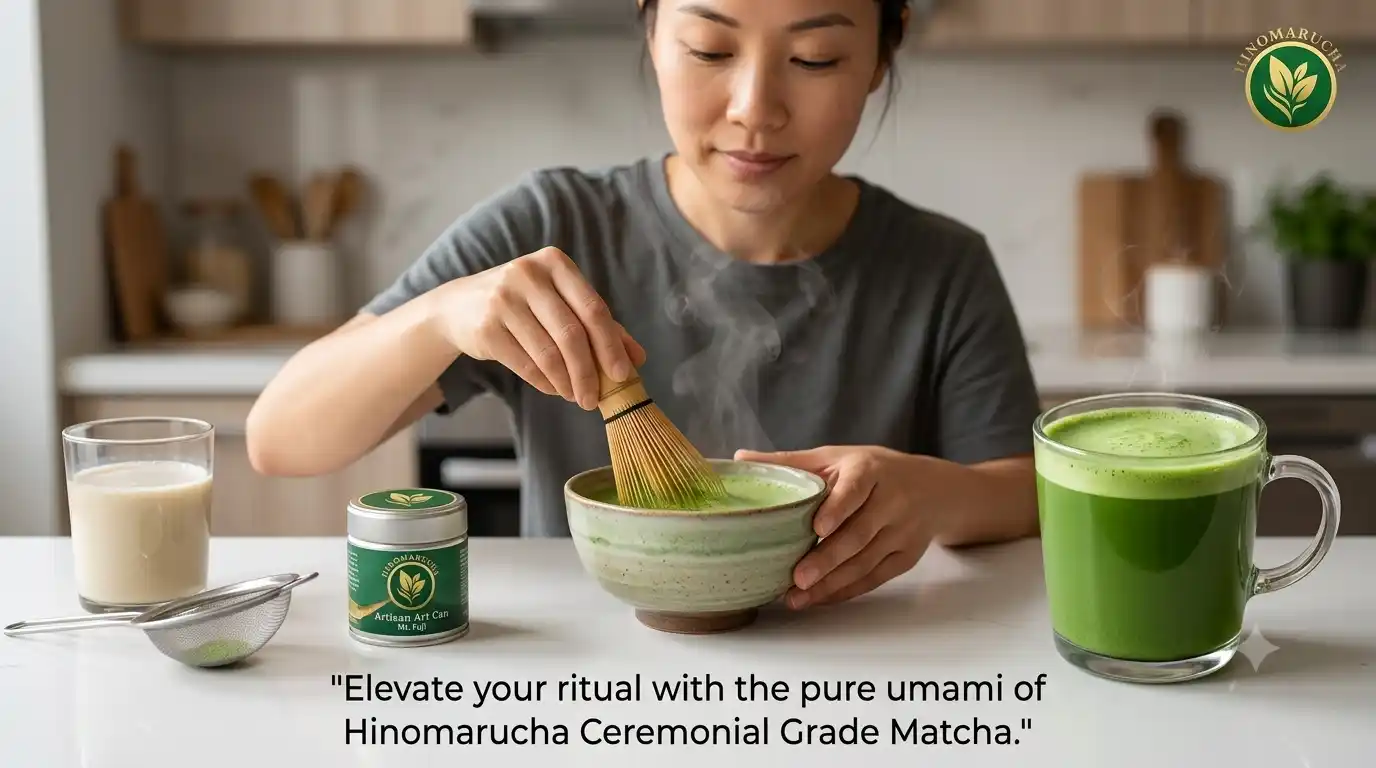
The matcha market is growing fast. Understanding the numbers shows why quality matters more than ever.
| Statistic | Figure | Source / Year |
| Global matcha market size (2024) | USD 4.5 billion | Market Research Reports, 2024 |
| Projected CAGR (2024–2030) | 8.3% per year | Industry Analysis 2024 |
| US matcha consumption growth (2023–2024) | +22% YoY | Tea Association Reports |
| Percentage of consumers preferring home-made lattes | 64% | Specialty Coffee Association 2024 |
| Starbucks Matcha Latte, average monthly searches | 246,000+ | Google Keyword Data, 2025 |
| Consumers willing to pay more for origin-verified matcha | 71% | Consumer Trends Survey 2024 |
| Antioxidant level: matcha vs brewed green tea | 137x higher | University of Colorado Study |
These statistics confirm one thing: consumers want better matcha. They want to know where it comes from. They want to make it at home. And they want the real health benefits. Hinomarucha delivers all three.
Sustainable Matcha at Its Core, The Hinomarucha Difference
Hinomarucha does not just source premium matcha. We care about how that matcha is grown. Our suppliers follow sustainable matcha farming practices in Japan that protect the soil, the environment, and the future of tea farming.
- No synthetic pesticides or harmful chemical fertilizers
- Traditional shade-growing techniques that enrich the leaf
- Soil health management passed down through generations
- Water-efficient irrigation systems
- Support for small family-run tea farms in Aichi
Curious about the growing process? How Organic Matcha Is Grown in Japan explains every stage from seed to stone-grinding.
We also teach you why soil and climate matter in matcha quality, because the terroir of Aichi is what makes our matcha unforgettable in every latte.
How to Buy Hinomarucha Matcha for Your Latte?
Ready to upgrade your matcha latte? Here is how to choose the right Hinomarucha product:
| Your Need | Best Product | Link |
| Pure ceremonial matcha for lattes | Ceremonial Grade Aichi Origin 30g | hinomarucha.com |
| Starter kit with tools | Matcha 3-Piece Set | hinomarucha.com |
| Elegant gifting option | Artisan Art Can Geisha | hinomarucha.com |
| Compact travel can | Mini Top Can Silver or Black | hinomarucha.com |
| Bulk / wholesale matcha | Screw Can with Pull Top 40g | hinomarucha.com |
| Gift box set | Mini Can Series Box | hinomarucha.com |
| Houjicha alternative | Houjicha Powder | hinomarucha.com |
Whether you are making a daily matcha latte or starting a matcha wholesale business, Hinomarucha has the right product for you.
Our Mini Top Can Silver and Mini Top Can Black are perfect for on-the-go matcha lovers who do not want to compromise on quality.
How to Tell if Your Matcha Is Truly Ceremonial Grade?
Not all matcha labeled “ceremonial” is the real thing. Here is how to check. We explain this in detail at How to Tell If Matcha Is Truly Ceremonial Grade.
| Quality Indicator | Real Ceremonial Grade | Inferior Matcha |
| Color | Vivid, deep green | Yellow-green or dull |
| Aroma | Grassy, sweet, fresh | Hay-like or stale |
| Texture | Ultra-fine powder | Coarse or grainy |
| Taste | Smooth, sweet umami | Bitter or astringent |
| Dissolves in water | Instantly and smoothly | Clumps or settles |
| Origin label | Named region (e.g. Aichi) | Vague or “Japan blend” |
| Harvest date | First harvest listed | Not mentioned |
Hinomarucha matcha passes every single test. That is why the Starbucks Matcha Latte Recipe made with our matcha looks, tastes, and performs better than anything you can buy at a coffee chain.
Matcha as a Lifestyle, The Modern Wellness Ritual
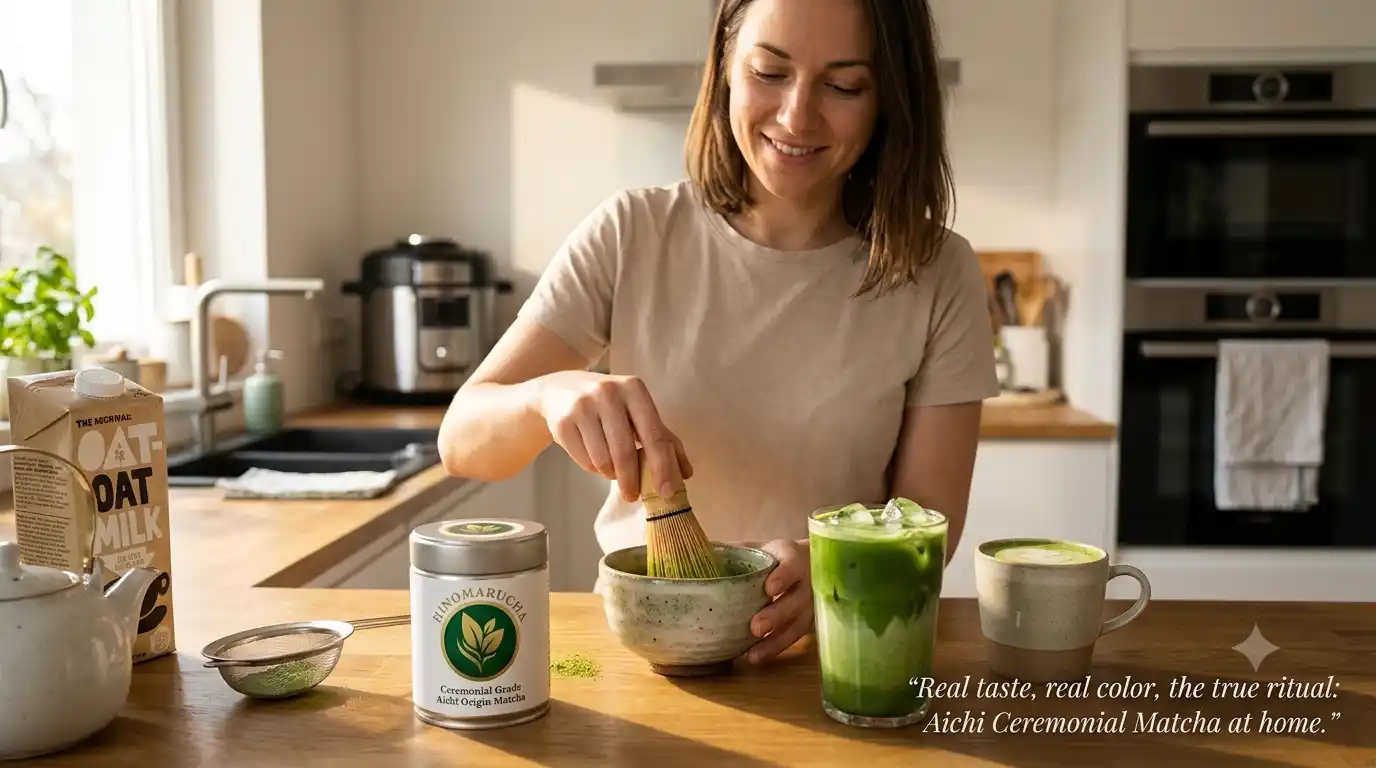
Matcha is more than a drink. It is a ritual. Learn how matcha became a modern wellness ritual across the globe.
More people are replacing morning coffee with matcha. The calm focus that L-theanine provides is perfect for work, creativity, and mindfulness.
- Matcha lattes have replaced coffee for millions of wellness-focused consumers
- Home matcha preparation is a growing mindfulness practice
- Japanese green tea culture is one of the world’s oldest wellness traditions
- Hinomarucha connects you directly to Japans green tea heritage through every cup
Conclusion
The Starbucks Matcha Latte Recipe is easy to make at home. With the right matcha, the right tools, and the right technique, your home version will surpass anything Starbucks offers.
The key is starting with the best matcha. Hinomarucha’s ceremonial grade Aichi origin matcha gives you a vivid green color, smooth umami taste, and rich health benefits in every cup. Our small-batch freshness, transparent sourcing, and expert knowledge make us the number one choice for matcha lovers worldwide.
From the Bamboo Chasen to the Artisan Art Can Geisha, every product we offer is designed to elevate your matcha experience. And our deep library of expert guides ensures you always know what you are drinking, where it came from, and why it matters.
Start your matcha journey today. Shop Hinomarucha matcha products here and taste the difference that real ceremonial grade matcha makes in every latte.