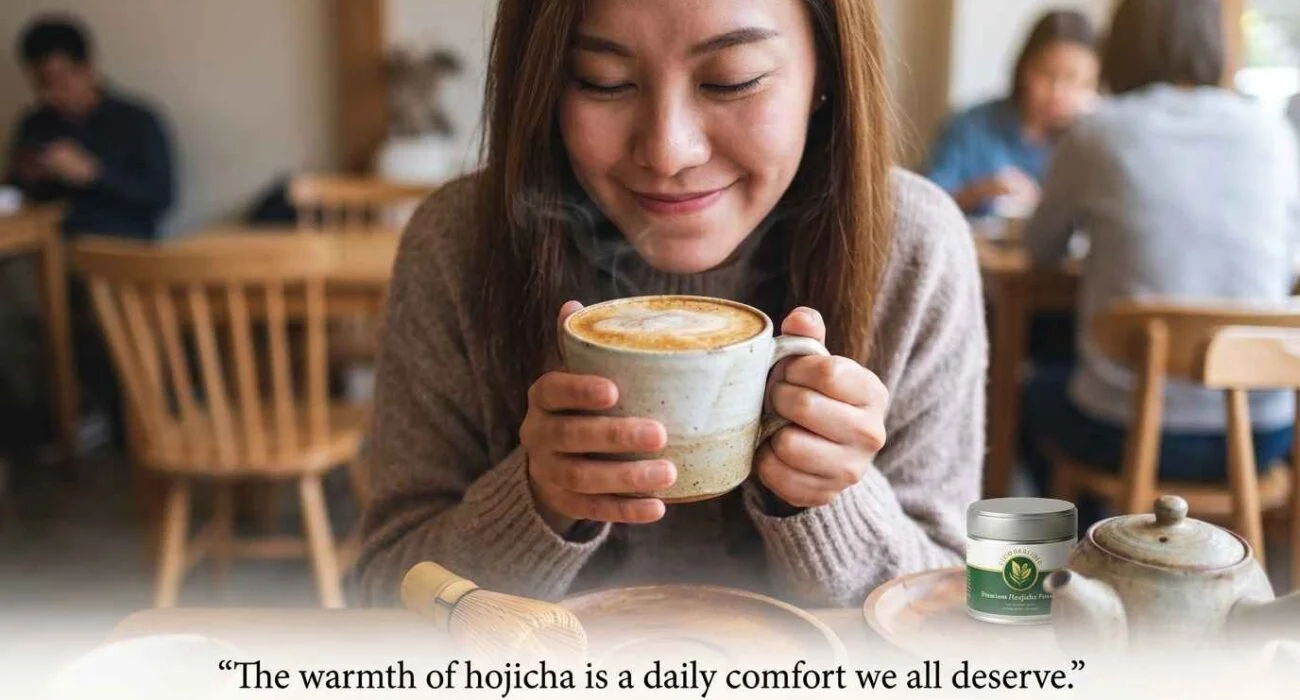
Most people discover green tea through matcha or sencha. But once they find Hojicha Roasted Green Tea, they rarely look back.
This tea is different. It is roasted over high heat, which gives it a warm, toasty aroma and a naturally sweet, smoky flavor. It is gentle on the stomach. It has lower caffeine than most other Japanese teas. And it makes one of the most comforting lattes you will ever drink.
At Hinomaru Cha, we have sourced, tested, and shared premium Japanese teas for years. We know what separates a good hojicha from a great one. In this guide, we cover everything: what hojicha is, how it tastes, its health benefits, its caffeine content, and how to make a café-quality latte at home. We also compare it to matcha so you can decide which tea fits your life best.
Let us get started.
What Is Hojicha? A Complete Overview
Hojicha (焙じ茶) is a Japanese roasted green tea. The name comes from the Japanese word hōji, meaning “to roast.” Unlike most green teas that are steamed and dried, hojicha is pan-roasted or roasted in a porcelain pot at around 200°C (392°F).
This roasting process does several important things:
- It turns the tea leaves from green to reddish-brown.
- It removes most of the grassy, bitter notes found in standard green tea.
- It reduces the caffeine and L-theanine content significantly.
- It creates new flavor compounds, particularly pyrazines, that give hojicha its signature roasted, caramel-like taste.
Hojicha is usually made from bancha (lower-grade green tea leaves and stems), though some premium versions use sencha or kukicha. The stems and twigs are often included, which contributes to the tea’s lower caffeine levels.
It is commonly enjoyed as an everyday tea in Japan, often served after meals because it is easy on digestion and low in caffeine. It is one of the most beloved teas across all age groups, from young children to elderly adults.
If you are new to Japanese green tea and want to understand the broader world of varieties available, our complete beginner’s guide to Japanese green tea is an excellent starting point.
How to Pronounce Hojicha?
The correct hojicha pronunciation is: hoh-JEE-cha.
Break it down like this:
- Ho, rhymes with “go”
- Ji, like “gee”
- Cha, like “cha” in “chai”
You may also see it spelled as houjicha, ho ji cha, or hou ji cha. All of these refer to the same tea. The spelling “houjicha” is a more literal Romanization of the Japanese, while “hojicha” is the simplified, widely used version in English.
What Does Hojicha Taste Like?
This is one of the most common questions we receive. Hojicha taste is warm, toasty, and lightly sweet. It has a pleasant smokiness without being harsh. Many people describe it as earthy, with hints of caramel and roasted nuts.
Here is a quick flavor breakdown:
| Flavor Profile | Description |
| Primary taste | Toasty, roasted, slightly smoky |
| Secondary notes | Caramel, roasted nuts, mild sweetness |
| Bitterness | Very low to none |
| Astringency | Minimal |
| Aroma | Warm, nutty, comforting |
| Aftertaste | Clean and slightly sweet |
Compare this to matcha, which is grassy, umami-rich, and sometimes bitter. Hojicha is the gentler, more approachable option, perfect for people who find standard green teas too sharp or too earthy.
The hojicha flavor also changes slightly depending on the roast level. Lightly roasted hojicha keeps a touch more of the original tea character. Deeply roasted hojicha is richer, more caramel-forward, and almost coffee-like in aroma.
Japanese Hojicha: Its Cultural Roots
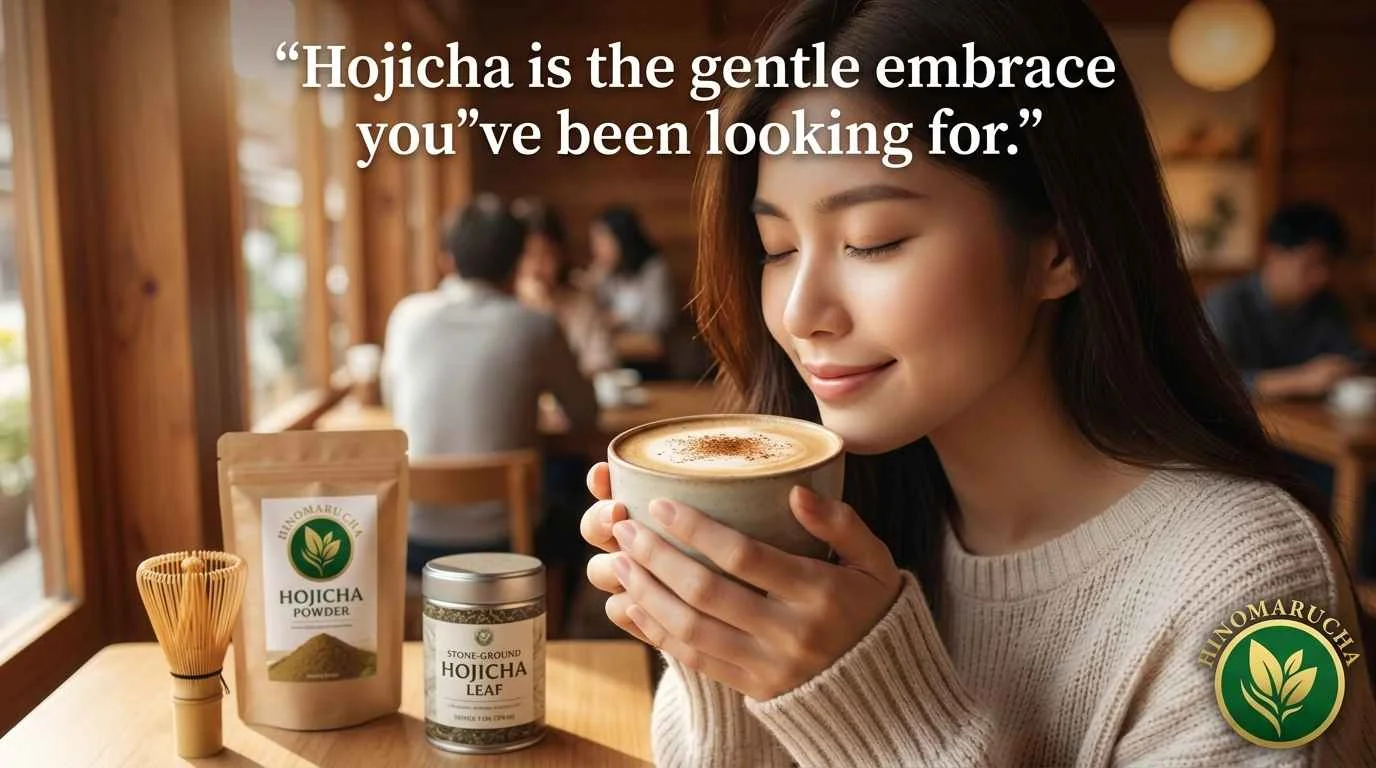
Japanese hojicha has a fascinating origin story. It was first made in Kyoto in the 1920s. Tea merchants were looking for a way to use older tea leaves and stems that could not be sold as premium tea. Someone had the idea to roast them. The result was so good that it quickly became a staple across Japan.
Today, hojicha is:
- Served free of charge at many Japanese restaurants
- Used as a common evening tea because of its low caffeine
- Given to children and elderly people who are sensitive to stimulants
- Used in cooking, from ice cream to cookies to tiramisu
Several respected Japanese tea producers have made their mark with hojicha. Names like Ippodo hojicha represent the long tradition of quality tea production in Japan. At Hinomaru Cha, we are proud to carry on this tradition by bringing authentic Japanese roasted tea directly to your cup.
Hojicha Caffeine Content, The Full Truth
One of the biggest reasons people choose hojicha over other teas is its low caffeine content. But how low is it exactly?
Hojicha Caffeine Numbers
| Tea Type | Caffeine per 8 oz (approx.) |
| Gyokuro tea | 120–140 mg |
| Matcha | 60–80 mg |
| Japanese sencha | 30–50 mg |
| Hojicha (leaf) | 7–30 mg |
| Hojicha powder | 10–25 mg |
| Decaf coffee | 2–15 mg |
The hojicha caffeine mg range varies depending on:
- Whether you use loose leaf or hojicha powder
- The water temperature
- How long you steep it
- Whether the tea uses mostly stems (lower caffeine) or leaves (slightly higher)
Most commercially sold hojicha contains around 7–30 mg of caffeine per cup. This is dramatically lower than matcha (60–80 mg) and coffee (80–100+ mg).
Is Hojicha Caffeinated?
Yes, is hojicha caffeinated? Technically yes. But the level is so low that many people, including pregnant women and children, can enjoy it without worry. Always consult a healthcare professional if you have specific caffeine sensitivities.
The reason for such low caffeine in hojicha is the roasting process. High heat breaks down caffeine molecules. The use of bancha stems, which naturally contain less caffeine than young leaf tips, further reduces the amount.
Hojicha vs Matcha Caffeine
For a clear comparison:
| Factor | Hojicha | Matcha |
| Caffeine per cup | 7–30 mg | 60–80 mg |
| L-theanine | Low | High |
| Stimulant effect | Very mild | Moderate |
| Suitable for evening | Yes | Less ideal |
| Suitable for children | Generally yes | With caution |
The hojicha vs matcha caffeine difference is significant. If you want to reduce your caffeine intake but still enjoy a rich, satisfying Japanese tea ritual, hojicha is the smarter choice.
Hojicha Benefits, What Science Says?
Beyond its wonderful taste, hojicha tea carries a range of documented health benefits. These come from its antioxidant compounds, pyrazines, and the mild L-theanine that survives the roasting process.
1. Rich in Antioxidants
Hojicha contains catechins and polyphenols, though in smaller quantities than unroasted green teas. The roasting creates new beneficial compounds. Research shows that polyphenols help fight oxidative stress, which is linked to aging and chronic disease.
Stat: Green tea polyphenols have been studied in over 1,000 clinical trials globally. Even roasted varieties retain meaningful antioxidant activity.
2. Supports Digestion
Hojicha has long been served after meals in Japan because it promotes healthy digestion. The warm, roasted compounds are gentle on the gut. Unlike coffee, it does not cause acidity or stomach irritation in most people.
3. Promotes Relaxation Without Drowsiness
Even though hojicha has low caffeine, it retains some L-theanine. This amino acid promotes calm alertness. The result is a gentle, soothing effect, ideal for evening wind-down routines. This makes it very different from coffee or even standard green tea.
4. Supports Cardiovascular Health
Studies on green tea compounds consistently show benefits for heart health. Regular consumption is associated with lower LDL cholesterol and improved blood vessel function. While hojicha is less studied individually, its shared polyphenol base suggests similar benefits.
5. May Support Blood Sugar Regulation
Pyrazines, the compounds created during roasting, have shown promise in early research for improving blood circulation and potentially supporting blood sugar balance. More research is ongoing.
6. Low Calorie and Naturally Sweet
Plain hojicha has zero calories and zero sugar. Its naturally sweet, roasted flavor means most people do not need to add sweetener. This makes it a smart swap for sugary drinks.
7. Gentle for Sensitive Stomachs
Because the tannin content is reduced through roasting, hojicha is far less likely to cause nausea or stomach upset compared to stronger teas or coffee. It is widely recommended for people with sensitive digestive systems.
For a broader look at how Japanese green teas support wellness, explore our guide to the top 10 health benefits of Japanese green tea.
Hojicha Powder vs Loose Leaf Hojicha, What to Choose?

You will find hojicha sold in two main forms: loose leaf hojicha and hojicha powder. Each has its advantages.
Comparison Table
| Feature | Loose Leaf | Hojicha Powder |
| Flavor intensity | Lighter, more delicate | Stronger, more concentrated |
| Brewing method | Teapot or infuser | Whisked or blended |
| Best for | Traditional hot tea | Lattes, baking, smoothies |
| Caffeine | Slightly lower | Slightly higher per serving |
| Price | Generally lower | Generally higher |
| Convenience | Moderate | High |
Which Is Better?
It depends on your goal:
- For traditional brewing: Loose leaf hojicha gives you a more authentic, nuanced cup. Use a good teapot like our Hitoshizuku Teapot to get the best results.
- For lattes, baking, and recipes: Hojicha powder for latte is superior. It dissolves easily and gives a richer, more intense flavor in drinks and food.
Our houjicha powder is stone-ground from premium Japanese roasted tea leaves. It is crafted for barista-level results at home, smooth, aromatic, and deeply flavorful.
Hojicha vs Matcha, Head-to-Head Comparison
These two teas often get compared. Here is a full breakdown:
| Category | Hojicha | Matcha |
| Color | Reddish-brown | Bright green |
| Flavor | Toasty, smoky, sweet | Grassy, umami, slightly bitter |
| Caffeine | 7–30 mg | 60–80 mg |
| L-theanine | Low | High |
| Antioxidants | Moderate | Very high |
| Preparation | Brew or whisk powder | Whisk powder |
| Best time to drink | Evening, anytime | Morning, pre-workout |
| Who it suits | Sensitive stomachs, low caffeine needs | Energy boost, focus |
| Common uses | Latte, hot tea, baking | Latte, ceremony, smoothies |
Both teas have a strong place in Japanese tea culture. The choice comes down to your personal needs. If you want high antioxidants and a focused energy lift, matcha is your tea. If you want a calming, low-caffeine, digestive-friendly option, especially in the evenings, hojicha wins.
We go deep on this topic in our article on ceremonial grade matcha explained if you want to explore the matcha side further.
How to Make Hojicha: Traditional Brewing Guide
What You Need
- 2 teaspoons loose leaf hojicha (or 1 tsp hojicha powder)
- 200 ml water (not boiling, use 90°C / 195°F)
- A teapot or infuser
- A cup
Step-by-Step Method
Step 1: Heat water to 90°C. Do not use fully boiling water, it can make the tea bitter.
Step 2: Add hojicha to your teapot or infuser. Use about 2g per 100ml of water.
Step 3: Pour hot water over the leaves.
Step 4: Steep for 30–45 seconds only. Hojicha brews fast. Over-steeping can make it astringent.
Step 5: Pour into your cup and enjoy immediately.
Step 6: You can re-steep the same leaves 2–3 times. Each steep changes the flavor slightly, later steeps are milder and sweeter.
Tips for best results,
- Use fresh, filtered water for cleaner flavor.
- Do not squeeze the leaves when removing, it makes the tea bitter.
- Try drinking it without sweetener first to appreciate its natural sweetness.
Hojicha Latte Recipe: Step-by-Step (Hot & Iced)
The hojicha latte is one of the most popular ways to enjoy this tea. It is creamy, warming, and deeply comforting. Here is our tested recipe.
Ingredients (1 serving)
| Ingredient | Amount |
| Hojicha powder | 1.5 teaspoons (about 4g) |
| Hot water | 60 ml (2 oz) |
| Milk (any type) | 150 ml (5 oz) |
| Sweetener (optional) | 1–2 tsp honey or maple syrup |
Hot Hojicha Latte, Step by Step
Step 1: Add hojicha powder to a small bowl or mug.
Step 2: Add 60ml of hot water (around 90°C). Whisk vigorously until smooth and no lumps remain. A small whisk like our Bamboo Chasen works perfectly here, it creates a beautiful frothy texture that elevates the entire drink.
Step 3: Heat and froth your milk using a frother, small saucepan, or steam wand.
Step 4: Pour the frothed milk over the hojicha concentrate.
Step 5: Add sweetener if desired. Stir gently and serve immediately.
Step 6: For a special finish, dust a tiny pinch of hojicha powder on top of the foam.
Iced Hojicha Latte, Step by Step
Iced hojicha latte is equally wonderful and incredibly refreshing.
Step 1: Whisk hojicha powder with 60ml of hot water as above.
Step 2: Let the concentrate cool for 5 minutes, or pour it over a small amount of ice to quick-chill.
Step 3: Fill a tall glass with ice cubes.
Step 4: Pour cold milk (about 150ml) over the ice.
Step 5: Slowly pour the hojicha concentrate over the milk. Watch the beautiful layers form.
Step 6: Stir before drinking or leave layered for presentation. Add sweetener to taste.
Hojicha Latte Variations to Try
| Variation | How to Make It |
| Hojicha milk tea | Add hojicha concentrate to cold sweetened milk with tapioca pearls |
| Hojicha hot chocolate | Mix hojicha powder with hot cocoa for a roasted chocolate drink |
| Hojicha vanilla latte | Add a drop of vanilla extract to the milk before frothing |
| Hojicha oat milk latte | Use oat milk, its natural sweetness pairs perfectly with hojicha |
| Hojicha condensed milk | Swap honey for a drizzle of condensed milk for a Southeast Asian twist |
For more creative Japanese tea latte ideas, check out our ultimate matcha latte recipe guide, many of the techniques transfer beautifully to hojicha.
Hojicha in Food, Beyond the Cup
Roasted green tea is incredibly versatile in the kitchen. Here are some popular uses:
Hojicha Ice Cream
Mix hojicha powder into a vanilla ice cream base before churning. The roasted flavor pairs brilliantly with dairy, rich, nutty, and subtly sweet.
Hojicha Cookies
Add 1–2 teaspoons of hojicha powder to a standard shortbread or sugar cookie dough. The cookies come out with a warm, toasty depth that is completely addictive.
Hojicha Tiramisu
Substitute espresso with a double-strength hojicha brew. Layer it with mascarpone cream for a Japanese-inspired tiramisu that is lighter and more elegant than the original.
Hojicha Granola
Toss oats with hojicha powder, honey, and a little oil. Bake until golden. The result is a fragrant, crunchy granola with a uniquely Japanese character.
How to Choose the Best Hojicha Powder?
If you want to make excellent lattes, cooking, or hot tea at home, the quality of your powder matters enormously. Here is what to look for:
Pros and Cons of Low-Quality vs Premium Hojicha Powder
| Factor | Low-Quality Powder | Premium Hojicha Powder |
| Color | Dull brown, faded | Rich reddish-brown |
| Aroma | Weak, flat, stale | Strong, toasty, fresh |
| Taste | Bitter, thin, metallic | Sweet, full-bodied, smooth |
| Texture | Coarse, grainy | Fine, dissolves easily |
| Origin | Unknown or mixed | Verified Japanese source |
| Price | Low | Fair, reflects actual quality |
At Hinomaru Cha, our houjicha powder is stone-ground from carefully sourced Japanese tea. It is fine, aromatic, and dissolves perfectly into both hot and cold drinks. If you care about the quality of what you drink, this is the powder to choose.
We also carry beautifully designed storage tins to keep your tea fresh, from our minimalist Mini Can Soft Matte to our stunning Artisan Art Can Geisha. Proper storage protects your tea from light, moisture, and air, all enemies of freshness.
Why Hinomaru Cha Is the Right Source for Your Hojicha?
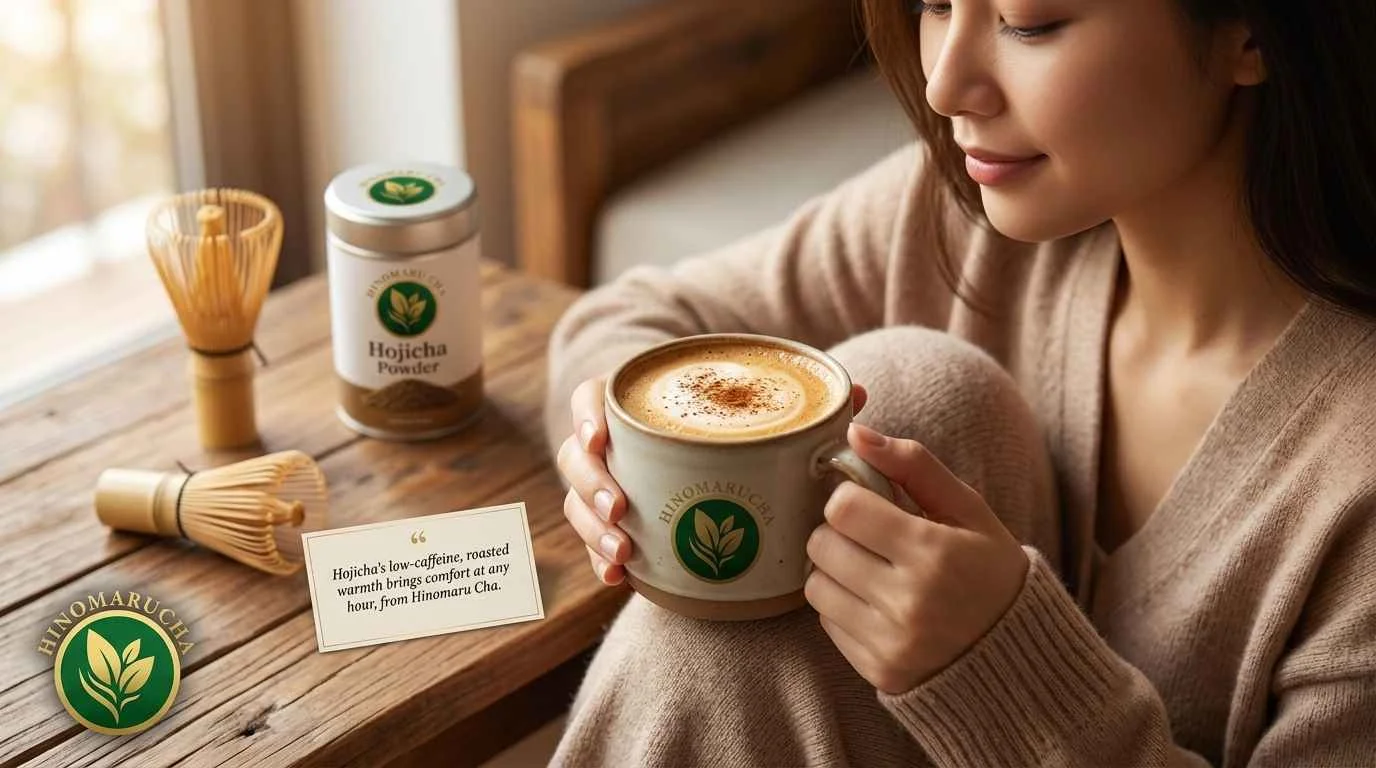
We want to be direct with you. There are many places to buy Japanese tea online. Here is why we believe Hinomaru Cha stands apart.
What Makes Us Different?
| Factor | Our Standard |
| Sourcing | Direct from Japanese tea farms and trusted producers |
| Quality control | Each batch tested for flavor, aroma, and purity |
| Product range | From loose leaf to powder to complete brewing sets |
| Knowledge | We share real brewing guides, not just product listings |
| Packaging | Designed for freshness, our cans and containers seal properly |
| Customer focus | We answer questions, share recipes, and help you brew better |
We carry not just tea, but everything you need to brew it properly. Our Matcha 3-Piece Set includes the key tools for any beginner. Our Mug Tea Whisk makes whisking hojicha latte simple and enjoyable without needing a traditional bowl.
We believe good tea deserves good tools. And good tools deserve a knowledgeable guide, which is exactly what we provide through every article, recipe, and guide we publish.
Our commitment to authenticity extends to how we think about premium Japanese green tea, we do not cut corners on sourcing, and we do not make promises we cannot keep.
Storage Tips for Hojicha
Hojicha can go stale faster than you might expect. Follow these rules to keep it fresh:
For loose leaf hojicha:
- Store in an airtight container away from light
- Keep at room temperature, no need to refrigerate if you use it within 2–3 months
- Keep away from strong smells, tea absorbs odors easily
For hojicha powder:
- Seal tightly after every use
- Store in a cool, dark place
- Use within 30–60 days of opening for peak flavor
- Avoid plastic bags, use a proper canister
Our storage cans are designed specifically for this purpose. The Screw Can with Pull-Top 40g provides an excellent airtight seal, your powder stays fresh, aromatic, and ready to use.
For detailed storage guidance across all Japanese teas, our article on best ways to store matcha covers the key principles that apply to hojicha as well.
Hojicha vs Other Japanese Teas
Hojicha fits into a rich family of Japanese teas. Here is how it compares to the other major varieties:
| Tea | Flavor | Caffeine | Best For |
| Hojicha | Roasted, toasty, sweet | Very low (7–30 mg) | Evening, sensitive stomachs |
| Matcha | Grassy, umami, rich | Moderate (60–80 mg) | Morning energy, lattes |
| Gyokuro green tea | Sweet, deep umami, complex | High (120–140 mg) | Special occasions, connoisseurs |
| Genmaicha tea | Nutty, light, popcorn-like | Low–moderate | Everyday drinking |
| Sencha green tea | Grassy, fresh, slightly astringent | Moderate | Everyday drinking |
| Kukicha tea | Mild, creamy, slightly woody | Very low | Relaxation, low caffeine needs |
| Bancha tea | Light, earthy, simple | Low | Everyday affordable drinking |
Each of these teas has a distinct identity and place in Japanese tea culture. Hojicha’s roasted warmth makes it uniquely positioned as the evening tea and the comfort tea of the group.
Common Hojicha Mistakes to Avoid
Even simple teas can be brewed poorly. Here are the most common mistakes and how to fix them:
- Using boiling water Water above 95°C makes hojicha bitter. Use 90°C for a smooth, balanced cup.
- Steeping too long 30–45 seconds is enough for loose leaf. Longer steeping extracts harsh tannins.
- Using too much powder for lattes 1.5 teaspoons of hojicha powder is the sweet spot for a 150ml milk drink. More can become overpowering.
- Not whisking properly Hojicha powder clumps if not whisked well. Always whisk in hot water first before adding milk. Our Bamboo Chasen creates a perfectly smooth, lump-free concentrate in seconds.
- Storing in the wrong container Plastic bags or open containers kill hojicha’s aroma fast. Use a sealed tin or canister.
- Buying stale powder Hojicha powder loses its roasted aroma once it oxidizes. Always buy from a trusted source and check for freshness indicators.
Hojicha Analytics, Market Trends and Growing Popularity
Hojicha is no longer a niche tea. Its popularity has grown dramatically outside Japan over the past five years.
Key Statistics
| Metric | Data |
| Google search growth for “hojicha” | +320% over 5 years (global) |
| Hojicha lattes on café menus worldwide | Increased by 180%+ since 2019 |
| US specialty tea market growth | CAGR of 6.8% projected through 2028 |
| Hojicha food products (ice cream, cookies) | Category grew over 200% on food delivery apps |
| Average consumer age for hojicha | Broadening, now popular among 18–45 age group |
Hojicha is entering the mainstream, but authenticity still matters. As the market grows, so does the amount of low-quality product. This is exactly why sourcing from a knowledgeable, trusted supplier like Hinomaru Cha matters more, not less.
The Hinomaru Cha Difference, Our Products, Your Perfect Cup
We want to take a moment to walk you through the products we have carefully selected so that your hojicha experience is as good as it can possibly be. We do not just sell tea. We help you build a ritual.
Our Hojicha Powder
Our houjicha powder is the cornerstone product for any hojicha lover. It is made from premium Japanese roasted tea leaves, stone-ground to a fine consistency that dissolves beautifully in hot water. No clumps. No bitterness. Just that deep, warm, caramel roasted aroma in every single cup.
Most hojicha powders on the market are coarsely ground and use low-grade tea that was roasted to mask poor quality. Ours starts with quality leaves, roasted with precision, then ground to a consistent fineness that produces a smooth latte every time.
Use it for your morning latte. Use it for baking. Use it for evening wind-down. It is incredibly versatile.
Our Brewing Tools
The right tools transform tea from a routine into a ritual. Here is what we recommend:
For whisking hojicha powder: The Bamboo Chasen is a traditional Japanese bamboo whisk with 80 tines. It creates a smooth, lump-free mixture far better than a regular spoon or electric frother. The bamboo tines are flexible and gentle, they do not scratch your bowl and they create a beautiful micro-foam that lifts the flavor of your latte.
If you want to learn more about using it correctly, our guide on how to use a bamboo chasen properly gives you everything you need to know, and the same technique applies perfectly to hojicha powder.
For brewing loose leaf hojicha: The Hitoshizuku Teapot is elegant, functional, and designed specifically for Japanese loose leaf teas. Its fine mesh strainer catches all the small particles without slowing the pour. The ceramic body retains heat well, keeping your brew warm longer.
For everyday mug-style brewing: Our Mug Tea Whisk lets you whisk hojicha powder directly in your favorite mug. No bowl needed. It is perfect for busy mornings when you want a good cup without the full ceremony setup.
Our Storage Tins
Fresh hojicha powder is aromatic, smooth, and rich. Old, improperly stored powder is flat and stale. This is why storage matters as much as sourcing.
Our storage tins are not just beautiful, they are functional. Every canister we carry creates a proper airtight seal that protects your tea from light, moisture, and odor absorption.
Some favorites from our range:
- Mini Top Can Silver, Sleek, modern, and compact. Perfect for the kitchen counter.
- Mini Top Can Black, Matte black finish with a premium feel. Light-blocking design.
- Artisanal Art Can Mt. Fuji, Beautifully illustrated with Japan’s iconic mountain. A collector’s piece and a functional tea tin.
- Anime Nittoh Cans, Fun, vibrant designs inspired by Japanese culture. Great as gifts.
- Genuine Gold Lacquer, The most premium option. Hand-crafted with a gold lacquer finish. For those who treat their tea collection as an art.
Each of these is available now in our store. When you invest in quality tea, it only makes sense to protect it properly.
Complete Sets for New Tea Lovers
If you are just starting your Japanese tea journey, our complete sets make it easy to get everything at once.
The Matcha 3-Piece Set includes the key tools to get started. While designed primarily for matcha, all the tools work brilliantly with hojicha powder too. The chasen, scoop, and bowl combination gives you a complete setup without guesswork.
We also carry the 3-Piece Matcha Set Sosuno and Gosu, a more refined option that pairs beautifully crafted ceramics with functional brewing tools. It is the kind of set you display proudly on your kitchen counter.
How Hojicha Fits Into a Healthy Daily Routine?
We get asked often: “Where does hojicha fit in my day?” Here is a practical daily schedule that many of our customers follow:
| Time of Day | Why Hojicha Works |
| Morning | Low caffeine gives a gentle start without coffee’s spike-and-crash |
| Mid-morning | Warm cup supports focus without jitteriness |
| After lunch | Excellent for digestion, traditional Japanese post-meal practice |
| Afternoon | A hojicha latte is a calming, satisfying coffee alternative |
| Evening | Its very low caffeine makes it safe and soothing before bed |
Unlike coffee or even standard green tea, hojicha does not disrupt your sleep cycle when consumed in the evening. This makes it one of the few warm, flavorful drinks you can genuinely enjoy at any hour.
Many of our customers tell us they replaced their afternoon coffee with a hojicha latte, and report better sleep, less anxiety, and still feeling alert throughout the day. That is not marketing language. That is the lived experience of people who switched to a lower-caffeine lifestyle without sacrificing warmth or ritual.
Hojicha for Kids and Families
One of the truly unique things about hojicha is that it is safe for the whole family.
In Japan, it is common practice to serve hojicha to young children. Because of its very low caffeine, sometimes as low as 7 mg per cup, it does not overstimulate young nervous systems. Its naturally sweet, mild flavor is also much more palatable for children than other teas.
For family use, we recommend:
- Brewing weak hojicha for children (shorter steep, more water)
- Making a lightly sweetened hojicha milk for kids as a hot chocolate alternative
- Using hojicha powder in oatmeal cookies or pancakes for a fun flavor addition
This is a tea that brings people together, from grandparents to grandchildren, in the same way it has done in Japanese households for over a century.
Sustainability and Japanese Tea Ethics
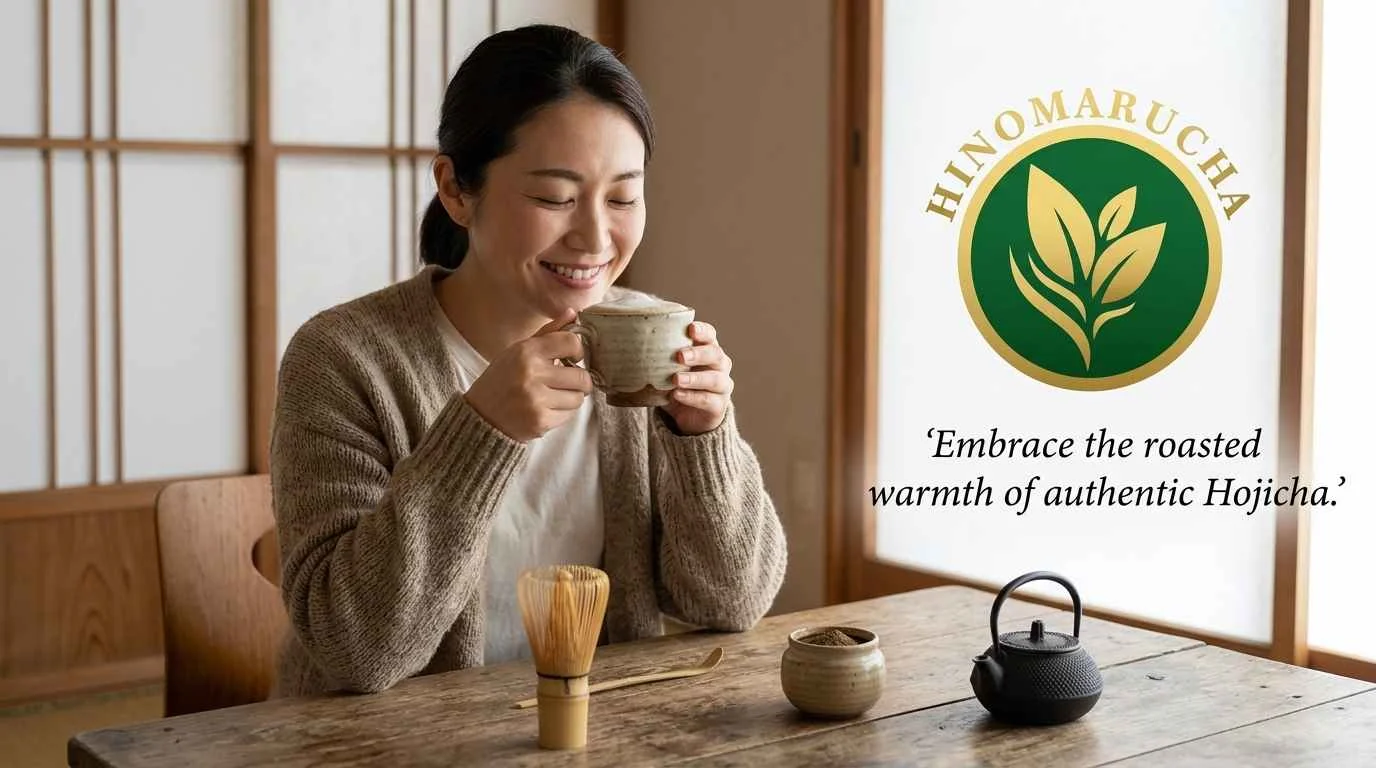
At Hinomaru Cha, we think about where our tea comes from. Japanese tea farming has a long tradition of working with the land rather than against it.
Key facts about Japanese tea farming:
- Many Japanese tea gardens practice minimal pesticide use by tradition
- Shade-growing techniques used for premium teas naturally increase soil moisture retention
- Small-batch production, which many Japanese farms still practice, reduces waste and maintains quality
We are committed to sourcing from producers who share these values. When you buy from us, you are not just getting great tea. You are supporting a network of farmers and artisans who have dedicated their lives to this craft.
For more on what makes Japanese tea production special, our article on how organic matcha is grown in Japan gives excellent context, and many of those principles apply directly to how quality hojicha is also grown and produced.
Conclusion
Hojicha Roasted Green Tea is one of the most underappreciated gems in the world of Japanese tea. It has a warm, toasty flavor unlike any other tea. It has remarkably low caffeine. It supports digestion and relaxation. It works beautifully in lattes, desserts, and traditional brewing. And it has centuries of Japanese craftsmanship behind every cup.
Whether you are new to Japanese tea or a seasoned enthusiast looking to expand your collection, hojicha deserves a permanent place in your routine.
At Hinomaru Cha, we have made it our mission to bring the best of authentic Japanese roasted tea culture to your home. From our premium houjicha powder to our beautifully crafted brewing tools like the Hitoshizuku Teapot and Bamboo Chasen, everything we offer is chosen to help you brew better and enjoy more.
Explore our collection, try our latte recipe, and discover why thousands of tea lovers trust Hinomaru Cha as their go-to source for authentic Japanese tea.
Your perfect cup of hojicha is closer than you think.